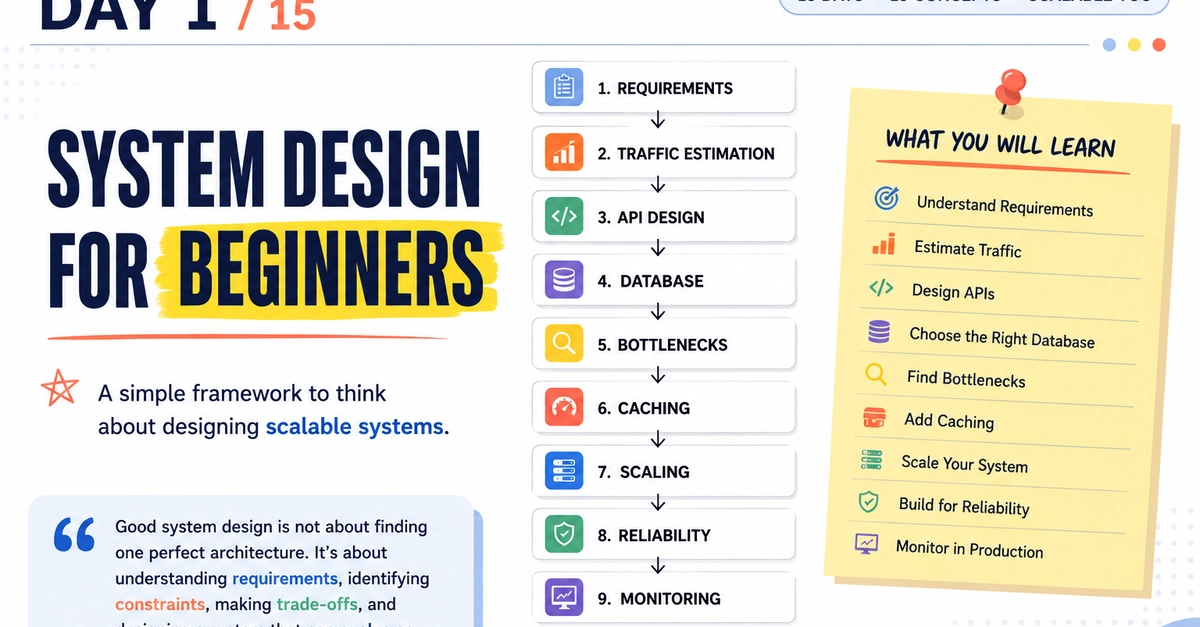
System design preparation often feels harder than it should.
You open one article and see caching, sharding, replication, and load balancing. Then another resource introduces Kafka, consistent hashing, distributed locks, and eventual consistency. A third tells you to design YouTube, Uber, or WhatsApp.
Soon, you have a long list of concepts but no clear idea of what to study first.
That is the real problem.
Most candidates do not fail because there is not enough system design material available. They fail because the material is consumed in the wrong order.