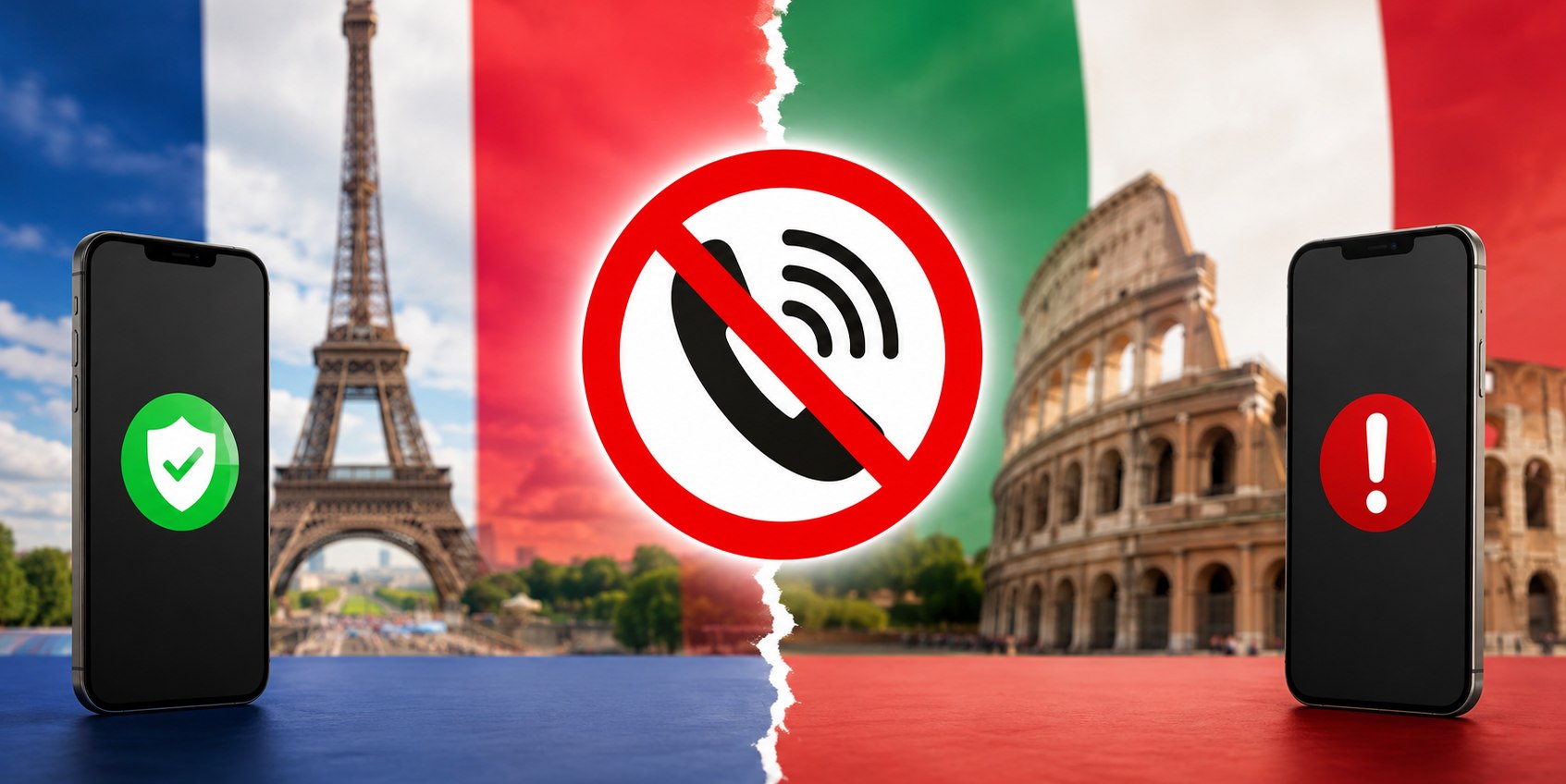
Cold calling is about to come to an end. Or at least in its current form. On Tuesday 11 August, a law backed by Emmanuel Macron's government will come into force, tightening the rules and banning these unsolicited nuisance calls. The aim is to protect consumers from intrusive commercial solicitations and to protect vulnerable people from fraudulent practices.
From now on it will be illegal to contact consumers without their prior consent. Consent that "can be withdrawn at any time", says Alice Vilcot, chief of staff at the Directorate-General for Competition, Consumer Affairs and Fraud Control.
However, the practice will still be allowed in two situations: when a company has already obtained your agreement, for example during a purchase, a visit to a shop or via a form, and when the call concerns a contract you have already signed.
The government says the law responds to years of consumer complaints. Authorities estimate that around three quarters of people in France receive at least one unsolicited sales call every week, and many receive more.
Content creator Micode highlights the same problem on his YouTube channel. In a lengthy investigation carried out over several months (source in French), he sheds light on how these call campaigns work, from aggressive techniques to schemes that discourage victims from taking legal action.