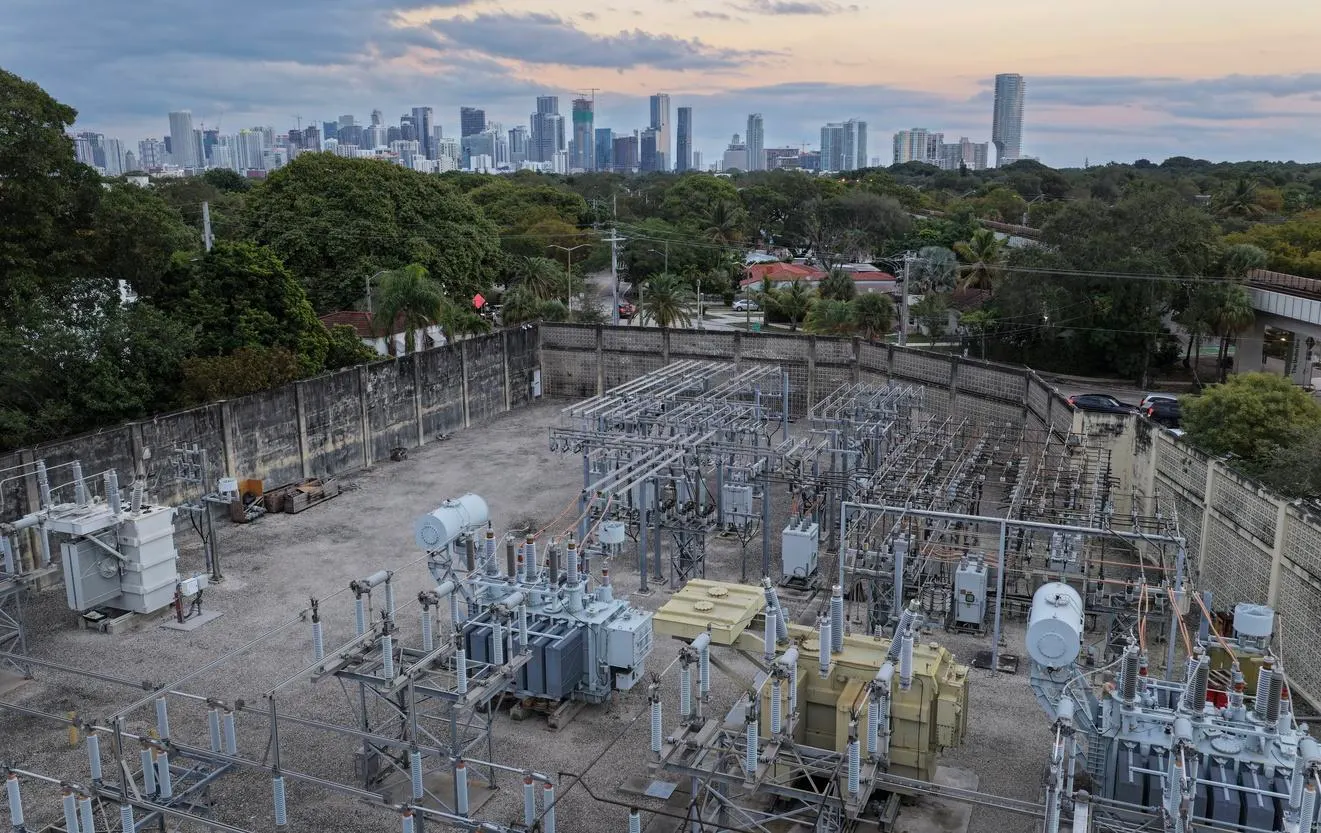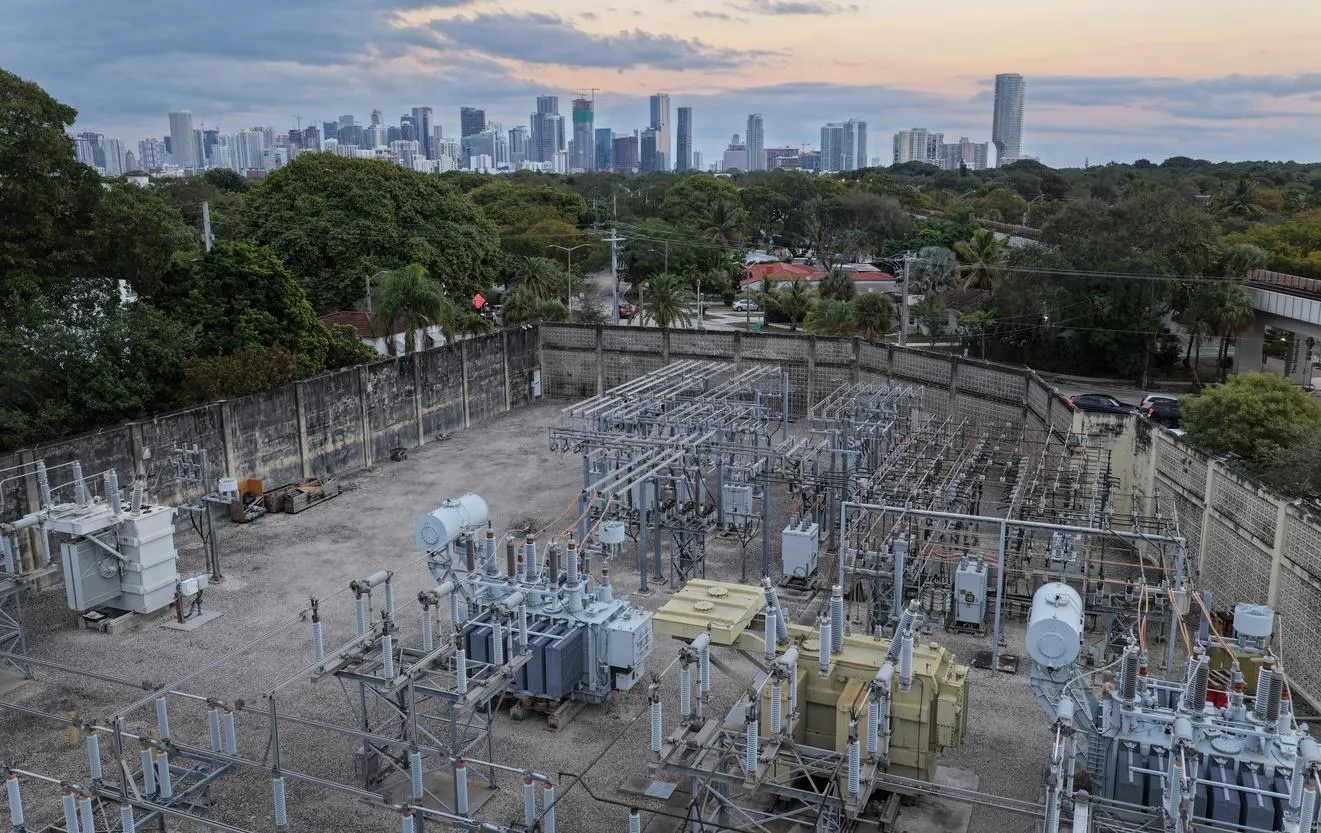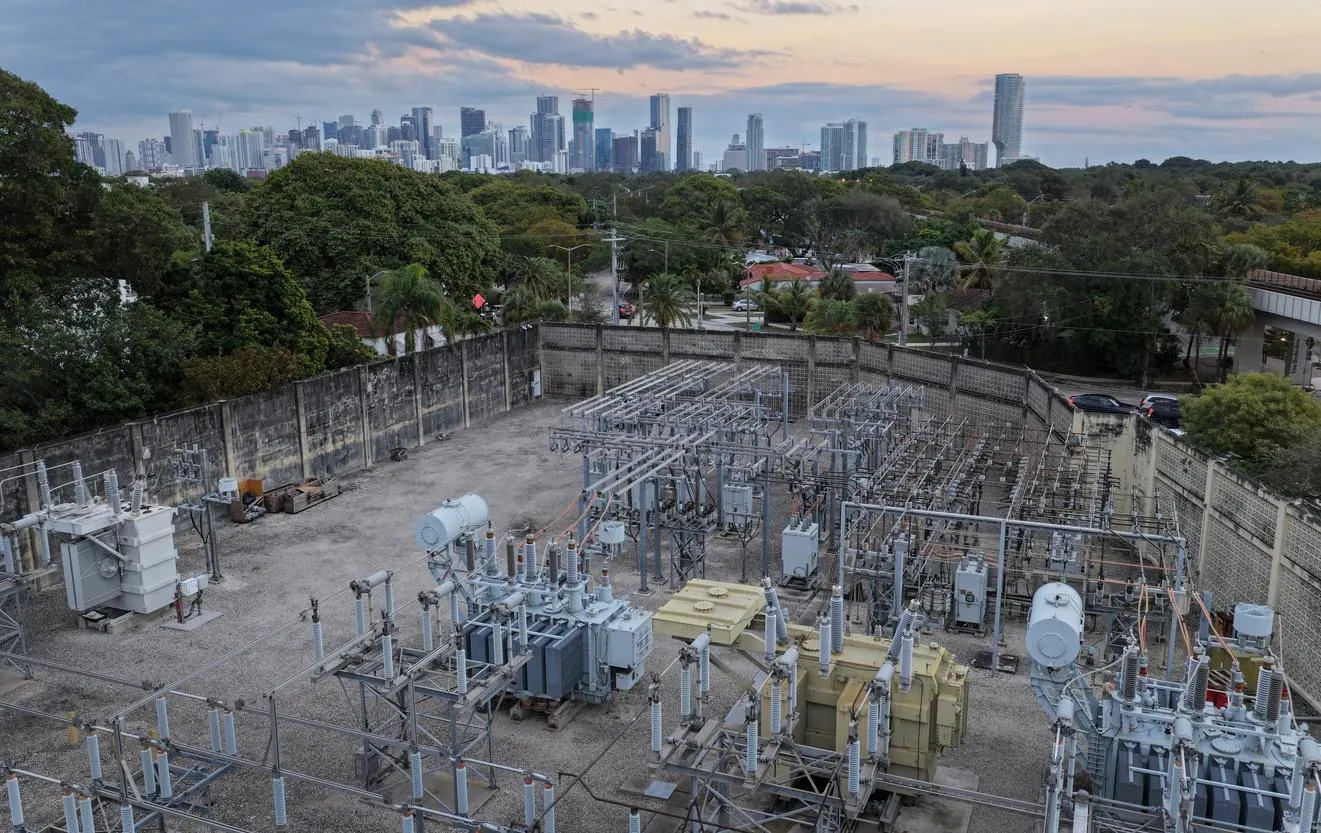
MIAMI, FLORIDA - JANUARY 14: In an aerial view, high voltage power lines run through a sub-station along the electrical power grid on January 14, 2026 in Miami, Florida. U.S. President Donald Trump announced that AI tech companies need to ‘pay their own way’ when it comes to their electricity consumption so that Americans don't 'pick up the tab' for their data centers. (Photo by Joe Raedle/Getty Images)Getty ImagesExtreme heat is turning electricity from a household service into emergency infrastructure.During a heat wave, air conditioners drive demand upward just as high temperatures can reduce the efficiency of power plants and transmission equipment. When wind generation falls, power plants go offline, or electricity imports become scarce, grid operators must decide which resources to activate, which customers can reduce consumption and, in the most serious emergencies, where power interruptions will occur.Those decisions are becoming more difficult as data centers place great new demands on regional grids. Hospitals, cooling centers, water systems, communications networks and households with electricity-dependent medical equipment also require reliable power.The central question is no longer simply whether America has enough electricity. It is who receives priority when it does not.Heat Is Changing Grid OperationsIn late July, the Department of Energy issued an emergency order authorizing the Southwest Power Pool to deploy idle and backup generation across a 17-state region serving approximately 20 million people. Extreme heat, power plant outages, reduced wind production, and limited electricity imports had pushed the grid toward emergency conditions.The order allowed backup generation to operate as a last resort before rotating outages. It also permitted the grid operator to call on backup resources at data centers and other large commercial and industrial facilities.MORE FOR YOUTexas offers a preview of how this may work more routinely. After setting a new seasonal electricity-demand record, the state approved standards requiring large data centers to disconnect in a controlled manner during certain grid disturbances. An Arizona demonstration also showed that an artificial-intelligence data center could reduce consumption by 25 percent for three hours during a simulated peak event.These examples suggest that data centers can serve as flexible grid resources rather than operate only as fixed demands. But that distinction should depend on what a facility actually does. A data center supporting emergency communications, hospital records or water controls serves a different public function from one running commercial computing tasks that can be delayed.Treating every digital workload as equally essential would place private computing demand on the same level as life-sustaining public services.Reliability Depends On More Than SupplyUtilities traditionally planned around a limited number of peak-demand hours. Longer heat waves now require enough generation, transmission and reserve capacity to operate under stress for several consecutive days.“There isn’t one specific resource that’s coming up and saving the day,” Aidan Tuohy of the Electric Power Research Institute told Axios. Reliability depends on how generation, storage, transmission and demand management work together.Weather risks also differ by region. A multiyear study of U.S. outages found that California’s most severe disruptions were associated with high heat combined with strong winds. In Texas, high heat followed by heavy precipitation produced the greatest stress.The researchers found that an outage lasting at least eight hours was nearly 52 times more likely when unusual heat, severe precipitation, and tropical-storm winds occurred together than on days without those compound conditions.This matters because grid emergencies rarely affect electricity alone. FEMA classifies energy, communications, food, water, shelter, and health and medical services as interconnected community lifelines. A power interruption can disable pumps, cellular equipment, refrigeration, traffic controls, and medical devices at the same time.Broadband and cellular service therefore function as resilience infrastructure during extreme heat. People need connectivity to receive warnings, locate cooling centers, request transportation, use telehealth services, and check on family members. Communications facilities may deserve priority, but operators should still distinguish genuinely critical functions from workloads that can be shifted to another place or time.Backup Power Creates A Second RiskDirecting data centers to use onsite generation can quickly reduce grid demand. It can also transfer environmental costs to nearby communities.Many large facilities use stationary engines or combustion turbines for backup power. These sources are regulated under the Clean Air Act because they produce air pollutants. Older diesel generators can be particularly polluting.That creates a difficult tradeoff. Running backup generators may help prevent a regional blackout, but concentrated generator use during a heat emergency can worsen neighborhood air quality when residents already face elevated health risks. Communities located near industrial facilities may shoulder the pollution burden while receiving few of the facility’s economic benefits.Grid planners should prefer batteries, cleaner generation and load reduction before extended diesel operation. Emergency orders should also require public reporting of when backup generators operate, for how long and with what estimated emissions.A Household Outage Is Not A Minor CurtailmentFor some customers, electricity loss is inconvenient. For others, it is life-threatening. Millions of Medicare beneficiaries rely on electricity-dependent medical equipment or essential health services, according to the HHS emPOWER program. Oxygen concentrators, ventilators, powered mobility equipment and home dialysis systems cannot simply wait for the grid to recover.Extreme heat deepens this vulnerability. People in poorly insulated housing, renters who cannot install improvements, and households that cannot afford continuous air conditioning face greater danger before an outage even begins. A cooling center also offers little protection if someone lacks transportation or cannot receive an alert telling them it is open.Long-term heat policy must therefore reduce demand as well as increase supply. A 2026 study of 2,265 cities found that reflective surfaces, vegetation and reductions in human-generated heat could reduce dangerous heat hours in high-risk regions. The combined measures produced much greater reductions at night than during peak daytime heat, showing that cities need strategies tailored to local climate and time of day.Electricity Triage Needs Public RulesAmerica is already practicing electricity triage. Emergency orders, demand-response agreements and controlled outages determine who reduces consumption and who remains powered. Those rules should become more transparent before the next crisis.Grid operators and regulators should:Rank loads by their consequences for human safety and community functioning.Require large flexible users to participate in demand-response programs.Protect medically vulnerable households from disconnection and prioritize restoration.Build clean microgrids for cooling centers, water systems, clinics and communications facilities.Require data centers to identify which workloads are essential and which can be shifted.Include local air-quality effects when emergency backup generation is authorized.Extreme heat makes electricity allocation a public-health and equity decision, not only an engineering calculation. When the grid is strained, the governing principle should be clear: protect life-sustaining services first, shift flexible demand next, and make the burdens of emergency operation visible.
When The Grid Is Strained, Who Gets Power And Who Gets Shut Out?
Extreme heat is turning electricity from a utility into an emergency infrastructure. Grid operators will have to make choices that aren't always best for communities.
1,093 words~5 min read