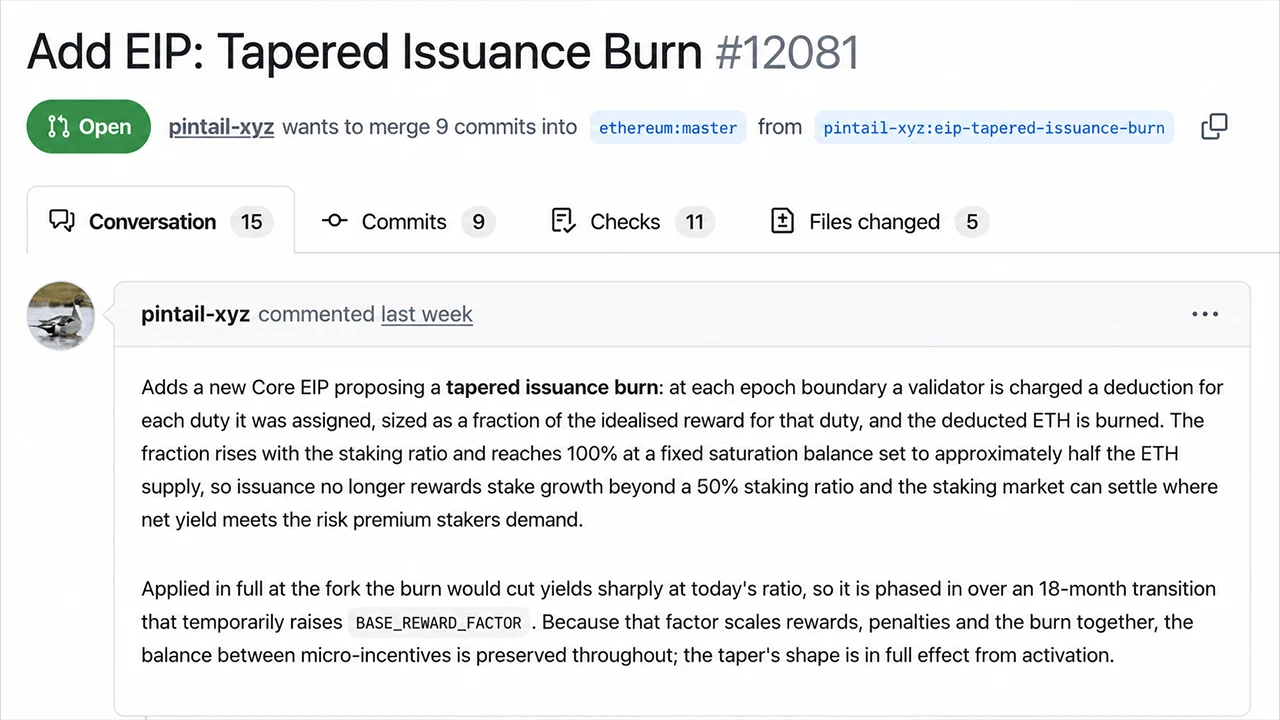
Stani Kulechov, the founder of Aave, has come out swinging against one of Ethereum’s newest and most contentious proposals. EIP-8361, dubbed the “Tapered Issuance Burn,” landed on August 4 and immediately drew fire from corners of the ecosystem that rely on predictable staking economics to function.
Kulechov’s argument is straightforward: changing the rules on validator rewards introduces the kind of unpredictability that makes institutional money nervous and could undermine the borrowing strategies that power platforms like Aave.
What EIP-8361 actually proposes
The proposal, crafted by Ethereum Foundation researchers Jérôme de Tychey and Justin Drake, introduces a mechanism that would gradually burn an increasing share of consensus layer validator rewards as Ethereum’s staking ratio climbs. The endgame is aggressive: 100% burn, meaning zero net issuance from staking, once total staked ETH reaches roughly 50% of total supply, or approximately 60.25 million ETH.
Right now, Ethereum’s staking ratio sits at about 34.4%, which translates to around 41.6 million ETH locked up by validators. That number has been steadily climbing. Projections suggest it could blow past 55% by early 2028 if current incentive structures stay in place.