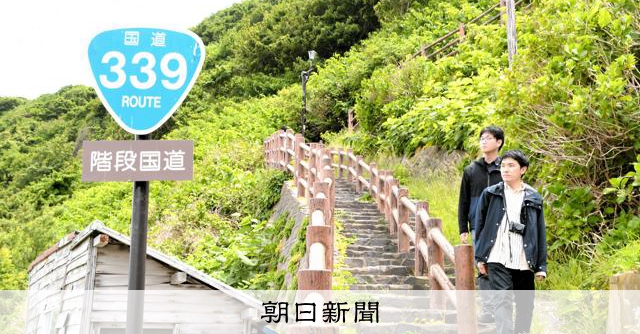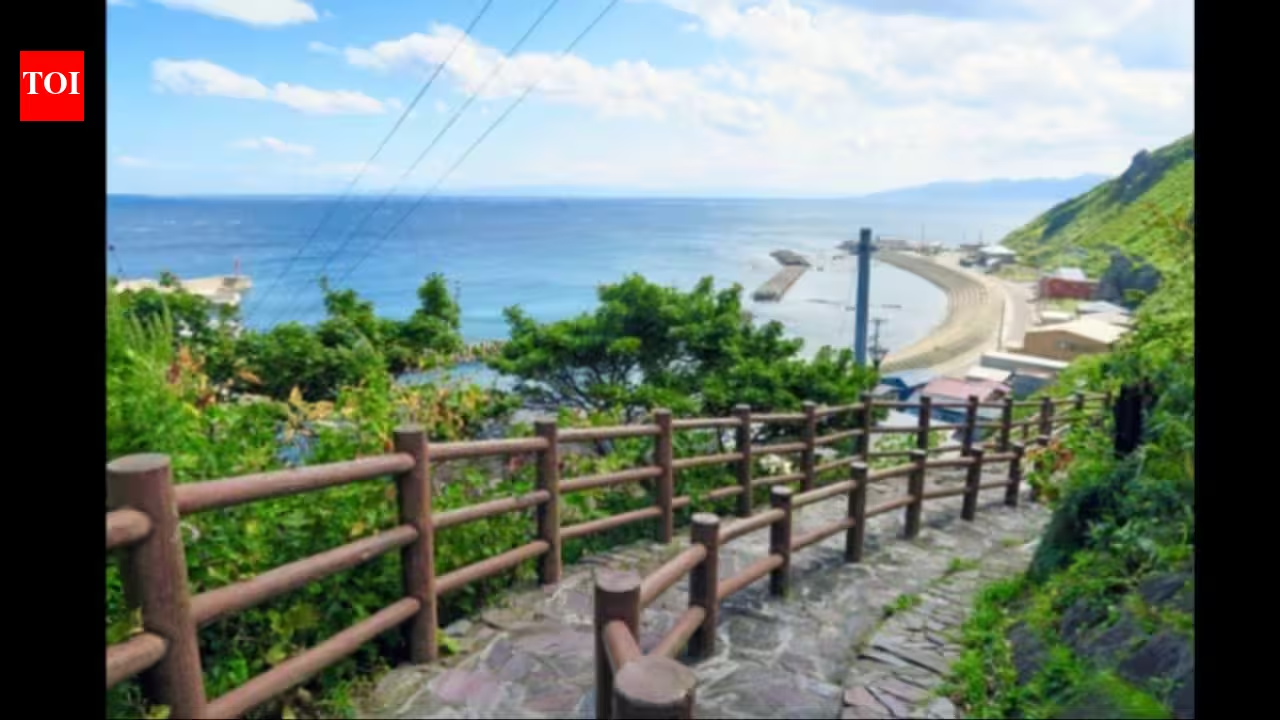
PC: Sotogahama Town official tourism officeRoads are usually designed with a single purpose: to carry vehicles from one place to another. Japan's National Route 339 breaks that expectation in a way few transport routes anywhere else do. Near Cape Tappi in Aomori Prefecture, the highway simply stops being a road. Instead of asphalt suitable for cars, visitors are met by a long stone staircase climbing the hillside towards the northern coastline. The unusual section has become one of Japan's most curious transport landmarks, where an officially designated national highway can only be travelled on foot, offering a reminder that geography sometimes shapes infrastructure in unexpected ways.Why Japan's National Route 339 becomes a 362-step staircase highwayJapan's National Route 339 stretches across Aomori Prefecture like any other national highway for most of its journey. The surprise comes at its northern end near Cape Tappi, where a 388.2-metre section consists entirely of 362 stone steps.Rather than continuing as a conventional carriageway, this final stretch climbs the hillside towards the lighthouse overlooking the Tsugaru Strait. Cars, motorcycles and bicycles cannot use this part of the route, leaving pedestrians as the only travellers able to complete the highway from end to end.According to Japan Today, the staircase became part of National Route 339 after the road received national highway status in 1975. While stories have circulated suggesting the staircase was included because officials never inspected the route closely, that explanation remains a popular local anecdote rather than an officially documented reason.The history behind Japan's National Route 339 staircase highwayThe staircase itself existed before it gained national highway status. Residents, assisted by the Japan Self-Defense Forces, originally constructed the steps. Following its designation as part of National Route 339, government authorities maintained the route and installed highway signs despite the absence of vehicle access.Finding the staircase is part of the experience. Visitors leave the standard highway, follow a narrow pedestrian path through a residential area and eventually reach the stone staircase. A central handrail divides the climb into two sides, creating what looks almost like separate pedestrian lanes.Tsugaru Strait views make Japan's staircase highway worth the climbThe climb is more than simply an unusual transport curiosity. The staircase rises around 70 metres in elevation, gradually revealing wider views across the Tsugaru Strait as visitors make their way uphill.Partway along the route, the gradient eases before continuing towards the upper section. The surrounding greenery contrasts with the rocky coastline, and higher ground offers clear views towards the sea separating Honshu from Hokkaido. According to the Sotogahama Town official tourism office, the staircase passes through Cape Tappi, an area recognised for several attractions including Tappisaki Lighthouse, one of Japan's 50 selected beautiful lighthouses, and the nearby Seikan Tunnel Memorial Museum, which explains the construction of the undersea rail tunnel linking Japan's two largest islands.Cape Tappi's famous Tsugaru Strait song monument is a must-visit attractionOne of the more unusual features waiting near the end of the climb is a monument dedicated to the famous enka song Tsugaru Kaikyo Fuyugeshiki ("Tsugaru Strait – Winter Scene"). Visitors are encouraged to press the monument's distinctive red button. Doing so plays the song while overlooking the strait, turning a sightseeing stop into an interactive experience that has become closely associated with Cape Tappi.The cape is also home to several literary and historical monuments, including tributes to novelist Osamu Dazai, senryu poet Santaro Kawakami and late Edo-period thinker Yoshida Shoin. Although the staircase remains a recognised section of Japan's national highway network throughout the year, weather affects access.Heavy winter snowfall closes the staircase, making seasonal checks advisable before planning a visit. During the warmer months, however, the route attracts travellers interested in seeing one of Japan's most unusual pieces of transport infrastructure, where a national highway finishes not with another stretch of road but with hundreds of steps leading towards the country's northern coastline.
Japan's National Route 339 becomes a 362-step staircase near Cape Tappi, making it the country's only pedestrian-only national highway
Roads are usually designed with a single purpose: to carry vehicles from one place to another. Japan's National Route 339 breaks that expectation in a way few transport routes anywhere else do.
640 words~3 min read