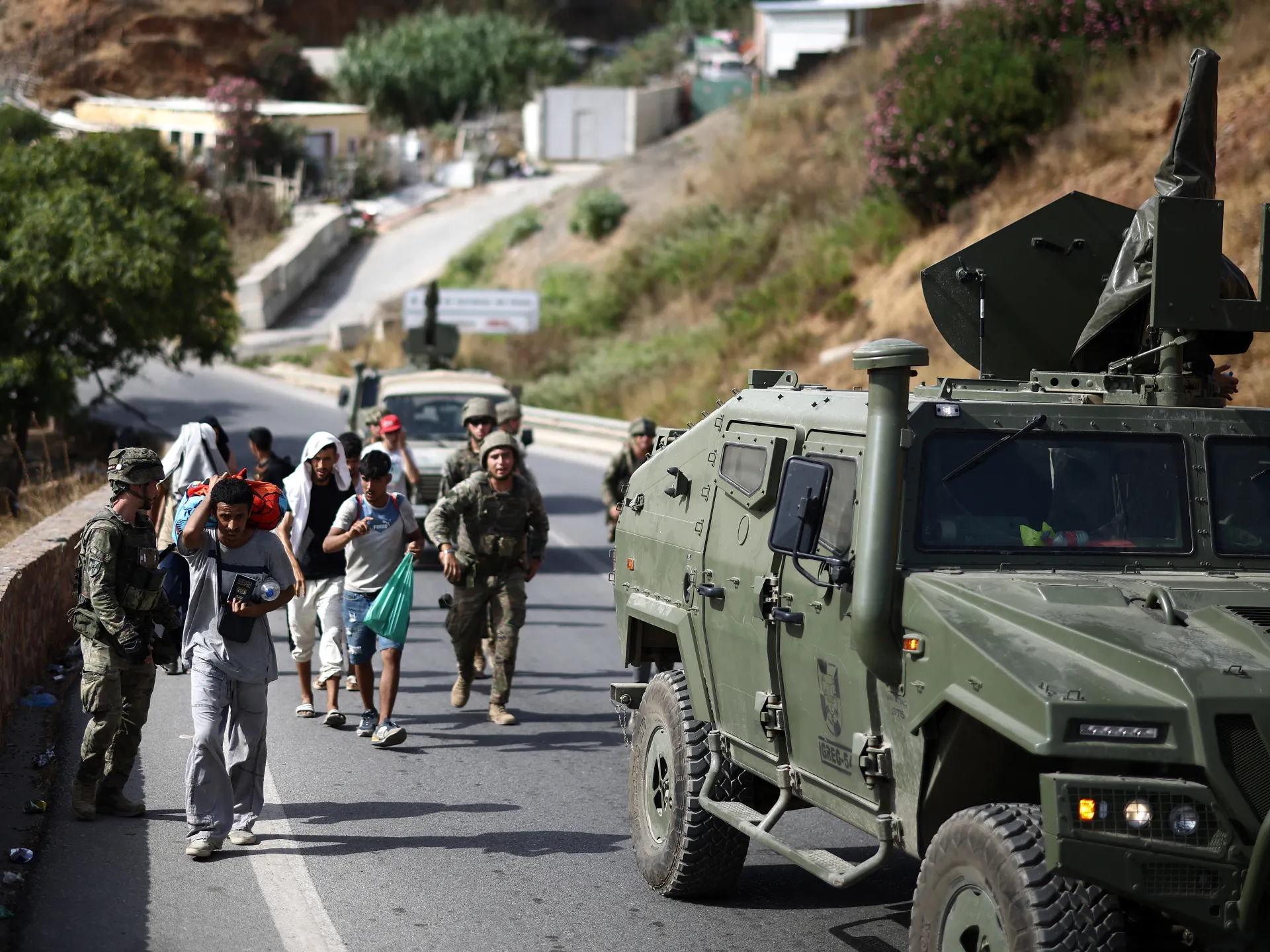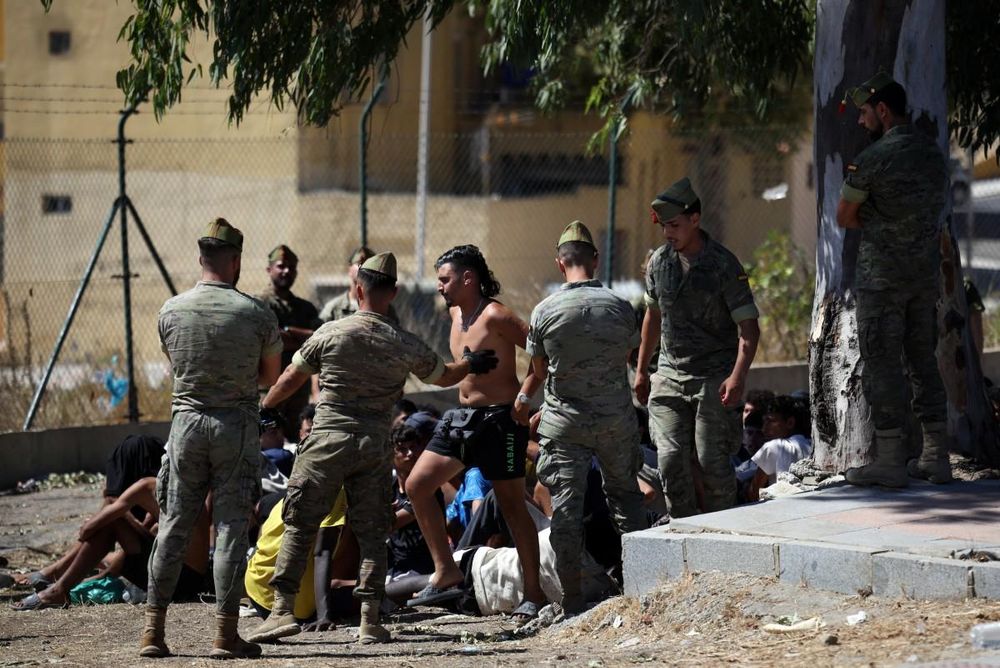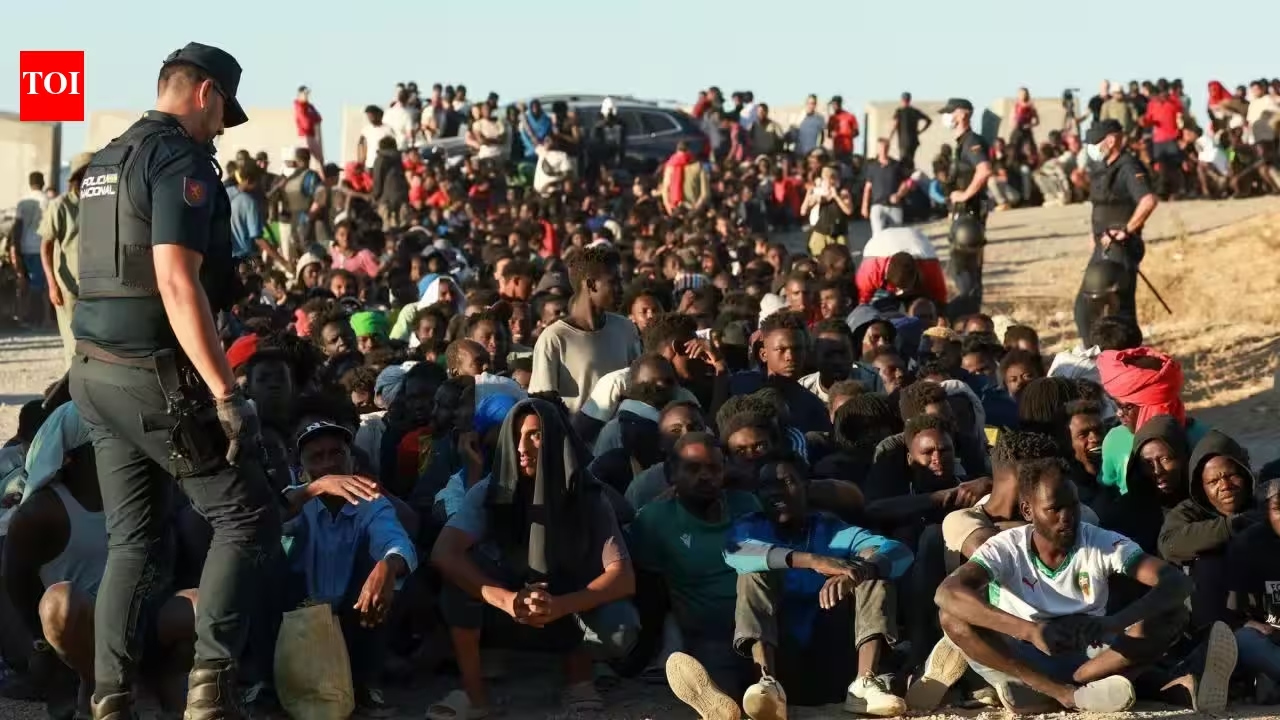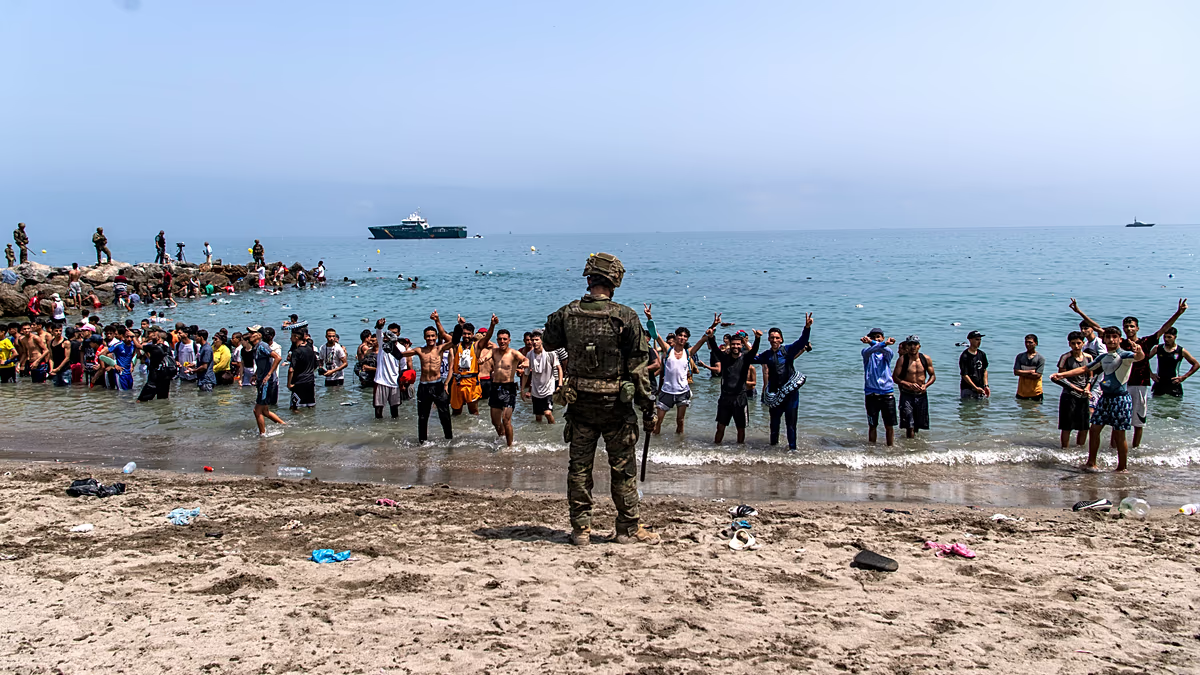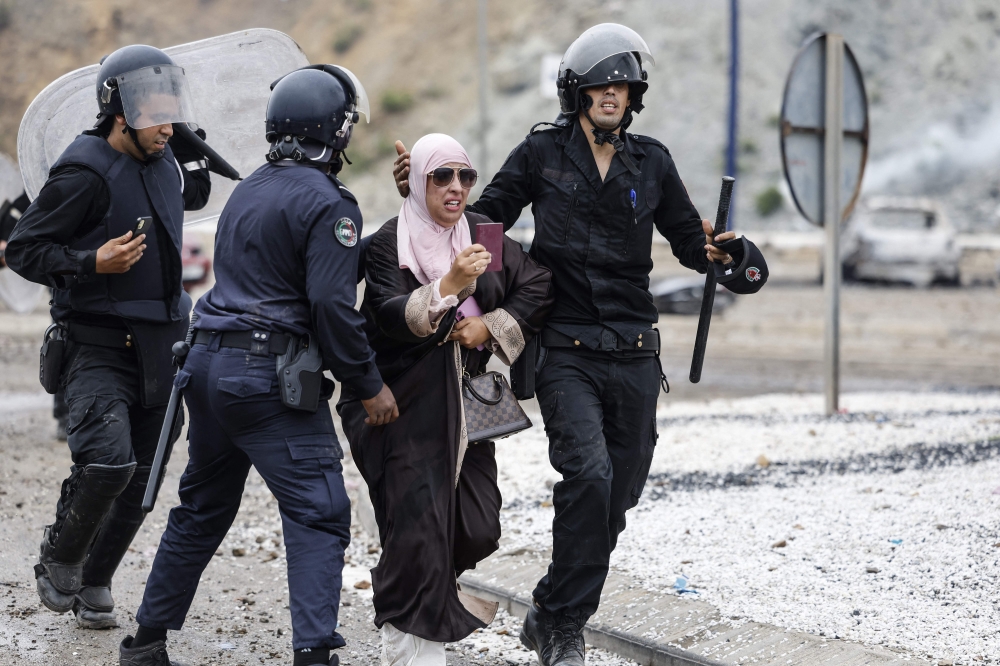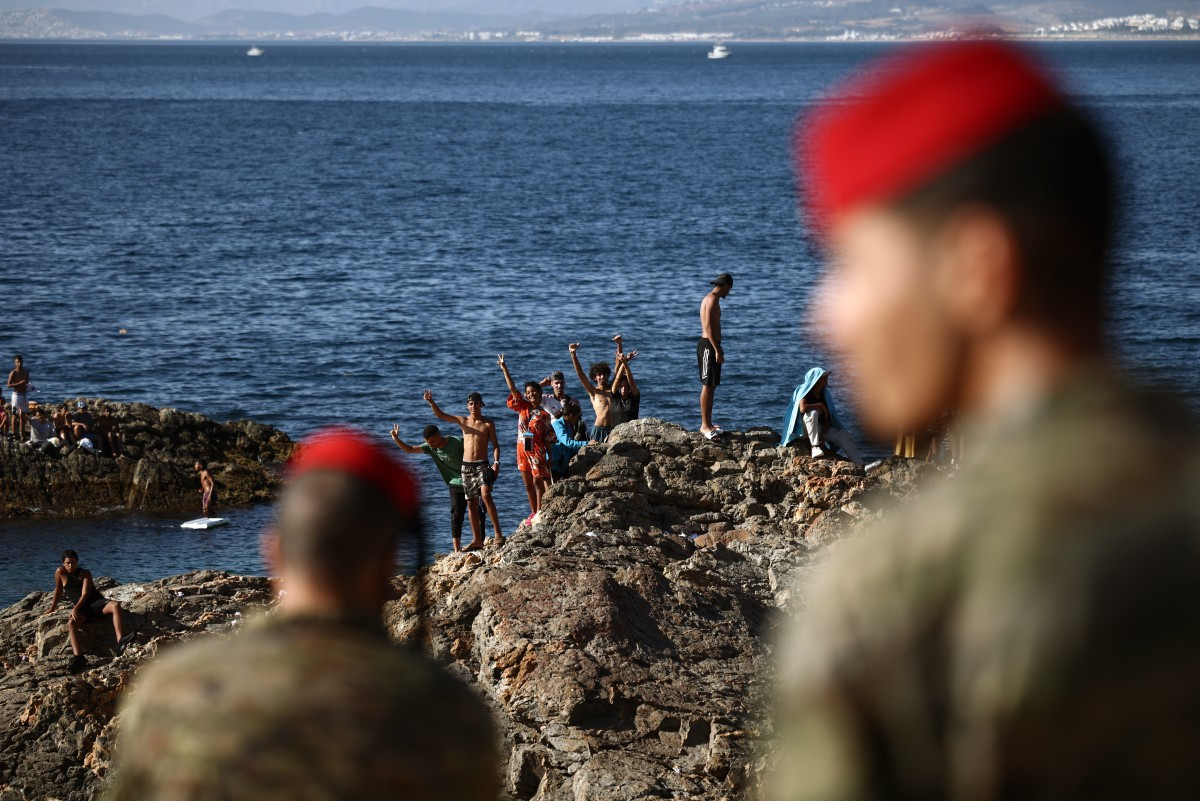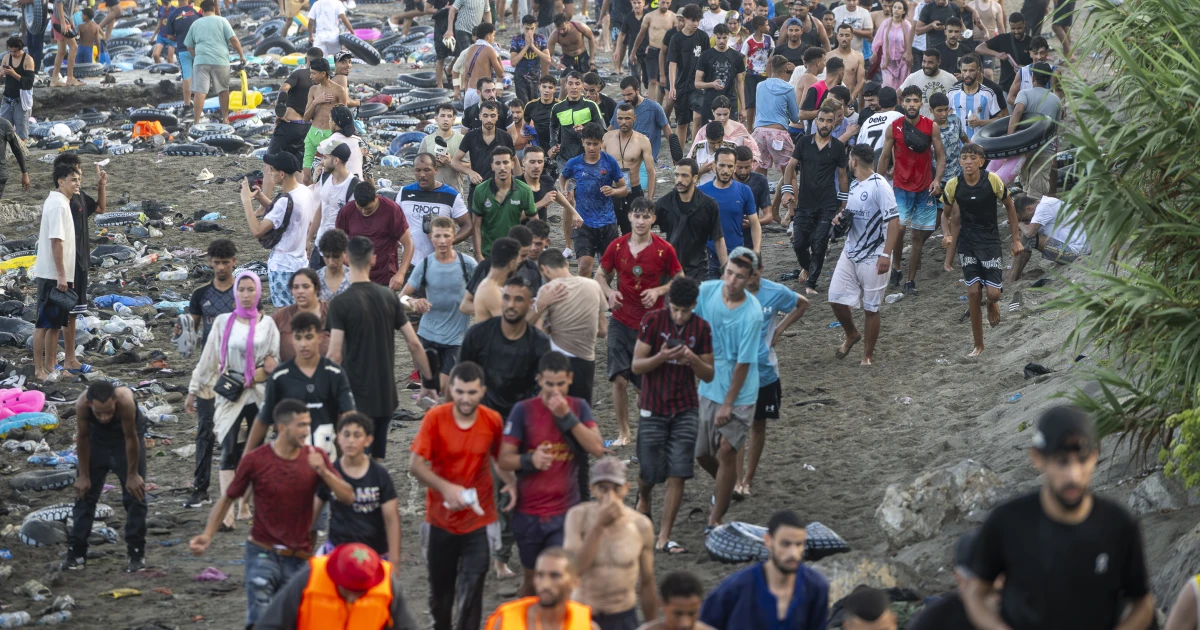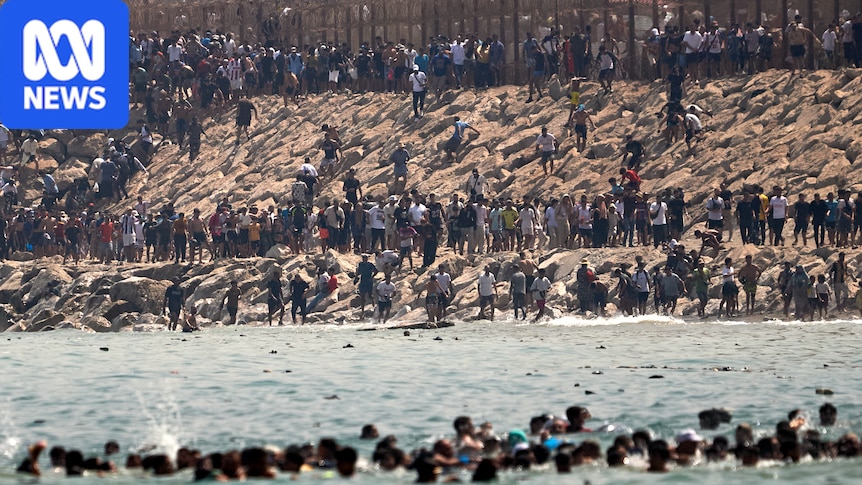
Young migrants collect water from showers at Trampolin Beach in Ceuta, Spain, on Tuesday, as around 2,500 migrants who crossed from Morocco remained in the enclave amid overwhelmed reception facilities. REDUAN/AFP
The recent wave of migrants into Spain's Ceuta has triggered humanitarian and border-control emergency measures by Spain and other European countries, while it has also laid bare a widening rift among European Union member states over migration policy, experts said.
The incident, which led to more than 80 deaths, has underscored how the politicization of the migration issue is eroding the bloc's capacity for coordinated action on this persistent challenge, with long-term solutions remaining elusive, they said.
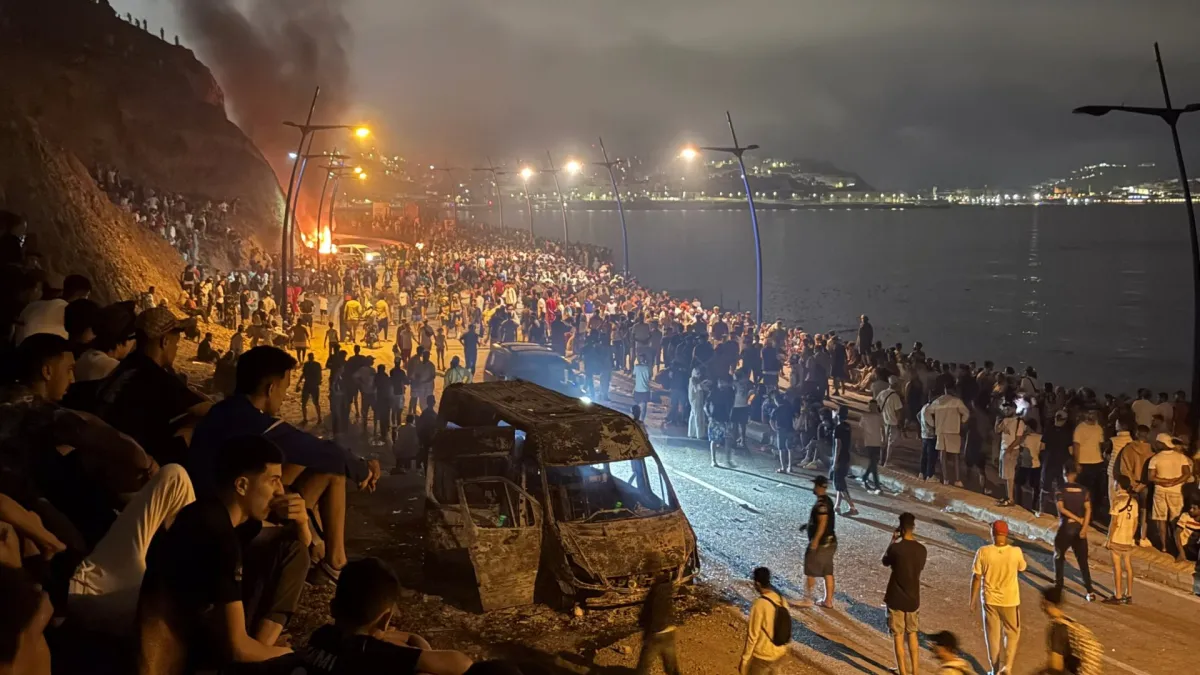
Ceuta, one of Spain's two enclaves on the North African coast, became the flashpoint when tens of thousands of migrants attempted to cross the border on July 30, overwhelming local border control agencies.
While Spain quickly repatriated most arrivals, easing immediate pressure, Italy announced a one-month suspension of Schengen free movement rules with Spain after the migrant surge, even though the rules do not apply to Ceuta. And 22 of 27 EU countries backed a joint call for firmer action against illegal immigration, suggesting Spain's migration policies were part of the problem.