The Distributed Transaction Dilemma
When you build a modular monolith or a microservice architecture, your business logic spans across multiple distinct domains or external services. Consider an e-commerce platform processing a new order. The system must perform three distinct actions: reserve inventory, process a Stripe payment, and generate a shipping label. In a traditional monolith sharing a single database, this is trivial: you wrap all three operations in a single DB::transaction(). If the shipping label fails, the database automatically rolls back the inventory reservation.
But what happens when Inventory, Billing, and Shipping are isolated microservices, or rely on slow external APIs? You cannot wrap HTTP calls to Stripe and FedEx inside an ACID relational database transaction. If you reserve the inventory and charge the credit card, but the shipping service crashes, you have a massive data inconsistency. The customer was billed, but the item will never ship. This is the nightmare of Distributed Transactions.
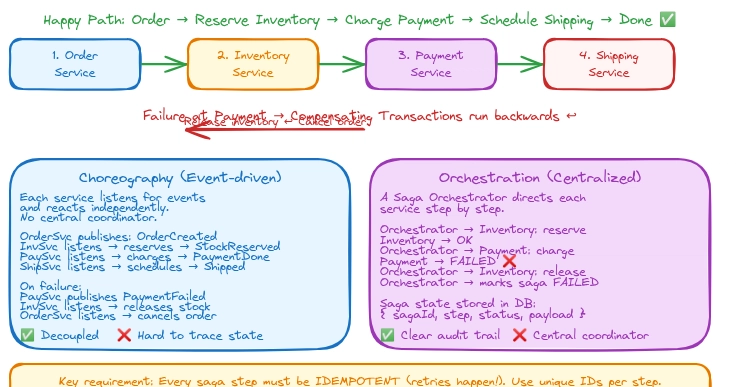
At Smart Tech Devs, we prevent distributed data corruption by implementing the Saga Pattern. A Saga is a sequence of local transactions. Each local transaction updates the database and publishes a message or event to trigger the next local transaction. Most importantly, if any local transaction fails, the Saga executes a series of Compensating Transactions that undo the changes made by the preceding steps.