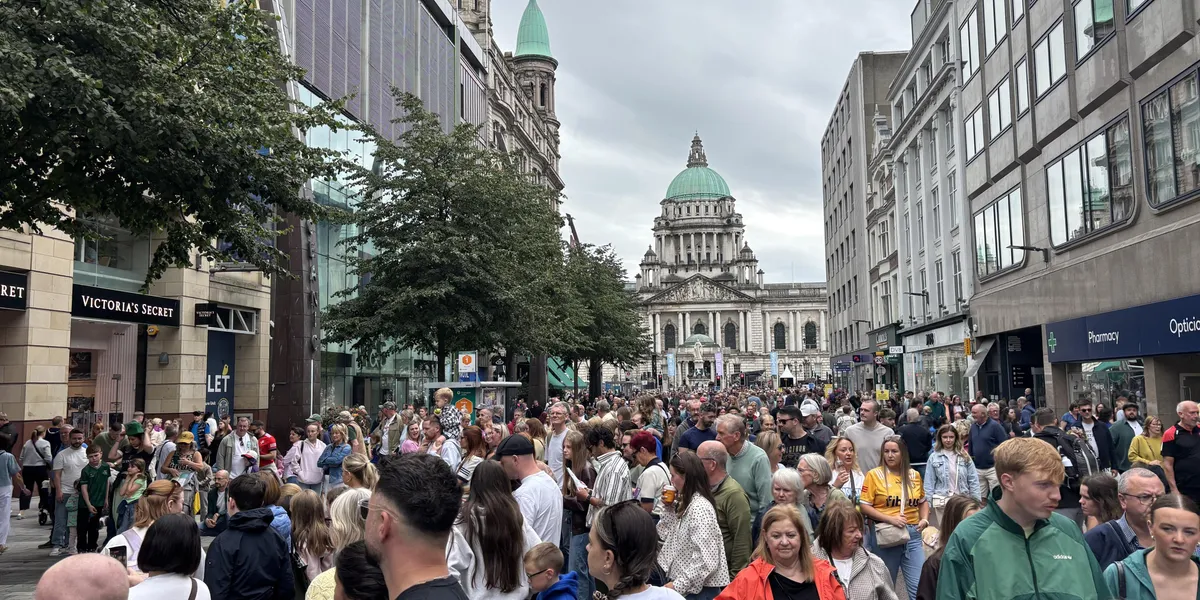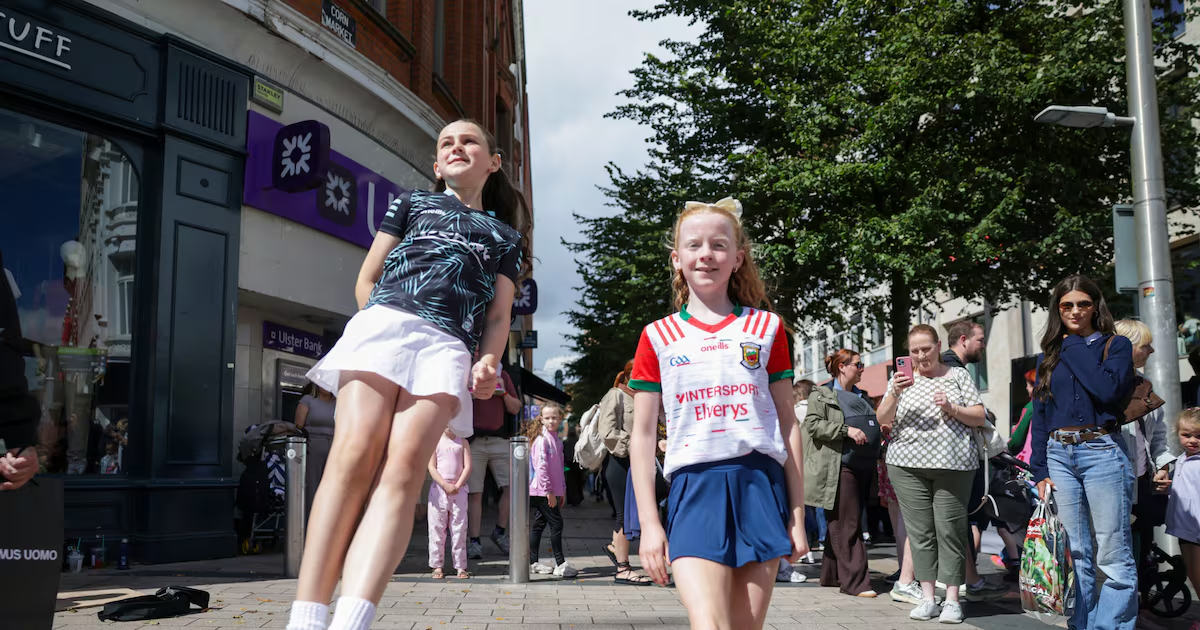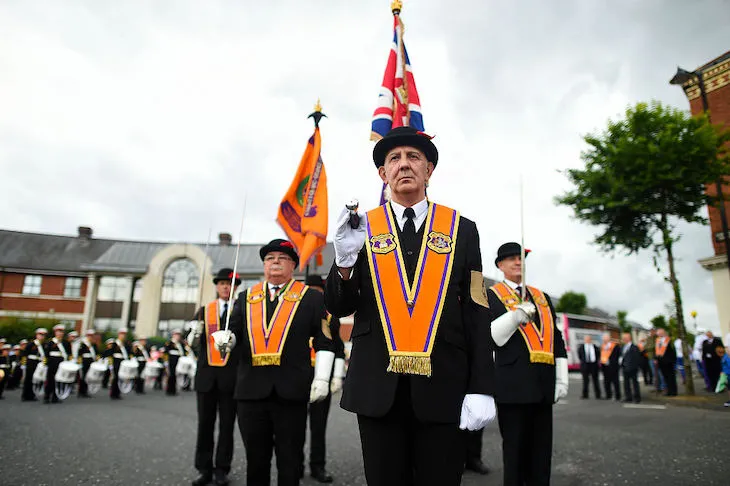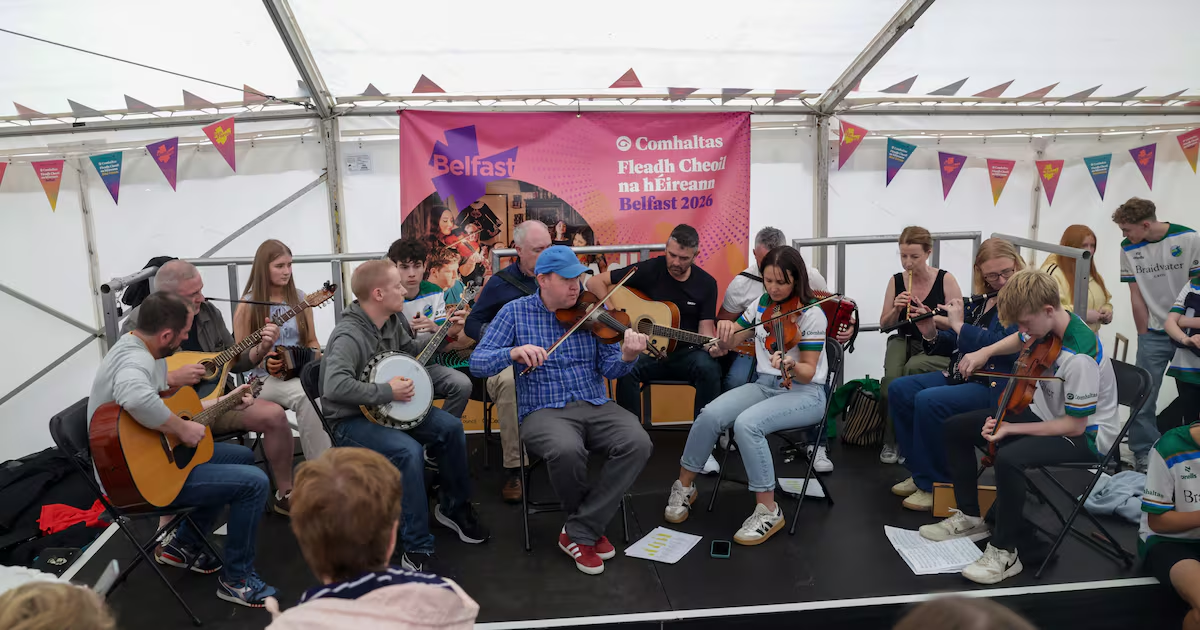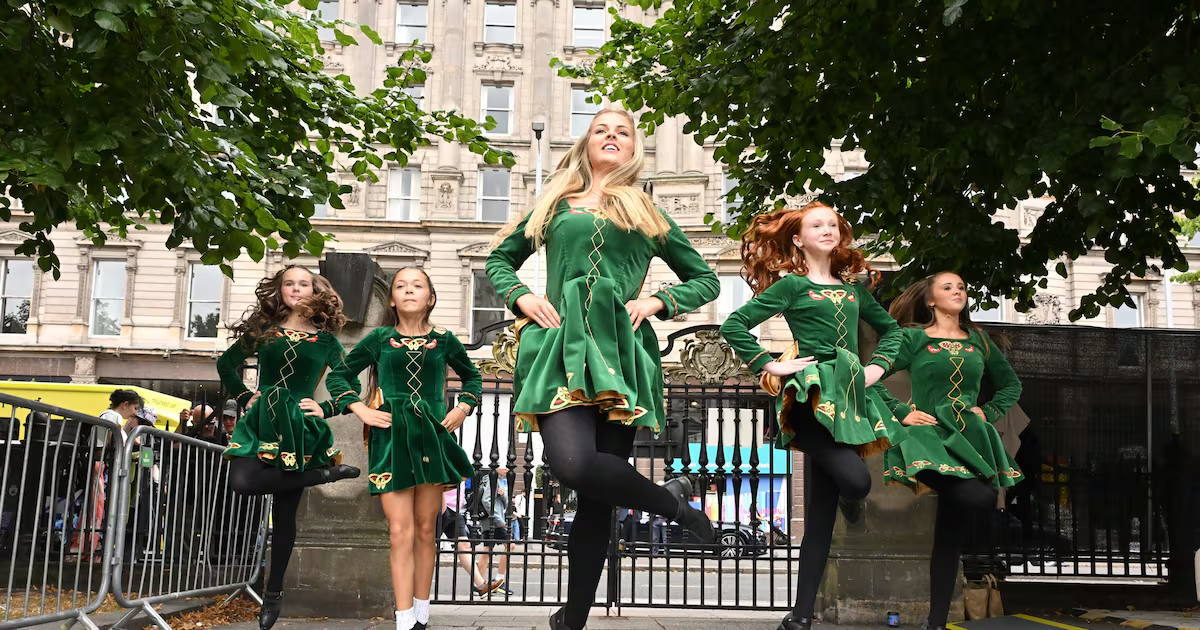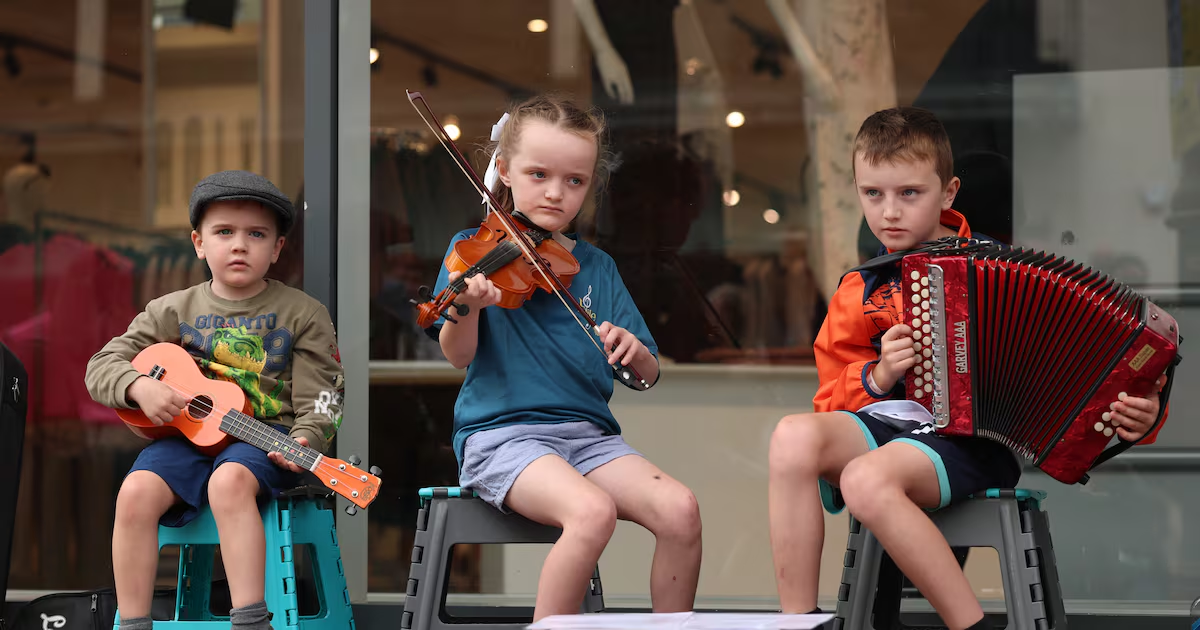
The Traditional Unionist Voice (TUV) is unhappy about the All-Ireland Fleadh taking place in Belfast this week for the first time. The party has questioned the cost and disruption of the event and complained about Tricolours being sold by a privately run Post Office branch in the city centre.But this has not proved typical of unionist opinion. The Fleadh has the backing of the Democratic Unionist Party (DUP) and the Ulster Unionist Party (UUP) at Belfast City Council, the principal host. Emma Little-Pengelly, the DUP Deputy First Minister, addressed the opening ceremony with the words “the Fleadh belongs to all of us who call this place home”. UUP leader Jon Burrows has attended events.Music and dance associated with the unionist community have been integrated into the festival programme, including participation by loyalist marching bands.A Fleadh fringe is being held in Bangor, the largest town in Northern Ireland with no nationalist elected representatives. Unionist councillors did oppose this for clashing with the Ulster Pipe Band championship, but reversed course when the bands said they had no objection.No census is being taken of the crowds in Belfast, but anecdotally it seems many unionists are among the throngs in the city centre. There is not even much discernible grumbling online.This is being widely reported as a pleasant surprise. It certainly was not inevitable. Some of the event’s success with people of all backgrounds must be due to the prosaic attraction of having the entire city centre cleaned up and pedestrianised for nine days. Belfast is suffering from all the same problems as other cities in the UK and Ireland. It feels almost miraculous to have squalor and dereliction replaced overnight with bustling, walkable streets. Delivering this has required the council to collaborate with Stormont’s notoriously hopeless Department for Infrastructure, which is responsible for all the streets and pavements in Northern Ireland, although cleansing remains the council’s job. One legacy of the Fleadh might be higher public expectations of what should be delivered all the time.Pleasant streets can only partly explain the numbers in the city centre. What unionist visitors are discovering is that the Fleadh is not repellingly “political”, as that term is applied in Northern Ireland. Culture is always political, of course, but the songs are not sectarian, the atmosphere is not partisan and the national symbolism is discrete. I noticed only one Tricolour in a whole afternoon, contrary to the TUV’s fears.Unionists are often presumed to be hostile to any manifestation of Irish culture, a view underscored by growing tensions over bilingual English and Irish signs.But signage arguments are primarily territorial, not cultural. Unionists have always maintained an interest in traditional Irish music and dancing, and this has always been evident at festivals in unionist-majority towns. Northern Ireland is so divided that many nationalists have not witnessed this – just as unionists have been oblivious to the Fleadh.Féile an Phobail, the West Belfast Festival, is also taking place this week, providing a well-timed illustration of the difference between the political and the non-political in Northern Ireland terms. Although some unionists do attend Féile, they will never flock to an event associated with Sinn Féin, where discussions and exhibitions take a republican perspective on the Troubles and a united Ireland.The contrast many cannot help drawing is between the Fleadh and the Twelfth of July. Efforts have been under way since 2007 to create a week of cultural activities around the Twelfth, heroically branded as “Orangefest”.This regularly features Irish traditional dance and music, included for outreach, to equate Irish and Scottish traditions and to shift the focus of celebrations away from atavistic parades.But the fundamentally partisan nature of Orangefest means it has about as much chance as Féile of attracting cross-community crowds.The Orange Order’s true success has been making the Twelfth easy for everyone else to ignore. An event that once brought Northern Ireland to a standstill has become an almost normal bank holiday, with few closed roads or shops. There are no remaining serious parade disputes – the past decade may have been the longest period without parade-related disturbances in the North in more than two centuries. Parallel efforts by councils and communities are gradually replacing July 11th bonfires with beacons and fairs. Social media can make the Twelfth seem more prominent than ever, but this is an illusion for those who want it or who want to be offended by it.Unionists can now be seen on social media asking why the Twelfth cannot generate an atmosphere more like the Fleadh. Some are blaming the council and Stormont for not providing enough support or the media for providing unbalanced coverage. Others put the blame closer to home. This reflection may never result in an Orange Fleadh, but it should produce some fresh thinking on what else may be possible.
Newton Emerson: Belfast Fleadh is not too political for unionists - unlike the Twelfth for nationalists
Some on social media ask why the July 12th celebrations cannot generate atmosphere more like the Fleadh
797 words~4 min read