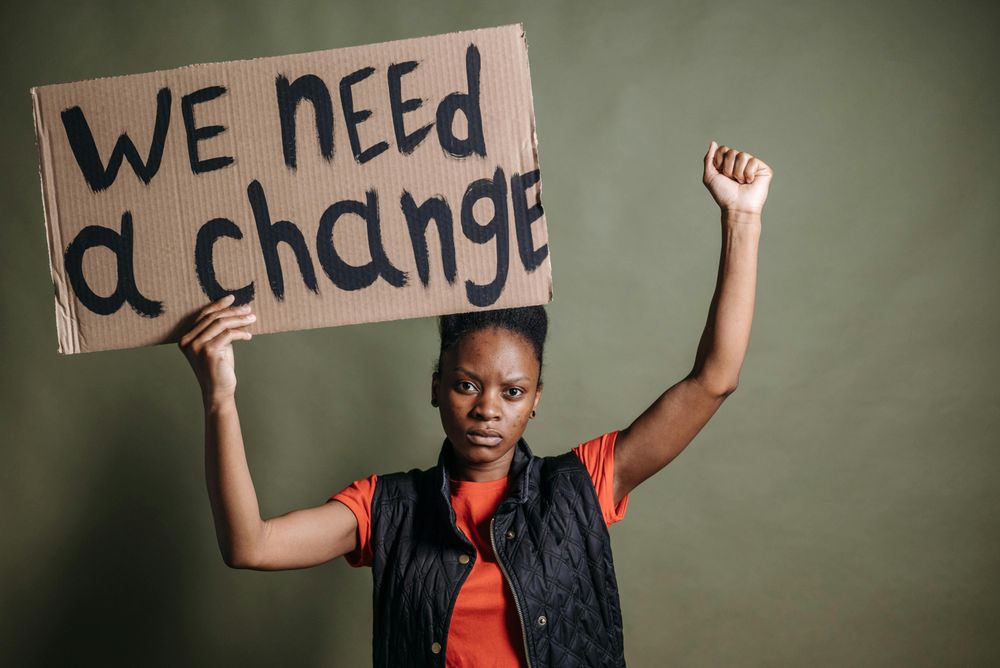
Opinion: For years, debate focused on the invisible barrier blocking women from top positions, but many must first overcome unequal care burdens, closed power networks, limited resources and harsher scrutinyAyelet Razin Bet Or|Every woman who announces that she is entering political life brings with her far more than another name on a party list. She brings another chance to change the face of a public sphere that for years was shaped primarily by men, according to their life experience, their priorities and the rules they themselves established.That is why the entry of new women into politics inspires genuine hope. Not because women are necessarily more moral, more professional or more deserving than men. Women are not a single bloc, and there is no automatic agreement among them on policy, security, the economy, religion and state or human rights.(Photo: shutterstock)The hope stems from the very expansion of the circle of participants in decision-making, from the possibility that voices, life experiences and perspectives that were missing around the table will begin to be given a place.For years, it was customary to speak of the “glass ceiling,” that invisible barrier preventing talented women from advancing to the most senior positions. But for many women, the ceiling is not even the first obstacle. Before they can collide with it, they must escape what is known as the “concrete floor.”The concrete floor is everything that makes it difficult for women to rise in the first place: an unequal division of responsibility for the home and family, closed male power networks, a lack of resources and connections, increased criticism of their appearance, age, voice and style, and the knowledge that every mistake they make may be perceived as proof that women are not suited for the role, while a man’s mistake is generally seen as the mistake of one individual.In politics, the concrete floor is especially rigid.That is why the very decision by women to enter the political system is a courageous step. But we must not settle for applauding the brave women who broke in. An equal society should not be based on exceptional women agreeing to pay an exceptional price. The goal must be to change the conditions themselves.Proper representation of women is first and foremost a matter of values. Women make up about half the public, and therefore their exclusion from centers of decision-making is not merely a women’s problem, it is a democratic flaw.A parliament, government, local council or public administration that does not reflect the society it serves cannot seriously claim that the entire public is represented around the table.But the significance is not only one of values. It is also highly practical. Those sitting in the room determine not only how problems will be solved, but which problems will be considered worthy of attention in the first place.When women are present in decision-making centers, issues that for years were defined as “private” or marginal can become public matters: personal safety, domestic violence, treatment for female and male victims, women’s health, wage and pension gaps, childcare frameworks, caregiving responsibilities and the integration of women into senior positions.Proper representation also affects the way decisions are made. A system composed of similar people, who came from the same social and professional networks and experienced a similar reality, may develop group blindness.Diversity is not decoration. It is a mechanism that broadens the range of questions being asked, highlights consequences that were not always taken into account and forces the system to contend with a more complex reality.The presence of women in politics also carries significance for the next generation. Girls and young women who see female leaders internalize that the public sphere belongs to them as well.Boys and young men learn that authority, leadership and expertise are not male traits. This is a profound change in the way a society imagines power and leadership.Ayelet Razin Bet OrHowever, the number of women is not the only measure. It is not enough to place women in unrealistic positions on party lists, present them at the forefront of a campaign or appoint them to roles without authority and resources.Proper representation is measured by genuine influence: their place on the party list, the portfolios they are given, membership in the Cabinet and key committees, the budgets under their authority and their ability to shape policy, not merely explain it to the public.Every woman who joins politics today cracks the concrete floor a little further. But the responsibility for continuing to dismantle it does not rest on her. It rests on the political parties, the media, state institutions and the public as a whole.The entry of more women is a reason for hope. Now that hope must be turned into a binding democratic standard.The writer is an attorney and an expert on advancing gender equality and combating gender-based violence, and formerly served as director-general of the Authority for the Advancement of the Status of Women
Before women hit the glass ceiling, they must escape the concrete floor
Opinion: For years, debate focused on the invisible barrier blocking women from top positions, but many must first overcome unequal care burdens, closed power networks, limited resources and harsher scrutiny
816 words~4 min read