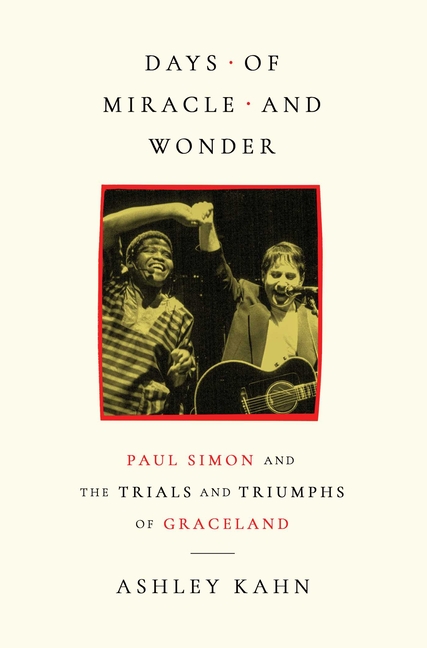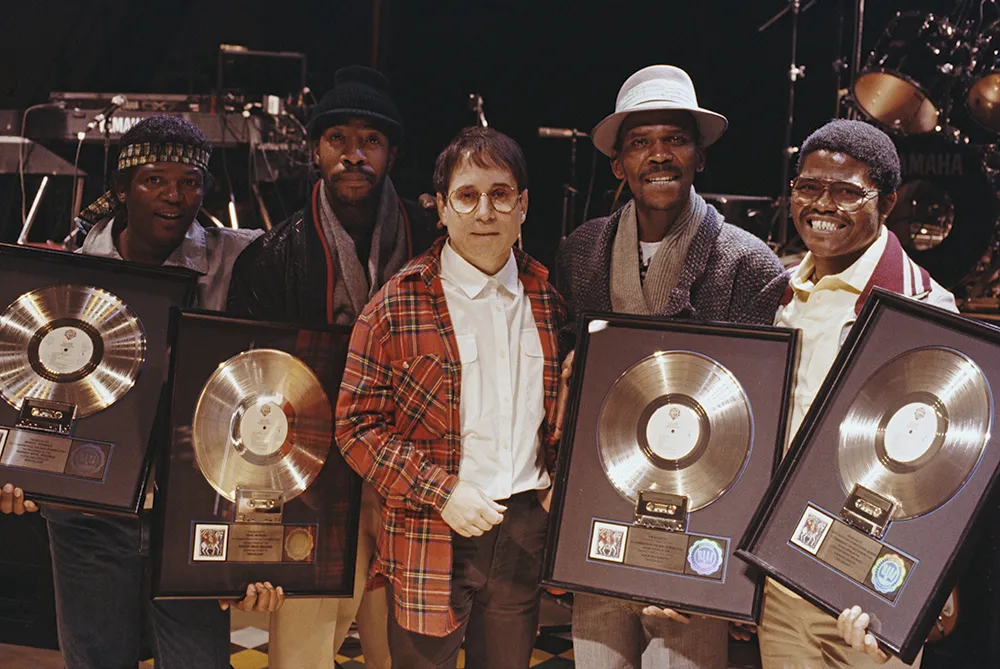
‘The story of Graceland’s origins,’ writes Ashley Kahn in his deep dive into Paul Simon’s multi-million-selling album, ‘is the story of a cassette: a bootleg tape.’ Entitled Accordion Jive Hits, Volume II, and containing a collection of decade-old Mbaqanga songs from the townships of black South Africa, it had been lent to Simon in 1984 by the Norwegian multi-instrumentalist Heidi Berg. She had come to know the musician through his friend and neighbour, Lorne Michaels, the creator of Saturday Night Live, and Simon had offered to produce her. She explained she needed the tape back, as it belonged to someone else, but that this was essentially what she had in mind for her next record – though there were many obstacles to working with musicians in apartheid-era South Africa.
Just four years earlier, the United Nations General Assembly had passed Resolution 35/206, requesting ‘all states to prevent all cultural, academic, sporting and other exchanges with South Africa’, and urging ‘writers, artists, musicians and other personalities’ to boycott the country. This boycott had the backing of the outlawed opposition party, the African National Congress, whose leader, Nelson Mandela, languished in prison on Robben Island. Many prominent western musicians, including Bruce Springsteen and Bono, made their support public, rallying together under the banner ‘Artists Against Apartheid’ and releasing the charity single, Sun City. It was a kind of musical rebuke to Queen and Rod Stewart for playing that majority-white holiday resort in the neighbouring ‘homeland’ of Bophuthatswana.