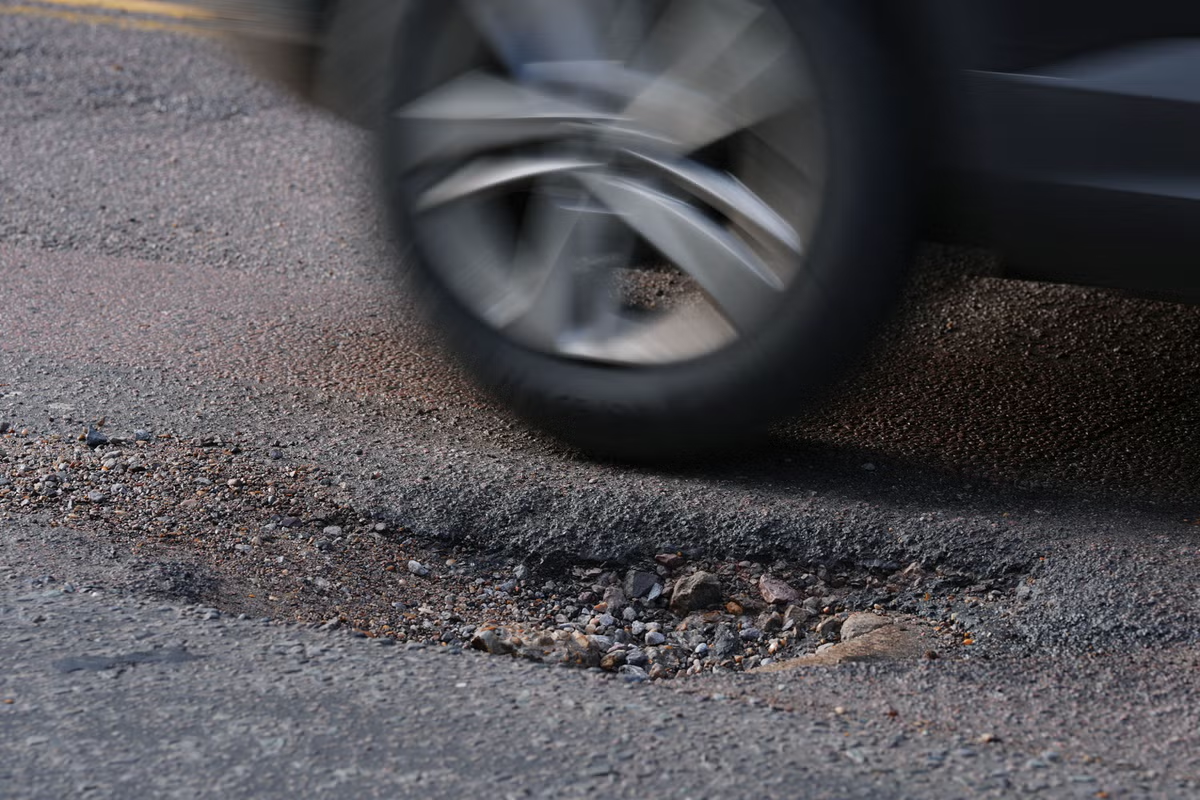
French carmaker Citroen has called for greater use of artificial intelligence to tackle Britain's escalating pothole crisis.The manufacturer says AI should be deployed nationwide to monitor and report road defects, while utility companies should face tougher oversight to ensure roads are properly reinstated after excavation works.Citroen estimates that repairing Britain's pothole-riddled roads could unlock savings of at least £5.5billion by reducing accidents and improving efficiency.Latest Department for Transport data suggests road defects contribute to 6 per cent of fatal or serious collisions. With crashes costing society an estimated £54.7billion annually, eliminating pothole-related accidents could save around £3.3billion.The Chartered Institution of Highways & Transportation also believes introducing longer-term funding programmes could save local highways authorities a further £2.2billion. French carmaker Citroen has published a manifesto calling for greater use of artificial intelligence to tackle Britain's escalating pothole crisisAs part of its newly launched Better Roads Manifesto, Citroen has outlined six recommendations for local highways authorities and councils aimed at improving road conditions.The proposals were developed with the support of Dave Gaster, a qualified highways engineer with more than 25 years of local government experience who has been researching pothole reporting for the best part of a decade.Among the recommendations is the use of AI-powered technology to improve road inspections, reduce costs, generate better-quality data and enable more targeted repairs.Citroen also wants local highways authorities to be given stronger powers to ensure utility firms properly repair roads after carrying out works, alongside the introduction of a rolling five-year government funding settlement.The company is also calling for a national road repair standard to ensure consistency in repair quality and enable authorities to be measured against common benchmarks.Other recommendations include greater use of volunteers to help identify road defects and a more comprehensive road-cleaning strategy to remove potentially dangerous debris.Greg Taylor, managing director of Citroen UK, said: 'Simply calling for more funding isn't realistic, so we are suggesting practical, cost-effective and logical steps that national government, local highways authorities and the public can support to improve the quality of roads across Britain.' The proposals were developed with the support of Dave Gaster, a qualified highways engineer with more than 25 years of local government experience who has been researching pothole reporting for the best part of a decade Citroen wants local highways authorities to be given stronger powers to ensure utility firms properly repair roads after carrying out works The study also found that only a quarter of local highways authorities sweep roads at least once every three months to remove potentially hazardous debris, while some do not carry out routine sweeping at allHow potholes are affecting motoristsCitroen's report found that more than a quarter of drivers (28 per cent) have lost control of their vehicle while avoiding a pothole, as a result of debris from a pothole, or a combination of both.The research also suggests motorists are prepared to help fund improvements. More than half (56 per cent) said they would pay higher council tax for better roads, while 49 per cent would support an increase in Vehicle Excise Duty – also known as car tax – if all proceeds were ringfenced for road maintenance.A Freedom of Information request submitted to 154 local highways authorities exposed how they identify, assess and repair potholes, as well as how often roads are cleaned.One of the most worrying findings from the investigation is that there is no national definition of what constitutes a pothole – as was revealed in a Channel 4 Dispatches report last April with information provided by the RAC.Some authorities classify a pothole as being at least 40mm deep, while others require a defect to be 80mm deep before action is taken. Elsewhere, some define potholes by width, ranging from 75mm to as much as 300mm.
Use AI to solve Britain's £5.5billion pothole crisis, says Citroen
The manufacturer says AI should be deployed nationwide to monitor and report road defects, while utility companies should face tougher oversight to ensure roads are properly reinstated after works.
TL;DRAI
Citroen proposes nationwide AI monitoring for potholes, estimating £5.5bn savings via reduced accidents and repair efficiency. Exposes governance gap: no national standard, only 50% of authorities geo-locate defects, revealing infrastructure automation opportunity.
1,011 words~5 min read