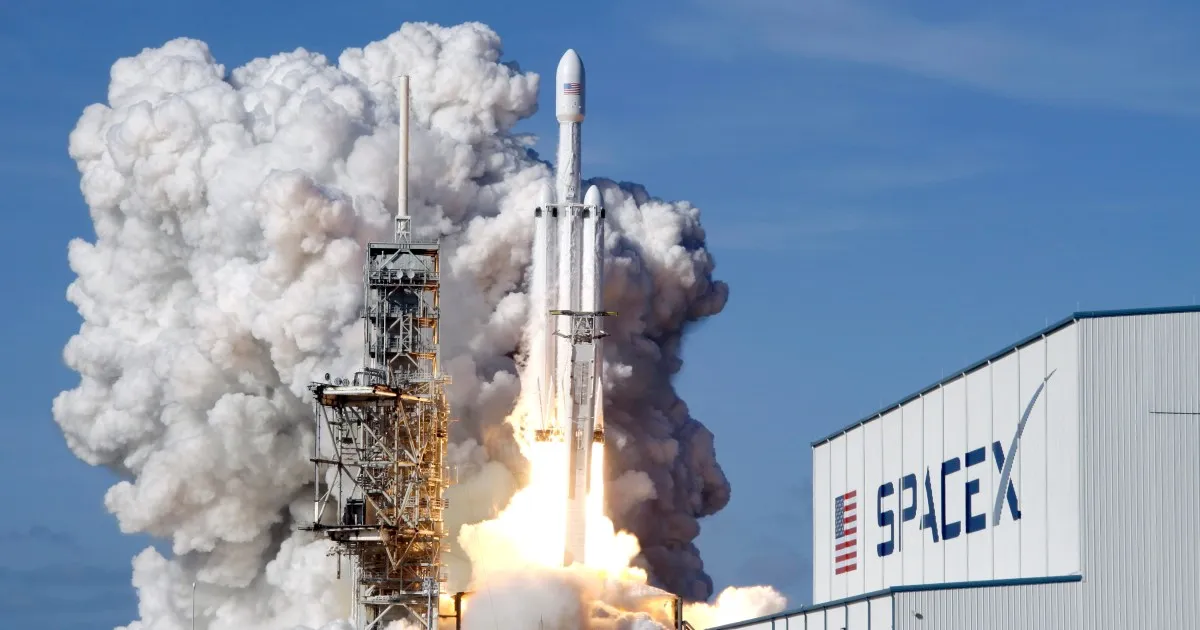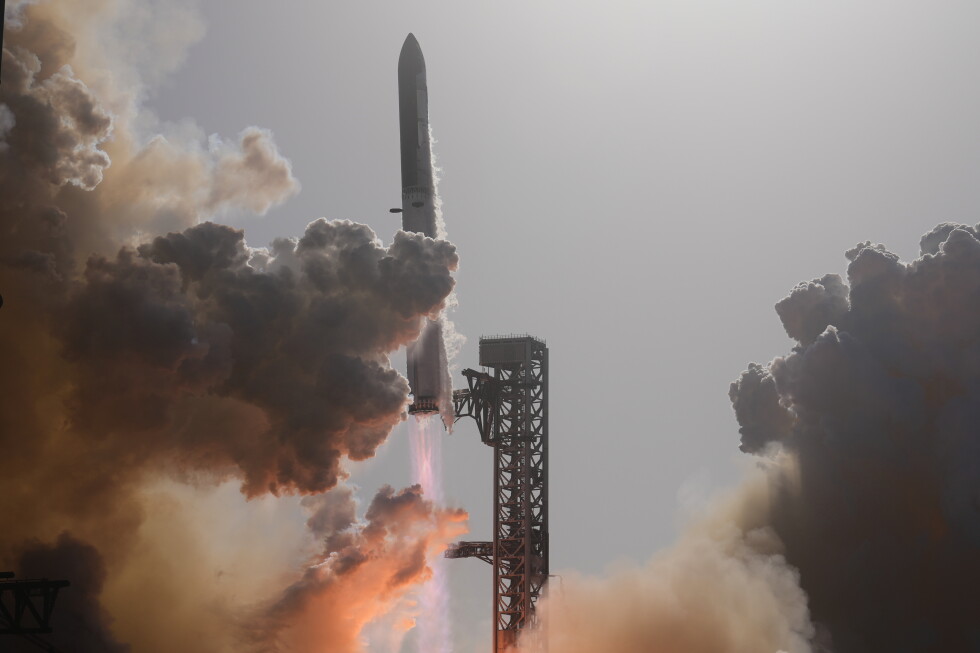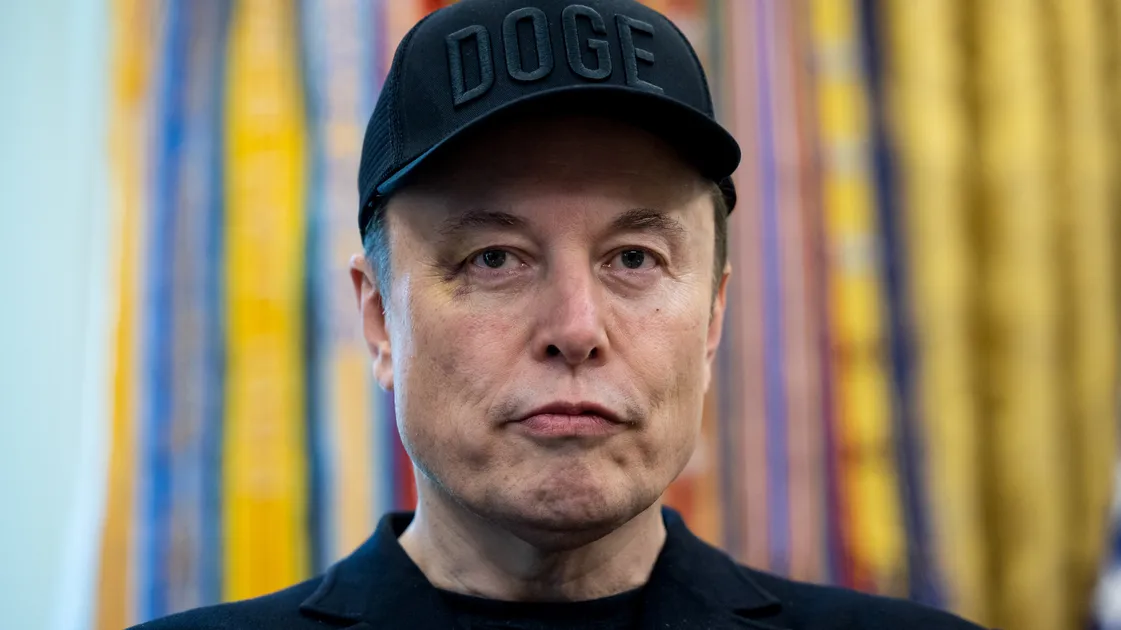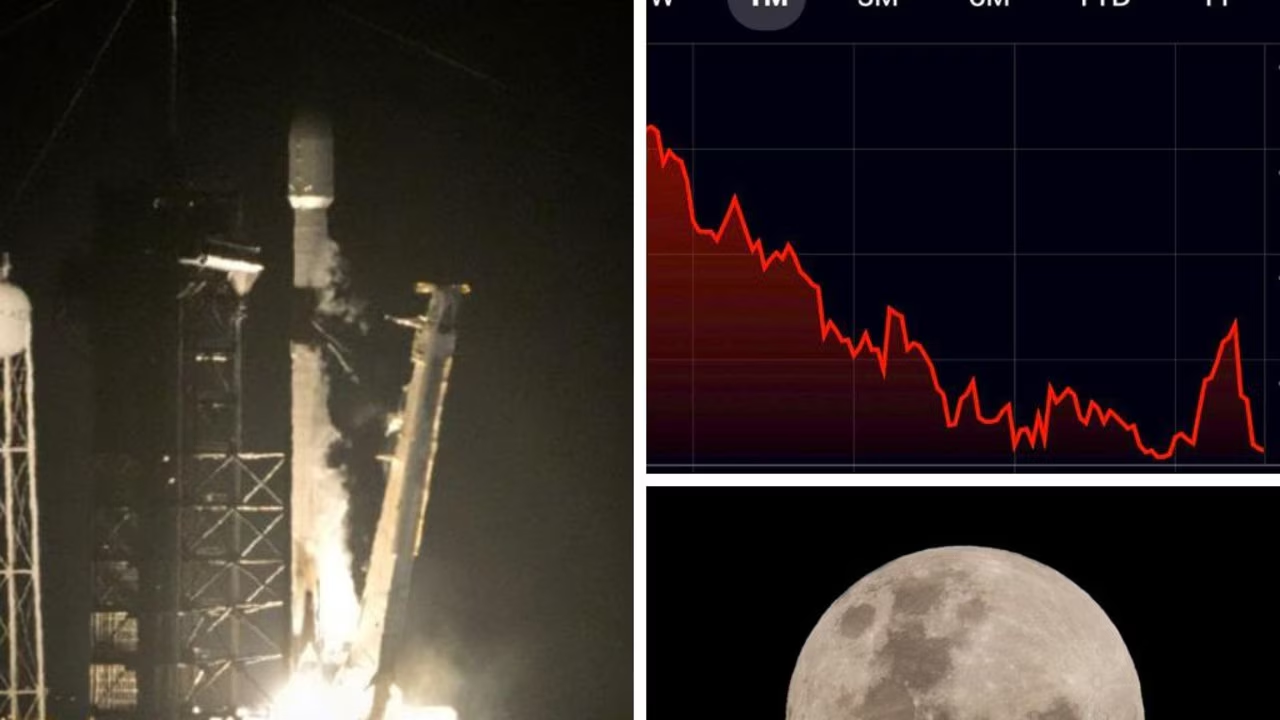
SpaceX shares fell almost 14 per cent a day after the company released its first quarterly results since going public and a four-tonne chunk of its hardware roughly the size of a school bus smashed into the Moon.Despite reporting a 92 per cent rise in revenue, investors were spooked by its net loss of $541m and a big jump in AI spending. America’s tech-heavy NASDAQ closed 0.8 per cent lower. Meanwhile, a telescope in Chile captured evidence of a stream of debris coming from the moon after part of a SpaceX rocket collided with it.The impact won’t threaten Earth, but scientists say it will have carved a brand new crater into the lunar surface, offering a rare chance to study what happens when human-made objects collide with another world.Scientists anticipated the Falcon 9 upper stage was going to strike the lunar surface at approximately on Wednesday morning, US time.And it did, the European Southern Observatory said on social media on Wednesday, based on observations recorded by its Very Large Telescope. The telescope “detected spectral lines,” the observatory said, what it called “chemical fingerprints” of “sodium and lithiumgas in the impact plume lasting for 5-10 minutes after impact.” “The sodium likely originated from the lunar soil, whereasthe lithium could come from the rocket itself,” the post continued, adding that the team would offer more details following fuller analysis. Scientific observers had deemed the 8,690km/hr crash inevitable.“I have Sir Isaac Newton’s personal assurance that it did indeed hit the moon, there’s no way for it to have escaped,” Jonathan McDowell, an astrophysicist and space analyst, told AFP. Unlike most rocket stages, which either burn up in Earth’s atmosphere or fall harmlessly into the ocean after completing their job, this one was travelling far beyond Earth’s orbit.After releasing its payload, it vented its remaining fuel and became little more than four tonnes of uncontrolled space junk.Earlier this year astronomers confirmed gravity and solar activity had gradually nudged it onto a collision course with the Moon.“What has happened is essentially a mixture of solar activity and gravity forces have put it on a path toward the moon,” SpaceX director of NASA science and Dragon programs Julianna Scheiman said.The incident has also reignited debate over the growing amount of debris humanity is leaving in space.The Earth is already surrounded by tens of thousands of tracked objects and millions of smaller fragments, forcing satellites and spacecraft to regularly manoeuvre out of harm’s way.Lunar impacts remain rare, but they are not unprecedented.A Chinese rocket stage accidentally struck the Moon in 2022 after a test mission, while NASA deliberately crashed a rocket stage into the lunar surface in 2009 to study the plume of debris it created.Several attempted Moon landings have also ended in spectacular failure in recent years, including Russia’s Luna-25 mission in 2023 and India’s Chandrayaan-2 lander in 2019.Israeli spacecraft Beresheet also crashed in 2019, scattering its unusual cargo, consisting of microscopic tardigrades, tiny animals famous for surviving some of the harshest conditions known to science, across the lunar surface.NASA and SpaceX are now discussing ways to prevent similar impacts in future as missions to the Moon become increasingly common.The Moon collision comes at a remarkable moment in SpaceX’s history, as founder Elon Musk enjoys his new status as the world’s first trillionaire.The company only entered public markets in June in what analysts described as the largest IPO ever, raising about US$50 billion (A$77 billion) at a valuation north of US$2.2 trillion (A$3.4 trillion) and instantly becoming one of the world’s most valuable listed technology companies.Wall Street’s enthusiasm has been fuelled by a business that now stretches far beyond rocket launches. Starlink has become the world’s largest satellite internet provider, while investors are increasingly betting SpaceX can monetise artificial intelligence infrastructure alongside its space business.The company’s first quarterly earnings as a public company this week reinforced that optimism.SpaceX reported US$7.8 billion (A$12.0 billion) in quarterly revenue, up 92 per cent from a year earlier and comfortably ahead of analysts’ expectations. Despite that, the company still posted a loss as it poured billions into AI infrastructure and next-generation spacecraft. Analysts point to the company’s enormous capital spending and the long runway that still lies ahead before many of Mr Musk’s biggest ambitions become consistently profitable. The listing has also reignited debate over Musk’s unprecedented personal fortune and the power it represents.With SpaceX now publicly valued in the trillions alongside his holdings in Tesla and xAI, some market commentators have argued Musk has effectively become the world’s first “trillionaire on paper”, although billionaire rankings such as Bloomberg and Forbes continue to place his verified net worth well below that threshold.Much of his wealth remains tied to volatile equity valuations and unrealised gains, meaning the actual figure is much less tangible.Whether the valuation ultimately proves justified remains one of the biggest questions hanging over Wall Street, and in some cases, segments of the broader global economy.Supporters argue SpaceX is evolving into something far larger than a lunar launch company, with global broadband, defence contracts and AI infrastructure now being tied under one roof.But sceptics counter that investors are pricing in years of future success before many of those businesses have fully matured.
SpaceX shares tumble as a giant piece of junk smashes into the Moon
SpaceX shares fell almost 14 per cent a day after the company released its first quarterly results since going public and a four-tonne chunk of its hardware roughly the size of a school bus smashed into the Moon.
863 words~4 min read