7 MIN(s) ago
51 MIN(s) ago
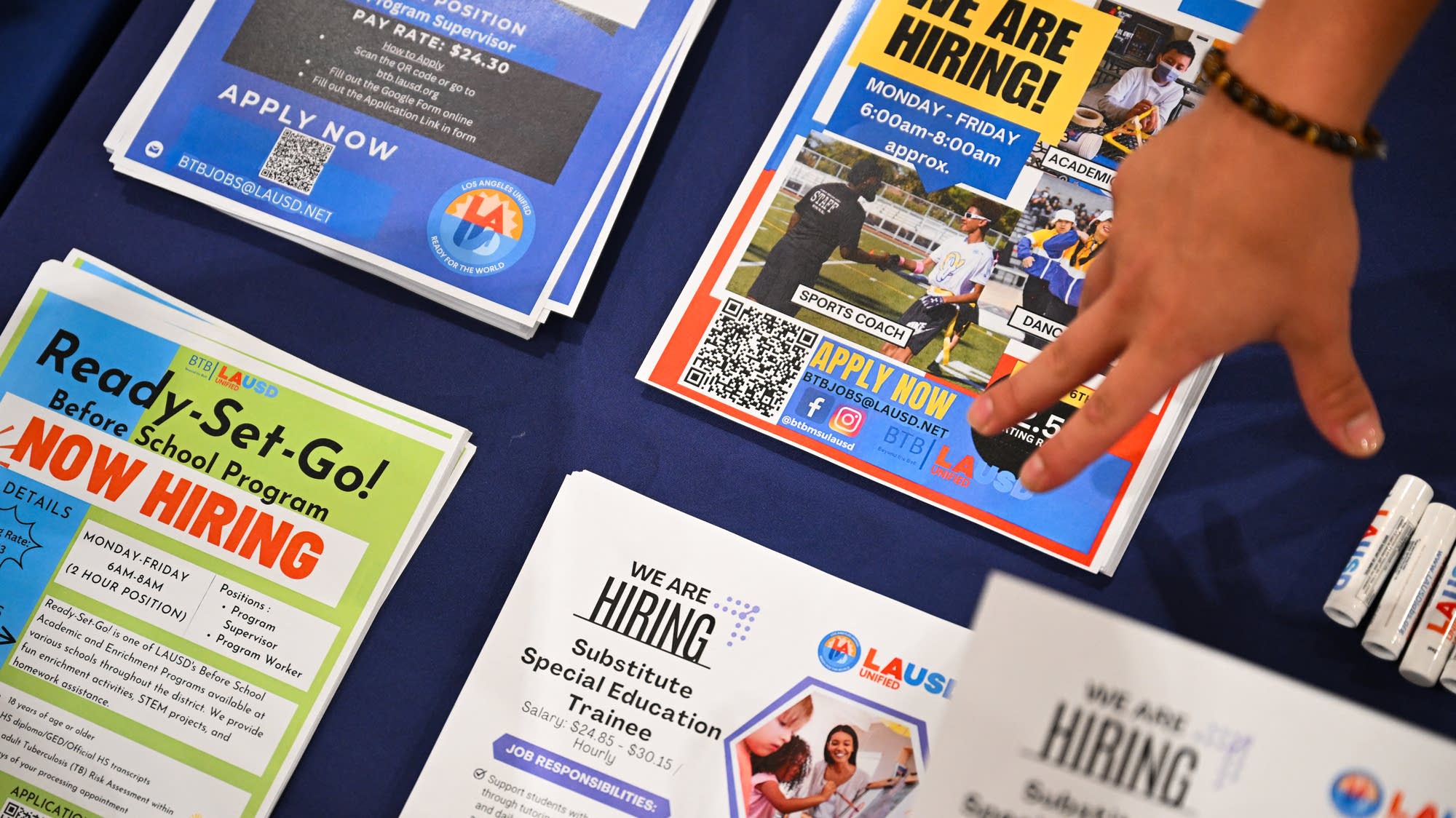
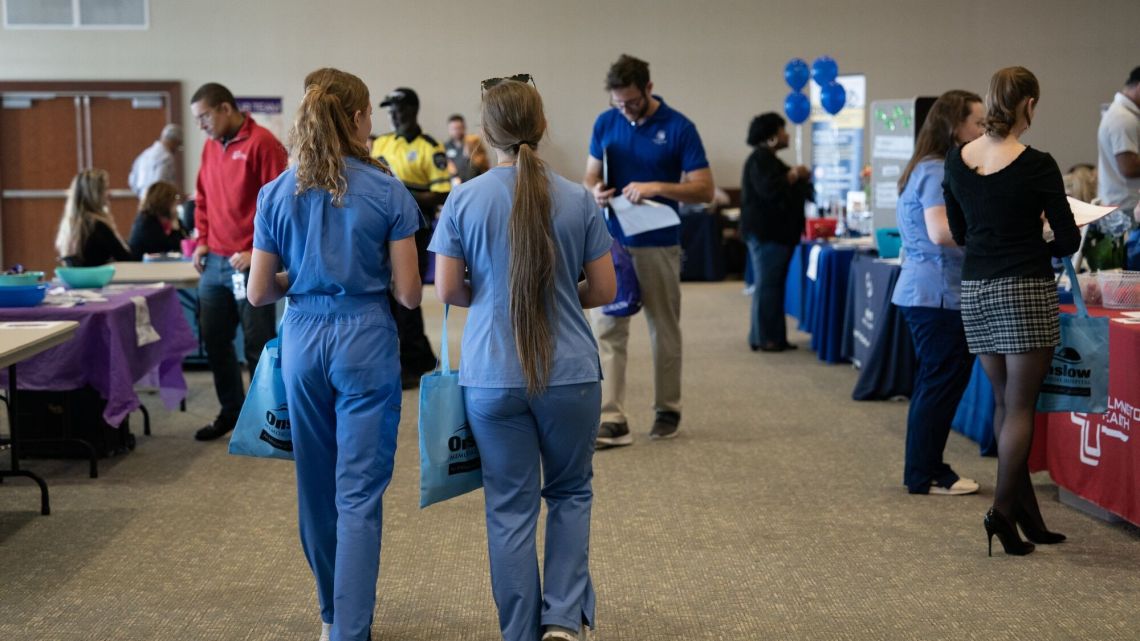
Job seekers speak with a recruiter during a job fair at Miami International Airport in Florida. Photo: AFP/FILE
US job openings dropped in June as vacancies in the healthcare and social assistance sector declined by the most in nearly a year, but an improvement in hiring and low layoffs suggested the labor market remained stable.The report from the Labor Department on Tuesday also showed a marginal increase in people quitting their jobs, presumably in search of greener pastures, which should limit wage growth and strengthen economists’ views that the labor market was not a source of inflation.Still, most economists expected the Federal Reserve to raise interest rates this year to tame inflation fueled by the Middle East conflict.“The picture is of a steady labor market,” said Carl Weinberg, chief economist at High Frequency Economics. “This picture of the labor market will change as the economy adjusts to $100 plus a barrel oil, higher inflation, possibly tighter monetary conditions and global recession starting in Asia, where many production supply chains are rooted.”Job openings, a measure of labor demand, had decreased by 178,000 to 7.359 million by the last day of June, the Labor Department’s Bureau of Labor Statistics said in its Job Openings and Labor Turnover Survey, or JOLTS report. Economists polled by Reuters had forecast 7.400 million unfilled positions in June.Some have said the JOLTS report should be treated with caution, noting that the response rate to the survey had declined considerably.Economists continue to view the labor market as remaining in a “slow-hire, slow-fire” mode, which they say should allow the US central bank to focus on inflation.The Fed last week left its benchmark overnight interest rate in the 3.50 percent-3.75 percent range. Three members of the Fed’s policy-setting committee dissented in favor of a quarter-percentage-point hike.Healthcare and social assistance job openings decreased by 147,000 in June, the largest decline since July 2025. This sector has been a key driver of job growth amid an aging population.Temporary Protected Status for hundreds of thousands of immigrants from Haiti and six other countries has ended.“With foreign-born labor force population driving the overall decline in civilian labor force, healthcare’s reliance on international recruitment may be exactly the sector to watch as limited labor supply increasingly shapes hiring in the labor market,” said Sneha Puri, economist at Indeed Hiring Lab.There were 86,000 fewer open positions in the leisure and hospitality sector, mostly at hotels, restaurants and bars. There were more job openings at retailers as well as in the financial activities sector.The job openings rate fell to 4.4 percent in June from 4.5 percent in May.Hiring increased by 96,000 to 5.348 million, led by the healthcare and social assistance industry.But hiring at hotels, restaurants and bars fell by 77,000, likely reflecting the fading boost from the recently ended FIFA World Cup tournament.The hires rate rose to 3.4 percent from 3.3 percent in May.Layoffs and discharges were little changed at 1.766 million, with the rate steady at 1.1 percent.The number of people quitting their jobs increased by a modest 79,000 to 3.232 million.The quits rate, viewed by policymakers as a gauge of labor market confidence, was unchanged at 2.0 percent.A Reuters survey of economists estimates that nonfarm payrolls increased by 80,000 jobs in July after a rise of 57,000 in June.The BLS is scheduled to publish the July employment report on Friday. The unemployment rate is forecast to hold steady at 4.2 percent.There is, however, a risk it could edge higher after a Conference Board survey last week showed the share of consumers viewing jobs as “plentiful” dropped in July to the lowest level since February 2021.