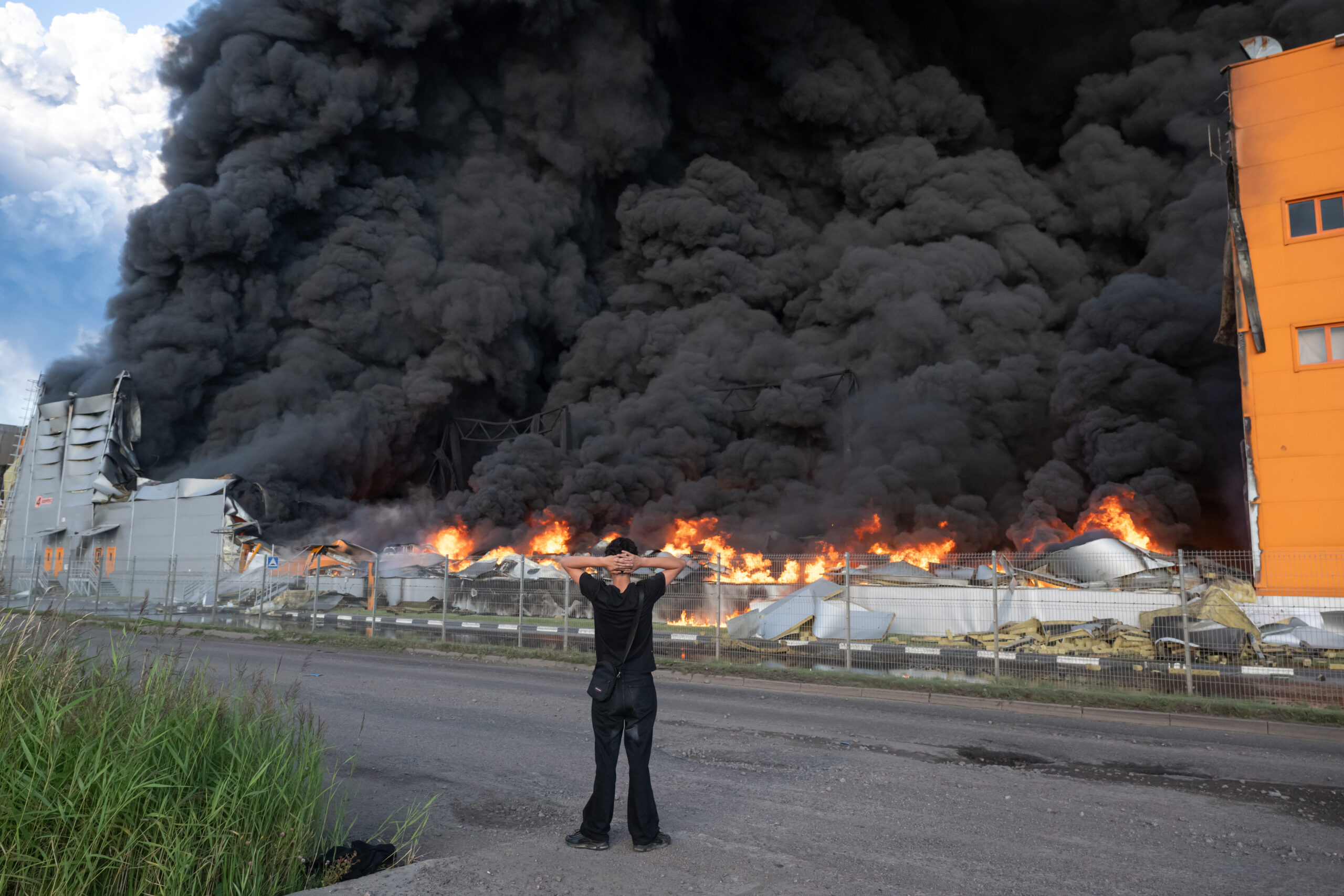
WASHINGTON—Could the Central Bank of Russia finally be running out of options? This question has been asked before, in part under the belief that Western countries’ immobilization of Russian assets abroad would severely constrain the institution. While that argument proved premature, there is now increasing evidence that monetary and regulatory policy cannot shield the Russian economy indefinitely from Ukraine’s uptick in drone strikes, from stronger international sanctions, or from its self-imposed weaknesses.
The Central Bank of Russia remains the most competent player in the system governing Russia’s wartime economy. On July 24, it cut its key rate for the tenth consecutive meeting, from 14.25 to 14 percent, despite raising its inflation forecast by 1.5 points that same day. With inflation threatening to reignite, the central bank will be very reluctant to cut rates any further, despite severe stagnation and a year-on-year contraction of gross domestic product (GDP) in the first quarter of this year.
Inflation may have temporarily subsided, but Russia’s bulging deficit continues to swell despite higher oil prices. The Kremlin has a variety of workarounds to make up for insufficient income, including its well-publicized pressure on banks to extend cheap loans to industry. But these measures are creating new problems in the banking sector. The latest data from the Central Bank of Russia show that the Kremlin continues to privilege war-linked sectors, while public documents and intelligence suggest that bad loans are accumulating on balance sheets, raising the risk of a banking crisis.