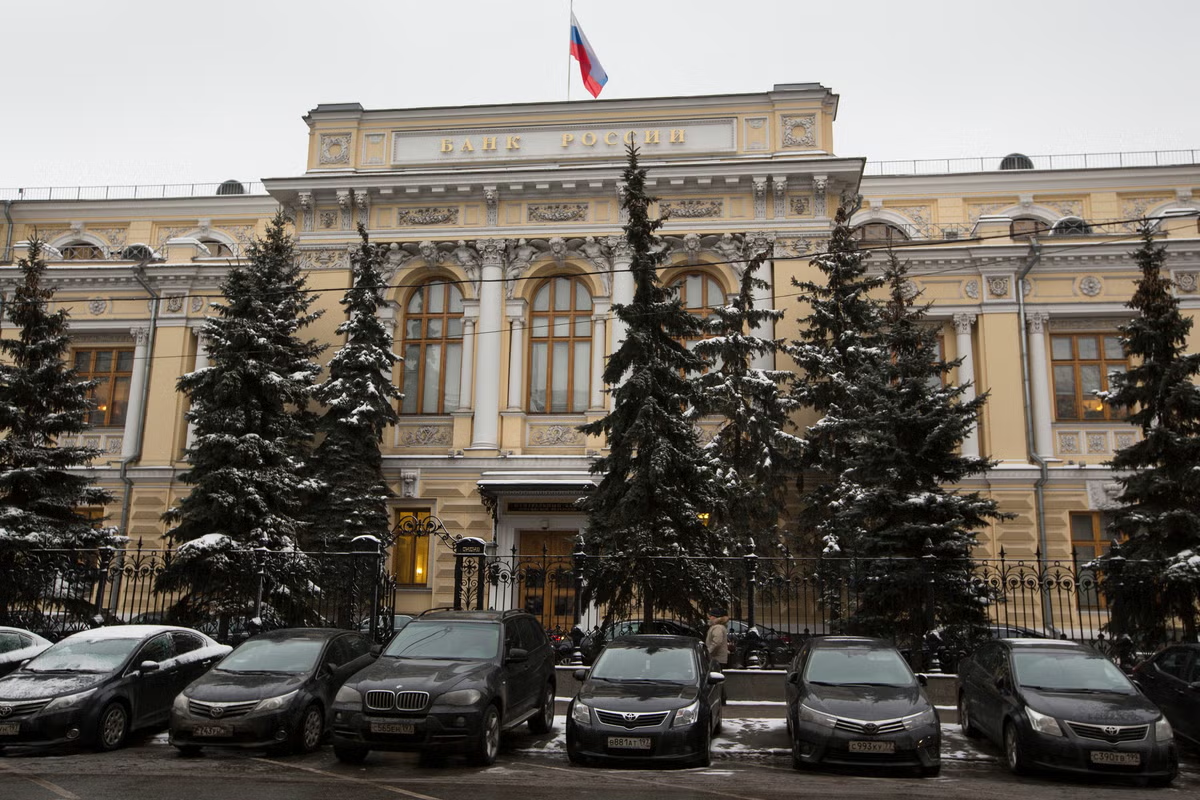
The Central Bank again cut its key interest rate by a symbolic quarter of a percentage point, to 14%, but warned that high rates will continue longer than planned. This creates problems not only for investors suffering from the stock market’s decline, but also for the Finance Ministry, which is frantically looking for money to cover the budget deficit and service expensive government debt.
It was not hard to guess that this would happen. It is already obvious that Central Bank Governor Elvira Nabiullina’s superiors — probably President Vladimir Putin himself — ordered her to lower the rate. It was not difficult to work out that, with inflation rising again because of the fuel shortage, the Central Bank would, as it did last time, lower the rate symbolically and furrow its brows so that no one got too excited.
And that is exactly what happened.
In its press release, the Central Bank wrote that “pro-inflationary risks prevail” over the forecast horizon. It also expressed concern about uncertainty over the budget parameters. That’s a diplomatic way of referring to the uncontrolled growth in war spending. At the press conference after the meeting, Nabiullina was even more diplomatic: she called the rise in inflation temporary. But she warned that the budget deficit will be higher than planned: up to 8 trillion rubles ($99.9 billion) instead of 3.8 trillion ($47.7 billion). Though that equates to 3.6% of GDP, a budget deficit is considered manageable up to 4-5%.