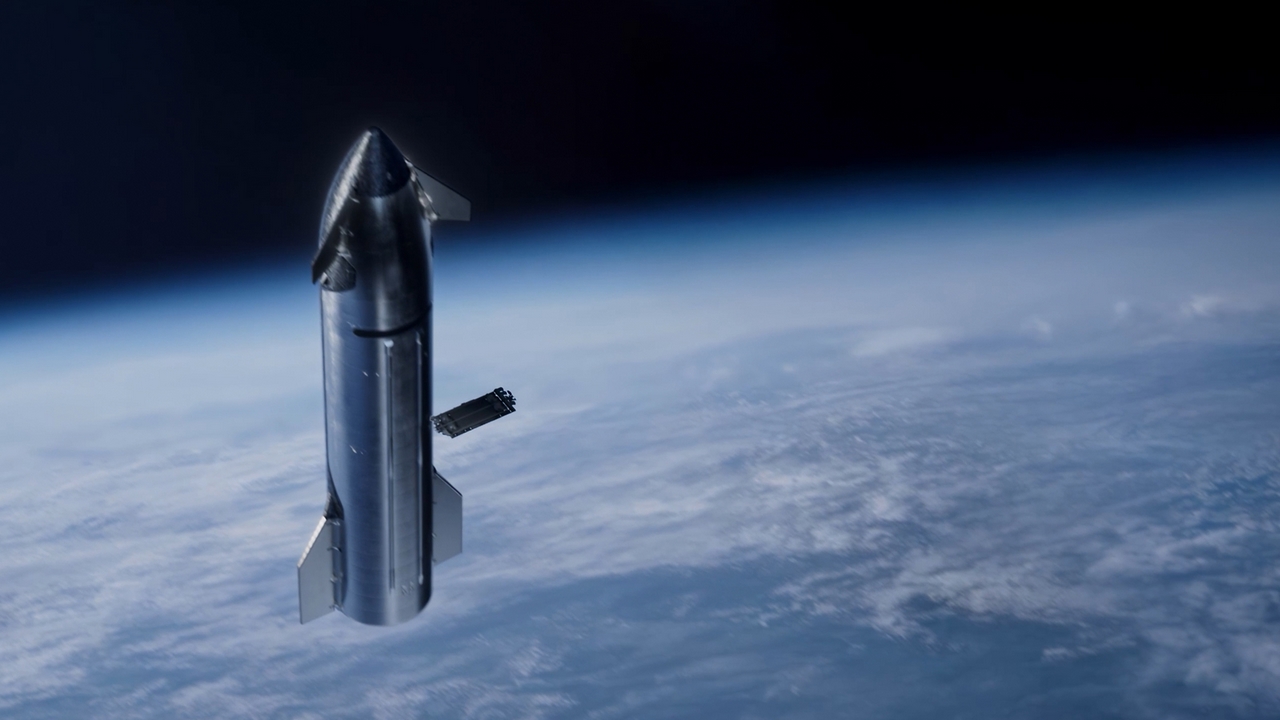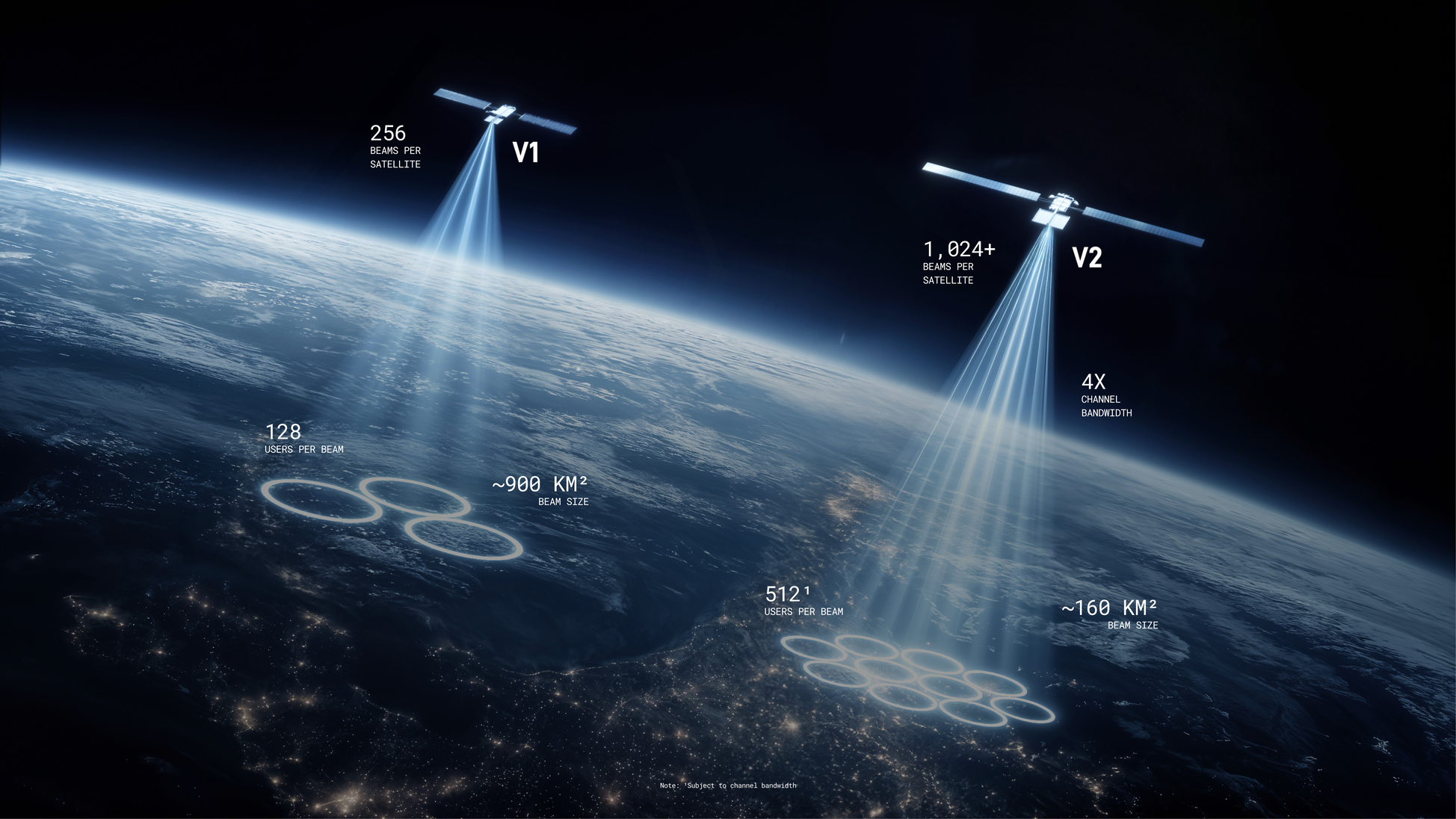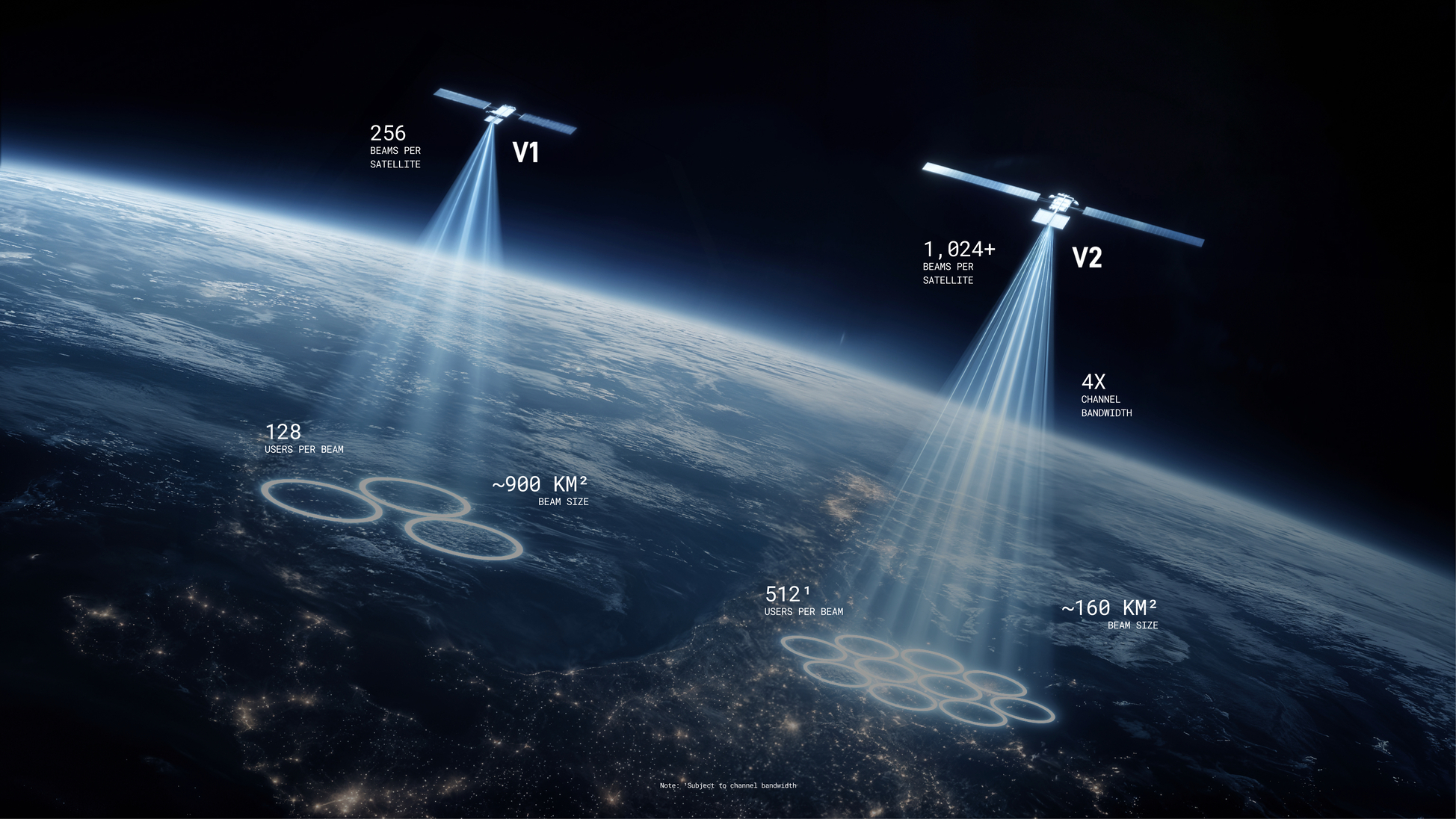
SpaceX says its planned V2 Mobile satellites will enable more comprehensive Starlink Mobile services, including broadband data and IoT connectivity direct to ordinary smartphones. The larger satellites require Starship to launch and are slated to begin deployments in 2027. Credit: SpaceX
Another wave of constellations has staked claims for communications satellites in non-geostationary orbit (NGSO), but what hope do newcomers have alongside the industry’s entrenched, vertically integrated giants?
A mix of established and wannabe constellation operators joined the Federal Communications Commission’s latest processing round for Ku-, Ka- and V-band frequencies before it closed July 6. The FCC uses processing rounds to consider constellations seeking similar frequencies together, generally putting them on equal footing for spectrum sharing. Still, several companies have a significant head start.
Industry powerhouse SpaceX proposed by far the largest number of new satellites: 100,000 for a Gen 3 network geared toward an age of AI that it said had taken hold since applying for roughly 30,000 Gen 2 spacecraft six years earlier.
There are already more than 10,000 Starlink broadband satellites in orbit, which SpaceX builds, launches and operates itself. Separately, it is seeking FCC approval for up to 1 million orbital data centers to support AI computing.