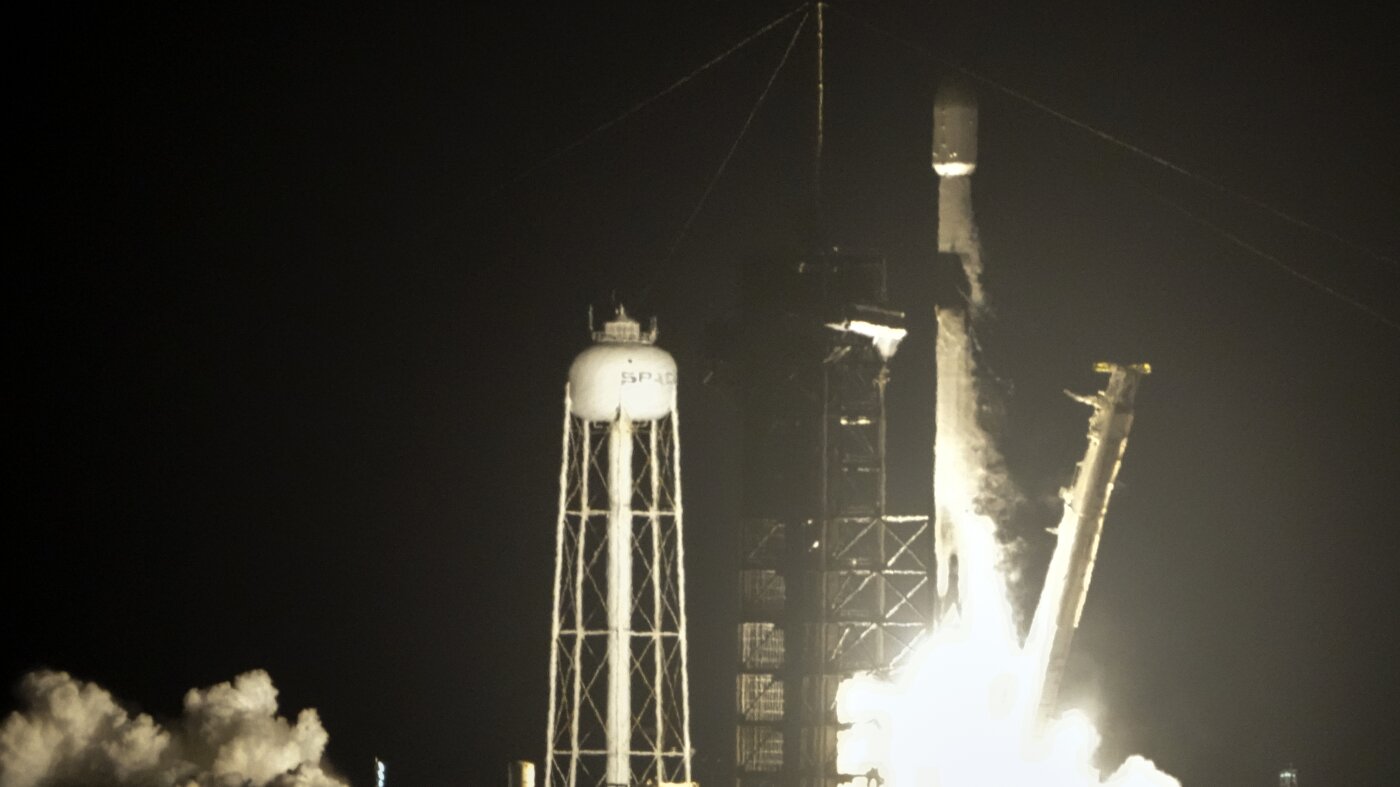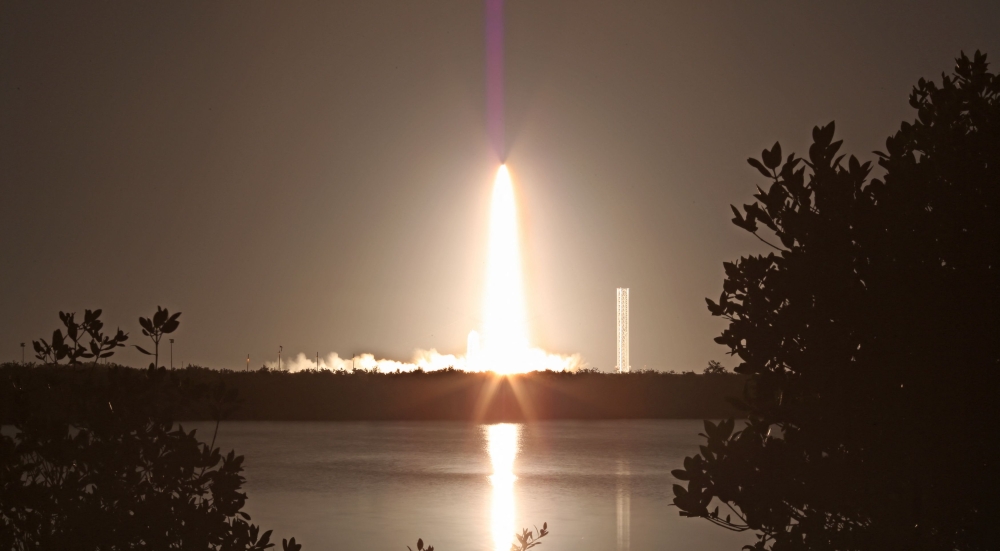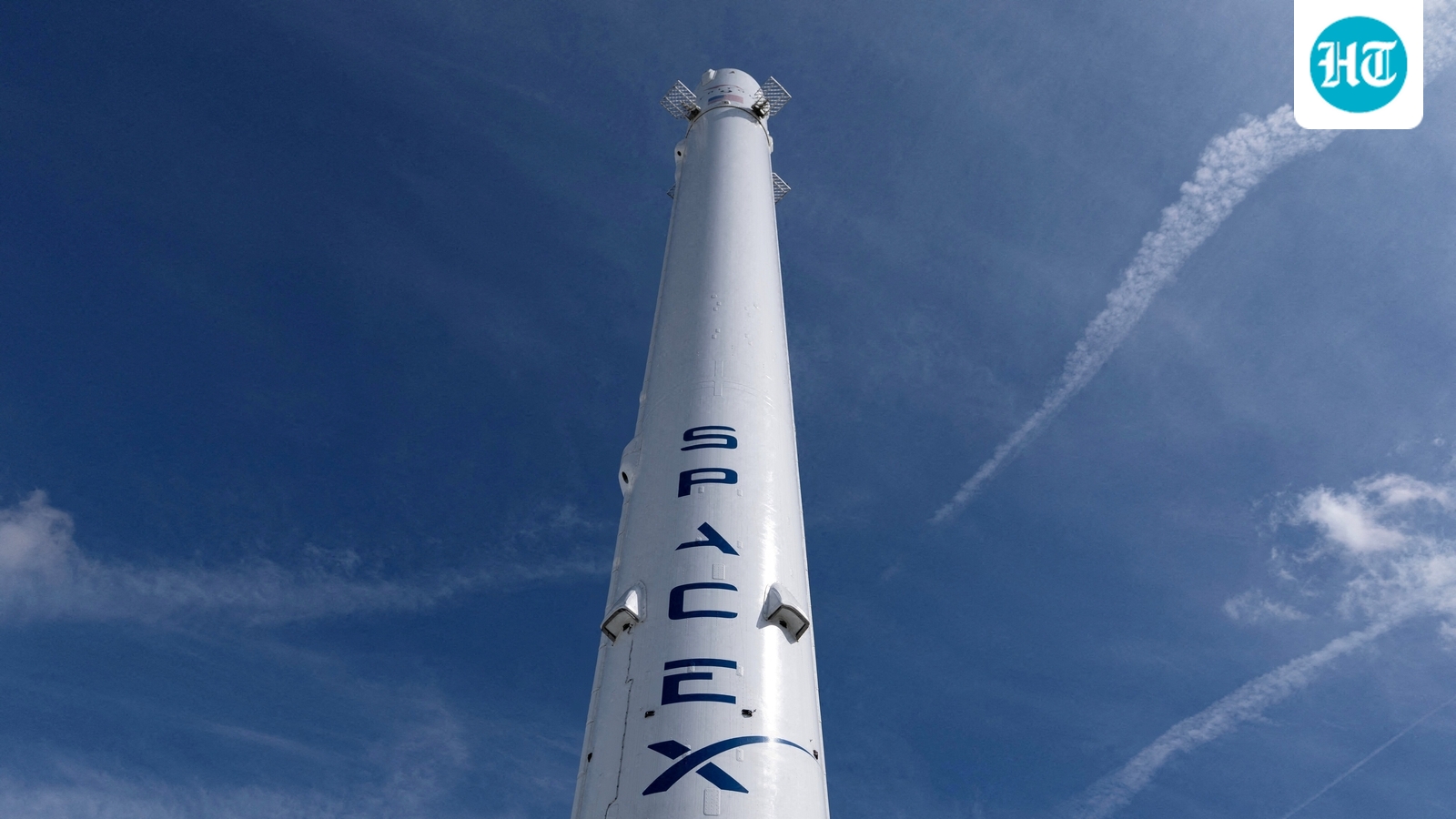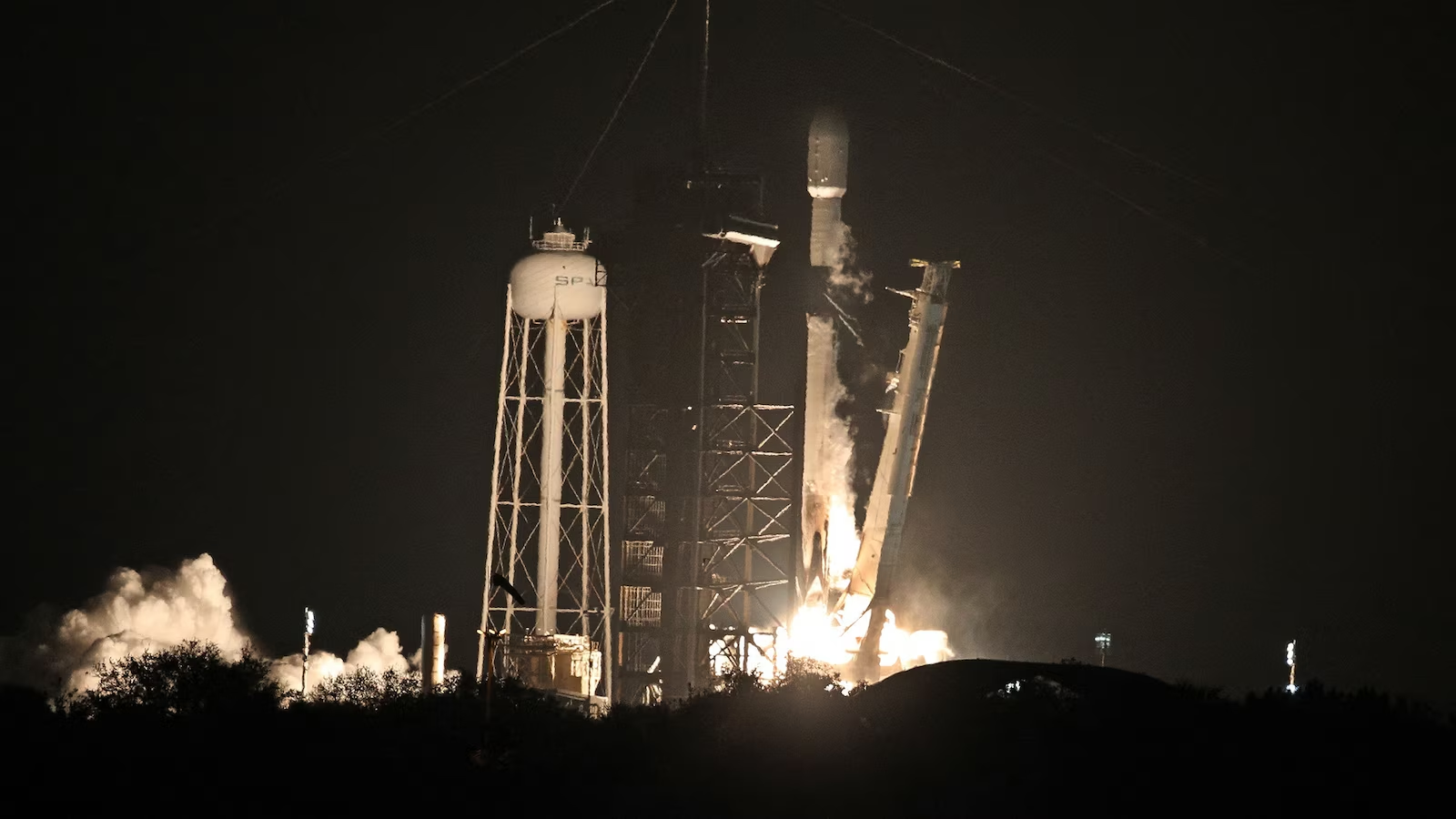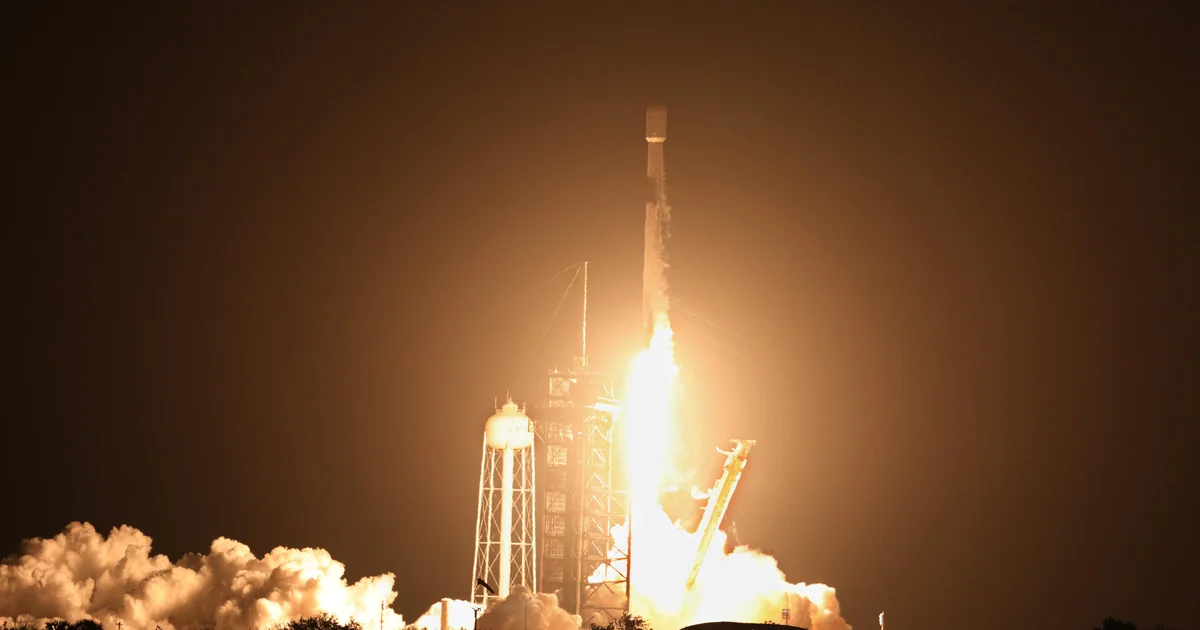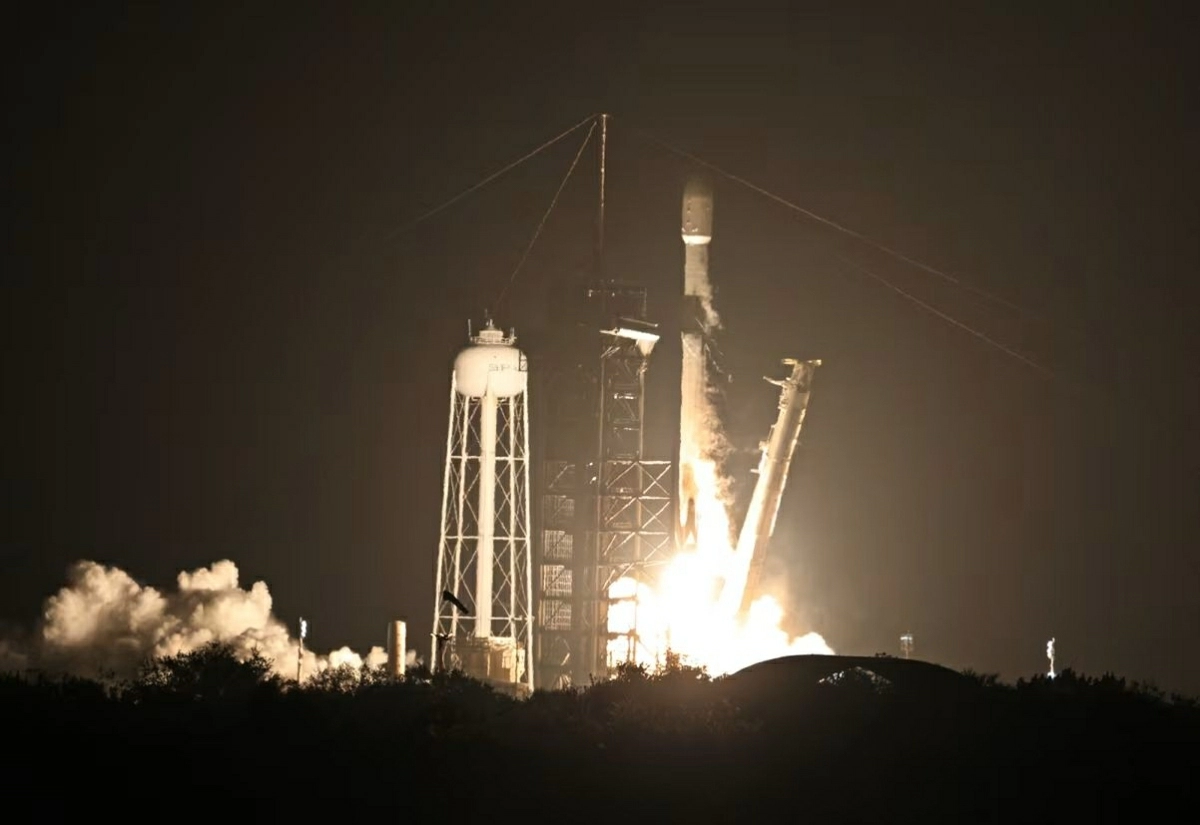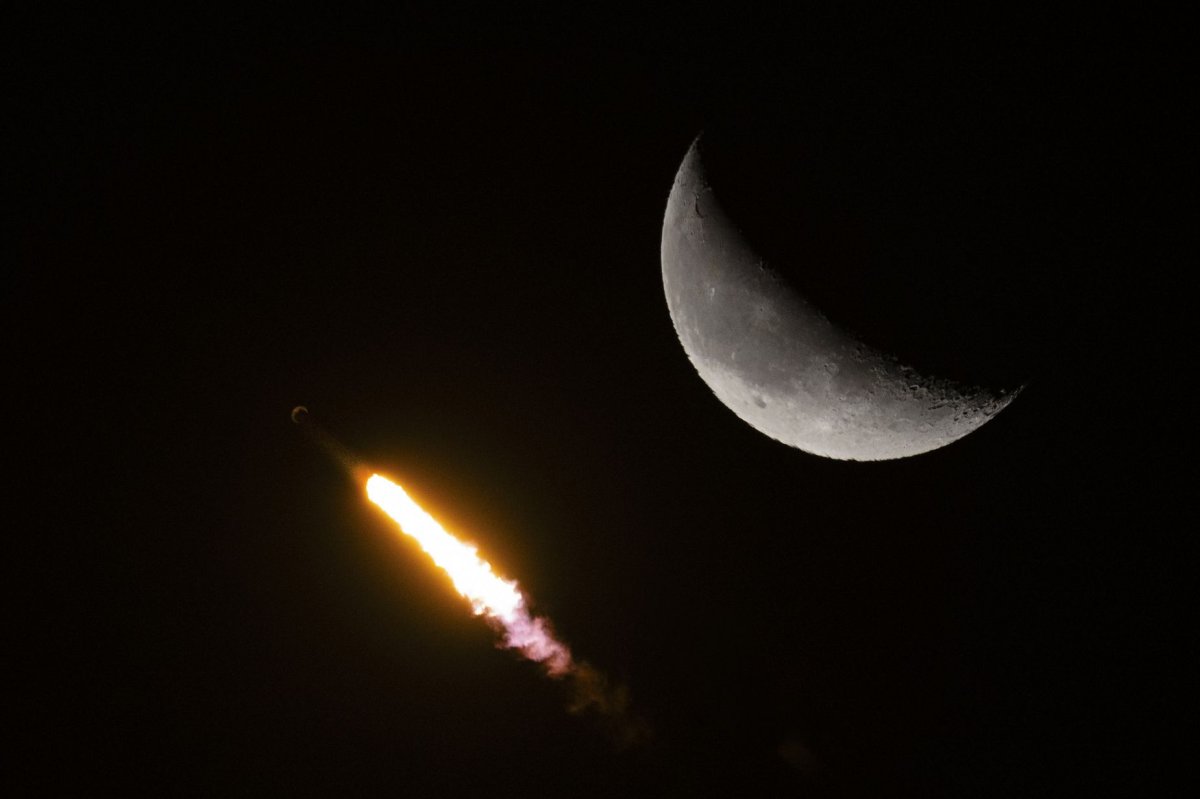
SpaceX's Falcon 9 rocket streaks past a crescent moon as it sped skyward from Launch Complex 40 at the Cape Canaveral Space Force Station in Florida on July 9 on a misson to deliver 29 Broadband satellites into low earth orbit. File Photo by Joe Marino/UPI | License Photo
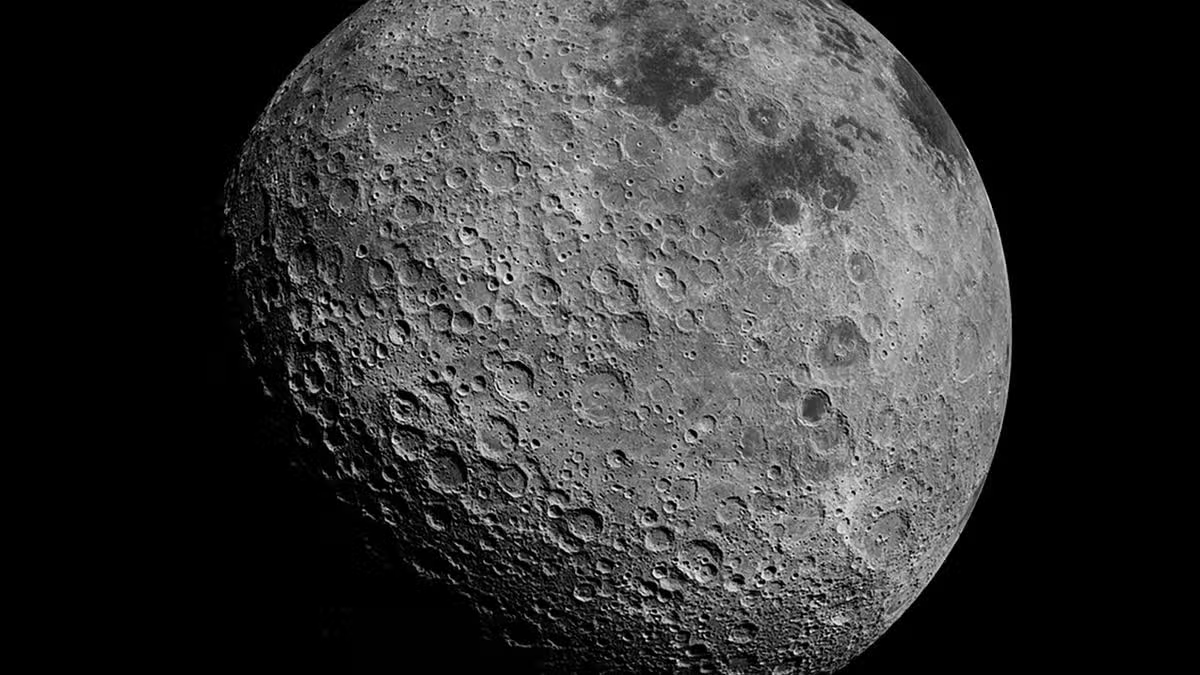
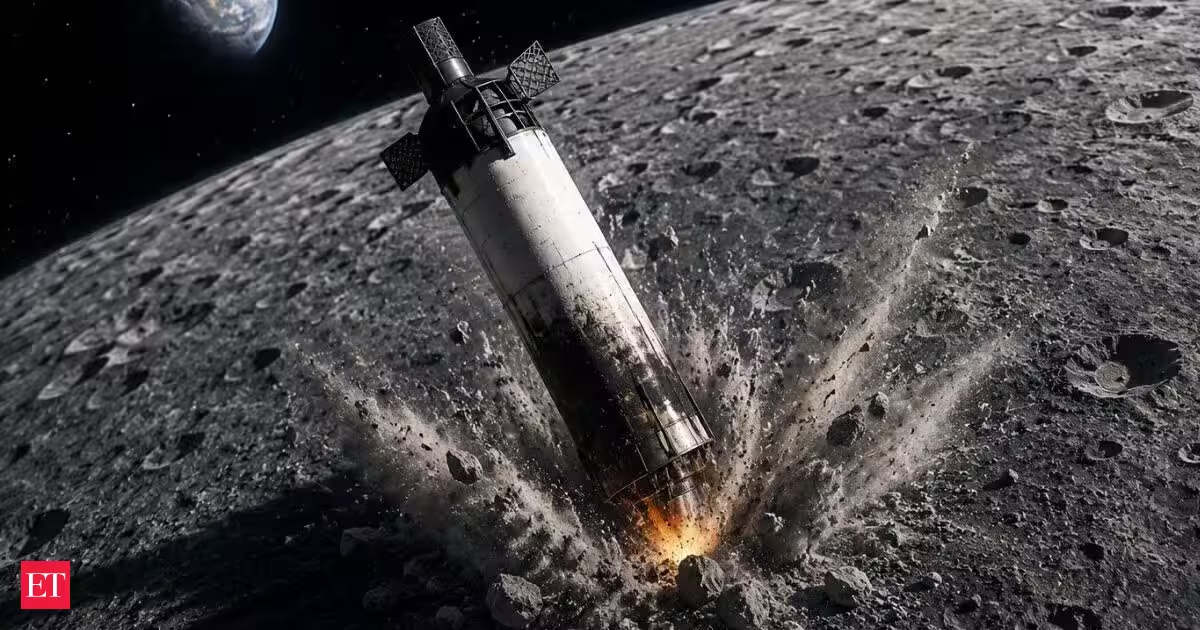
Aug. 5 (UPI) -- NASA scientists were awaiting confirmation that a stray 8,800-pound section of a SpaceX rocket launched in January 2025 had crashed into the surface of the moon at 5,400 mph on Wednesday morning, as expected.
Due at around 2:35 a.m. EDT, the impact, which would not be readily visible, will be verified using images taken by specialist telescopes, with NASA saying it hoped the event would provide it with valuable lunar data and help it "refine techniques for tracking objects in space."
Rodrigo Palominos, a telescope operator at the Paranal Observatory in the Atacama Desert in Chile, told BBC Radio that he had picked up changes in light around the anticipated time, indicating an impact of the upper stage of the Falcon 9 rocket had taken place.
Saying it might be a sign of material being thrown up from the surface, Palominos called it an "encouraging preliminary result."