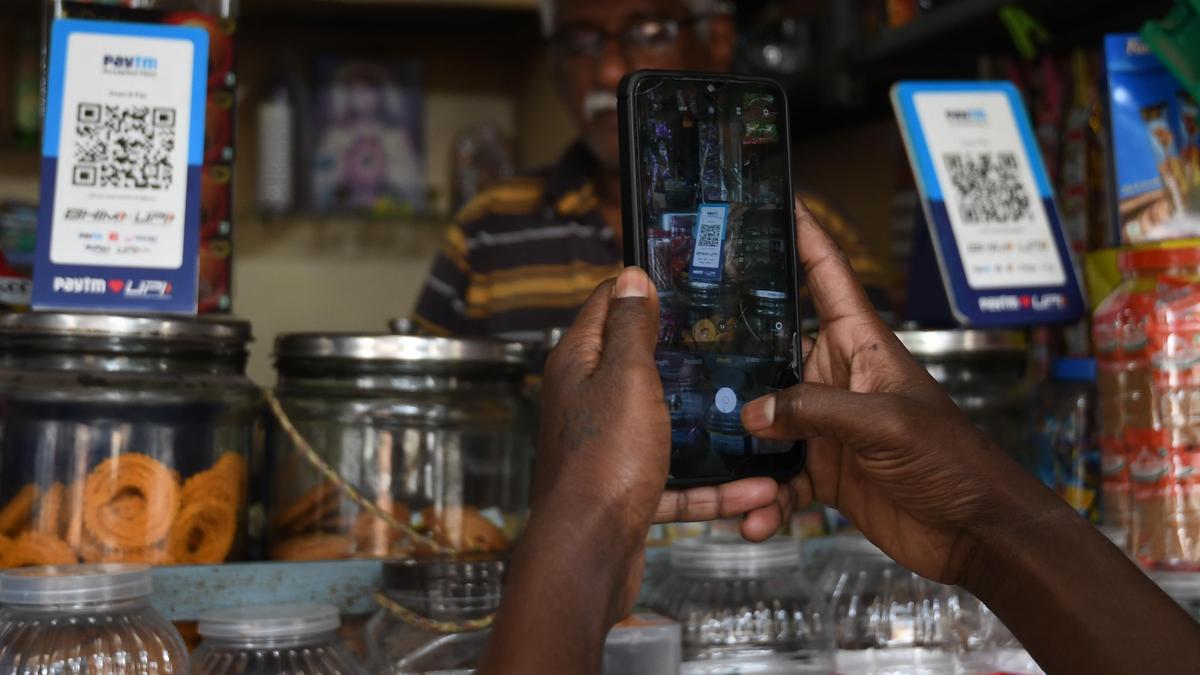
UPI merchant payments have remained free since January 2020, after the government mandated a zero MDR framework
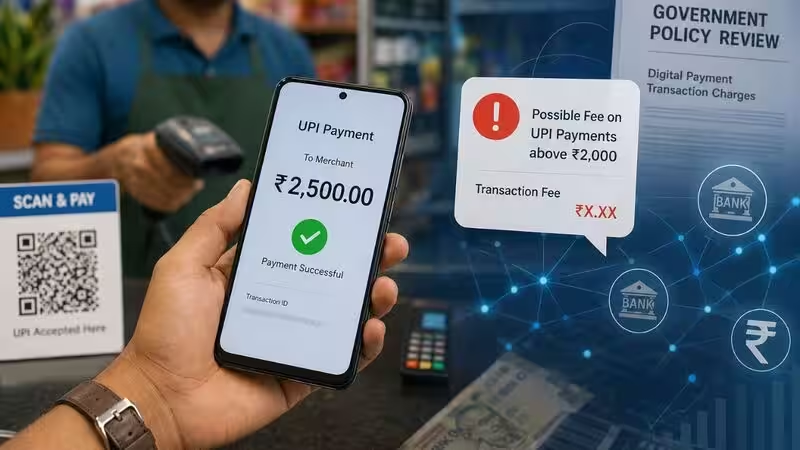
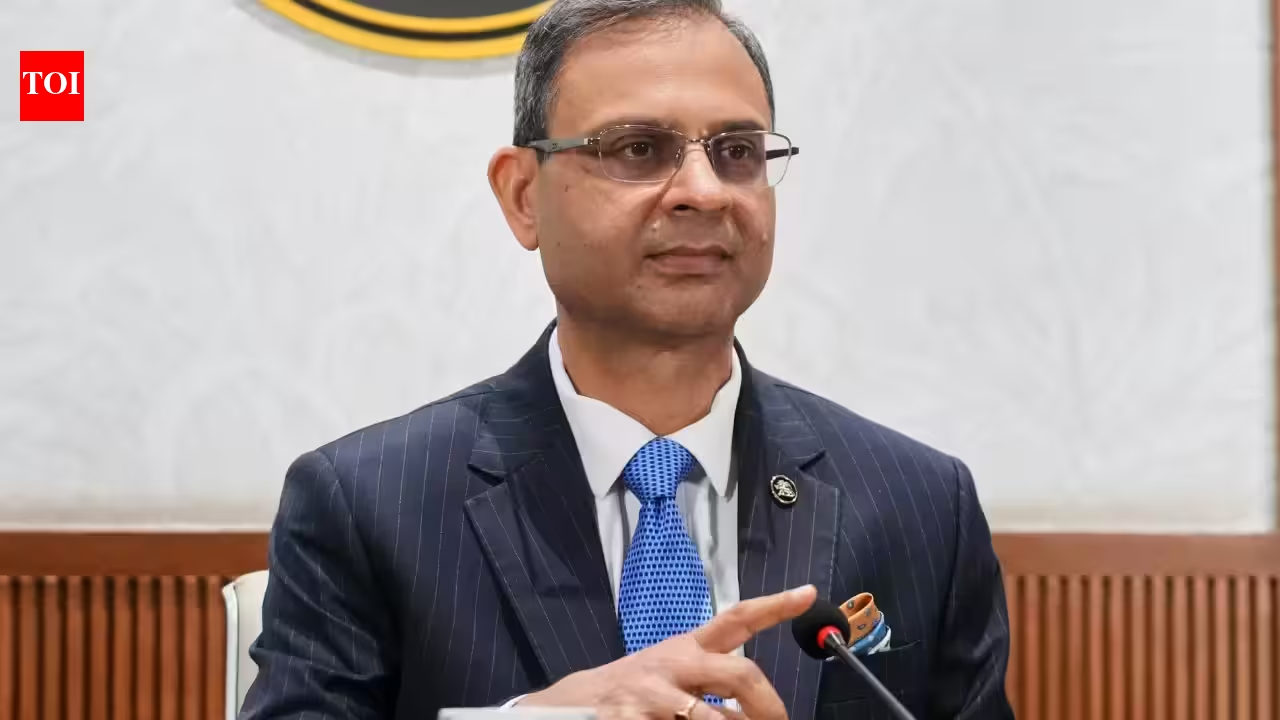
The Reserve Bank of India (RBI) Governor Sanjay Malhotra on Wednesday indicated that while it is too early to comment on any potential changes to the merchant discount rate (MDR) framework for unified payments interface (UPI) transactions, the country’s fast-growing digital payments ecosystem will require a sustainable funding mechanism as transaction volumes continue to surge.Responding to questions on reports that the government may be considering the reintroduction of MDR on select UPI transactions, Malhotra said policymakers are still examining the issue and it would be premature to speculate on the final outcome.‘premature stage’“It’s very premature right now. The government is still carrying out the amendment. Let’s wait and watch for further developments on this,” said the Governor. However, he reiterated a point that has increasingly gained attention within the banking and fintech ecosystem.“Costs have to be paid by someone. It is a public infrastructure. We all want this public infrastructure to continue to strengthen and become more efficient,” said Malhotra.His comments come amid industry expectations that the government may create a framework for the return of MDR on large merchant UPI transactions. Market participants expect a charge of 30-40 basis points on merchant payments accepted by businesses with annual turnover exceeding ₹1 crore.Industry executives believe any levy, if introduced, is likely to be restricted to person-to-merchant (P2M) transactions and large merchants, while person-to-person payments and smaller businesses will continue to enjoy the benefits of the existing zero-MDR regime.UPI merchant payments have remained free since January 2020, after the government mandated a zero MDR framework. The move accelerated digital payment adoption and helped UPI emerge as India’s dominant retail payments platform. Today, banks, payment aggregators and fintech companies process billions of transactions every month without earning direct MDR revenue from UPI payments.Malhotra acknowledged that while users may not directly see the cost of operating the payments infrastructure, those costs are already being absorbed elsewhere in the economy.“Ultimately, it is the consumer in some way or the other who is paying it already. It may not be the same consumer. It may be the general economy and you don’t get to see it directly. But already it’s coming,” he said.The Governor stressed that the larger objective is to ensure continued investments in the payments ecosystem so that it remains reliable, resilient and capable of handling future growth.With industry discussions around MDR gathering pace, the Governor’s remarks signal recognition that the institutions operating India’s digital payments rails need a viable commercial model as the country pushes towards even higher digital transaction volumes.Published on August 5, 2026