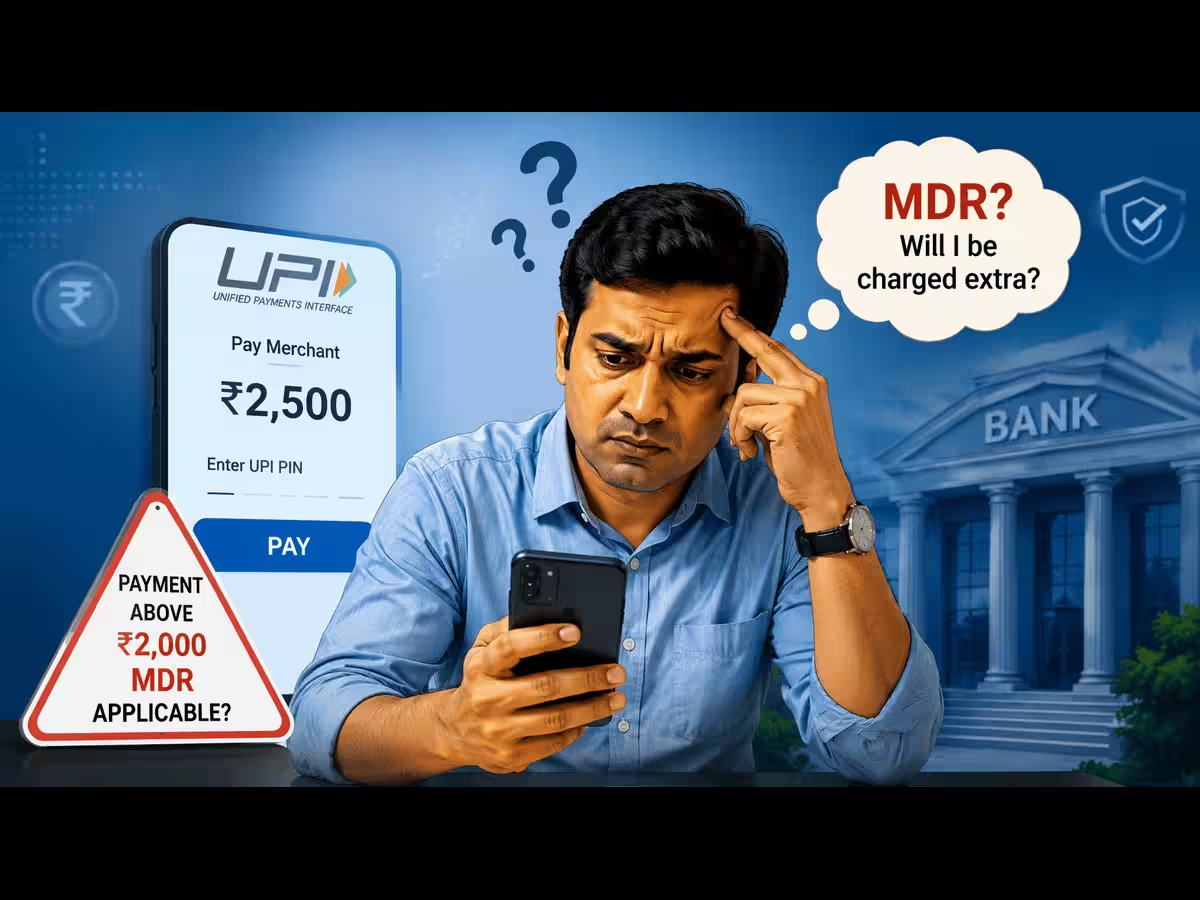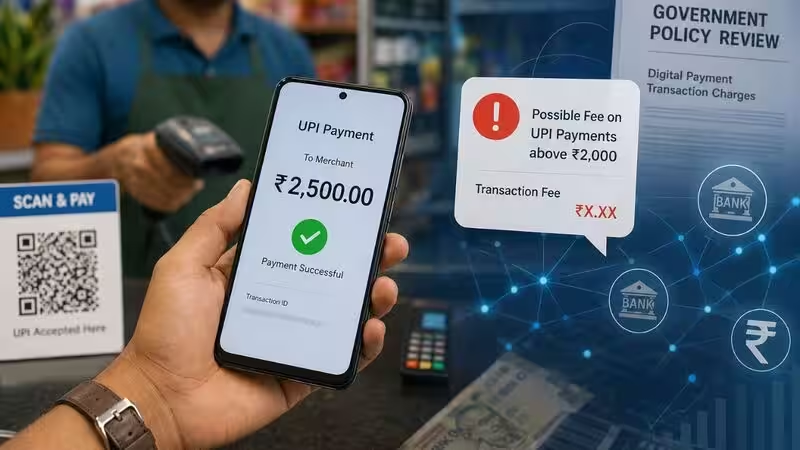
Unified Payments Interface (UPI) payments above ₹2,000 could soon come under a proposed fee framework as the government examines changes that may allow the introduction of a Merchant Discount Rate (MDR) on certain digital transactions. The proposal is aimed at creating a sustainable revenue model for banks and payment service providers that support India’s rapidly expanding digital payments ecosystem.The possible change is not expected to directly charge ordinary users making personal transfers. Instead, discussions are focused on merchant-side transactions, particularly payments made to businesses. The move comes amid concerns that maintaining UPI infrastructure, cybersecurity systems and payment networks requires continuous investment.About The AuthorHey there, i am a technology enthusiast with a deep passion for gadgets, consumer electronics, emerging technologies, and the fast-paced world of digital innovation. Constantly exploring the latest tech trends, product launches, and industry developments, I enjoy translating complex technological advancements into engaging and accessible stories for readers. My interests span smartphones, wearables, artificial intelligence, smart devices, and the broader technology ecosystem. As I begin my journey as a Tech Journalist at Gadgets Now, I am excited to contribute to a platform that informs millions of readers, combining my passion for technology with storytelling to deliver insightful, accurate, and timely tech coverage.What has happened?The government is considering a legal framework that could allow charges on selected UPI transactions, particularly those above ₹2,000 made to merchants. The proposed system is linked to the Merchant Discount Rate (MDR), a fee generally paid by businesses to banks or payment providers for processing digital payments.According to reports, the proposal may apply to larger merchants and commercial payments rather than person-to-person transfers. Sources have indicated that the possible MDR could remain below 0.5%, though the final rate and implementation details have not been decided.The discussion follows years of rapid UPI growth, during which transaction volumes have increased significantly while the system has continued with a zero-MDR model for regular merchant payments. Officials and industry stakeholders have highlighted the need to balance affordable digital payments with the long-term financial sustainability of the ecosystem.How will the proposed UPI fee work?Under the proposed mechanism, the charge would likely be applied as an MDR on eligible merchant transactions rather than as a direct fee deducted from customers. For example, if a customer makes a payment above ₹2,000 to a business, the merchant or payment ecosystem participant may bear the processing charge depending on the final rules.Reports suggest that one possible model is to impose a small percentage-based fee on higher-value transactions. The focus is expected to remain on commercial payments because these transactions contribute significantly to overall transaction value compared with smaller everyday payments.Its effects on customers will be dictated by how businesses react. Some traders could pass the cost on to their customers but other businesses might change their pricing in order to compensate for the increased payment processing charges. The government should put in the final structure once it has discussed it thoroughly with all interested parties.More articles by AuthorTrending StoriesWhy is the government considering this change?The proposed fee structure is being considered to address concerns about the financial sustainability of India’s digital payment infrastructure. Banks, fintech companies and payment service providers invest heavily in maintaining technology platforms, security systems and transaction networks that support millions of daily UPI payments.Since UPI transactions have largely remained free for merchants, payment companies have had limited direct revenue from processing these transactions. Industry representatives have argued that a regulated fee model could help support future investments while ensuring the payment system remains reliable as usage continues to expand.At the same time, policymakers are expected to consider the importance of keeping digital payments accessible. Any fee structure would need to balance the financial needs of the ecosystem with the goal of encouraging widespread adoption of cashless payments.Who could be affected by the proposed rule?The proposed changes are expected to primarily affect businesses accepting larger UPI payments rather than individual users transferring money between bank accounts. Personal UPI payments between individuals are likely to remain outside the proposed fee structure.Large merchants handling high-value transactions could face additional payment processing costs if the proposal is implemented. Smaller businesses may receive exemptions depending on the final policy design, with earlier discussions indicating that the government is considering protections for smaller merchants.For consumers, the immediate effect may be limited if merchants and payment companies absorb the cost. However, the long-term impact will depend on the final rules, the fee rate and how businesses adapt to the new payment environment.What happens next?Details of the new fee structure, including the rate and timeline, are still yet to be revealed. The authorities are expected to take into consideration feedback from banks, fintech companies, merchants, and other participants before enacting any new rules.As a leading digital payment service in India, any shift in UPI's fee structure will be closely monitored by customers and merchants alike. The authorities' challenge would be to balance the ease of use of UPI with its financial sustainability as an infrastructure. FAQsWhat is the proposed fee framework for UPI payments above ₹2,000?The government is considering a fee framework that may allow the introduction of a Merchant Discount Rate (MDR) on UPI transactions above ₹2,000, particularly focused on merchant-side transactions rather than personal transfers.How will the MDR impact businesses and merchants?The proposed MDR would likely apply to larger merchants handling high-value UPI payments, potentially increasing their payment processing costs. However, smaller businesses may receive exemptions based on the final policy design.What considerations are behind the government's proposal for a UPI fee structure?The proposal aims to ensure financial sustainability of India's digital payment infrastructure, as continuous investments are needed for maintaining technology platforms, security systems, and transaction networks. The challenge is to balance financial needs with maintaining affordable and accessible digital payments.end of article
UPI Payments Above ₹2,000 May Attract Fee As Government Considers Merchant Charge Framework
The government of India is currently evaluating a new fee structure for specific UPI transactions, which may include a Merchant Discount Rate for payments exceeding two thousand rupees. This initiative is targeted solely at merchant transactions rather than personal fund transfers, aiming to establish a viable revenue model for payment infrastructure providers. Further discussions with industry stakeholders will guide the final decisions on this matter.
959 words~4 min read