How flow batteries work: decoupling power and energy capacity
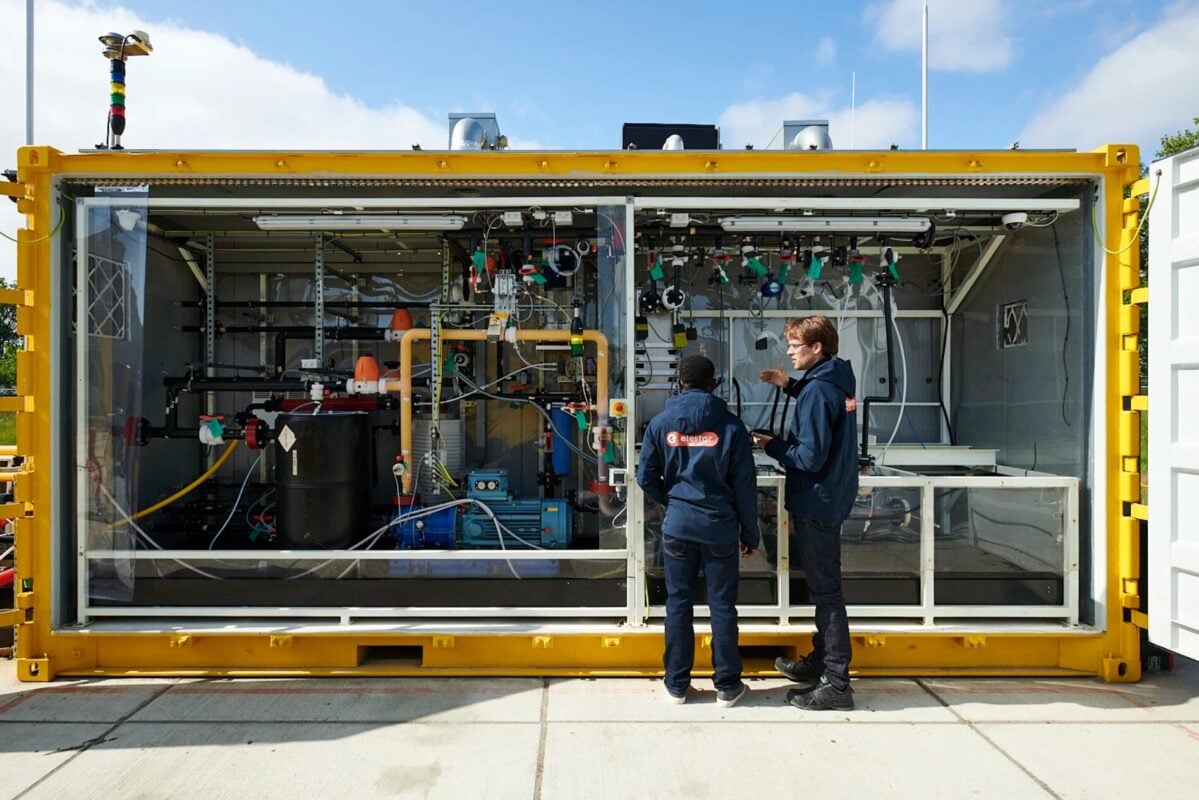
One of the main benefits of flow batteries is their decoupling of power and energy. The power level (MW) is determined by how many electrochemical cells are connected in series in the electrochemical stack and the surface area of the ion-selective membrane between the two electrodes.
On the other hand, the capacity (MWh) is determined by the volume of the two electrolytes―the catholyte and anolyte―in the reservoir (and by default, the size of the electrolyte reservoirs). So, unlike traditional batteries where power and capacity scale simultaneously, either power or energy capacity (or both) can be independently scaled to meet LDES requirements for different applications.
Different flow battery chemistries use different active materials. Vanadium flow batteries use different valence states of vanadium on either side of the cell. Zinc-bromine flow batteries use positive zinc ions on one side and negative bromine ions on the other. Hydrogen-bromine flow batteries have drawn significant interest because bromine is more abundant than metals like vanadium, though supply can be volatile since most of it originates in the Middle East.