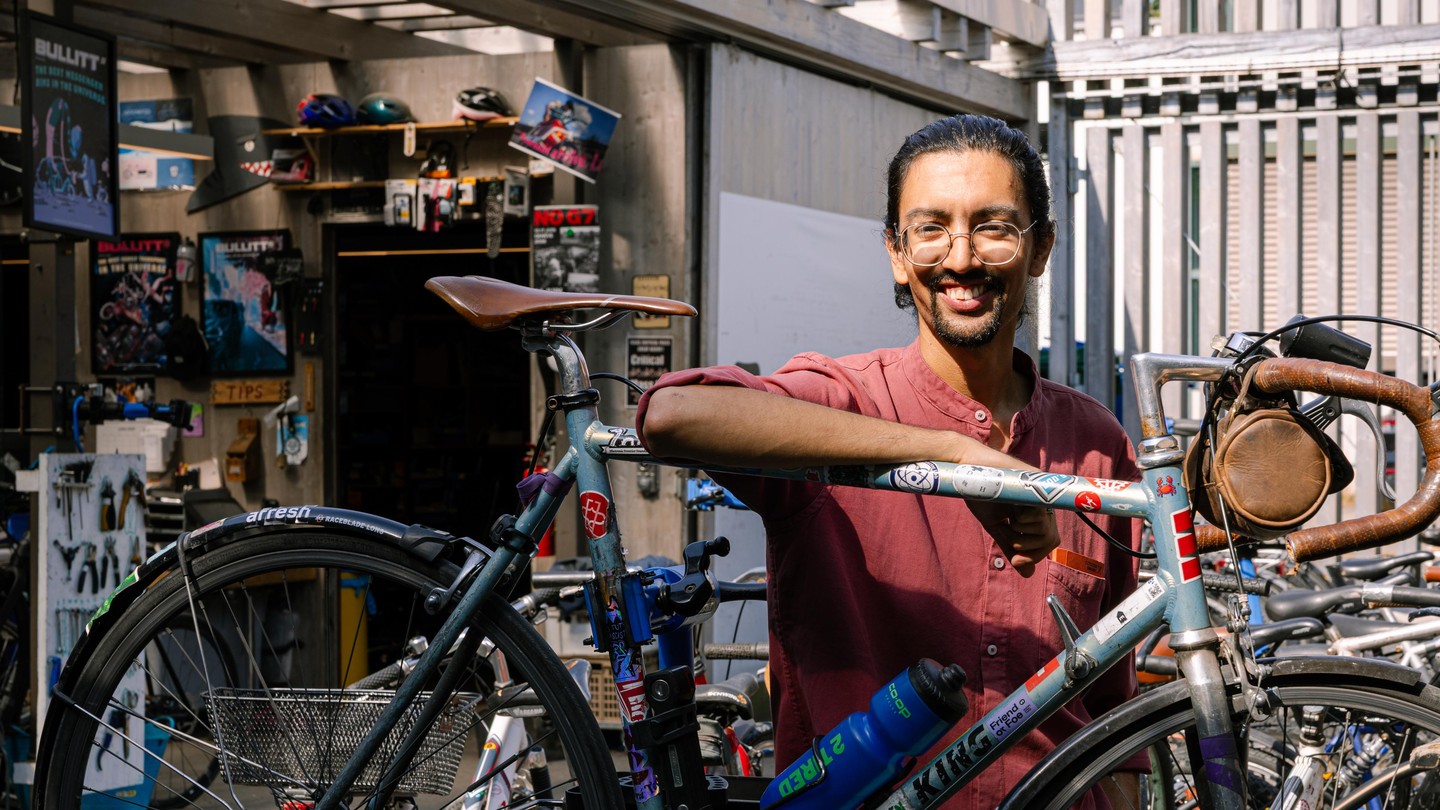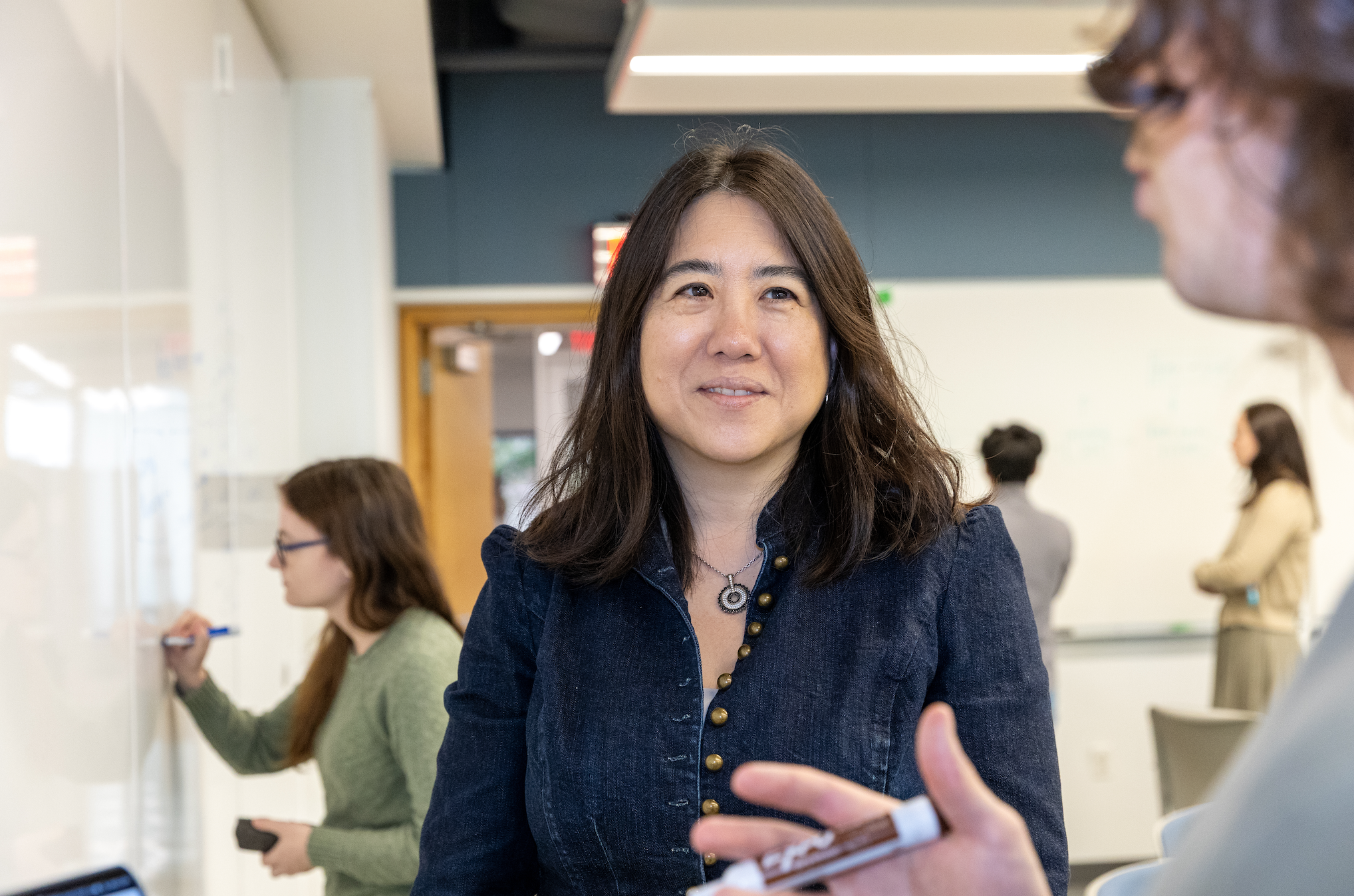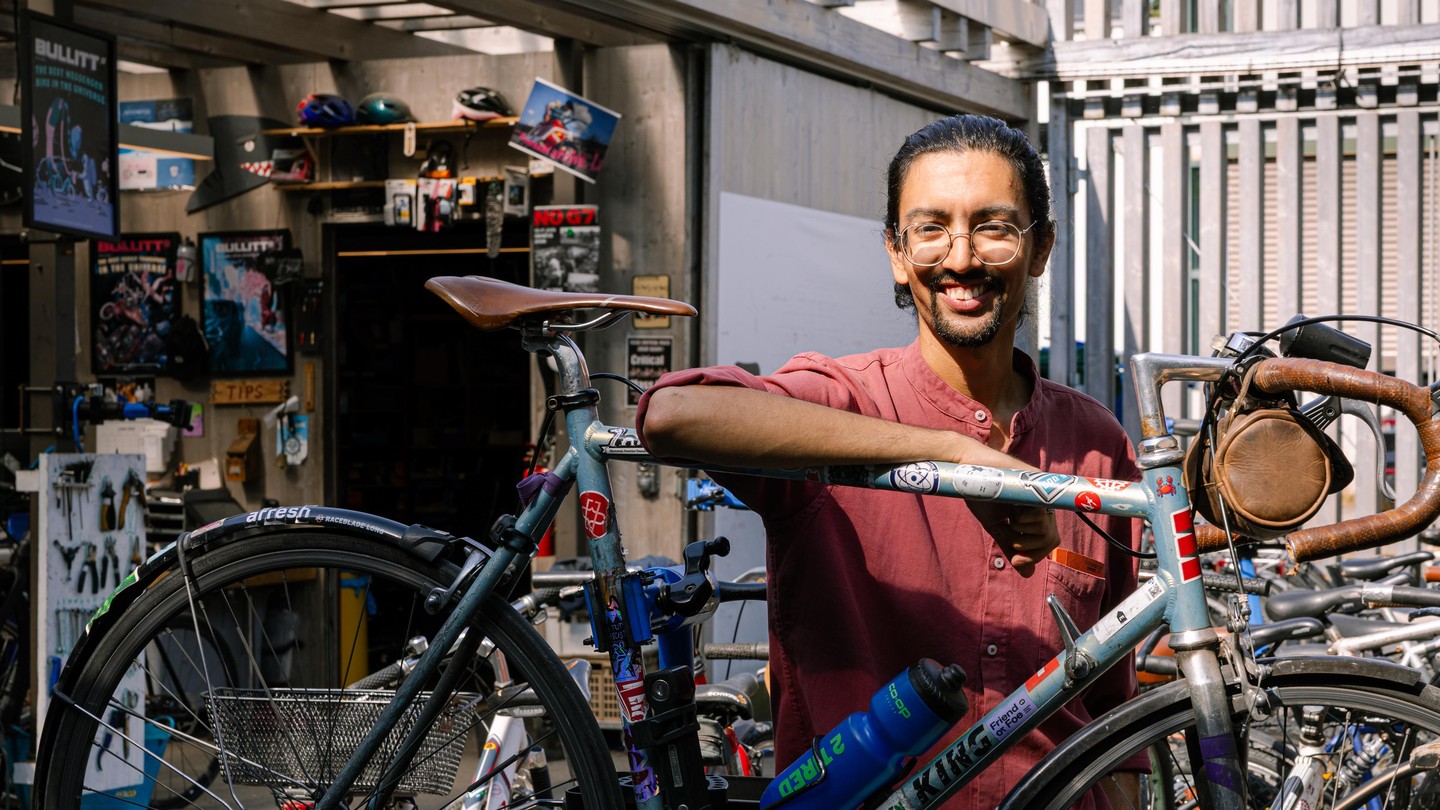
Shardul Chiplunkar is a fourth-year PhD candidate in the School of Computer and Communication Sciences who is deeply involved in representing his peers at EPFL. In this interview for the “Mind to Mind” series, he offers an inspiring perspective on managing stress and engaging with big questions.His research is about human interfaces for programming and theorem-proving tools, trying to make them more intuitive with diagrams and other rich interactions. But Shardul Chiplunkar’s interests are much wider: Hindustani classical music, choir and a capella, etymology, and bicycles, to quote a few from his personal website. We met to speak about stress, resilience, and his role in representing PhD students, only to end up talking about AI.How do you cope with stress?One thing I’ve learned over the course of my PhD is that it's important to identify yourself not just with your work, but also with other pursuits in life. Academia often has this implicit expectation that you should dedicate your whole life to research, but then if I’m not making progress in research, I would be stressed about my whole life… It becomes one-dimensional. But in reality, I might be making progress along different dimensions, like assimilating to a new culture, improving my French, making more friends or becoming better friends, learning an instrument. It helps to put stress in perspective.Still, doing a PhD is very demanding!It is! Even if you have a perfect advisor and your research is going great, there are day-to-day stresses of submission deadlines, presentations, etc. But perhaps more importantly, there are the long-term background stresses of: Am I doing anything useful for the world? Will anything ever come out of this research? I see a lot of people around me, myself included, struggling with the fact that we are in a worsening climate emergency despite all the research; technology keeps enabling more repression and violence; people, including scientists, are losing faith in academia; just to give a few examples from a wide spectrum of big problems. It can be difficult to stay motivated when your work seems so far removed from addressing any of it.I don’t have a grand unified solution, of course. But as a start, it helps to have these conversations with others who feel the same way. And it helps me to consider not just my research but also my training as a researcher, and the exposure to the world at large that it gives me, the voice it lets me have in the communities around me.Does being involved at EPFL in some ways help lower this stress?Yes! Representing the interests of my immediate communities—PhD students in my program, and scientific staff across EPFL—trying to improve things, to make sure everyone’s voices are heard, all this really helps me contribute in the here and now. Apart from that, being involved puts you in a network of smart people from diverse backgrounds working on many different things. So even a casual conversation after a seminar or at a dinner party can be insightful, and you never know what impact you are collectively going to have down the road.What are the main problems of PhD candidates at EPFL?EPFL is a big place. It can seem like your problems are kind of getting lost in a huge maze. And sometimes, different sides of this maze, like PhD students and administrators, have never really spoken to each other. It can be hard to know where to start improving the situation. A perfect example is mental health issues arising from work-related stress or interpersonal conflicts. Surveys have shown this is common among PhD students, and it can seem like there’s no real solution. Damaging the relationship with your advisor or other professors can hurt your career. So the Respect Compliance Office, VPH, doctoral program directors, and so on are all supposed to—and trying to—help with nuanced interventions and difficult conversations. But for a PhD student who is already struggling, navigating it all is overwhelming. People who could have supported them often hear too little, too late, and I think that’s why EPFL as a whole still hasn’t developed the right frames to resolve these issues.That’s where PhD student representatives play an important role. Many parts of the administration are increasingly involving us in working groups and committees where we can provide context, summarize common issues, propose ideas. And this also lets us better explain the system to our peers. In general, I think everyone would benefit from having more experience of what other people’s work at the university is like.What other kinds of issues have you addressed in your representative work?I won’t claim sole credit for any specific change, but I was involved in a lot of discussions about balancing teaching and research responsibilities. There are many conflicting interests: some PhD students enjoy teaching, others would be happier without it. Professors need TAs for their courses, but also want their students to focus on research. Each doctoral program has a different view of how much teaching is expected for a PhD. So to what extent should we have uniform rules for everyone, versus maintaining flexibility? It’s not an easy problem, but everyone wanted to address it, and now we have new rules at the EDOC level and new policies that individual programs like EDIC are already trying out.What do you like most about EPFL?That it’s so international. And partly because of Switzerland's position as a neutral country, we’re lucky to get a lot of talented people from all over the world, who might face more political barriers elsewhere. Maybe also because of its geographical location, and because it can be easier to fit in when so many people at EPFL are foreigners, and aren’t native speakers of French or English. It’s a unique advantage and I wonder how we can make the most of it.You are a “generative AI vegetarian”. Can you elaborate on that?Gladly! I believe generative AI is unethical and unsustainable. Unethical, because these models are trained on vast amounts of books, artwork, etc., collected without the consent of the creators or respect for intellectual property. Worse, the result is marketed as a replacement for the people whose labor it relied on. As for sustainability, I just don’t think the environmental costs are justified by the claimed benefits. My personal conclusion is that I try to avoid consuming the output of genAI. For instance, I don’t read articles “written” using AI, and I don’t use AI coding tools. I’m not trying to convince anyone to be genAI-vegetarian or claim these are the best or only reasons. But I want to highlight that how much you want to engage with genAI in your everyday life should be a personal choice, although not everyone currently has that freedom.What about the relationship between AI and mental health?Clearly negative. We’ve all heard the stories of people using chatbots as therapists, and it goes completely off the rails. But there are also subtler influences. There’s the fear of being “left behind” if you don’t use AI, the pressure to be “more productive”, because everyone around you is using AI to work faster. Or at least it seems so… Personally, I thought everyone else worked faster than me even before AI was so common! Also, we’re starting to see evidence that relying on AI for everyday tasks reduces your skills, and your confidence in your own abilities without AI. It’s even worse for students, who now might not be acquiring those skills to begin with.The silver lining is that I think the AI hype is making people, especially younger generations, question the whole package of AI, social media, Big Tech. Am I really in control of what I read and watch, what I feel and believe, what the algorithms know about me? Are my tools expanding my agency or making me beholden to some corporation? Asking these questions will give us a healthier relationship with technology.
“Representing PhD students helps me contribute in the here and now”
Shardul Chiplunkar is a fourth-year PhD candidate in the School of Computer and Communication Sciences who is deeply involved in representing his peers at EPFL. In this interview for the “Mind to Mind” series, he offers an inspiring perspective on managing stress and engaging with big questions.
1,314 words~6 min read