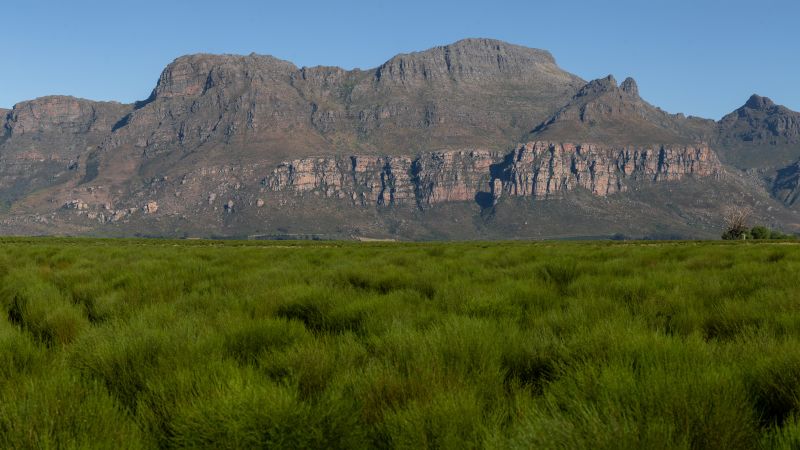
South Africa’s rugged Cederberg Mountains are best known for their dramatic rock formations and wildlife including baboons and leopards. But the arid region is also the home to an unassuming plant that has become popular around the world.
Rooibos, meaning “red bush” in Afrikaans, grows exclusively in a 60,000-hectare (140,000 acre) area in the Cederberg region, around 155 miles north of Cape Town. Its needle-like leaves have long been used by the country’s Indigenous communities to make a woody-flavored tea.
Now, it appeals to the tastebuds of tea-lovers globally. Between 2022 and 2024, global consumption of rooibos tea increased by 12.5%; and in 2025, exports of the plant passed 10,000 tons for the first time — up from around 5,900 tons in 2015.
“In the beginning, (rooibos) was virtually unknown, so the growth was just driven by more people getting to know it and enjoying its flavor,” said Martin Bergh, managing director of South Africa-based Rooibos Limited, the oldest and largest rooibos processor in the world.
Now, he says the tea’s growing popularity is being driven by health-conscious consumers. “Rooibos is naturally caffeine free. So … it replaces, or can be a substitute for, black tea and coffee,” he explained.