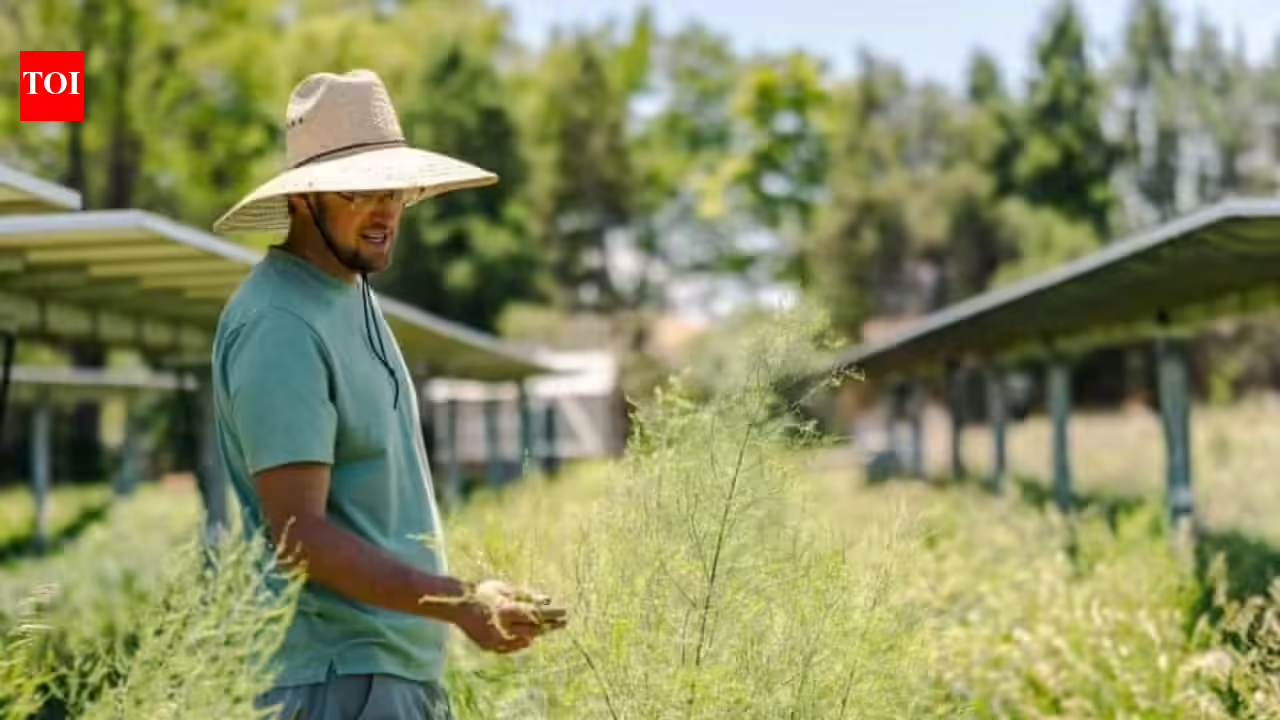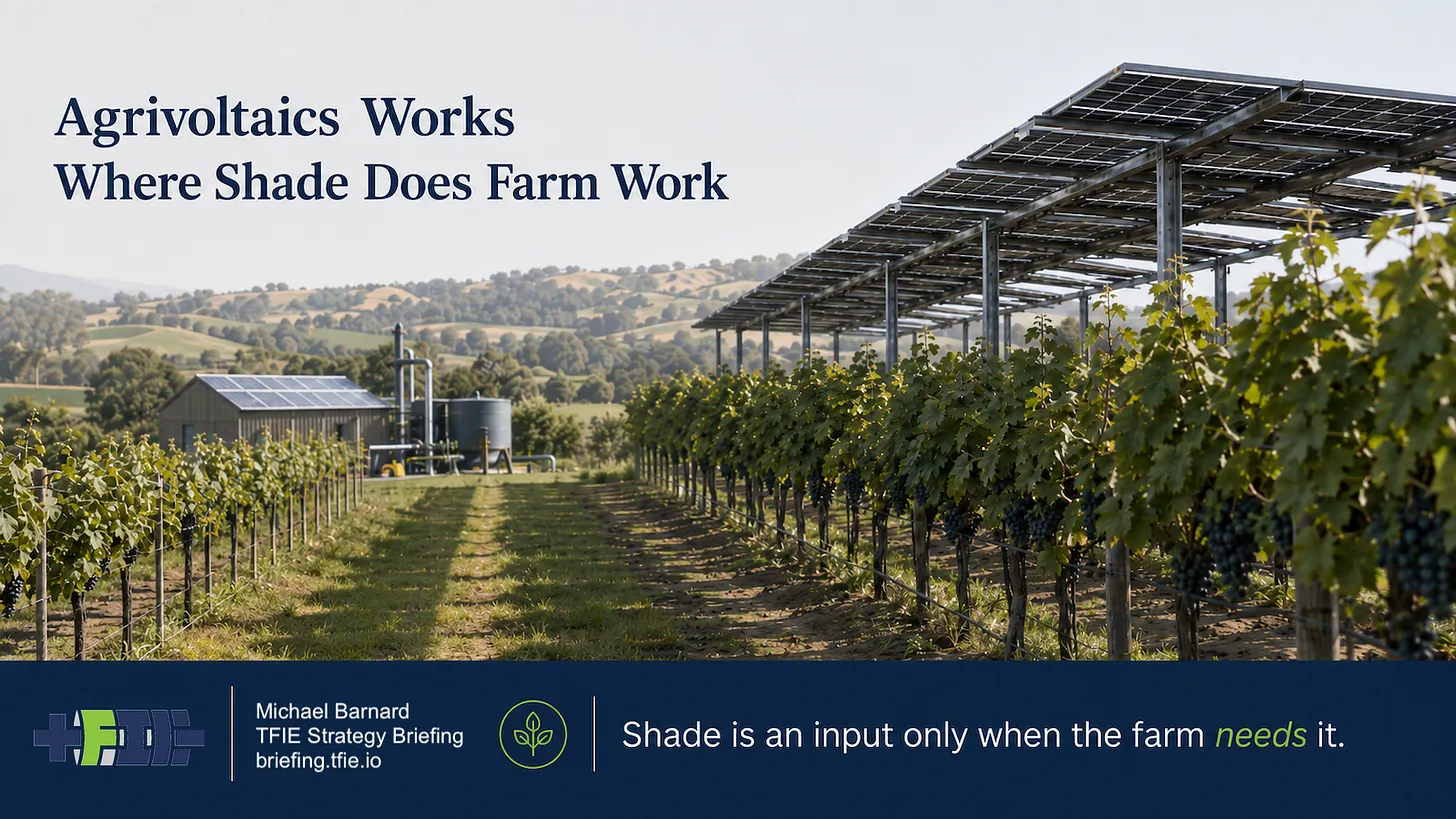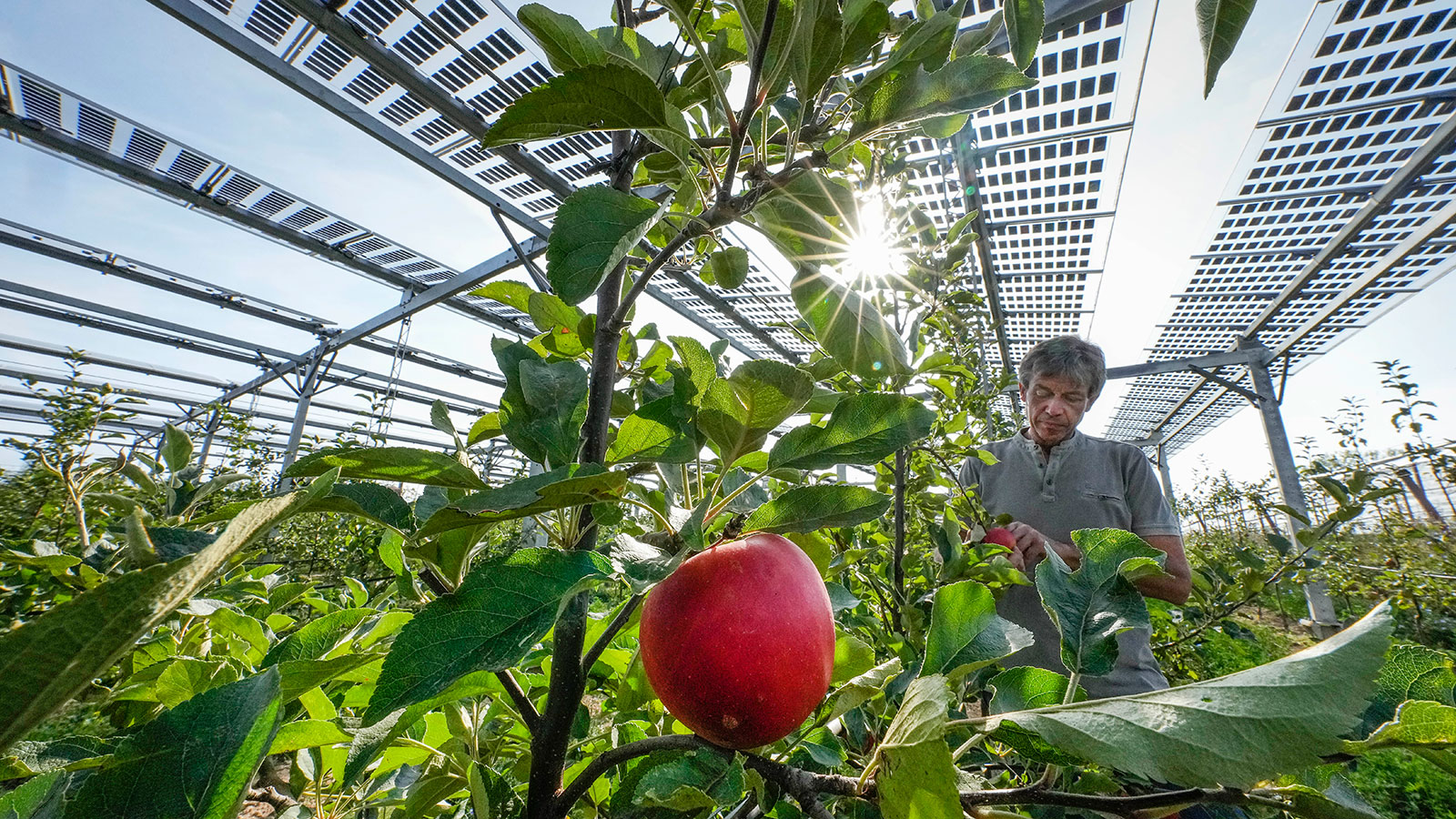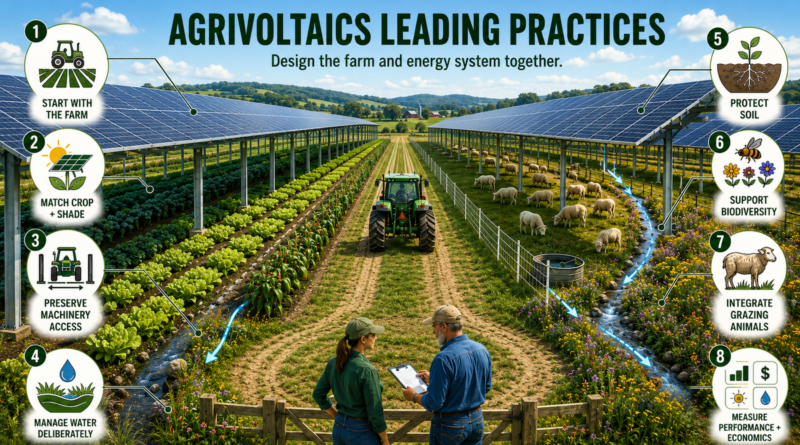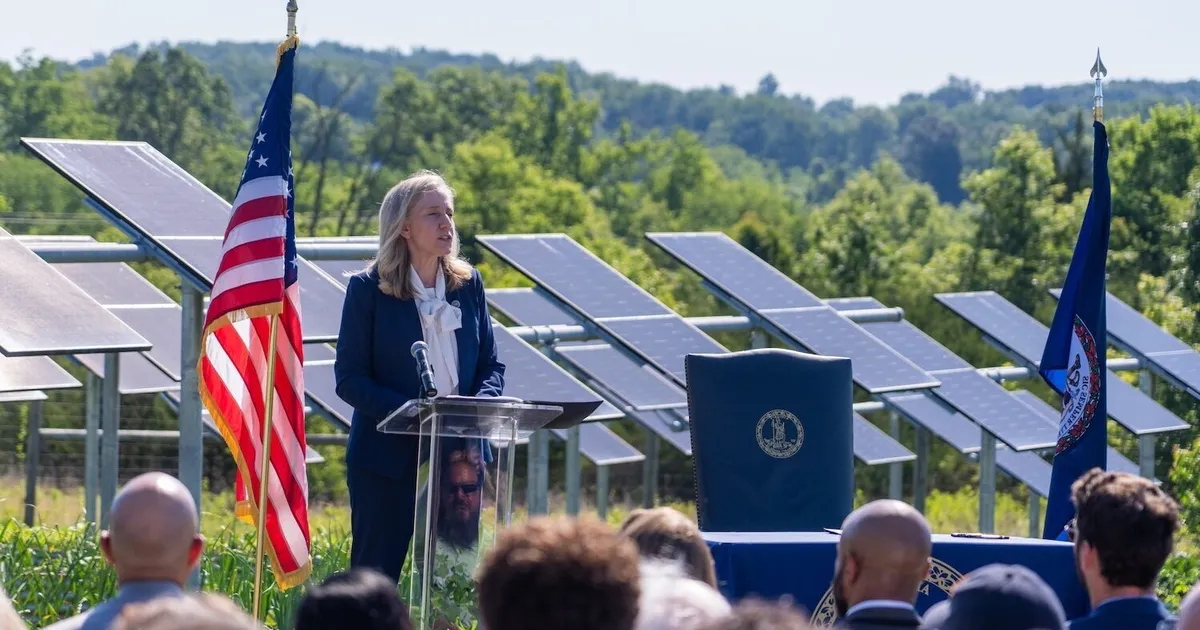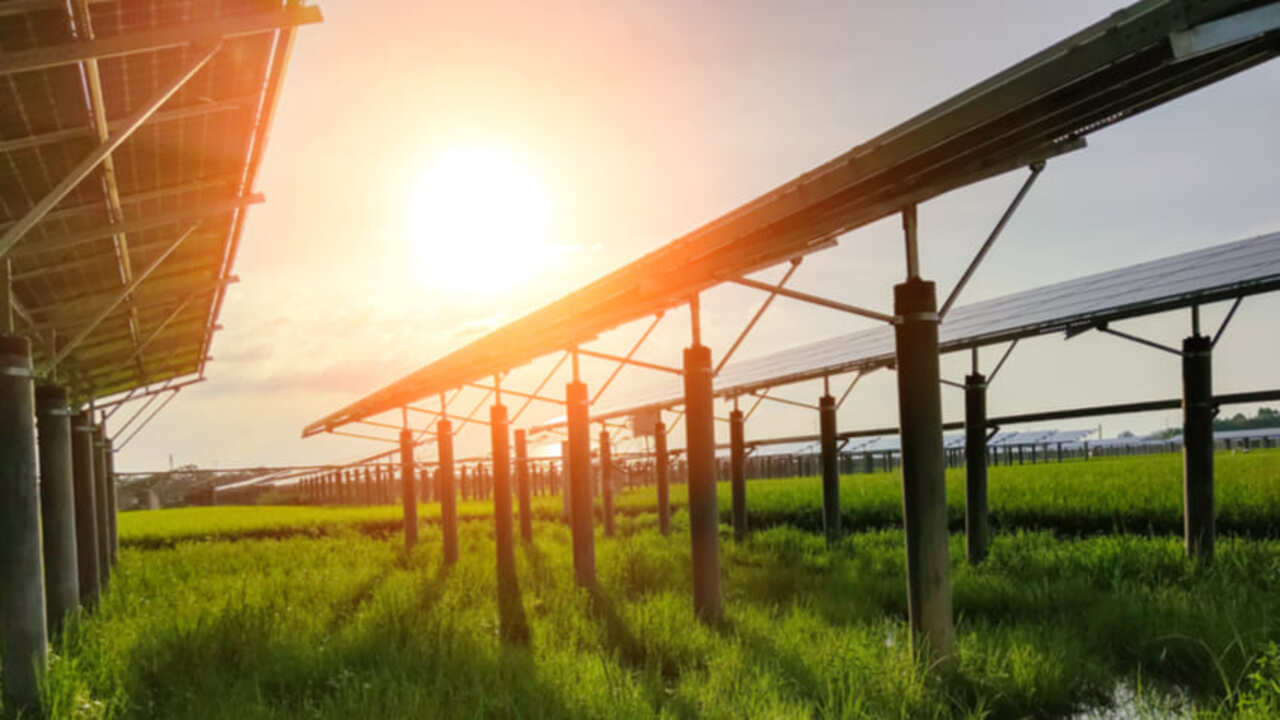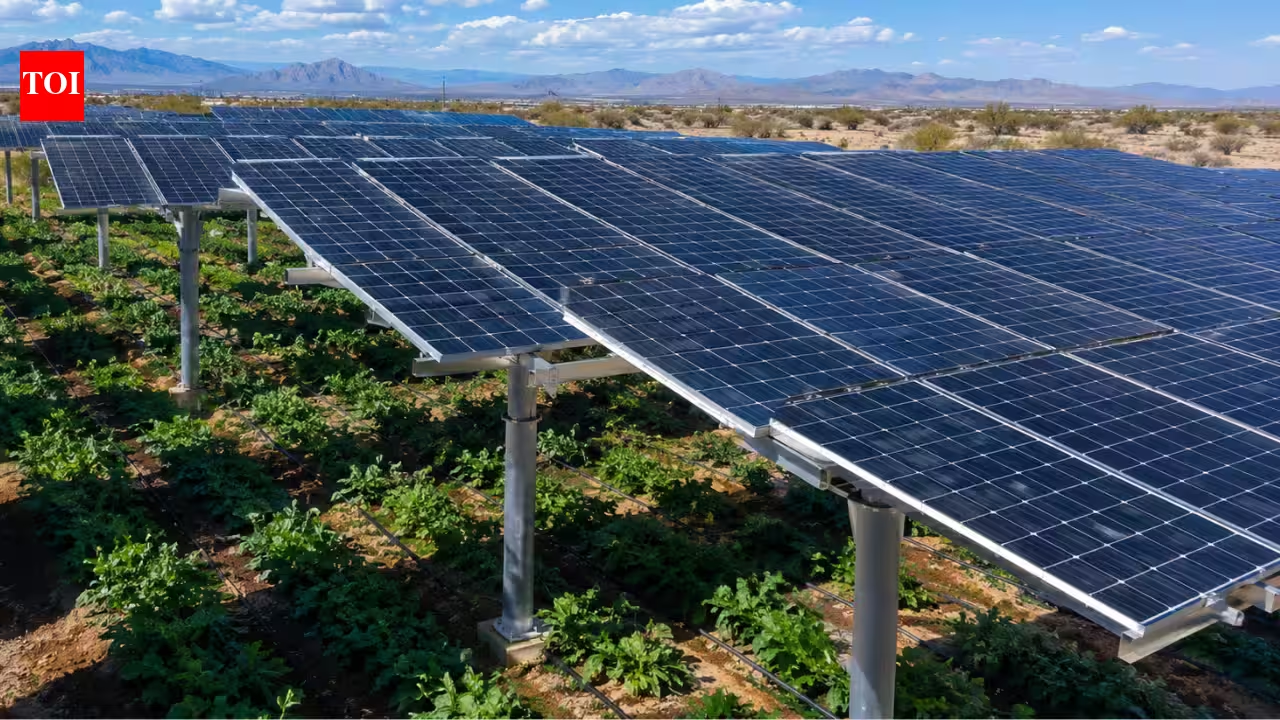
Agrivoltaics: growing crops in the shade of solar panels lets the same land produce both food and electricity. Image Credits: ChatGPTFarmland and solar farms have long been competing for the same patch of ground in America. Arizona tried something different: raise the panels on stilts and grow food in the shade underneath. According to the research titled ‘Agrivoltaics provide mutual benefits across the food–energy–water nexus in drylands,’ from the University of Arizona, published in the journal Nature Sustainability, this set-up, known as agrivoltaics, lets one acre do two jobs at once. Researchers also found an unplanned third benefit: cooler, safer conditions for people working the land.One acre, two jobsThe idea is simple. Instead of clearing land for solar panels or clearing land for crops, you lift the panels several feet into the air and plant vegetables in the shade below. Desert sunlight is often more than plants can use anyway, so a little shade helps rather than hurts.The research team, led by geographer Greg Barron-Gafford, tested this at the university's Biosphere 2 facility. They grew chiltepin peppers, jalapeños and cherry tomatoes under raised panels and compared them with the same crops grown out in the open. The study reports that chiltepin fruit production was three times greater under the panels, and tomato production was twice as high. Jalapeños produced a similar amount of fruit either way, but with 65% less water lost through the plant's leaves.The agrivoltaics research site at the University of Arizona's Biosphere 2, where much of this data was collected. Image Credits: Wikimedia CommonsLess water, more cropWater is the key constraint in the desert Southwest, and this is where agrivoltaics shows its value. The same study found that when plots were irrigated every other day, soil moisture under the panels stayed about 15% higher than in the open plot. Less direct heat means less evaporation, so the water farmers pay to pump has more time to reach the roots before it disappears into dry air.The panels and the plants help each otherWhat makes this more than a simple shading effect is that the relationship runs both ways. Solar panels lose efficiency as they heat up, and desert installations often bake in the very sun they are meant to be capturing. The study notes that crops growing underneath release moisture into the air as they breathe, and that natural cooling effect reduces heat stress on the panels above, helping them work a little better in return.Measurably cooler for the people underneathThis is where the story gets personal. Separate skin-temperature readings collected by the AgriSolar Clearinghouse, a project of the National Centre for Appropriate Technology, compared workers standing in full sun with workers standing under solar panels at several US sites. In Boulder, Colorado, skin temperature dropped by about 15°F in the shade. In Phoenix, Arizona, one of the hottest cities in the country, it dropped by nearly 21°F.Agrivoltaics isn't unique to Arizona; this vineyard in southern France uses the same raised-panel principle over its vines. Image Credits: Wikimedia CommonsThat kind of difference is not just about comfort. A CDC analysis of heat-related deaths among US crop workers between 1992 and 2006 found that crop workers died from heat exposure at a rate nearly 20 times higher than the average American civilian worker. The report also notes that most of those who died were adults in their prime working years, not people typically seen as high-risk, which underlines how dangerous prolonged heat can be for anyone doing hard physical labour outdoors.Against that backdrop, a strip of shade that also keeps a water bottle cool through a triple-digit shift is not a small thing. For outdoor workers, it can be the difference between finishing the day safely and a trip to the emergency room.Still early days, but a promising directionIt is important to note where the research stands. Most of these results come from research plots at Biosphere 2, not from thousand-acre commercial farms. Elevating panels high enough for tractors and irrigation equipment to pass underneath costs more upfront than a standard ground-mounted solar array, and scaling the idea across working farms will take time, investment and further testing.Even so, the appeal is easy to see. This is not a choice between growing food and generating clean electricity. For a country dealing with drought, rising summer heat and growing demand for clean power all at once, that combination is worth watching closely.
Arizona researchers raised solar panels above crops so one acre could grow food and electricity, while separate readings found skin temperatures nearly 21°F cooler under panels in Phoenix
Farmland and solar farms have long been competing for the same patch of ground in America. Arizona tried something different: raise the panels on stilts and grow food in the shade underneath.
732 words~3 min read