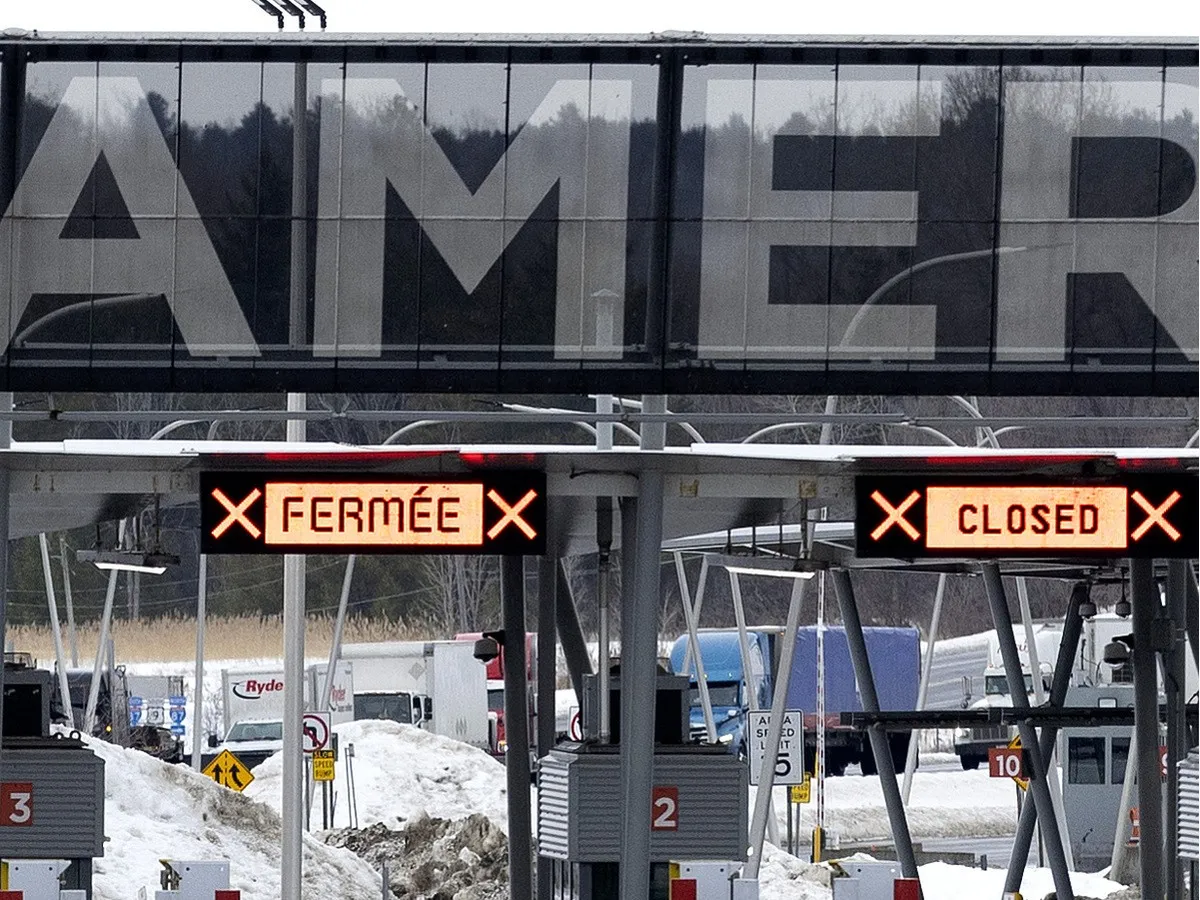
Skip to Content Subscribe Our Offers My Account Manage My Subscriptions FAQ Newsletters Canada Canadian True Crime Canadian Politics Health World Israel & Middle East Financial Post NP Comment Longreads Puzzmo Diversions Comics NP News Quiz New York Times Crossword Horoscopes Life Eating & Drinking Style Sponsored Play for Ontario Travel Travel Canada Travel USA Travel International Cruises Travel Essentials Culture Books Celebrity Movies Music Theatre Television Business Essentials Advice Lives Told Tails Told Shopping Buy Canadian Home Living Outdoor Living Kitchen & Dining Tech Style & Beauty Personal Care Entertainment & Hobbies Gift Guide Travel Guide Amazon Prime Day Deals Savings National Post Store More Sports Hockey Baseball Basketball Football Soccer Golf Tennis Driving Vehicle Research Reviews News Gear Guide Obituaries Place an Obituary Place an In Memoriam Classifieds Place an Ad Celebrations Working Business Ads Archives Healthing Epaper Manage Print Subscription Profile Settings My Subscriptions Saved Articles My Offers Newsletters Customer Service FAQ Newsletters Canada World Financial Post NP Comment Longreads Puzzmo Diversions Life Shopping Epaper Manage Print Subscription HomeNewsCanadaRefunds are on the way for Canadian exporters owed roughly $10 billion from Trump's illegal tariffsThe United States raked in over $160 billion in gross revenue from tariffs imposed under the International Emergency Economic Powers ActLast updated 0 minutes ago You can save this article by registering for free here. Or sign-in if you have an account.U.S. Customs and Border Protection (CBP) launched a new Consolidated Administration and Processing of Entries (CAPE) system to handle the refund process. Photo by Allen McInnis /Montreal GazetteWASHINGTON, D.C. — The United States raked in over $160 billion in gross revenue from tariffs imposed under the International Emergency Economic Powers Act (IEEPA) before the U.S. Supreme Court deemed them illegal in February. Given recent headlines about all the tariffs flying around the globe — Section 122, 301, and 338 tariffs — it’s easy to lose sight of where the court-ordered refunds now stand, but Canadian exporters want their roughly $10 billion back.Enjoy the latest local, national and international news.Exclusive articles by Conrad Black, Barbara Kay and others. Plus, special edition NP Platformed and First Reading newsletters and virtual events.Unlimited online access to National Post.National Post ePaper, an electronic replica of the print edition to view on any device, share and comment on.Daily puzzles including the New York Times Crossword.Support local journalism.Enjoy the latest local, national and international news.Exclusive articles by Conrad Black, Barbara Kay and others. Plus, special edition NP Platformed and First Reading newsletters and virtual events.Unlimited online access to National Post.National Post ePaper, an electronic replica of the print edition to view on any device, share and comment on.Daily puzzles including the New York Times Crossword.Support local journalism.Create an account or sign in to continue with your reading experience.Access articles from across Canada with one account.Share your thoughts and join the conversation in the comments.Enjoy additional articles per month.Get email updates from your favourite authors.Create an account or sign in to continue with your reading experience.Access articles from across Canada with one accountShare your thoughts and join the conversation in the commentsEnjoy additional articles per monthGet email updates from your favourite authorsSign In or Create an AccountorU.S. Customs and Border Protection (CBP) launched a new Consolidated Administration and Processing of Entries (CAPE) system to handle the refund process, and it has been a few months now since this took effect, so National Post thought now would be a good time to speak with Carrie Owens, a lawyer specializing in international trade from Washington-based firm Kelley Drye — and a former director at U.S. Customs and Border Protection — to learn where things stand with refunds.Get a dash of perspective along with the trending news of the day in a very readable format.By signing up you consent to receive the above newsletter from Postmedia Network Inc.A welcome email is on its way. If you don't see it, please check your junk folder.The next issue of NP Posted will soon be in your inbox.We encountered an issue signing you up. Please try againCarrie Owens: Yes, they are being refunded. CAPE is up and running for the vast majority of entries, including regular consumption entries, and phase two has included warehouse withdrawal entries. Any U.S. importer of record is entitled to file for a refund.When an order goes into a bonded warehouse, importers don’t pay customs duties until they’re withdrawn from the warehouse and enter the US Customs territory. When that withdrawal entry is filed, one can then get their refund in CAPE.More recent import transactions are eligible for refunds, but older ones — the finally liquidated entries — are still tied up in liquidation.I’ve been impressed with how quickly CBP was able to get the system up and running.Liquidation is like paying your bill at a restaurant. Where the restaurant says, ‘This is what you owe.’ You say, ‘Great, I’ll pay my bill,’ and then you leave.”CBP generally sets the import transactions to liquidate by day 314, and that means that’s the final assessment of duties, when they say, ‘This is what we think you owe.’”Once liquidation occurs, a critical split-timeline starts. For the first 80 days post-liquidation, CBP allows you to claim your tariff refund through their automated CAPE portal. Once you hit day 81, however, the CAPE portal locks you out.If you disagree with the owed amount, you can then file a protest. The importer has until 180 days after liquidation to file a protest, at which point the entry becomes finally liquidated.You see a lot of discussion of finally liquidated entries — entries that have gone more than 180 days without a valid protest being filed. That’s where we are in the litigation right now.CBP’s CAPE system is handling the administrative refunds first, including unliquidated entries and recently liquidated entries that still fall within the agency’s processing window. The harder question is what happens to finally liquidated entries, which are no longer eligible for routine CAPE processing and are now at the centre of the government’s appeal to the Federal Circuit.The litigation now focuses on those finally liquidated entries. The Court of International Trade ordered CBP to refund the duties, but the government says that order cannot automatically extend to every importer; in its view, only the parties before the court are entitled to that relief. In other words, every importer would have to file a lawsuit to get their money back.The plaintiffs disagree, and the CIT rejected CBP’s narrower reading. The result is an appeal to the Federal Circuit, which is being asked to decide whether the CIT can issue a refund order with broader effect.Meanwhile, the CIT is still moving forward on related refund cases, including efforts to revive class-action claims that could help similarly situated importers whose entries fall outside CAPE’s refund window.No. The Supreme Court issued its decision so quickly, and CBP got the CAPE system up and running quickly… so a lot of the entries were within that first 314 days plus the 80 day period. So they were eligible for the automated CAPE refunds.They’re doing them in batches. And what you’ll see is that a whole batch will have a liquidation date… That’s part of the CAPE process. That’s actually a good sign.Once a batch moves, importers should see the money appear into their account probably within about two weeks.The biggest challenge that I’ve seen right now with companies is that they don’t have access to their own ACE portal. This matters because if you have multiple brokers, each broker can only file for a refund for the entries it filed for that importer.Companies need to make sure they have access to their ACE portal. Then they can file on their own, and it’s fairly straightforward.If an importer, for some reason, puts entries in there that aren’t qualifying, all that happens is those entries are rejected. All the other entries are accepted.Yes, the major complaint I get is people saying that it’s taking a while. CBP is batching them according to how close they are to entering beyond that day 90 after liquidation, when, in the government’s view, they no longer have authority to rule on them, to act on them.As for surprises, there are some unusual results where taxes that are owed are being subtracted from the refund.Also, importers need to make sure entries are accurate before filing in CAPE because they won’t be able to file a post summary correction after that. Instead, after the entries liquidate in the CAPE process, importers would have to file a protest within 180 days of liquidation in order to correct errors.National PostOur website is the place for the latest breaking news, exclusive scoops, longreads and provocative commentary. Please bookmark nationalpost.com and sign up for our newsletters here. Join the Conversation This website uses cookies to personalize your content (including ads), and allows us to analyze our traffic. Read more about cookies here. By continuing to use our site, you agree to our Terms of Use and Privacy Policy.
Refunds are on the way for Canadian exporters owed roughly $10 billion from Trump's illegal tariffs
Some Canadian exporters are getting IEEPA refunds through U.S. Customs' CAPE system, while older claims remain tied up in litigation.
1,493 words~7 min read