Story audio is generated using AI
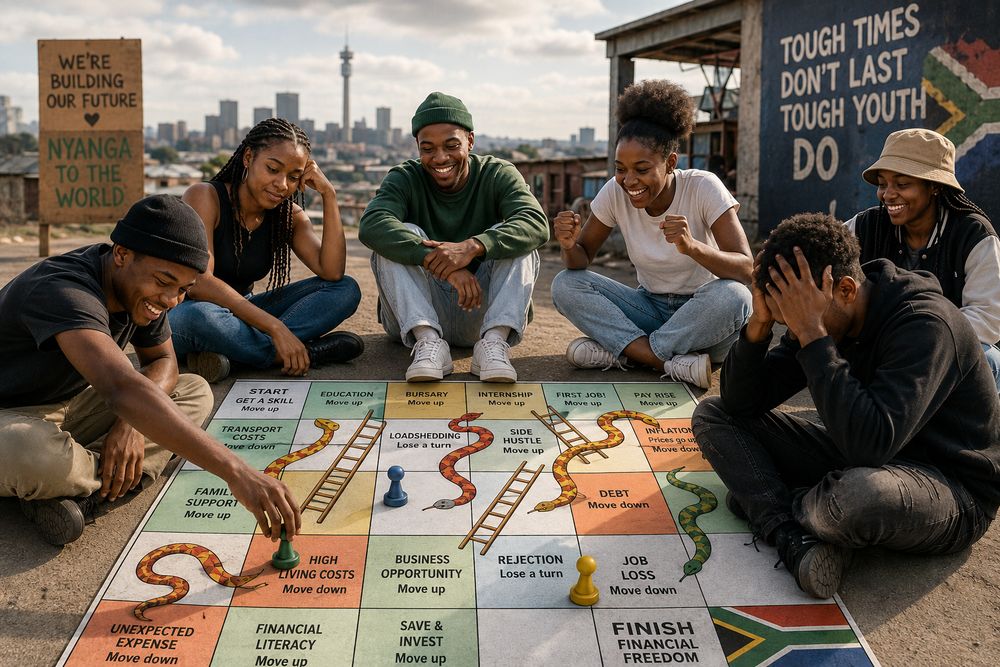
South Africa has no shortage of young entrepreneurs or business ideas. What it struggles with, however, is turning those ideas into businesses that survive.The country’s official unemployment rate stood at 32.7% in the first quarter of 2026 according to Stats SA, with 4.7-million people aged 15-34 unemployed. Yet millions of South Africans are already trying to build their own livelihoods. FinMark Trust previously estimated that the country has about 3-million micro, small and medium enterprises, employing about 13.4-million people and accounting for almost 80% of the national workforce.Entrepreneurship, in other words, is not the problem — survival is. And the reason so many small businesses stall has less to do with a shortage of capital and more with customers who are willing to pay for what founders are making.That was the premise behind Woolworths’ Youth Makers programme, which recently put 15 young entrepreneurs spanning fashion, agriculture, beauty and homeware into its stores for a two-week retail showcase, this time at Mall of Africa, Johannesburg, after a first leg in Durban. The programme drew more than 200 applications this year, narrowed to 24 finalists who pitched to a judging panel. Sixteen were selected, though one later dropped out, leaving a final cohort of 15 with R130,000 each in funding. Unlike conventional supplier development initiatives, it does not promise shelf space. What it offers, several founders said, is something harder to come by: a few thousand paying customers, in person, immediately.Niraj Soman, a Woolworths lead for technical product development for the fashion, beauty and home (FBH) division, who judged this year’s cohort, said the panel scored finalists on four criteria: whether the product solves a genuine problem, its novelty, its suitability for a typical Woolworths shopper, and the founder’s capacity to actually deliver. Pitches were capped at 10 minutes. “Do they feel as though they can carry their own brand?” he said, describing what judges were listening for.Woolworths Youth Makers 2026 winner and founder of Marapyane Farms Nthato Motlana. (Supplied) Nthato Motlana, who runs the 150ha Marapyane Farms in Lanseria, put most of his grant toward GlobalGAP certification, an international agricultural compliance standard.“We positioned the business to be almost formal-market ready,” he said, adding that in the absence of the certificate, Woolworths ran its own risk assessment, scoring his farm at 92%.“That showed us we were ready to scale. Beyond that, people have started asking where they can buy from us, wanting to learn about farming and how to support young black farmers.”Patrick Ferguson. (Supplied) Patrick Ferguson, known for couture and occasion wear, used the programme to launch his first ready-to-wear collection — a leap he had planned for years.“[The programme] accelerated the plan for the business. We’ve learnt a lot that would have taken years to learn in just six months. Before this, it was appointment-only from my studio. Now we’re applying to boutiques because we’ve built a collection that can be stocked.”Woolworths Youth Makers 2026 winner Phiwe Mareka. (Supplied) For Phiwe Mareka, founder of leather goods brand Hide and Suede, the grant went toward a laser cutter that reduced production time dramatically.“It’s opened doors that I know at my capacity wouldn’t have been possible,” she said.“Customers are discovering the brand and appreciating the products. I’ve also been able to invest in marketing, because making a beautiful product isn’t enough if people don’t know it exists.”Woolworths Youth Makers 2026 winner and founder of Walk Fresh, Lethabo Mokoena. Picture: SUPPLIED (Supplied) Lethabo Mokoena, co-founder of sneaker-care brand Walk Fresh, now 11 years old with six stores, described the showcase as validation rather than a windfall.“Being acknowledged and given the opportunity to say, ‘Come showcase what you have with our audience; we trust you,’ is a big milestone and a turning point for our brand.”Woolworths director for corporate social justice, Zinzi Mgolodela, was candid about what the programme is and isn’t. “A win in this programme is about exposure. It’s not pulling them into the supplier base.” Woolworths runs a separate, longer-term enterprise and supplier development programme for founders it wants to bring into its actual supply chain. Youth Makers sits apart from that pipeline, built instead around access rather than procurement. It is a gap the government has struggled with too. Bongani Nkosi, director of economic development strategy at Gauteng’s department of economic development, conceded that the access-to-market gap is one the government has struggled to close on its own.Business Day