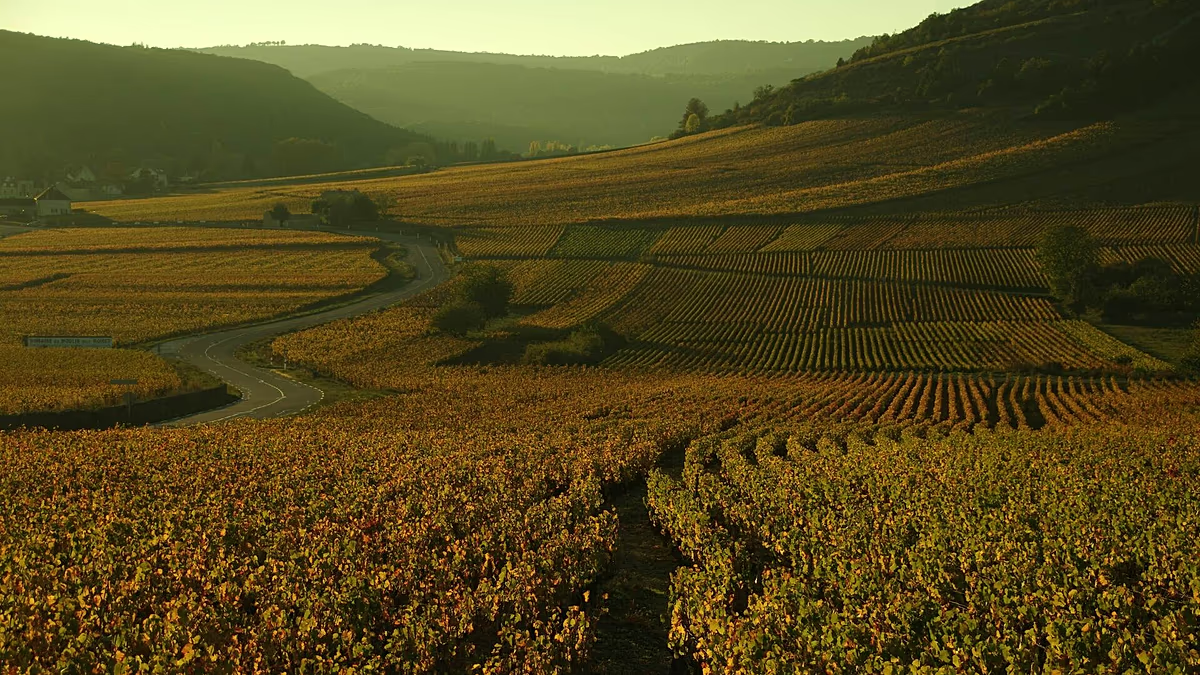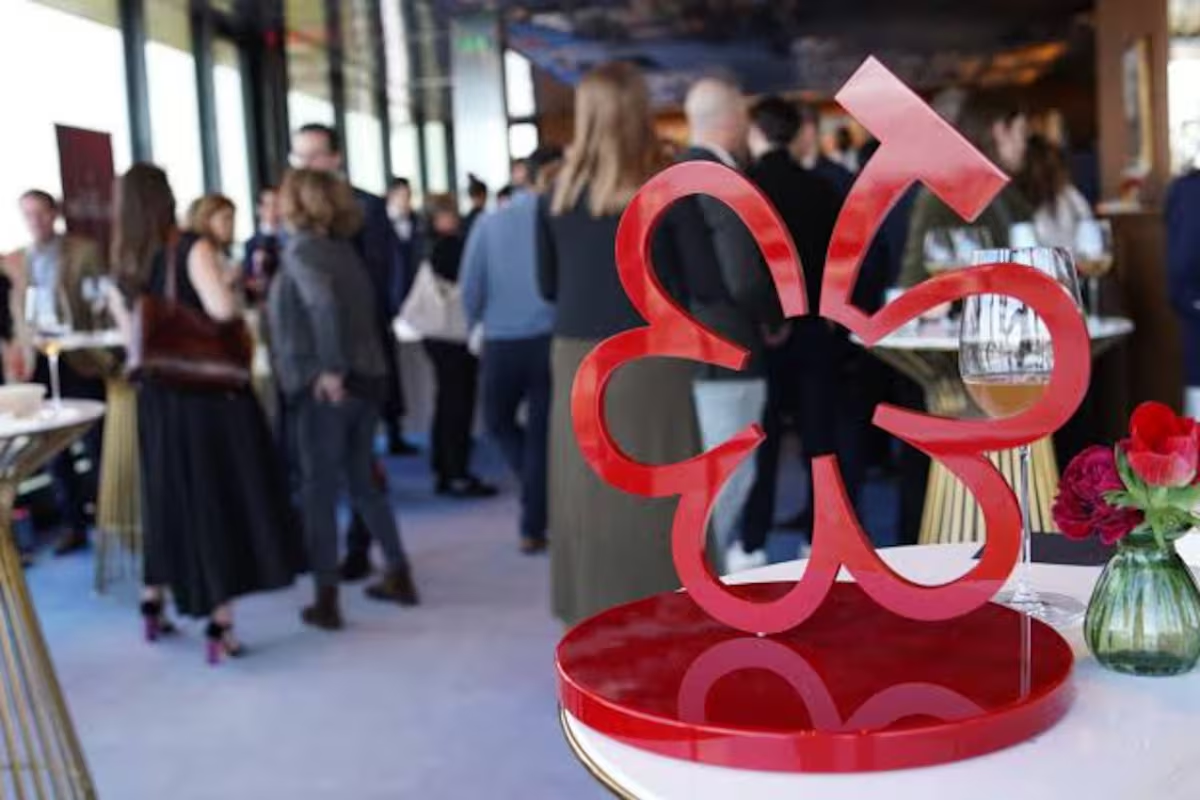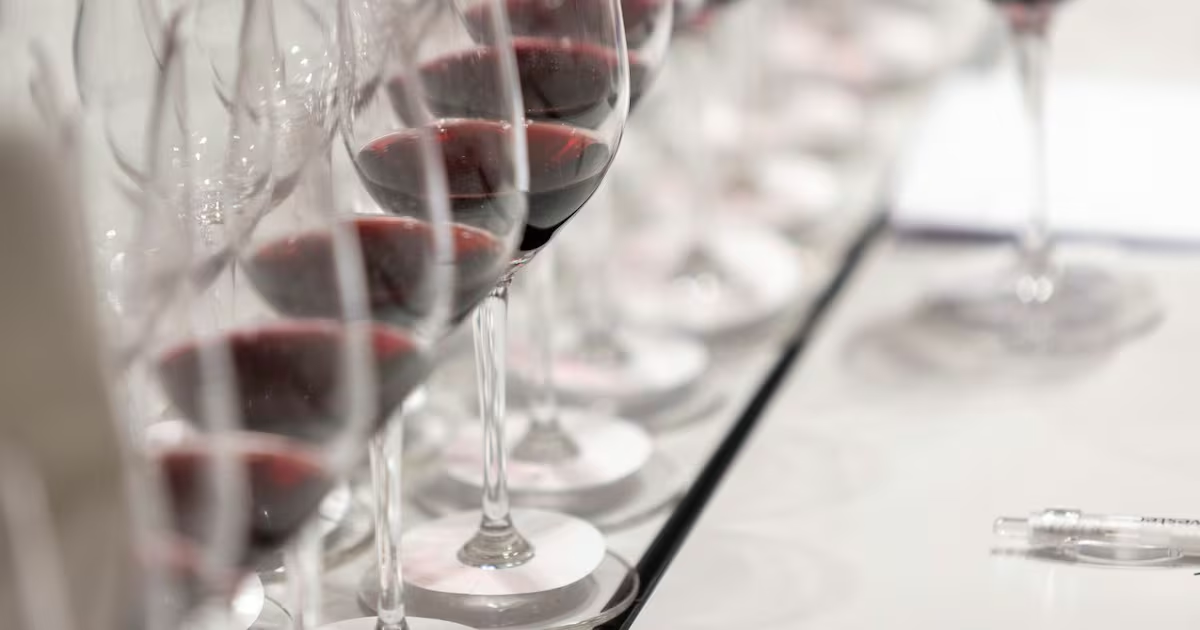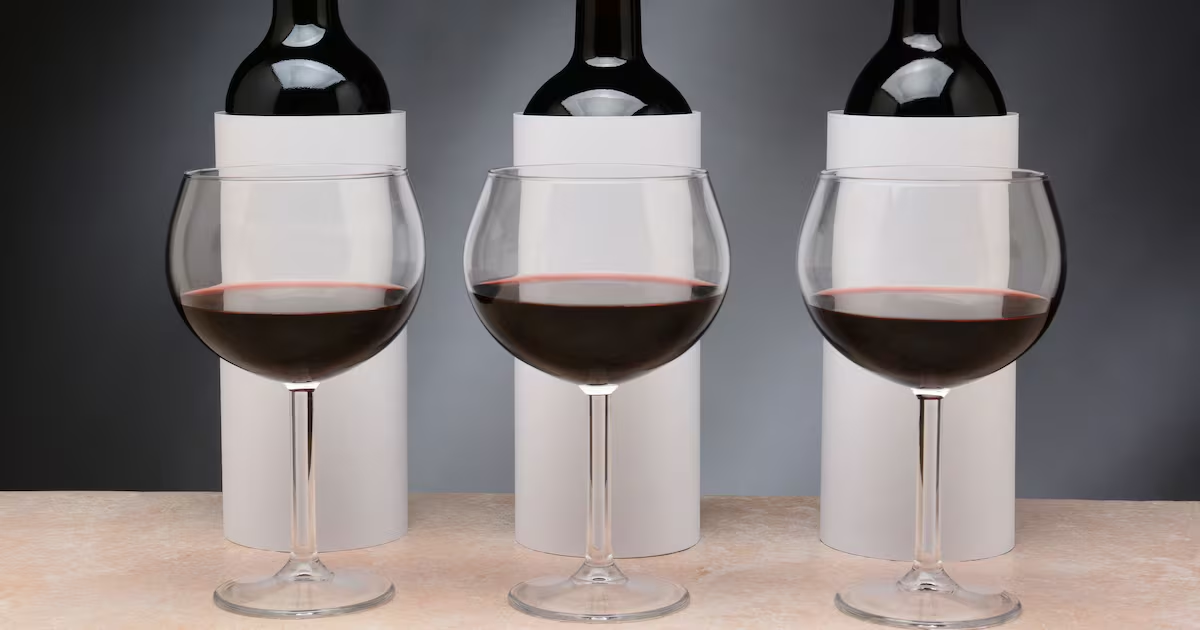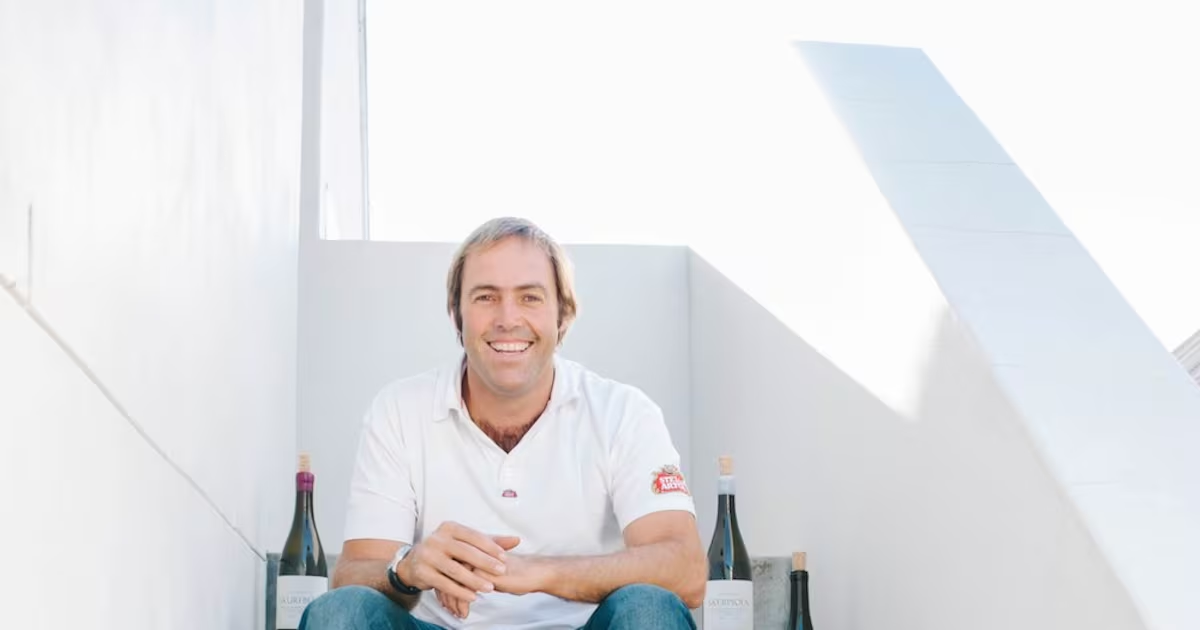
A few weeks ago the famous Guide Michelin issued its first formal producer wine ratings. The focus was Burgundy and the editors presented their table of merit using the system that has served to define excellence in the fine dining establishments of France for more than a century. While Michelin has owned Robert Parker’s Wine Advocate since 2019, until now it has kept the two brands wholly separate. The wine world has not reacted well to Michelin’s Burgundy ratings. In what must rank as a corporate strategic gaffe alongside IBM’s refusal to see laptops as the future of computing, the guide has sailed into a perfect storm of its own making. While its rankings can be easily defended (top Burgundy experts would probably produce a similar regional classification), the problem for Michelin is that its credibility has always resided in its neutrality, independence and, most importantly, its rigorous review methodology. Its “auditors” dine anonymously in all the establishments it rates. It’s believed that where an establishment is on the cusp of an upgrade (or downgrade), the auditors return a few times. That is why the Guide Michelin has for so long been the final arbiter of haute cuisine.It’s quite clear that this was not the methodology applied to the Burgundy rankings. Panels of judges were not invited to blind taste several vintages of all of the wines of all the 94 producers whose names appear on this table of merit. Instead, in the words of the blurb, winemakers were judged holistically based on identity, balance, consistency, technical mastery and their commitment to long-term excellence (whatever that might mean). In other words, instead of the hallmark Michelin secret audit of an establishment, the publishers opted for a subjective impression of a producer’s reputation.The wine world (with the possible exception of the producers on the Michelin list) is not amused. But the challenge — even for dedicated and well-heeled consumers — is how else are you expected to determine the claims and relative status of an industry’s top players? Ask a dozen Cape wine experts which are the country’s best producers, and the odds are that they will list several iconic cellars whose wines they only rarely get to taste and never without the label in plain sight.In this way reputations are self-perpetuating. The wines of Eben Sadie, the Alheits and the Mullineux have become the stuff of legend, leaving them safely ensconced on our vinous Olympus. Last year I assembled a blind tasting that included all the latest release wines from the Sadie family cellar. There were other wines in the line-up, enough to ensure that I couldn’t deceive myself into thinking all were gold and none were dross.The Sadie wines scored pretty impressively — a comfort to those who have been hoarding rather than drinking their cellar treasure. A few weeks ago I tasted the latest releases (all 2025 except for 2024 Columella and 2024 Palladius) with Eben. The tasting proceeded in relative silence: he was happy to let the wines speak for themselves and I couldn’t speak (because it’s rude to talk with a full mouth). I plan to taste them again (blind) and will probably also compare this year’s releases with some of the wines from previous vintages.Sadie’s wines sell out quickly, so it’s important to share which are the must-buy wines in his slightly unwieldy range. The answer is pretty much whatever you can lay your hands on of the 2025s — the vintage was splendid and his treatment of fruit masterly. That said, of the reds, the Sonvang (a field blend), Treinspoor (tinta barocca) and Columella were standout — textural, intense, powerful yet restrained: iron fist, velvet glove. Of the whites, T’Voetpad (a field blend), Kokerboom (semillon), Skurfberg, Rotsbank (both chenins) and Palladius showed best. All had exceptional concentration, an explosion of flavour on the mid-palate, great linearity and length. Sadly, his most famous chenin, Mev Kirsten, called in sick (a closure problem — despite the R40 per cork). Even a Rolls-Royce Phantom sometimes fails.Business Day
MICHAEL FRIDJHON | Michelin erred in putting producer’s reputation above rankings
Methodology of neutrality and independence was not applied to the Burgundy rankings
670 words~3 min read