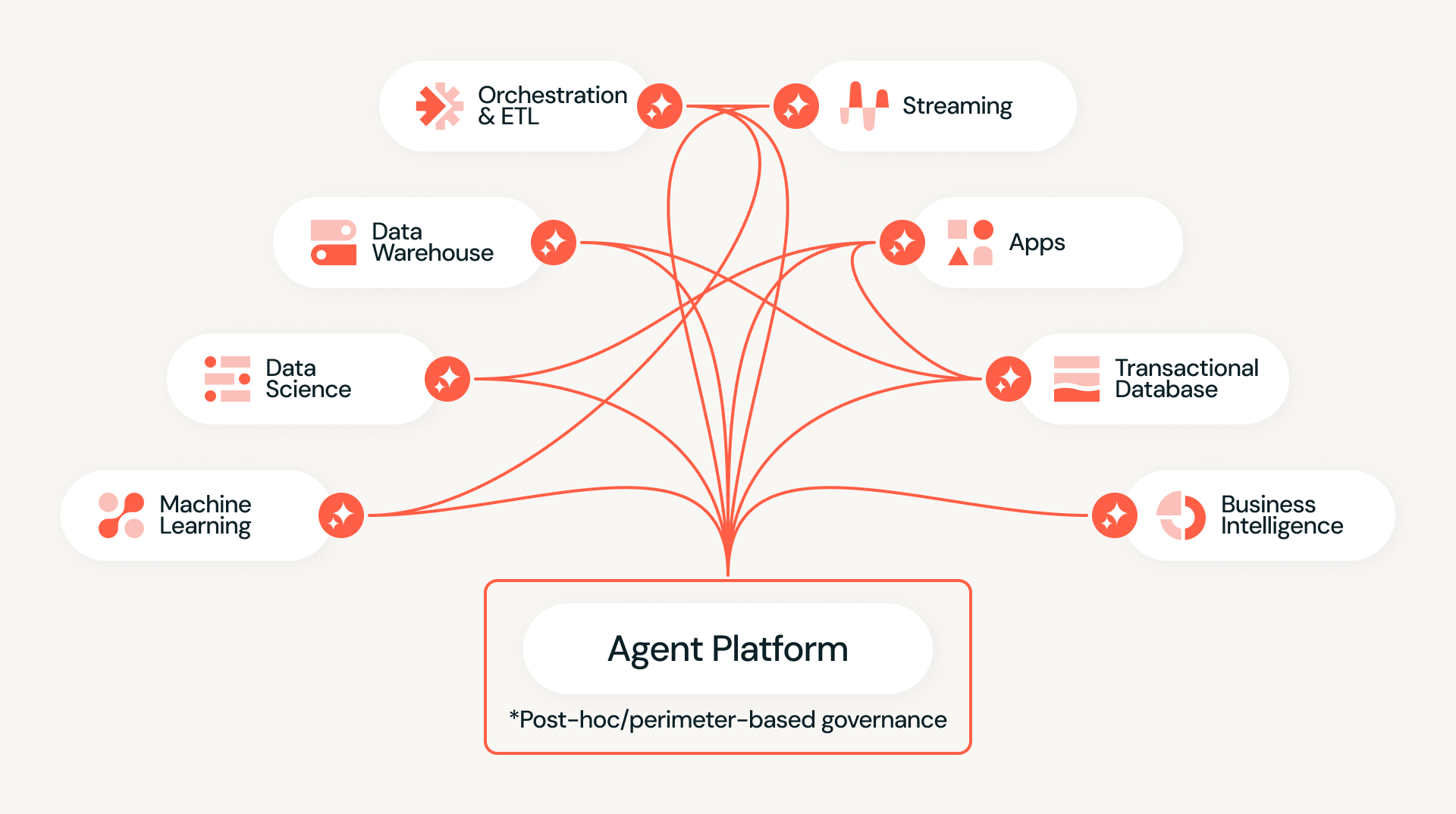
The enterprise data landscape is an intimidating maze of heterogeneous systems. On any given day, your organization relies on relational monoliths like PostgreSQL for ACID-compliant structured records, high-speed in-memory caches like Redis for real-time session states, and complex graph databases like Neo4j to map intricate relationship webs.
Now, imagine dropping an autonomous AI agent into this environment.
Historically, connecting a Large Language Model (LLM) to this polyglot data layer meant resorting to brittle, ad-hoc Python scripts, hardcoding raw SQL generators inside monolithic application runtimes, or praying that your system prompt engineering would magically stop the model from hallucinating a destructive DROP TABLE command. This approach doesn't just scale poorly; it introduces catastrophic security vectors—like prompt-injection-driven SQL exfiltration—and chokes the context window with uncurated database schemas.
To build production-grade, autonomous enterprise AI systems, we need a fundamental paradigm shift. We need a standardized protocol that safely decouples agentic reasoning engines from enterprise storage mechanisms. That protocol is the Model Context Protocol (MCP).