Enterprise AI agents belong where your data, governance, and policies already live.
by Kaan Kuguoglu and John Karlsson
Most enterprise AI pilots clear the same low bar: connect an LLM to your data, drop in a vector database, demo it to leadership. The hard part shows up later. Security flags the governance holes. Latency in multi-step agents kills the user experience. The bill from your model provider keeps climbing. These problems usually trace back to one decision: pulling data out of governed systems and into an AI stack that was never built to enforce your policies.
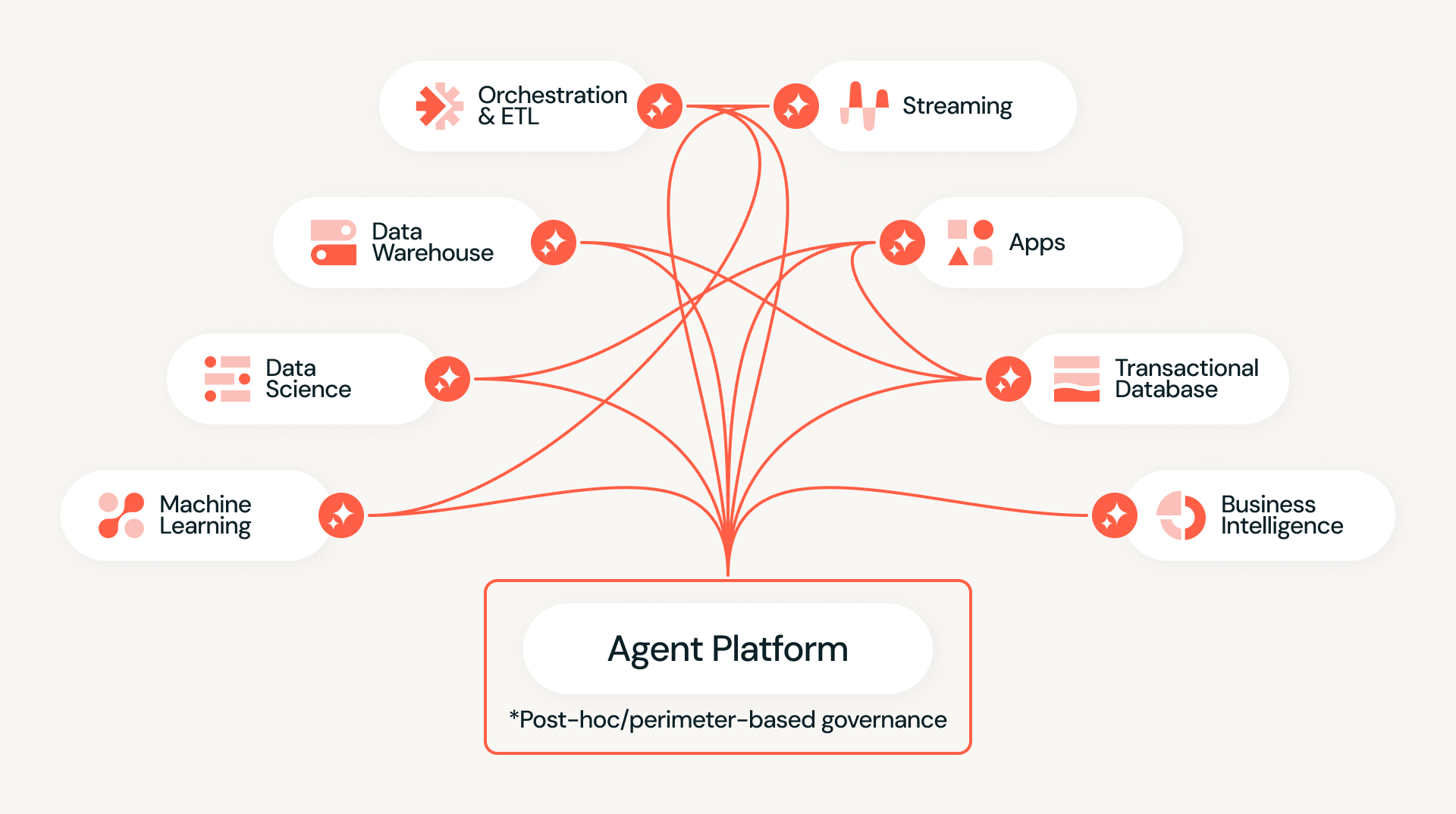
This post argues for a different architectural direction: move models and agents to the data, not the other way around. Instead of building a parallel AI infrastructure and wiring it back to your lakehouse, you treat agents as native workloads that run inside your data platform, under the same governance, security, and observability controls you already trust for your data.
The lakehouse gave you one place to govern your data. The next question is whether your agents live inside that boundary or outside it. There are two emerging paradigms.