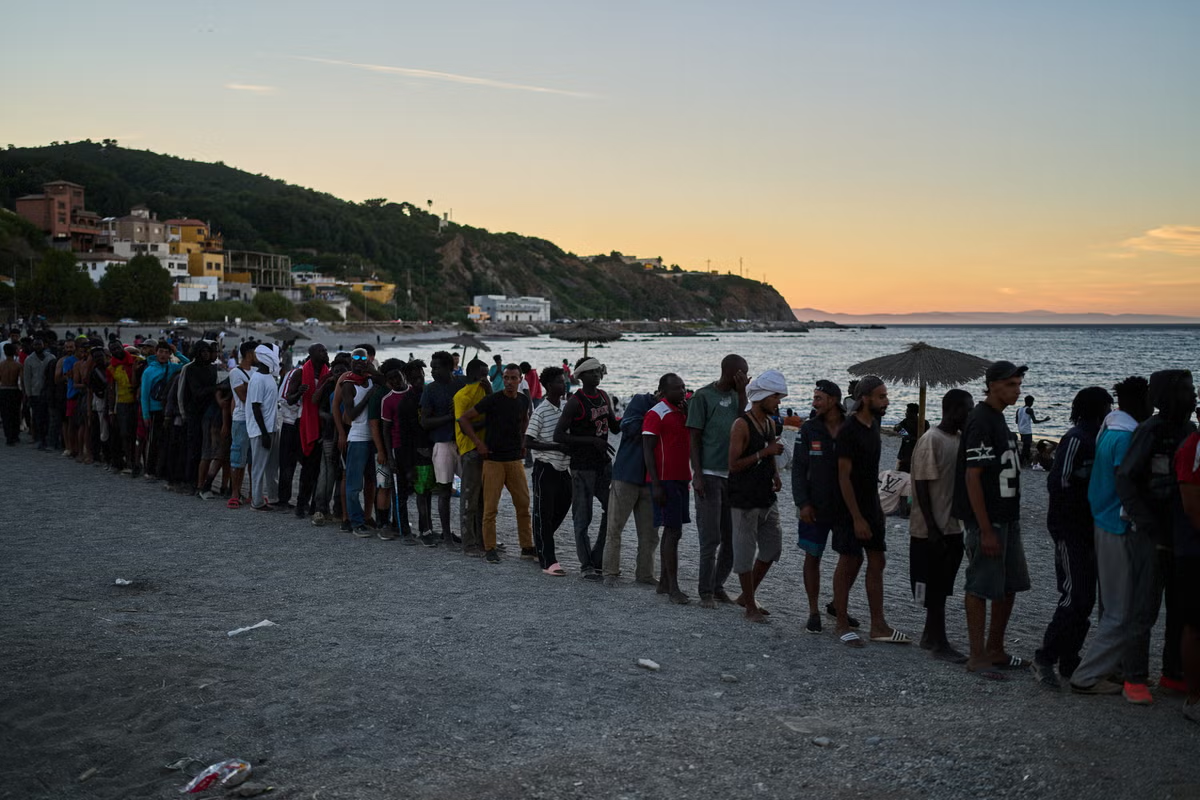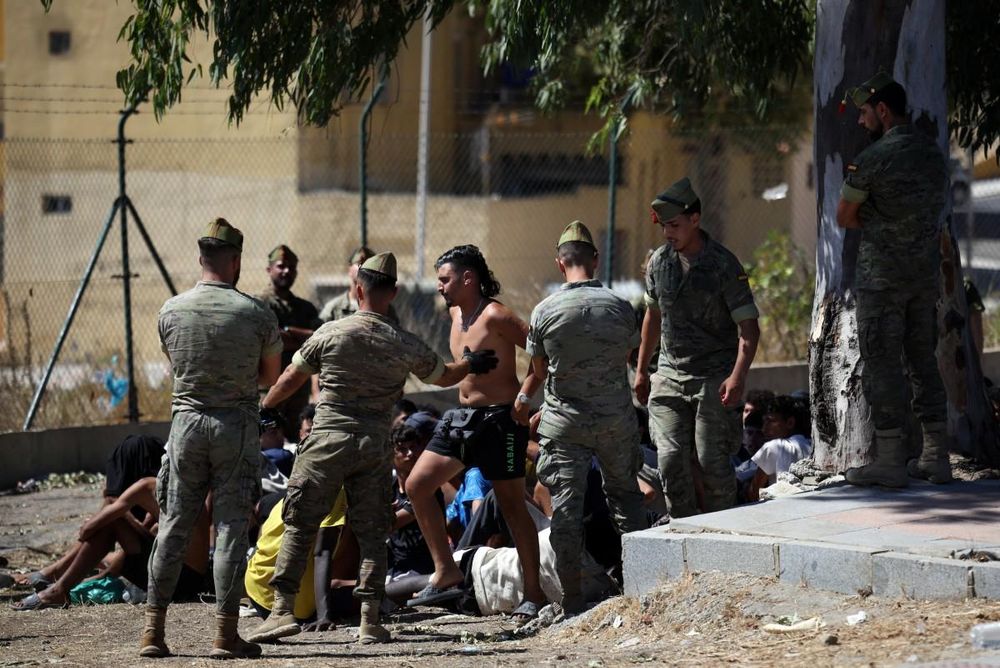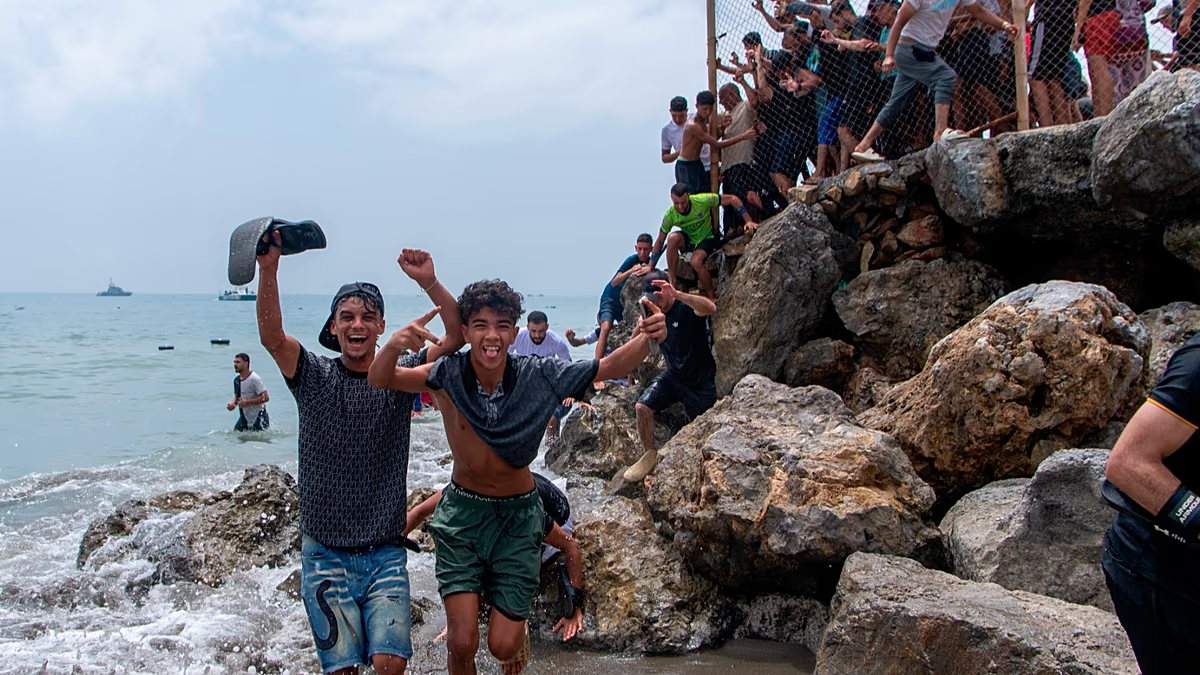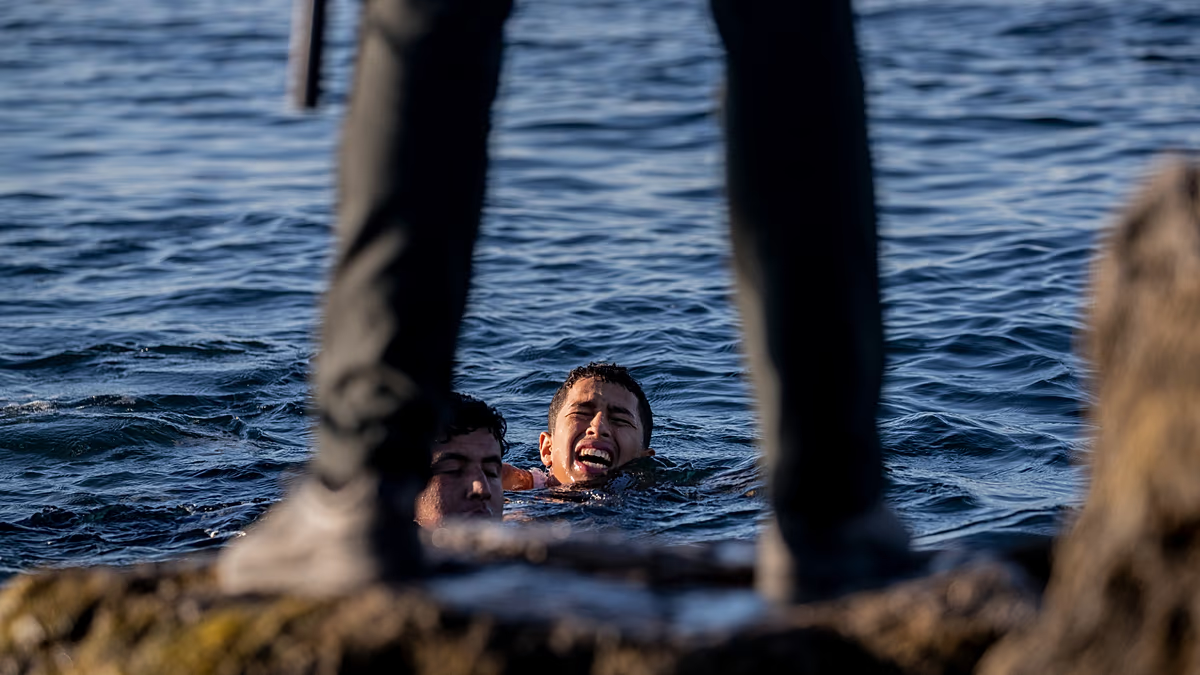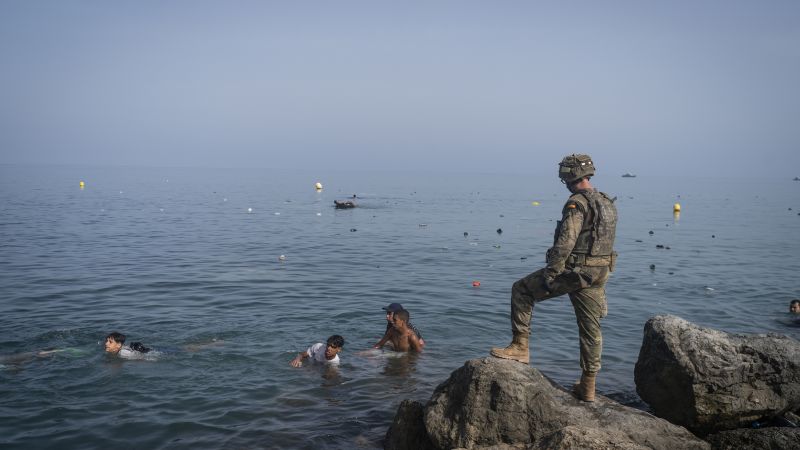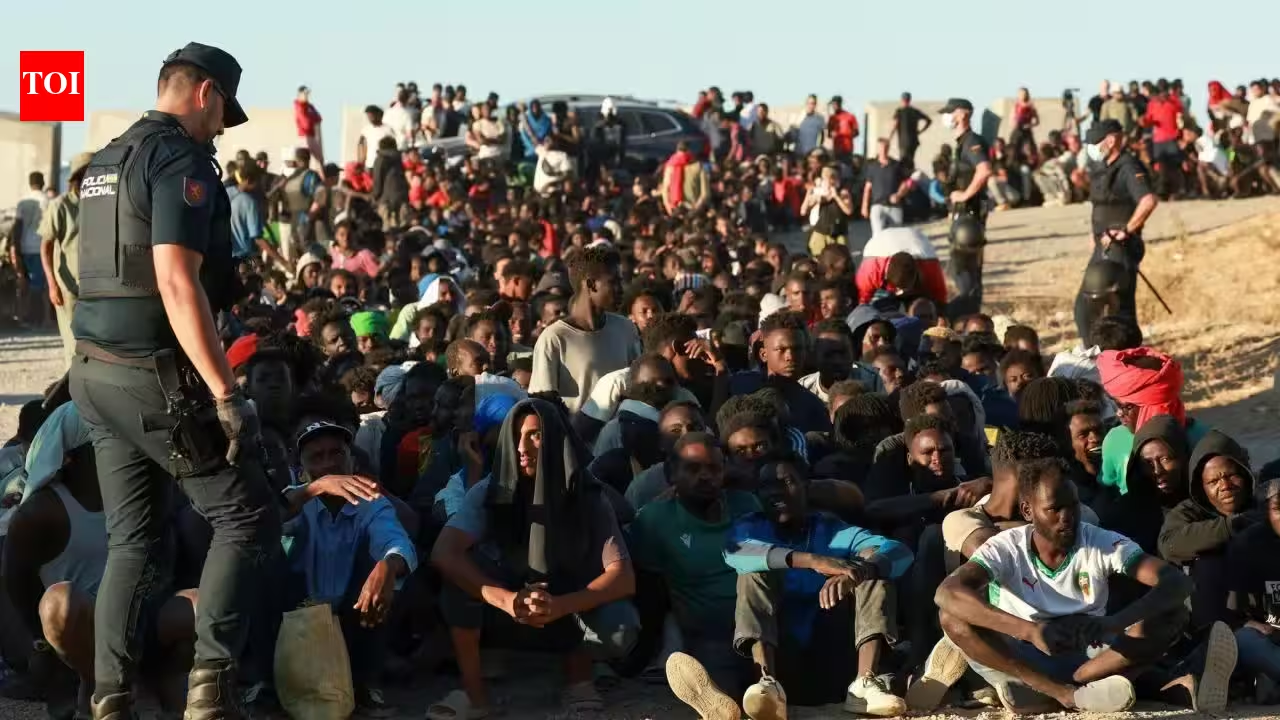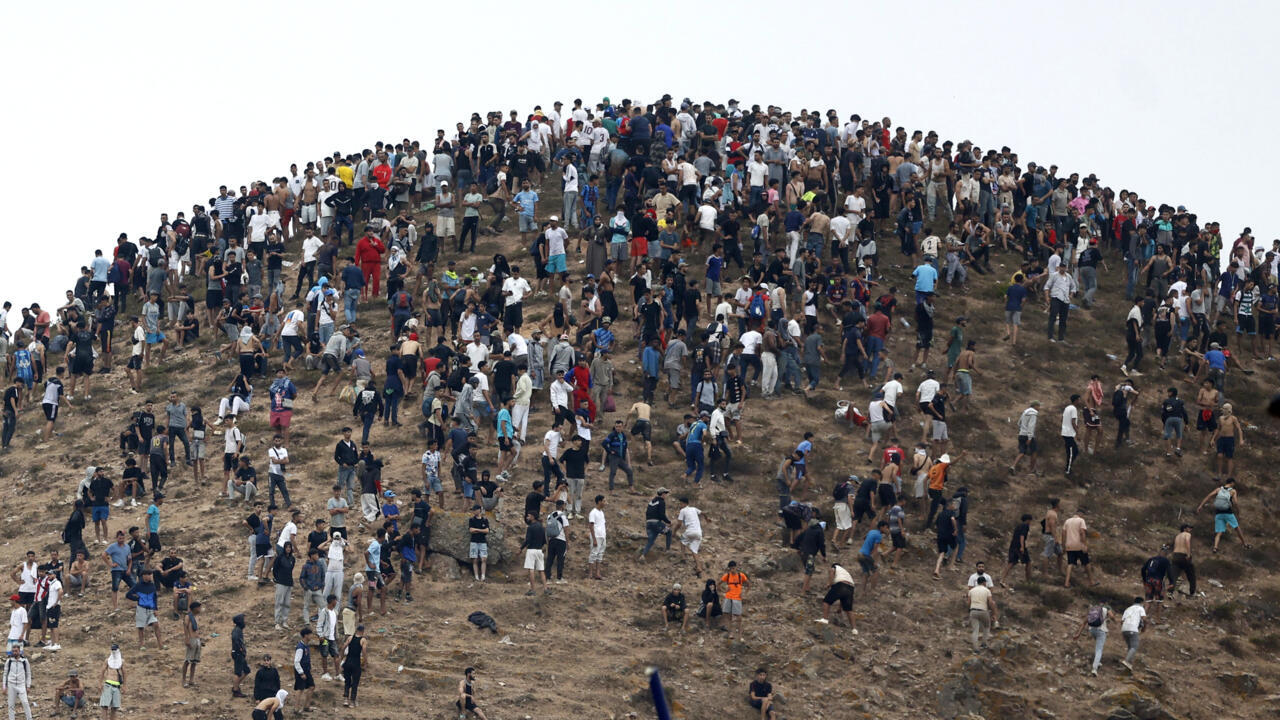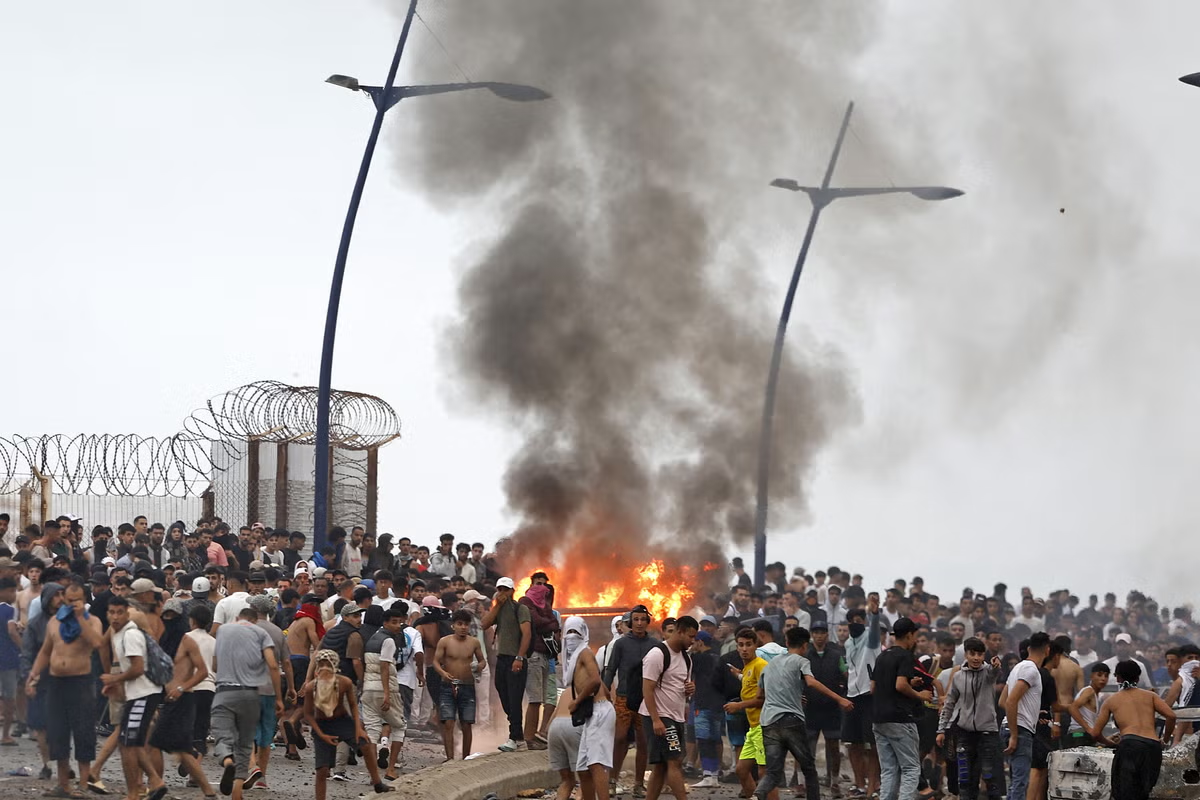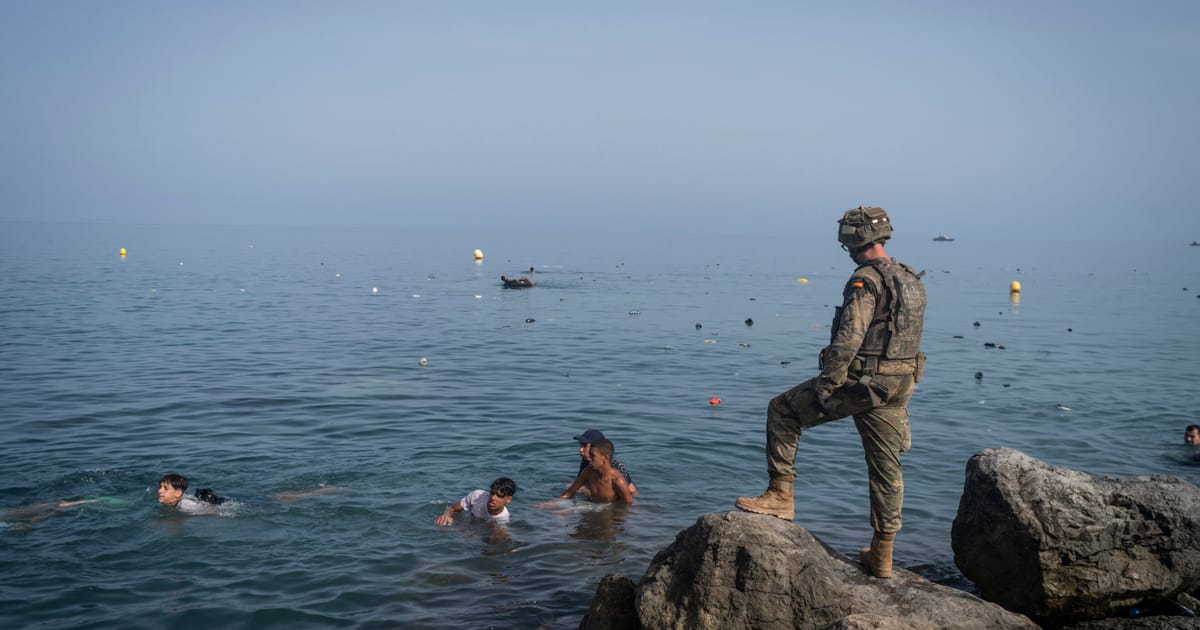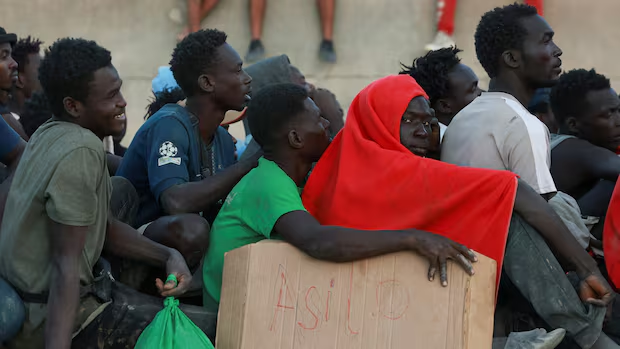
WorldSpain's Interior Minister Fernando Grande-Marlaska gave a fresh estimate of the migrants who pushed into Ceuta last week, as European Union ministers discussed the crisis on Tuesday.Interior minister says at least 75 died last week, an increase from a previous estimateThe Associated Press · Posted: Aug 04, 2026 11:55 AM EDT | Last Updated: 1 hour agoListen to this articleEstimated 6 minutesThe audio version of this article is generated by AI-based technology. Mispronunciations can occur. We are working with our partners to continually review and improve the results.Migrants wait in line to receive food and beverages from the Red Cross, following mass crossings of migrants on foot and by sea from Morocco into Spanish territory, in Ceuta, Spain, on Monday. The sign reads 'asylum' in Spanish. (Violeta Santos Maura/Reuters)Spain's Interior Minister Fernando Grande-Marlaska gave a fresh estimate of the migrants who pushed into Ceuta last week, as European Union ministers discussed the crisis on Tuesday. Grande-Marlaska said a total of around 72,000 had arrived on the Spanish frontier last week, and that 70,000 had since returned to Morocco. Local official Alejandro Ramírez, however, said that it was impossible to know the exact number, which he estimated to be closer to 3,000 to 5,000 remaining in the city.Spain's government announced Tuesday that it has earmarked 25 million euros ($40.5 million Cdn) to be spent on assisting the minors in Ceuta.Spain's Civil Guard also said Tuesday that it was opening an office for missing persons at the customs house on the border, as well as providing an email address for people to write to with missing persons reports. Spanish authorities said many of the migrants went back voluntarily after they saw that there was little chance to reach mainland Europe, or that the tiny enclave of 84,000 people was unable or unwilling to accommodate them. WATCH | Renata Brito, AP migration reporter, on how the wave began:Why did 60,000 migrants cross into a tiny Spanish enclave in North Africa? | Hanomansing TonightJuly 31|Duration 7:54At least 57 people have died during a mass attempt by migrants to enter the Spanish enclave of Ceuta from Morocco. Spain and Morocco reinforced the border fence on Friday, halting mass crossings.Children beg on Ceuta streetsAmong the adult migrants who remain in Ceuta are significant numbers of people from other countries, including Sudanese fleeing their war-torn country, Palestinians from Gaza and Afghans, as well as people from several African countries.The city's migrant centre with a capacity for 600 people is completely full. Many migrants sleep or rest on the beach or hills surrounding the speck of Spain. Hundreds of migrant children are stranded in Spain's Ceuta after border crossingWhat is Ceuta, and how was the Spanish enclave near Morocco breached by 60,000 migrants?An estimated 1,000 minors — among the most vulnerable of those who crossed the border —remain in Ceuta, staying without their families in a foreign land.One 17-year-old girl told The Associated Press how she watched her eight-year-old brother drown as migrants made a chaotic crossing around a breakwater and a subsequent stampede on the rocky shore to avoid the border fence last Thursday at the peak of the migration surge. She was separated from her mother and has been begging on the streets of Ceuta since. "I saw people stepping on the dead," the girl, from Tangier, Morocco, said through a translator. The AP is withholding her identity because she is a minor in a vulnerable situation. Spanish law says that adult migrants can apply for asylum. If rejected, they will face expulsion procedures. The bar is normally very high for Moroccans to be granted humanitarian protection.Migrant minors who are unaccompanied by adults, however, are supposed to be granted protection and taken care of by Spanish authorities."In Spain, the fundamental rights of minors as vulnerable individuals are respected, as are those of adults," Grande-Marlaska told reporters in Madrid Tuesday.Irregular migration to EU declined last few yearsGrande-Marlaska also increased the death toll to 75 people who perished mostly in the water, during the crossing. Morocco reported 11 deaths that are not included in the Spanish total, the Spanish Interior Ministry said.Ceuta officials said they had warned the Spanish government of a surge in arrivals before the massive crush. The Spanish Interior Ministry said Monday that it had not received "any report or warning regarding the mass arrival of people in Ceuta."On the Moroccan side of the border, many parents were hoping to see their children come home.Ibtissam Chari has been waiting for signs of life from her son, called Rayan. He left Morocco with a group of friends last week. She knows he made it across because he was able to get word to her that he made it to Ceuta. But since then, she hadn't heard from him."Every day, we come here in the hope to have any news but there is none," she said. Some migrants misunderstood recent legal developments in Spain, including regularization measures and a court ruling limiting authorities' ability to immediately return migrants who swim into Ceuta. Prime Minister Pedro Sanchez's recent efforts to regularize migration were meant only for people already living in Spain prior to Jan. 1, the majority of whom hail from Latin America and entered Spain legally but overstayed their visas. "Pedro Sanchez is a liar. He told us if we came, we would get jobs and papers, but they sent us back," said Adam Assil, a migrant from Casablanca, even though Sanchez never made such a promise.Many others who spoke to AP denied they had been smuggled."There are no mafias. The border was open, and I crossed. But now I regret it," said Danbor, his clothes still wet after making the journey back.In Brussels, European Commissioner Magnus Brunner told a news conference after an emergency meeting of EU justice and home affairs ministers that the influx had been fuelled by criminal smuggling networks and disinformation on social media.Brunner said the EU was negotiating a strategic comprehensive partnership agreement with Morocco. He declined to say whether Morocco bore any responsibility, but praised Rabat's co-operation with Spanish authorities on returns.The surge prompted the EU ministers on Tuesday to discuss a range of measures, including better intelligence sharing, closer monitoring of social media to detect migration surges earlier and stronger protection of the EU's external borders.Denmark and Italy used the emergency talks to press for tougher migration measures, according to government statements.Danish Immigration Minister Morten Bodskov called for increased EU funding for border security, saying: "We will not accept a repeat of the situation in 2015."Migration has been one of the EU's most divisive political issues since a 2015-16 crisis, when more than a million refugees and migrants, many fleeing war in Syria, arrived in Europe.After steep declines beginning in 2017, there was a bump over the course of the pandemic, with estimates of 316,000 irregular border crossings.Frontex, the European Border and Coast Guard Agency, had documented significant year-on-year declines in irregular crossings for both 2025 and the first six months of 2026With files from CBC News and Reuters
Ceuta grapples with child migrants who remain as Spain approves millions to deal with crisis | CBC News
Spain's Interior Minister Fernando Grande-Marlaska gave a fresh estimate of the migrants who pushed into Ceuta last week, as European Union ministers discussed the crisis on Tuesday.
1,169 words~5 min read