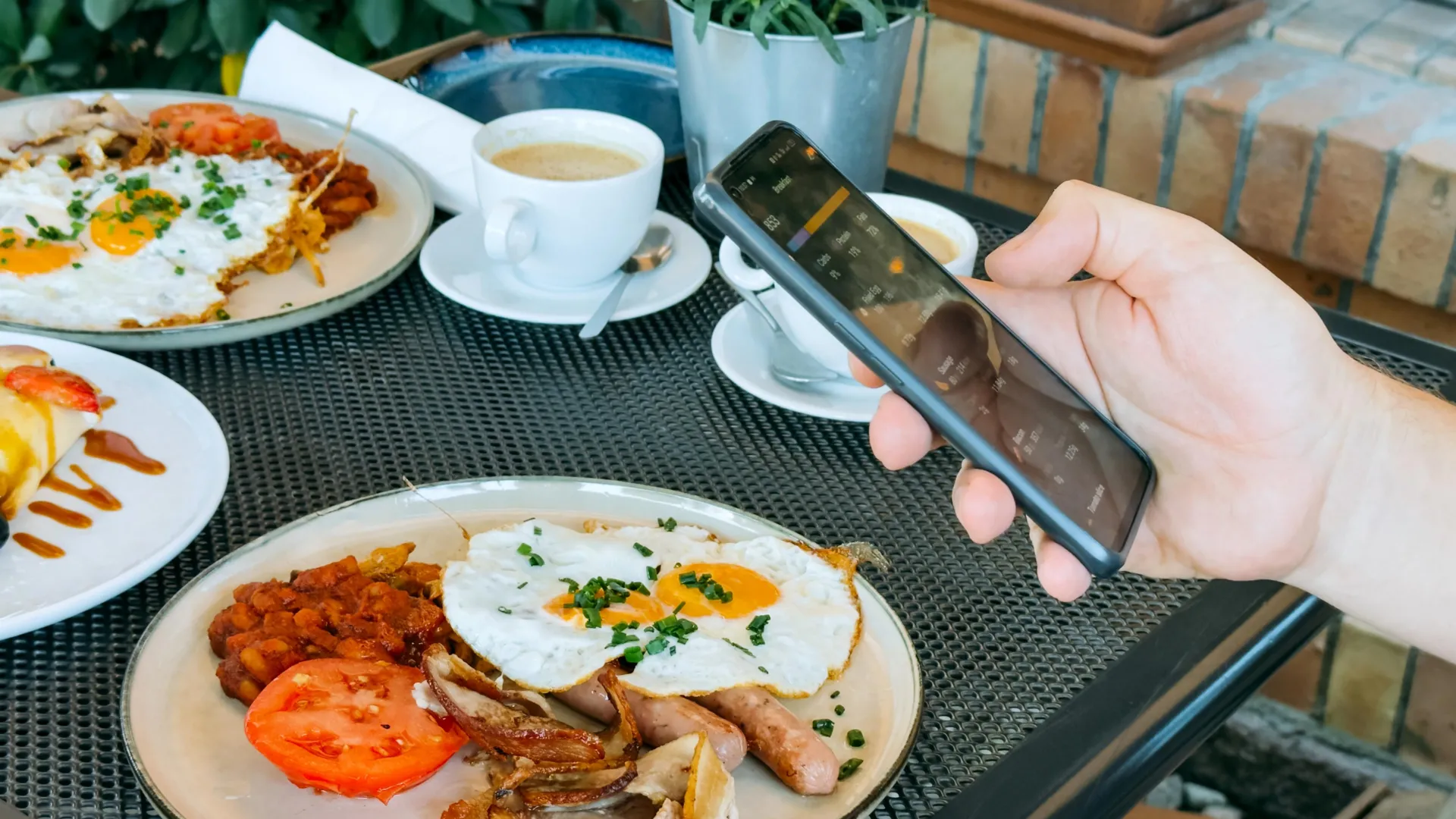
These findings are important, but they are not entirely surprising. Decades of nutrition research have shown that accurately measuring dietary intake is one of the field’s greatest challenges, and this study suggests that AI-powered photo tracking has not yet eliminated that problem. The investigators strengthened the study by comparing four commercial apps against meals prepared in a tightly controlled metabolic kitchen, providing a high-quality reference standard. Across all four apps, energy intake was underestimated by roughly one-third, with particularly large underestimation of fat intake. Interestingly, carbohydrate estimates were more consistent than estimates for fat or overall energy, although two of the four apps still significantly underestimated carbohydrate intake. This suggests the apps perform better for some nutrients than others, but there is still room for improvement.
The greater concern isn’t simply that the estimates are imperfect — it’s that they consistently underestimate energy intake. For people trying to closely match calorie goals, this kind of systematic bias is more consequential than random error. Random error might overestimate calories one day and underestimate the next, roughly balancing out. But because these apps consistently underestimate energy intake, someone relying on them is likely eating more than they think at every meal — an error that compounds over time and works against, rather than for, weight management goals.