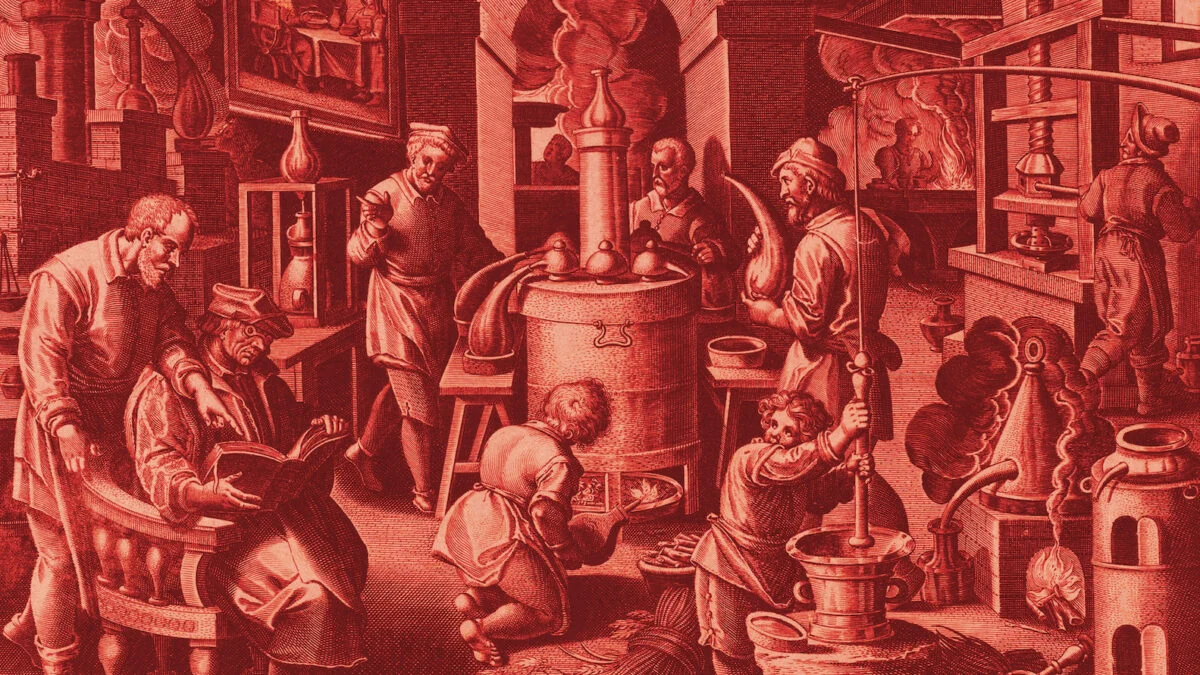
When you set out to master a new skill, it pays to have a mentor—someone who has already navigated the terrain and, as a result of that hard-earned experience, can provide you with a rough roadmap for you to follow. Learning doesn’t happen in a vacuum: “If I have seen further,” as Isaac Newton put it, “it is by standing on the shoulders of giants.” The same is true for artificial intelligence. When we think about AI, we tend to think about so-called flagship models—digital behemoths like ChatGPT, Claude, and Gemini, which require billions of dollars and much of the content on the internet to function. These giants were built from the ground up, so to speak (although there are plenty of artists and news publishers whose work was surreptitiously scraped during the models’ training process who would probably say that’s an oversimplification). But that isn’t the only—or even the most efficient—way to develop AI. Rather than building from the ground up, you can harness a more powerful model and let it do the heavy lifting while your new, smaller model reaps the benefits. That, in a nutshell, is the basic process behind what’s known in the tech industry as “model distillation.” And it’s becoming an increasingly divisive issue as the AI race between the U.S. and China intensifies.
What Is AI Model Distillation?
More and more models are being built on the shoulders of giants—for better or worse.
TL;DRAI
Model distillation extracts knowledge from large flagship models to train smaller ones at a fraction of the cost, democratizing powerful AI access. For tech teams, this enables advanced AI without billion-dollar budgets; it becomes strategically critical in US-China AI competition.
1,447 words~7 min read