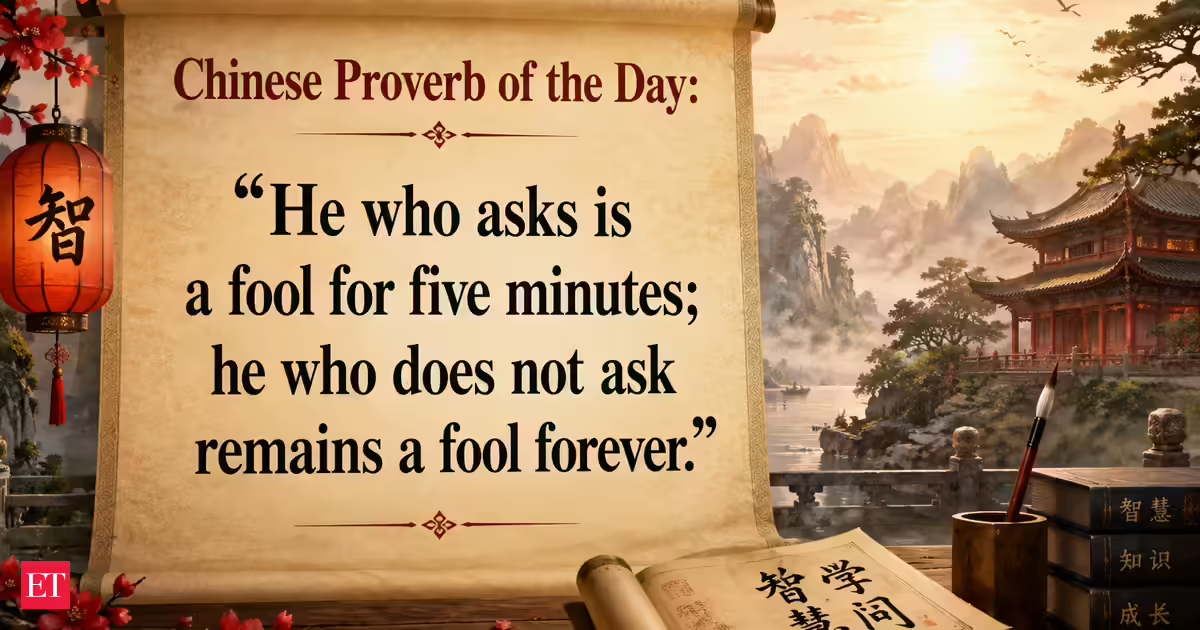
Curiosity has long been regarded as one of humanity's greatest strengths, and few sayings capture that idea better than the Chinese proverb, "He who asks a question is a fool for five minutes; he who does not ask remains a fool forever." At first glance, the proverb acknowledges the brief embarrassment that can come with admitting ignorance. Yet its deeper message is that refusing to ask questions carries a far greater cost because it prevents learning, growth and understanding. Whether in school, at work or in everyday life, the proverb encourages people to value knowledge over pride and to recognise that every sincere question opens the door to new ideas. Its wisdom remains just as relevant today as it was generations ago, reminding us that curiosity is often the first step towards personal and intellectual growth.What does the Chinese proverb mean?The proverb teaches that there is no shame in asking questions. Most people have experienced moments when they hesitated to speak up because they feared appearing uninformed. The saying acknowledges that asking a question may briefly make someone feel self-conscious, but that discomfort lasts only a few minutes. Remaining silent, however, can leave a person without the knowledge they need for far longer.The proverb also highlights an important truth about learning: nobody is born knowing everything. Every skill, profession and area of expertise begins with a willingness to ask questions. Whether someone is learning a new language, mastering a musical instrument or understanding a scientific concept, curiosity is the foundation of progress. By encouraging people to seek answers rather than hide their uncertainty, the proverb promotes a lifelong love of learning.Why asking questions mattersQuestions are the foundation of education, innovation and personal growth. Every major scientific discovery, technological breakthrough and social advancement began with someone asking, "Why?" or "How?" Curiosity has driven explorers to discover new lands, scientists to develop life-saving medicines and inventors to create technologies that have transformed everyday life.In classrooms, students who ask questions often gain a deeper understanding of subjects than those who simply memorise information. A single thoughtful question can clarify an entire lesson and encourage discussion that benefits everyone. Teachers frequently view questions as signs of engagement rather than weakness because they demonstrate a genuine desire to understand.The same principle applies in the workplace. Employees who ask for clarification before beginning a task are more likely to avoid costly mistakes. Professionals who seek advice from experienced colleagues often develop their skills more quickly than those who pretend to know everything. In leadership, asking questions can foster collaboration, encourage fresh ideas and strengthen decision-making.Even in personal relationships, asking questions plays an essential role. Honest conversations build trust, reduce misunderstandings and help people better understand one another's experiences, perspectives and emotions.A lesson in humilityAnother important message within the proverb is humility. Accepting that we do not have all the answers is a sign of confidence rather than weakness. In fact, recognising our own limitations is often the first step towards becoming wiser.People who are willing to admit they need help are usually more open to learning from others. They understand that knowledge can come from teachers, colleagues, friends or even strangers. By contrast, those who refuse to ask questions out of pride may limit their own growth because they avoid opportunities to gain new insights.Humility also encourages meaningful conversations. Instead of trying to appear knowledgeable at all times, people who ask questions create opportunities for discussion and shared learning. This approach strengthens teamwork, promotes mutual respect and allows everyone involved to benefit from different viewpoints.Relevance in today's worldIn an age where information is available at the touch of a button, asking the right questions has become more valuable than ever. Search engines, artificial intelligence tools and digital libraries provide access to vast amounts of information, but knowing what to ask remains the key to finding useful answers.The proverb is particularly relevant in a world where misinformation spreads rapidly through social media and online platforms. Rather than accepting every claim at face value, people should ask critical questions about the source, evidence and context of the information they encounter. Curiosity combined with critical thinking helps individuals separate facts from rumours and make informed decisions.The saying is equally important in professional settings shaped by rapid technological change. As industries evolve and new skills become essential, those who continue asking questions and embracing learning are often better prepared to adapt. Lifelong learning has become an important quality in almost every career, and curiosity remains at its heart.A proverb with universal appealAlthough the exact origin of the saying is uncertain and it has often been attributed to Chinese wisdom rather than traced to a specific historical source, its message resonates across cultures. Similar ideas appear in many traditions around the world, reflecting a shared belief that the pursuit of knowledge is more valuable than protecting one's pride.The proverb's enduring popularity comes from its simplicity and practicality. It does not promise instant success or extraordinary achievements. Instead, it offers a realistic reminder that learning begins by admitting what we do not know. That lesson applies equally to children starting school, professionals building careers and older adults continuing to explore new interests.Timeless wisdomThe enduring appeal of "He who asks a question is a fool for five minutes; he who does not ask remains a fool forever" lies in its timeless understanding of human nature. Fear of appearing uninformed is natural, but allowing that fear to silence curiosity can prevent personal growth and meaningful learning.Every expert was once a beginner who dared to ask simple questions. Every breakthrough started with someone seeking an answer that others had overlooked. By choosing curiosity over embarrassment and knowledge over pride, people give themselves the opportunity to grow throughout their lives. That is why this proverb continues to inspire students, professionals and lifelong learners around the world, reminding us that the shortest path to wisdom often begins with a single question.
Chinese proverb of the day: "He who asks a question is a fool for five minutes; he who does not ask remains a fool forever"
Curiosity has long been regarded as one of humanity's greatest strengths, and few sayings capture that idea better than the Chinese proverb, "He who asks a question is a fool for five minutes; he who does not ask remains a fool forever." At first glance, the proverb acknowledges the brief embarrassment that can come with admitting ignorance. Yet its deeper message is that refusing to ask questions carries a far greater cost because it prevents learning, growth and understanding.
984 words~4 min read