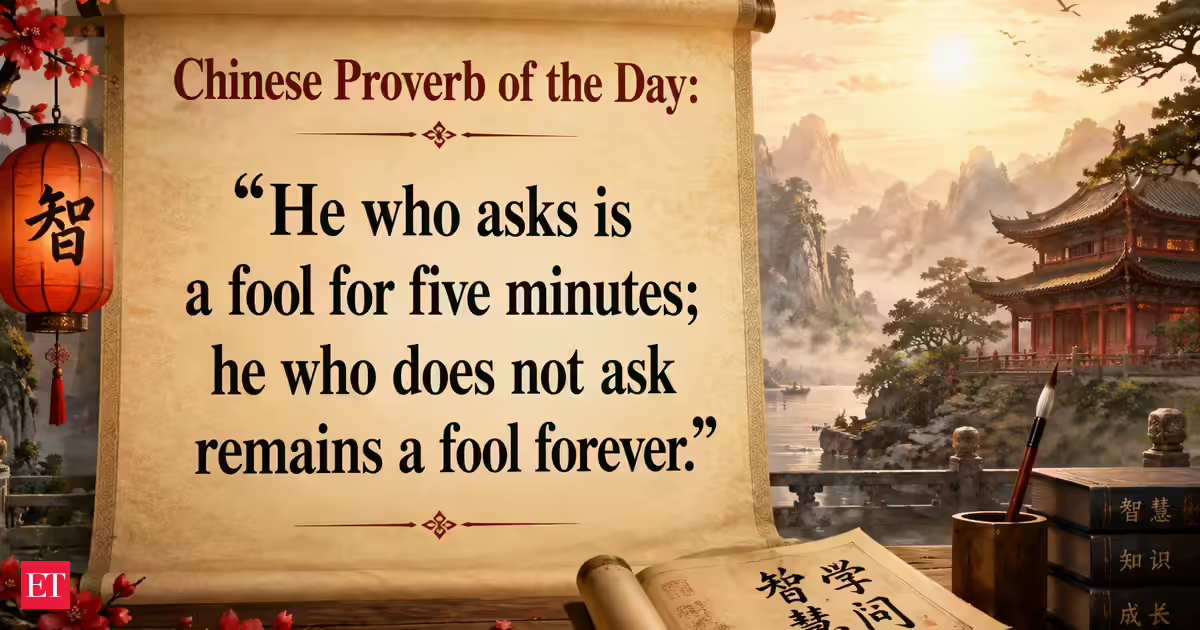
(AI image used for representational purposes only)The proverb carries a simple message: asking questions is not a sign of ignorance; it is the first step towards understanding. It challenges the idea that staying silent makes someone appear wise, and instead suggests that curiosity is what helps people learn, grow and gain knowledge.The saying comes from Ghanaian oral traditions, where proverbs have long been used to share lessons about life, relationships and human behaviour. In many African societies, proverbs are not just expressions; they are a way of passing knowledge from one generation to another. This proverb reflects the value placed on learning through conversation, observation and the willingness to seek answers.The image of a child in the proverb is important. A child represents someone who is still learning about the world, but the saying does not present questions as a weakness. Instead, it recognises that every person begins without knowing and that asking questions is how understanding develops. The “fool” in the proverb is not the person who asks, but the person who refuses to learn because of pride or fear.The proverb also reflects a traditional belief that knowledge is built through interaction. A child who asks an elder a question is not simply seeking information; they are participating in a process of learning. The conversation itself becomes a way of preserving experience, stories and wisdom.This idea remains relevant far beyond childhood. In classrooms, students who ask questions often understand subjects more deeply because they are trying to connect ideas rather than simply memorise information. A student who asks why a formula works, why a historical event happened or how a concept applies in real life is engaging more actively with learning. The same lesson can also apply in workplaces. A new employee who asks questions about a process may initially feel hesitant, but those questions can prevent mistakes and lead to better understanding. In contrast, someone who stays silent to avoid appearing uninformed may continue making the same errors. The proverb suggests that the desire to learn is more valuable than the desire to appear knowledgeable. In everyday life too, curiosity often separates those who grow from those who remain stuck. People who ask questions about unfamiliar ideas, cultures or experiences are often able to see situations from different perspectives. Asking does not always mean doubting; sometimes it means trying to understand.The proverb also touches on a common human fear — the fear of looking foolish. Many people avoid asking questions because they worry others may judge them for not knowing something. But the saying turns that idea around. It suggests that admitting what one does not know is not a weakness; refusing to learn is what limits growth.The philosophy behind the proverb is closely connected to humility. Learning requires accepting that there are things we do not yet understand. A person who believes they already know everything leaves little room for improvement, while someone willing to ask creates opportunities to discover more.The reason this Ghanaian proverb continues to endure is because the process of learning has not changed. Whether in a traditional community, a classroom or a modern workplace, knowledge begins with curiosity. The tools may change, but the need to ask, understand and learn remains the same.The wisdom of the saying lies in its simple reminder: a question may reveal what a person does not know today but it also becomes the beginning of what they will learn tomorrow.
Ghanaian proverb on learning and curiosity: 'A child who asks questions does not become a fool'
The proverb carries a simple message: asking questions is not a sign of ignorance; it is the first step towards understanding. It challenges the idea that staying silent makes someone appear wise, and instead suggests that curiosity is what helps people learn, grow and gain knowledge.
572 words~3 min read