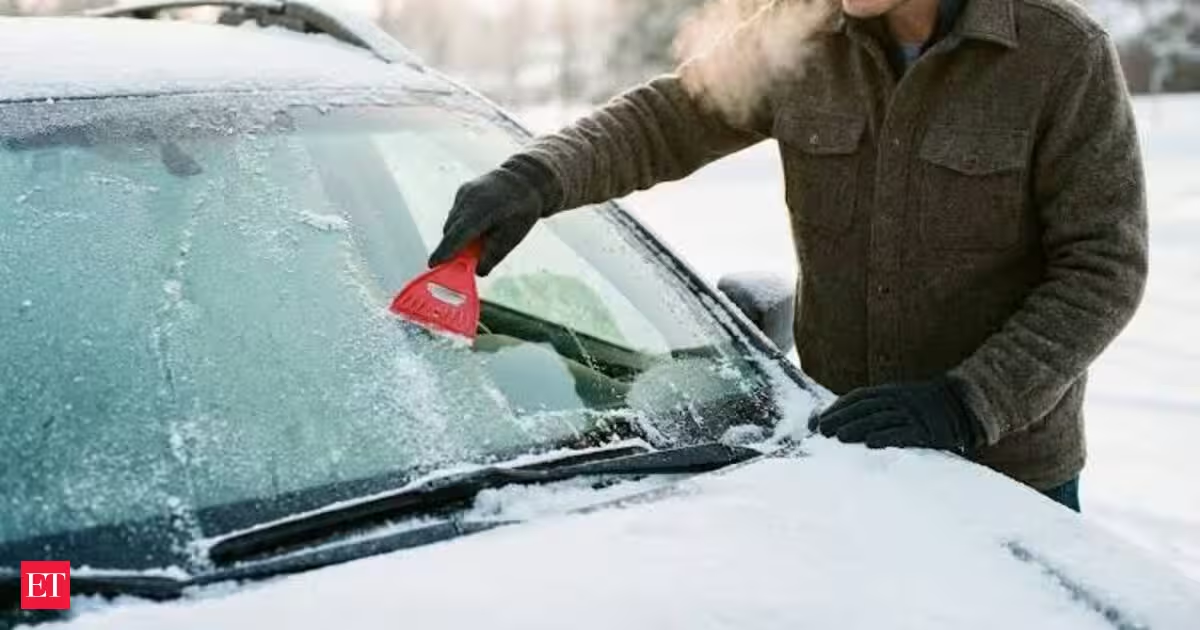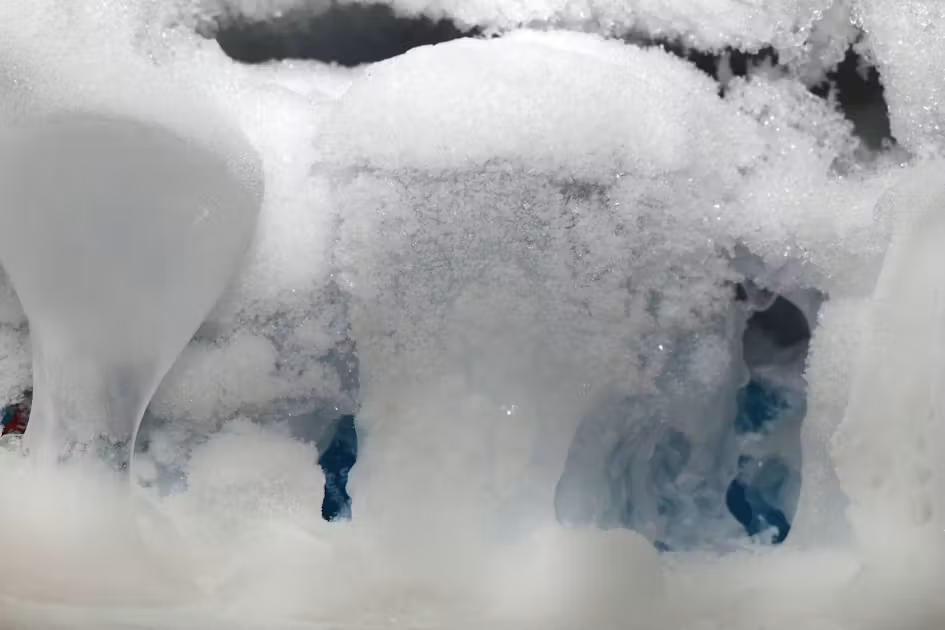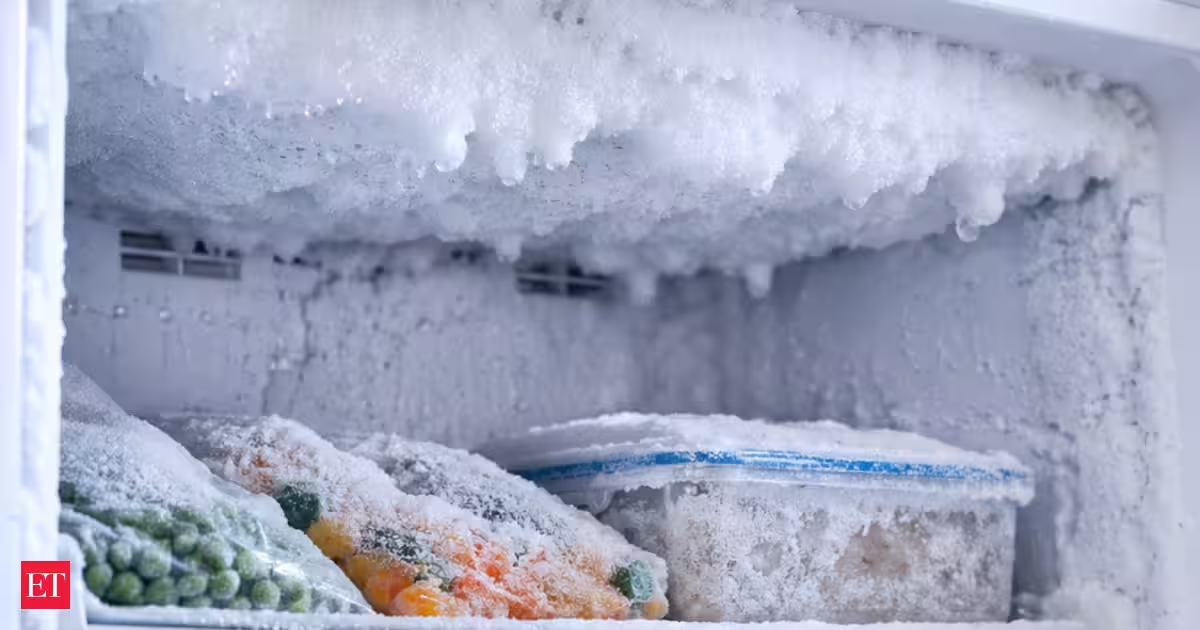
If your freezer seems like it's growing its own glacier, you’re probably not alone. Ice buildup is one of the most common complaints in US kitchens, especially in older units or the ones that get opened a dozen times a day. Research by Oak Ridge National Laboratory for the U.S. Department of Energy titled ‘Analysis of Frost Formation and Novel Defrost Techniques for Commercial Refrigeration Applications (CRADA Hillphoenix/Dover Food Retail)’ found that frost buildup on freezer coils can reduce cooling efficiency by 15 to 25 percent.This means your freezer has to work harder, your food takes longer to get cold, and your electricity bill climbs quietly. So when the ice begins to close in, it’s tempting to grab a knife or pour boiling water on it. Both moves can actually hurt your freezer, appliance technicians say.Why the knife and hot water trick backfiresChipping away ice with a knife or screwdriver can be satisfying but dangerous. Sharp tools can easily puncture the freezer’s inner liner or nick the coolant lines behind it, according to Mr. Appliance, a national appliance repair company. Such damage can lead to a costly repair.But boiling water is no safer. It's poured directly onto icy walls, and the sudden heat can warp plastic shelves, crack panels, or damage door seals. Once a seal is broken, warm air keeps getting in, and the ice problem is right back within weeks.It's tempting to chip away at ice with a knife, but technicians warn this is exactly how freezers get damaged. Image Credits: ChatGPTThe method technicians actually recommendThe safest fast fix combines two simple things: airflow and gentle steam, not direct heat. According to an official appliance guide, a small fan placed near an open, unplugged freezer speeds melting because the moving air pulls heat towards the ice faster than still air does. You can try shallow bowls of warm, but not boiling, water inside the freezer, with the door shut, for a few minutes at a time. The soft steam melts the ice off the walls, without touching the hot metal or plastic directly. When the ice begins to soften, it can be easily scraped off with a plastic scraper or spatula.How to defrost faster and saferUnplug the freezer completely. This is a basic safety step technicians always mention first. Remove all the food and store it in a cooler with ice packs. Take out shelves and bins if you can and line the bottom with towels to catch water. Place a bowl or two of warm water inside and close the door for 10 to 15 minutes. Open the door and carefully scrape off the loose ice with a plastic tool, not metal. Point a fan into the freezer to make the rest melt faster. Wipe the interior dry and plug the freezer back in.According to Mr. Appliance's defrosting , this combination will usually clear a moderate layer of ice in less than an hour, compared with several hours if you simply leave the door open.Don't forget about your foodYour food is on borrowed time with the freezer off. According to the U.S. Department of Agriculture’s Food Safety and Inspection Service, food kept at 0°F continuously is safe indefinitely, but once it begins to thaw, it must be treated as any perishable item. A cooler full of ice packs keeps things cold enough for a quick defrosting session. If meat or seafood thaws completely and is kept above 40°F for more than two hours, it is better to cook it soon or throw it away rather than refreezing it raw.This simple setup can cut defrosting time down significantly, without risking damage to your freezer. Image Credits: ChatGPTWhy this small chore actually saves you moneyDefrosting isn't just a convenience. Manual-defrost freezers need periodic defrosting to keep them efficient. The U.S. government-backed efficiency program, ENERGY STAR, recommends that frost should never be allowed to build up more than a quarter inch thick. That thick layer of frost acts as insulation around the cooling coils. If left unchecked, the compressor has to run longer and use more electricity just to keep food at the same temperature.Manual-defrost or frost-free? It's worth knowing which you haveNot every freezer needs this treatment. Frost-free models, common in most modern refrigerator-freezer combos, use a built-in heating element on a timer to automatically melt frost off the coils before it builds up, so ice rarely accumulates in the first place. Manual-defrost freezers, more common in standalone chest and upright freezers, have no such system and rely entirely on the owner to clear frost periodically. The tradeoff is efficiency: manual-defrost units are generally simpler, cheaper to buy, and slightly more energy-efficient per cubic foot when properly maintained, precisely because they don't run a heating element on a schedule. If you're not sure which type you own, a quick check of the owner's manual or a look for a visible heating coil behind the back panel usually settles it.Keep the ice from coming backOnce your freezer is clear, a few habits will keep it that way. Make sure the door seal closes completely every time. A loose gasket allows warm, moist air to enter, which turns to frost instantly. Don’t leave the door open any longer than you have to and don’t fill the freezer so full that the door can hardly close. In manual-defrost freezers, doing this mini version of the process once a month keeps the job quick and painless instead of turning into a weekend project, right when the ice is still thin.Your freezer doesn't require a knife fight or a pot of boiling water. All it requires is a fan, a bowl of warm water, and a bit of patience, and your appliance will be grateful for it.
Not with a knife or boiling water: A safer way to remove freezer ice faster, according to appliance guides
Discover the safest and most efficient method for defrosting your freezer in minutes, avoiding costly damage with simple airflow and gentle steam techniques. Keep your freezer efficient and your bills low!
953 words~4 min read