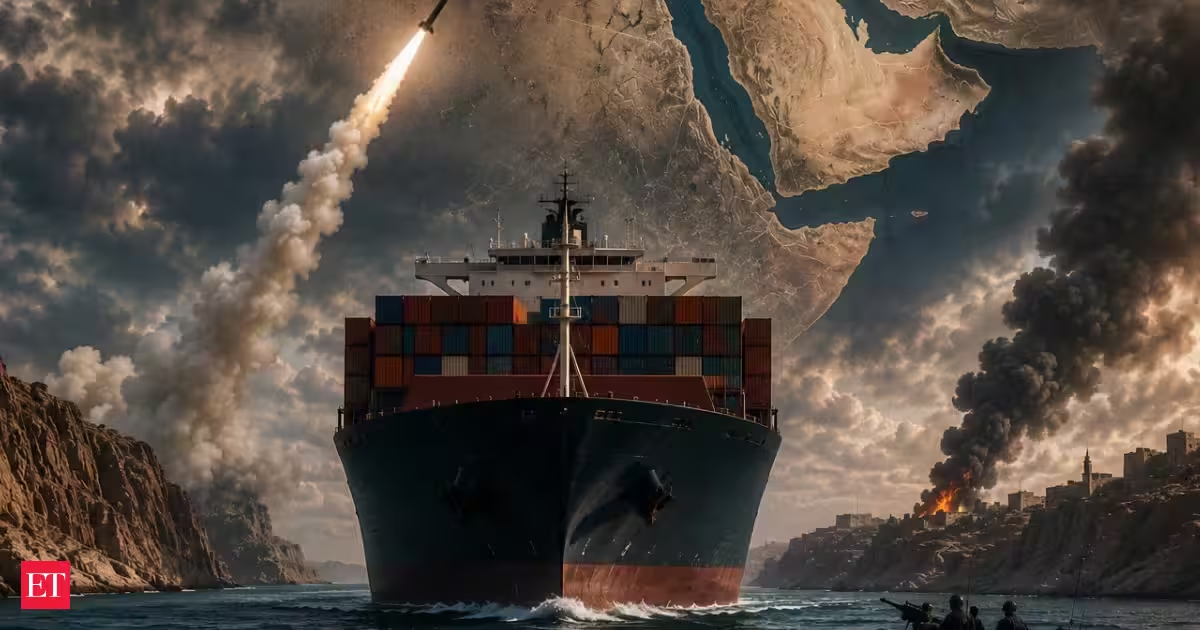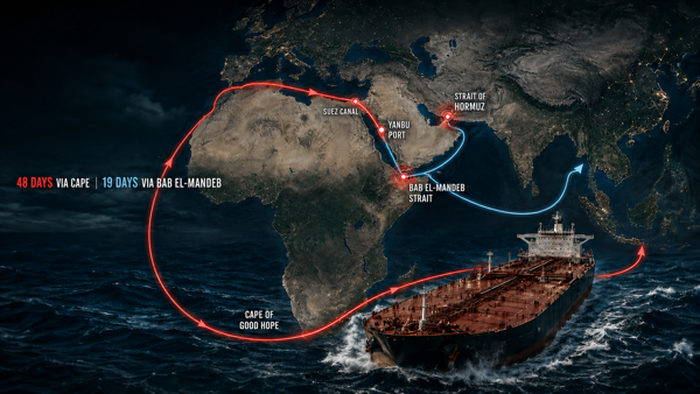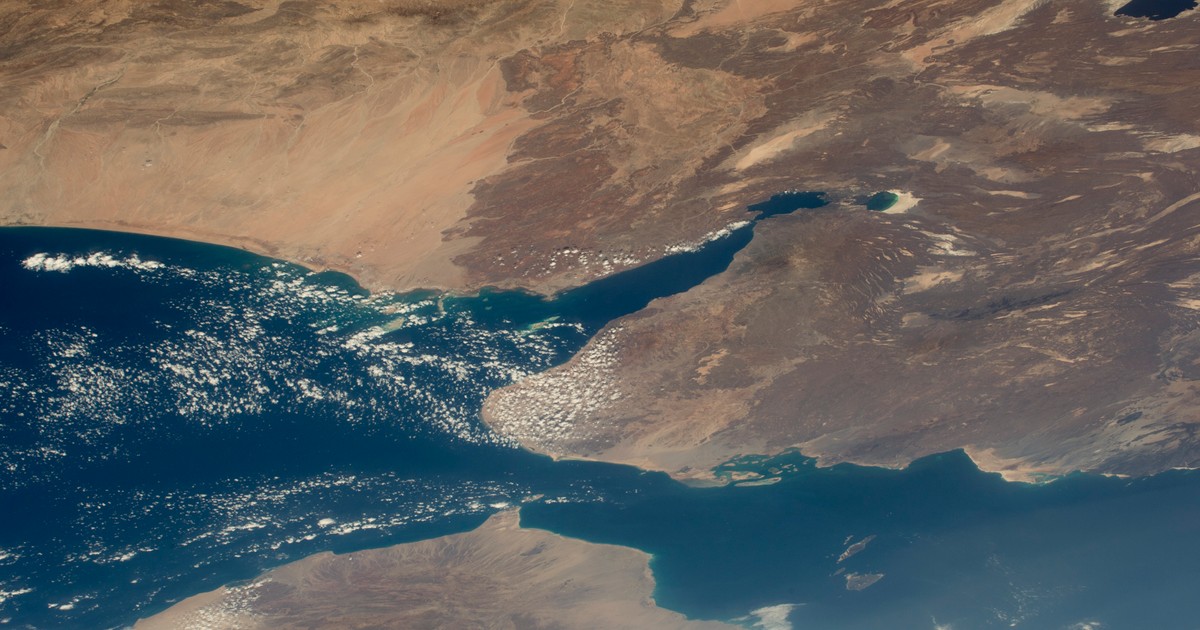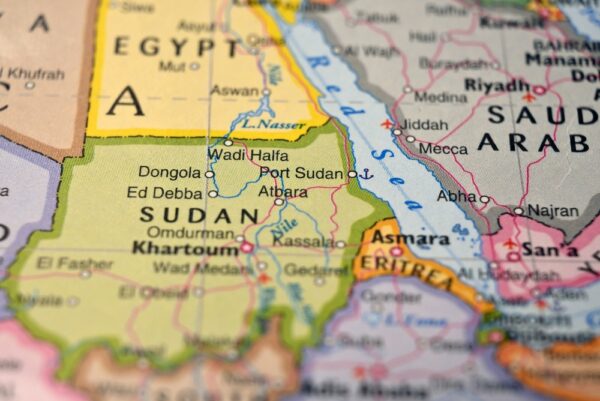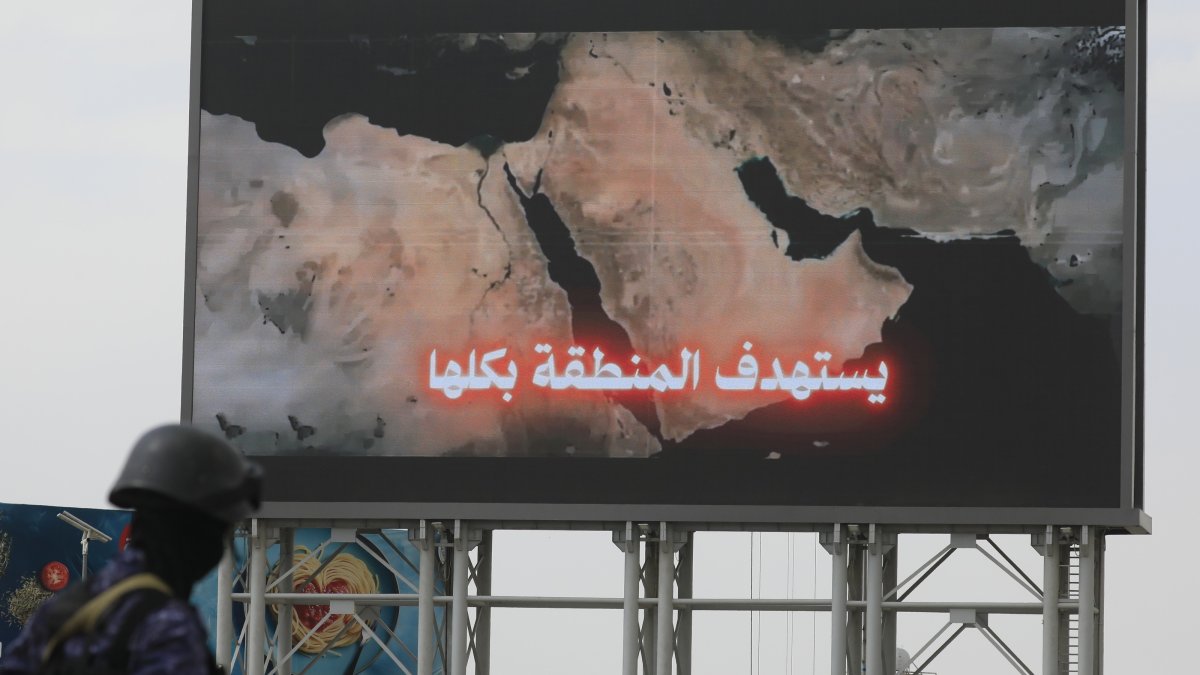
Stretching 1,400 miles (2,250 kilometers) between Northeast Africa and the Arabian Peninsula, the Red Sea is one of the world’s most critical maritime arteries. Every year, between 12% and 15% of global seaborne trade, valued at more than $1 trillion, passes through this waterway extending from the Suez Canal in the north to the Bab el Mandeb Strait in the south. While a substantial share of energy flows between Asia, the Middle East and Europe depends on this route, Houthi attacks on commercial vessels have created a new source of risk for global oil and liquefied natural gas (LNG) markets alongside the Strait of Hormuz.
According to the United States Energy Information Administration (EIA), during the first half of 2025, approximately 4.9 million barrels per day of crude oil and petroleum products were transported through the Suez Canal and the Suez Mediterranean (SUMED) Pipeline at the northern end of the Red Sea. At the southern entrance, around 4.2 million barrels per day passed through the Bab el-Mandeb Strait. Combined, shipments through these three routes accounted for roughly 6% of all seaborne oil trade during the period. By comparison, average oil flows through the Strait of Hormuz reached nearly 21 million barrels per day over the same period.