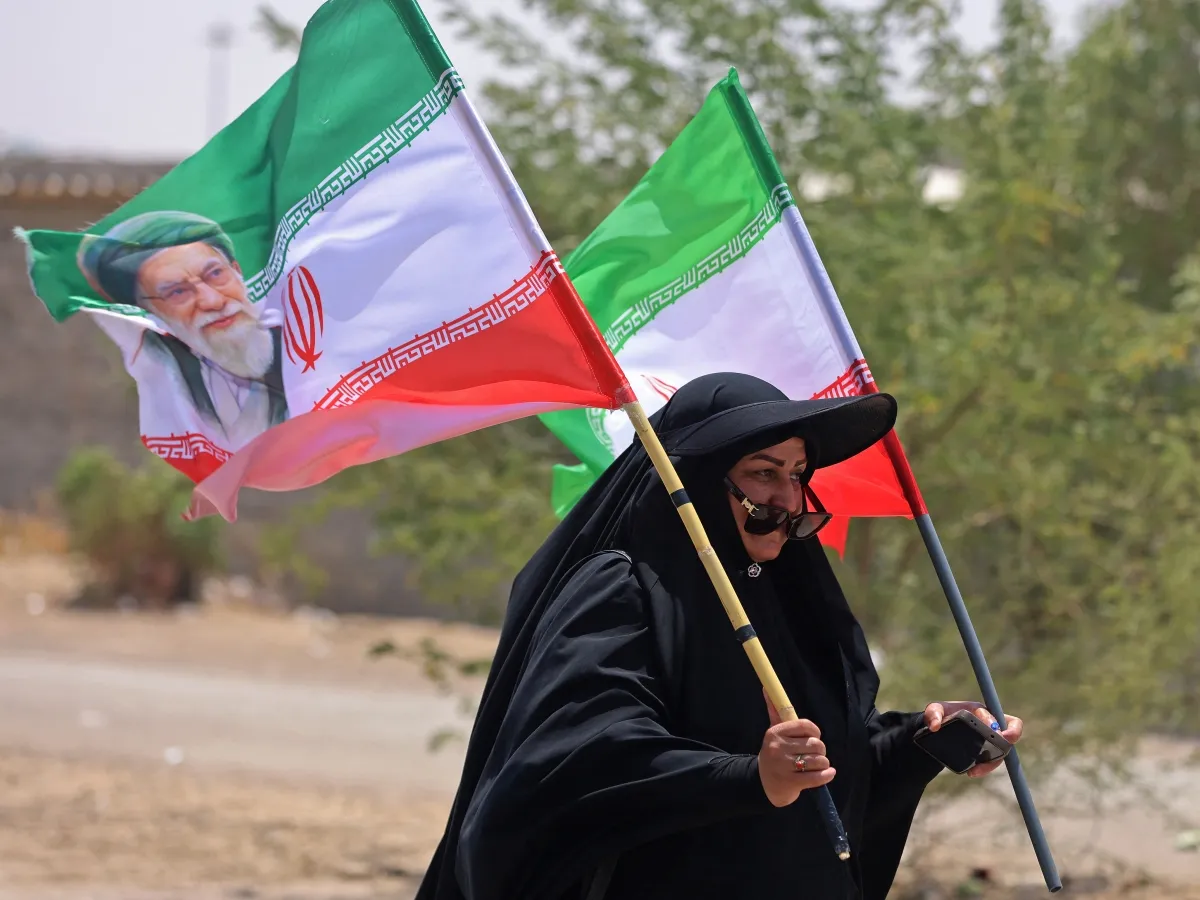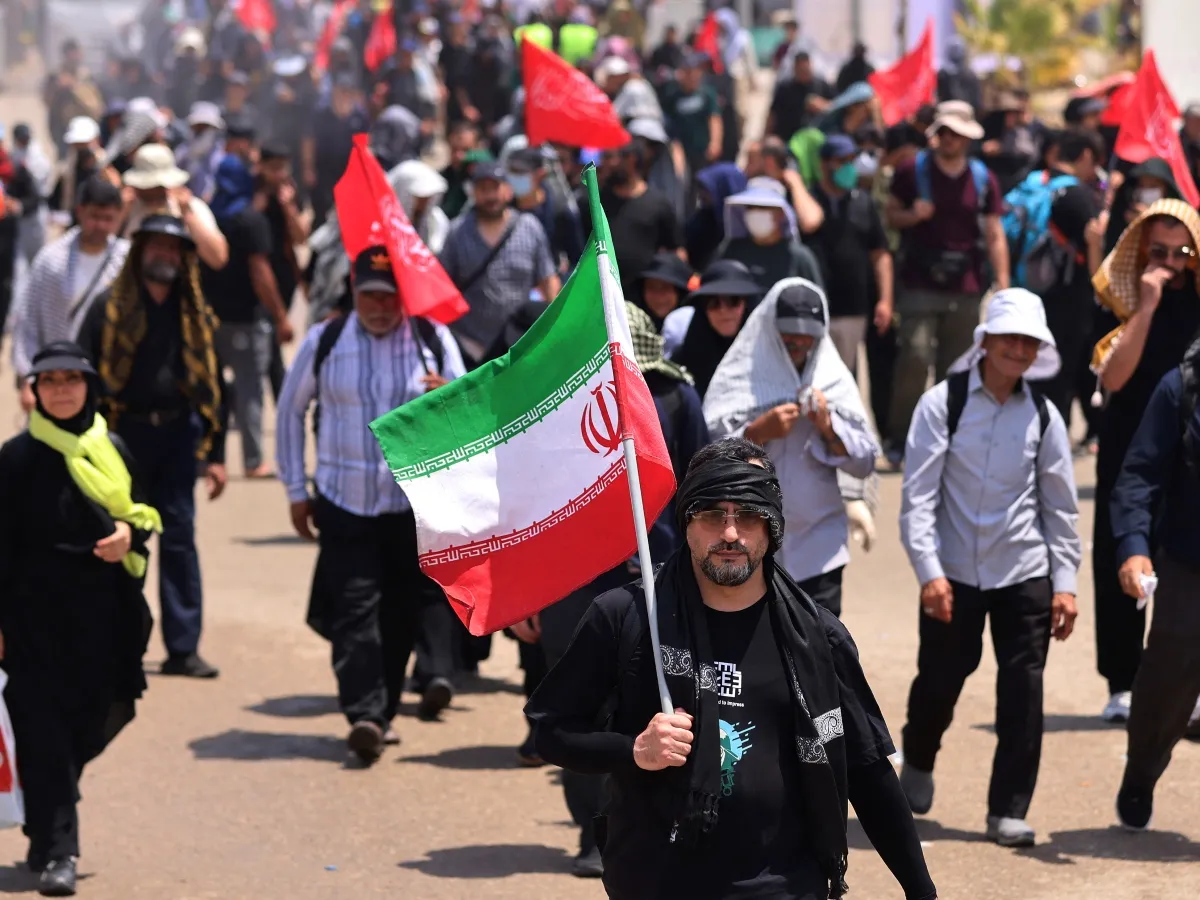
Skip to Content Subscribe Our Offers My Account Manage My Subscriptions FAQ Newsletters Canada Canadian True Crime Canadian Politics Health World Israel & Middle East Financial Post NP Comment Longreads Puzzmo Diversions Comics NP News Quiz New York Times Crossword Horoscopes Life Eating & Drinking Style Sponsored Play for Ontario Travel Travel Canada Travel USA Travel International Cruises Travel Essentials Culture Books Celebrity Movies Music Theatre Television Business Essentials Advice Lives Told Tails Told Shopping Buy Canadian Home Living Outdoor Living Kitchen & Dining Tech Style & Beauty Personal Care Entertainment & Hobbies Gift Guide Travel Guide Amazon Prime Day Deals Savings National Post Store More Sports Hockey Baseball Basketball Football Soccer Golf Tennis Driving Vehicle Research Reviews News Gear Guide Obituaries Place an Obituary Place an In Memoriam Classifieds Place an Ad Celebrations Working Business Ads Archives Healthing Epaper Manage Print Subscription Profile Settings My Subscriptions Saved Articles My Offers Newsletters Customer Service FAQ Newsletters Canada World Financial Post NP Comment Longreads Puzzmo Diversions Life Shopping Epaper Manage Print Subscription HomeNP CommentOpinion: Sovereign states run the Mideast. American policy should reflect thatThe War on Terror was about hunting down terrorist networks. Times have changed, and so should our strategyLast updated 12 minutes ago You can save this article by registering for free here. Or sign-in if you have an account.Iranian pilgrims walk toward Karbala to participate in the Arbaeen pilgrimage after crossing through the Iraq-Iran border at Zurbatiyah, south of Baghdad on July 29, 2026. Photo by AHMAD AL-RUBAYE / AFP via Getty ImagesThe latest U.S.-Iran standoff has laid bare the outdated lens through which Washington continues to see the Middle East. For nearly a quarter-century, American policy in the region has been locked into the assumptions forged in the post-9/11 era.Enjoy the latest local, national and international news.Exclusive articles by Conrad Black, Barbara Kay and others. Plus, special edition NP Platformed and First Reading newsletters and virtual events.Unlimited online access to National Post.National Post ePaper, an electronic replica of the print edition to view on any device, share and comment on.Daily puzzles including the New York Times Crossword.Support local journalism.Enjoy the latest local, national and international news.Exclusive articles by Conrad Black, Barbara Kay and others. Plus, special edition NP Platformed and First Reading newsletters and virtual events.Unlimited online access to National Post.National Post ePaper, an electronic replica of the print edition to view on any device, share and comment on.Daily puzzles including the New York Times Crossword.Support local journalism.Create an account or sign in to continue with your reading experience.Access articles from across Canada with one account.Share your thoughts and join the conversation in the comments.Enjoy additional articles per month.Get email updates from your favourite authors.Create an account or sign in to continue with your reading experience.Access articles from across Canada with one accountShare your thoughts and join the conversation in the commentsEnjoy additional articles per monthGet email updates from your favourite authorsSign In or Create an AccountorAfter the September 11, 2001 attacks — when al-Qaida under Osama bin Laden killed almost 3,000 Americans — President George W. Bush launched the “War on Terror.” That campaign marked a decisive break from traditional military thinking. Instead of preparing primarily for clashes with rival states, the U.S. redirected its attention toward loosely organized terrorist networks like al-Qaida and later ISIS.“Our enemy is a radical network of terrorists and every government that supports them,” Bush told Congress just days after the 9/11 attacks. He went on to say that U.S. military action would begin with al-Qaida but continue “until every terrorist group of global reach has been found, stopped and defeated.”The National Post newsletter that doesn’t hold back, giving readers the unvarnished truth on media, politics and culture.By signing up, you consent to receive the above newsletter from Postmedia Network Inc.A welcome email is on its way. If you don't see it, please check your junk folder.The next issue of Right? will soon be in your inbox.We encountered an issue signing you up. Please try againThat diagnosis shaped American strategy for a generation. For nearly 25 years, counterterrorism focused on dismantling decentralized extremist groups. Today, that framework no longer captures the realities of the Middle East. Instead, the region is increasingly defined by the return of sovereign states as the primary actors shaping its security and balance of power.For decades, Iran extended its influence through proxies — Hamas, Hezbollah, the Houthis — allowing Tehran to pressure the U.S. and Israel while limiting the risk of direct retaliation. Containing those groups came to be treated as the practical equivalent of containing Iran itself. This is no longer the case.Iran has not discarded its proxies, yet they are no longer its sole tool. Senior Iranian officials have openly linked any ceasefire with the U.S. to events in Lebanon. In doing so, Tehran has inverted a long-standing logic. For years Hezbollah functioned as Iran’s forward deterrent, a heavily armed buffer meant to raise the price of striking the Islamic Republic. Now Iran is seeking diplomatic cover to protect Hezbollah.Rather than relying chiefly on surrogates, the Islamic Republic is increasingly prepared to use force directly. Early Wednesday, Iran launched a surprise attack on U.S. forces in Jordan which was successfully intercepted. After that strike, the naval arm of Iran’s Islamic Revolutionary Guard Corps announced it detained three “offending” oil tankers in the Strait of Hormuz. This escalation follows the announcement that two U.S. soldiers in Jordan were killed last week while nearly 100 American service members have been wounded in Iranian strikes on bases across the region.Iran is not alone. Across the Middle East, governments are investing in military capabilities designed for long-term strategic competition. Turkey has expanded its defence industry as an instrument of statecraft, while Saudi Arabia continues to strengthen its domestic military capabilities under Vision 2030.Egypt provides another example. The construction of “The Octagon,” one of the world’s largest military headquarters, underscores the enduring centrality of the armed forces in Egyptian strategy. Israel has reached similar conclusions under different pressures. After nearly two years of intense regional fighting, Prime Minister Benjamin Netanyahu has argued that Israel must evolve into a more self-sufficient “super-Sparta.” At the same time, debates over manpower shortages and ultra-Orthodox draft exemptions have moved to the centre of the country’s national security conversation.The pattern is difficult to ignore. Across the region, governments are preparing for a security environment in which states — not proxies — are increasingly shaping the balance of power.Nor is this shift confined to the Middle East. Earlier this week, Ukraine claimed responsibility for striking vessels carrying Iranian military-linked cargo to Russia in the Caspian Sea, underscoring how interstate competition is increasingly shaping conflicts well beyond the region.Terrorism has not vanished. Hezbollah, Hamas, ISIS and other extremist groups remain serious threats. But counterterrorism can no longer serve as the central organizing principle of American strategy in the region when formal states are asserting themselves through force. American strategy must once again begin with sovereign states, because they are now the principal drivers of regional competition.Washington has started to adjust — lifting some sanctions, deepening military partnerships and pursuing new regional arrangements. Isolated steps, however, do not add up to a coherent strategy. The framework through which these policies are made must be completely rethought.The question is no longer simply whether the United States can deter Iran’s proxies. It is whether Washington is prepared for a Middle East in which states, not proxies, once again determine the regional balance of power.National PostBradley Martin is the executive director of the Near East Center for Strategic Studies. Liram Koblentz-Stenzler is the head of the Global Extremism and Antisemitism Desk at the International Institute for Counter-Terrorism (ICT) at Reichman University, Herzliya, and a visiting scholar at Brandeis University. Join the Conversation This website uses cookies to personalize your content (including ads), and allows us to analyze our traffic. Read more about cookies here. By continuing to use our site, you agree to our Terms of Use and Privacy Policy.
Opinion: Sovereign states run the Mideast. American policy should reflect that
The War on Terror was about hunting down terrorist networks. Times have changed, and so should our strategy
1,329 words~6 min read