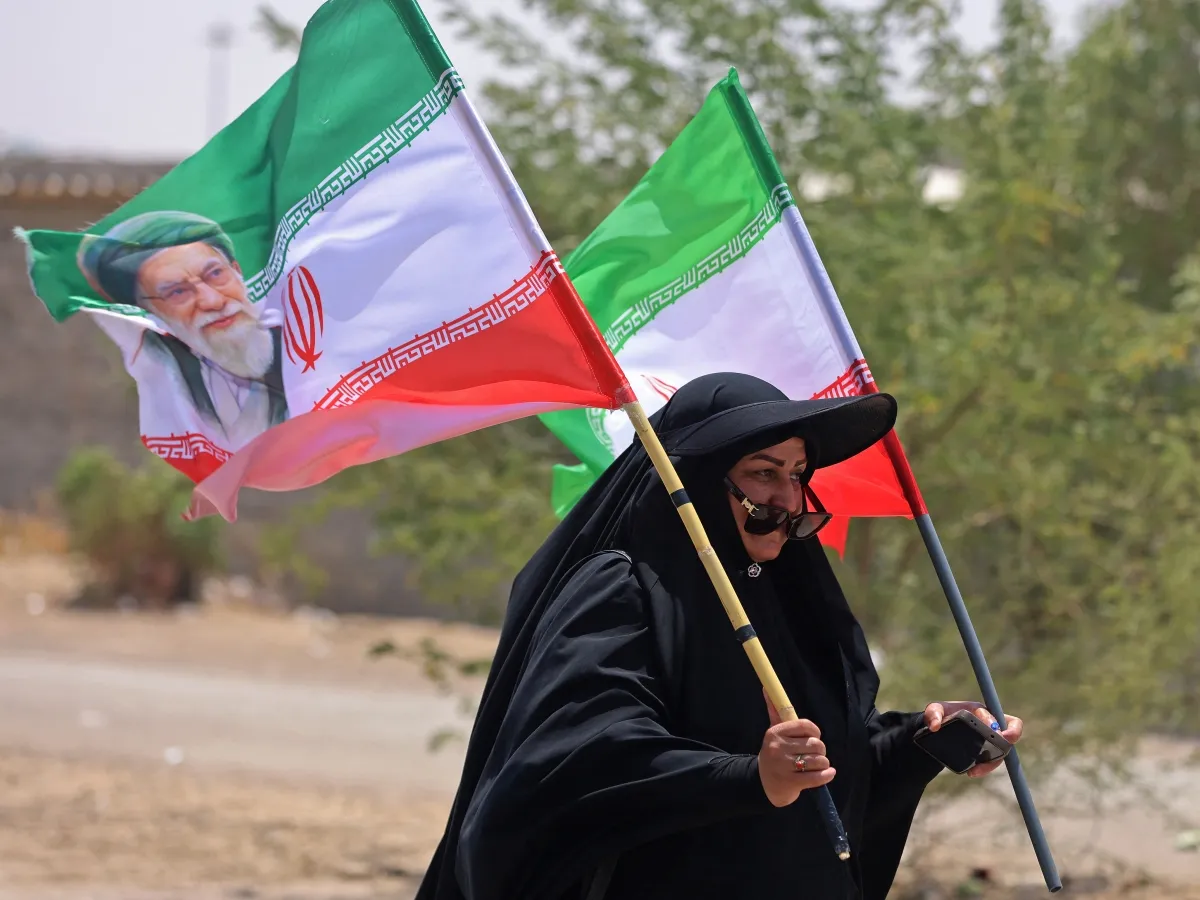
Skip to Content Subscribe Our Offers My Account Manage My Subscriptions FAQ Newsletters Canada Canadian True Crime Canadian Politics Health World Israel & Middle East Financial Post NP Comment Longreads Puzzmo Diversions Comics NP News Quiz New York Times Crossword Horoscopes Life Eating & Drinking Style Sponsored Play for Ontario Travel Travel Canada Travel USA Travel International Cruises Travel Essentials Culture Books Celebrity Movies Music Theatre Television Business Essentials Advice Lives Told Tails Told Shopping Buy Canadian Home Living Outdoor Living Kitchen & Dining Tech Style & Beauty Personal Care Entertainment & Hobbies Gift Guide Travel Guide Amazon Prime Day Deals Savings National Post Store More Sports Hockey Baseball Basketball Football Soccer Golf Tennis Driving Vehicle Research Reviews News Gear Guide Obituaries Place an Obituary Place an In Memoriam Classifieds Place an Ad Celebrations Working Business Ads Archives Healthing Epaper Manage Print Subscription Profile Settings My Subscriptions Saved Articles My Offers Newsletters Customer Service FAQ Newsletters Canada World Financial Post NP Comment Longreads Puzzmo Diversions Life Shopping Epaper Manage Print Subscription HomeNP CommentBryan Brulotte: The West's adversaries don't think like us. The sooner we get it, the betterEconomic sanctions alone can't defeat an authoritarian enemy that cares nothing for its peopleLast updated 1 hour ago You can save this article by registering for free here. Or sign-in if you have an account.An Iranian pilgrim carrying a flag with a portrait of Iran's slain supreme leader Ali Khamenei, walks toward Karbala to participate in the Arbaeen pilgrimage after crossing through the Iraq-Iran border at Zurbatiyah, south of Baghdad on July 29, 2026. Photo by AHMAD AL-RUBAYE / AFP via Getty ImagesFive months after the latest war with Iran began, it is becoming apparent that this conflict is about far more than missiles, sanctions or oil tankers. It is exposing a deeper truth about modern warfare: democratic nations often struggle to understand the strategic culture of authoritarian regimes.Enjoy the latest local, national and international news.Exclusive articles by Conrad Black, Barbara Kay and others. Plus, special edition NP Platformed and First Reading newsletters and virtual events.Unlimited online access to National Post.National Post ePaper, an electronic replica of the print edition to view on any device, share and comment on.Daily puzzles including the New York Times Crossword.Support local journalism.Enjoy the latest local, national and international news.Exclusive articles by Conrad Black, Barbara Kay and others. Plus, special edition NP Platformed and First Reading newsletters and virtual events.Unlimited online access to National Post.National Post ePaper, an electronic replica of the print edition to view on any device, share and comment on.Daily puzzles including the New York Times Crossword.Support local journalism.Create an account or sign in to continue with your reading experience.Access articles from across Canada with one account.Share your thoughts and join the conversation in the comments.Enjoy additional articles per month.Get email updates from your favourite authors.Create an account or sign in to continue with your reading experience.Access articles from across Canada with one accountShare your thoughts and join the conversation in the commentsEnjoy additional articles per monthGet email updates from your favourite authorsSign In or Create an AccountorWestern governments have long assumed that economic hardship eventually forces political compromise. That assumption has shaped decades of sanctions policy against Iran. Yet history repeatedly demonstrates that revolutionary regimes frequently value ideological survival over economic prosperity. They are often willing to impose extraordinary hardship on their own populations if doing so preserves their hold on power.Iran is proving that lesson once again. The country’s economy has suffered severe damage. Oil exports have been constrained, inflation has accelerated, and Iran’s official currency, the rial, has lost much of its value. Ordinary Iranians are bearing the cost through rising prices, declining purchasing power and growing economic uncertainty. Yet despite these pressures, Tehran continues to prosecute the war with determination.The National Post newsletter that doesn’t hold back, giving readers the unvarnished truth on media, politics and culture.By signing up, you consent to receive the above newsletter from Postmedia Network Inc.A welcome email is on its way. If you don't see it, please check your junk folder.The next issue of Right? will soon be in your inbox.We encountered an issue signing you up. Please try againThe conflict has also reminded the world why stability in the Persian Gulf matters. The Strait of Hormuz used to carry approximately 20 million barrels of oil every day, representing roughly 20 per cent of global oil and liquefied natural gas. Even the threat of disrupting that vital artery has sent shockwaves through international energy markets and global supply chains.This should not surprise us. The Islamic Revolutionary Guard Corps was never designed to maximize economic growth or improve living standards. Its purpose is to preserve the Islamic Republic and defend the revolutionary ideology on which it was founded. As long as that objective remains intact, economic suffering alone is unlikely to change its strategic calculations.This distinction is critical because successful military strategy begins with identifying an adversary’s true centre of gravity. Carl von Clausewitz, the famed 19th-century Prussian military theorist, described this as the source of an opponent’s strength and cohesion. Too often, western governments mistake economic infrastructure for political will. They assume that enough financial pain will eventually produce political moderation. Sometimes it does. Often it does not.History offers numerous examples of authoritarian governments enduring extraordinary economic deprivation while maintaining political control. National resolve, ideological conviction and coercive state institutions can sustain a regime long after outside observers believe collapse is inevitable.The broader lesson extends well beyond Iran. Russia has demonstrated a similar capacity to absorb sanctions while continuing its war in Ukraine. China, meanwhile, has spent decades preparing its economy, industrial base and political institutions for prolonged strategic competition with the West. These governments understand that modern conflict is not simply a contest of military power. It is equally a contest of endurance, industrial capacity and political will. That reality has been reflected in financial markets, where Brent crude briefly climbed above US$100 (C$140) per barrel as investors priced in the risk of prolonged disruption to Middle Eastern energy supplies.For Canada and its allies, this demands a more sophisticated approach to national security. Economic sanctions remain an important policy tool, but they are rarely decisive on their own. They must form part of a broader strategy that integrates diplomacy, military deterrence, intelligence, cyber capabilities and sustained economic resilience. Perhaps the most important lesson is psychological. Democratic societies often project their own values onto their adversaries. We assume that others will calculate costs and benefits as we would. They frequently do not. Strategic success requires understanding an adversary as it understands itself, not as we wish it to be.Wars are ultimately contests of political will. Five months into the Iran conflict, that lesson has become impossible to ignore. The battlefield has become a classroom, reminding us that wars are rarely won by economic pressure alone. They are won by accurately identifying the political, military and ideological sources of an opponent’s strength and by developing strategies that address them directly. As Canada confronts an increasingly unstable international environment, from Russia to Iran to China’s growing ambitions, that may be the most valuable lesson of all.National Post Join the Conversation This website uses cookies to personalize your content (including ads), and allows us to analyze our traffic. Read more about cookies here. By continuing to use our site, you agree to our Terms of Use and Privacy Policy.
Bryan Brulotte: The West's adversaries don't think like us. The sooner we get it, the better
Economic sanctions alone can't defeat an authoritarian enemy that cares nothing for its people
1,230 words~6 min read