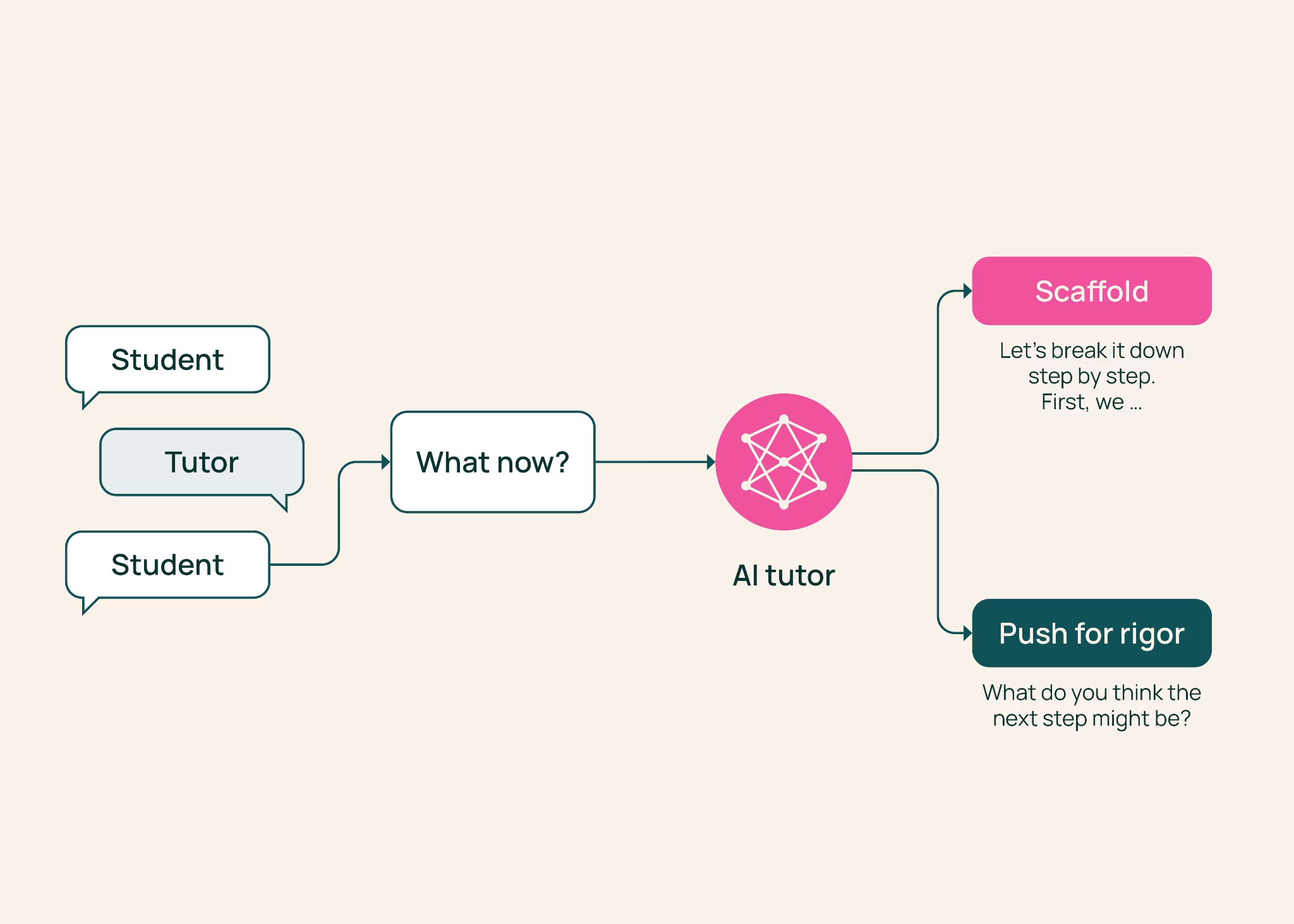
If you've ever built or evaluated an online coaching platform, you've probably run into a problem that doesn't show up in the initial feature list: students get stuck, and there's no reliable path from "I don't understand this" to "someone explained it to me," fast enough to matter. Live classes handle content delivery well. Recorded lectures handle self-paced review well. But the actual moment a student needs help — usually late at night, working through a practice problem — is exactly the moment most platforms fall apart.
This is what's often called the doubt-resolution gap, and it's a genuinely interesting systems problem, not just a UX afterthought. Solving it well involves real-time messaging infrastructure, intelligent routing, and some non-obvious trade-offs between response speed and instructor load. Let's dig into what's actually going on under the hood.
Why This Is Harder Than It Looks
The naive solution is "just add a chat feature." That gets you maybe 20% of the way there, and it's worth being specific about why the remaining 80% is genuinely hard.
Doubt volume is bursty and unpredictable. Unlike scheduled live classes, doubts arrive whenever a student is actually working through material — which, for a serious exam-prep audience, is often late evening or weekend hours. A system built assuming steady, predictable load will either be overprovisioned most of the time or fall over during actual peak usage.