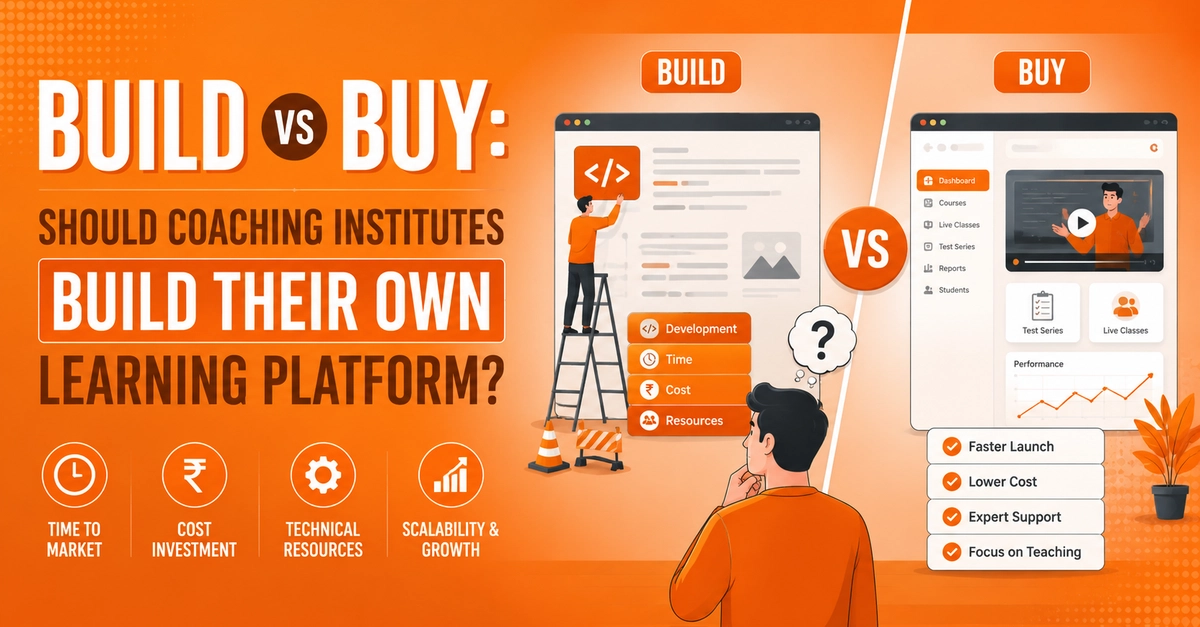
Every coaching institute that starts thinking seriously about technology eventually has this conversation: "What if we just built our own platform?" Sometimes it comes from a founder who used to code. Sometimes it comes from a growing frustration with existing platforms' limitations. Sometimes it's simply the instinct that owning your own tech stack must be better than renting someone else's.
As a developer, if you're the one being asked to scope this out, it's worth walking through what "build your own learning platform" actually entails — technically, operationally, and financially — before committing an engineering team to it. This isn't a simple weekend project, and it isn't a bottomless money pit either. It depends heavily on what the institute actually needs and how much ongoing engineering capacity they're willing to commit, indefinitely, to keep it running.
What "Building" Actually Involves
A learning platform for a coaching institute isn't one feature — it's a cluster of interdependent systems, each with real complexity once you get past the MVP stage.
Live class delivery. Video infrastructure at scale is genuinely hard. Building your own WebRTC-based video system that reliably handles variable class sizes — from a small batch of 20 students to a large lecture of several hundred — with acceptable latency and quality across different network conditions, is a substantial undertaking on its own. Most teams that go this route end up wrapping a third-party video SDK (Zoom, Twilio Video, Agora, or similar) rather than building raw video infrastructure from scratch, which changes the scope but doesn't eliminate it.