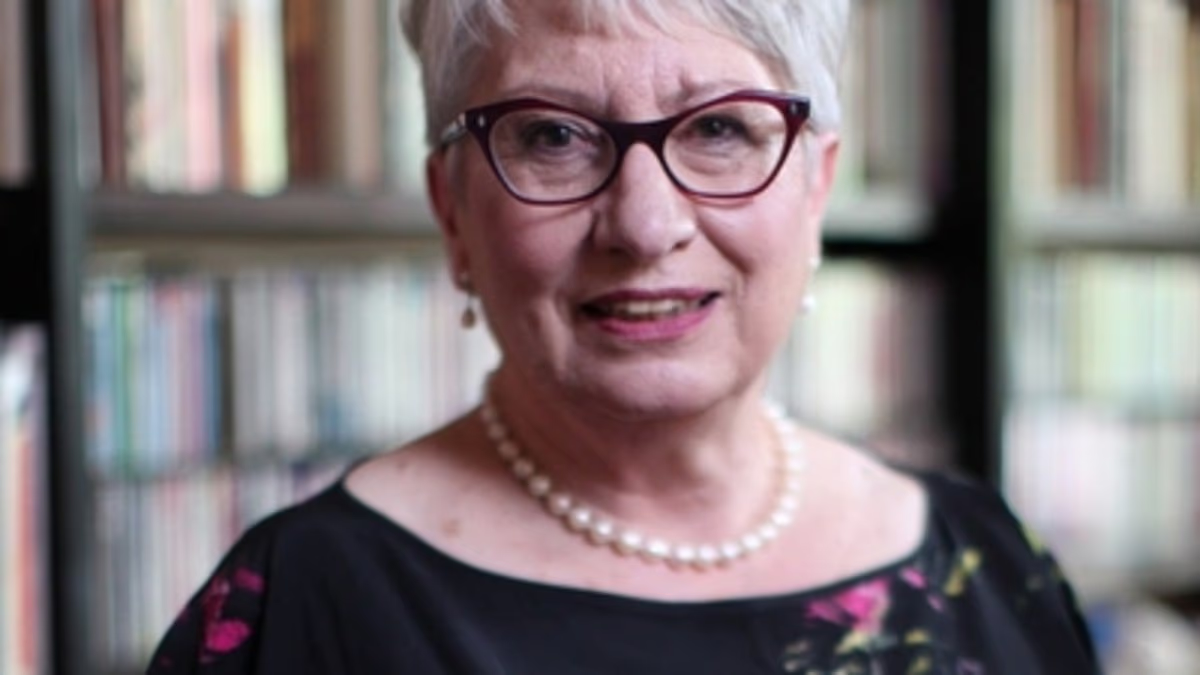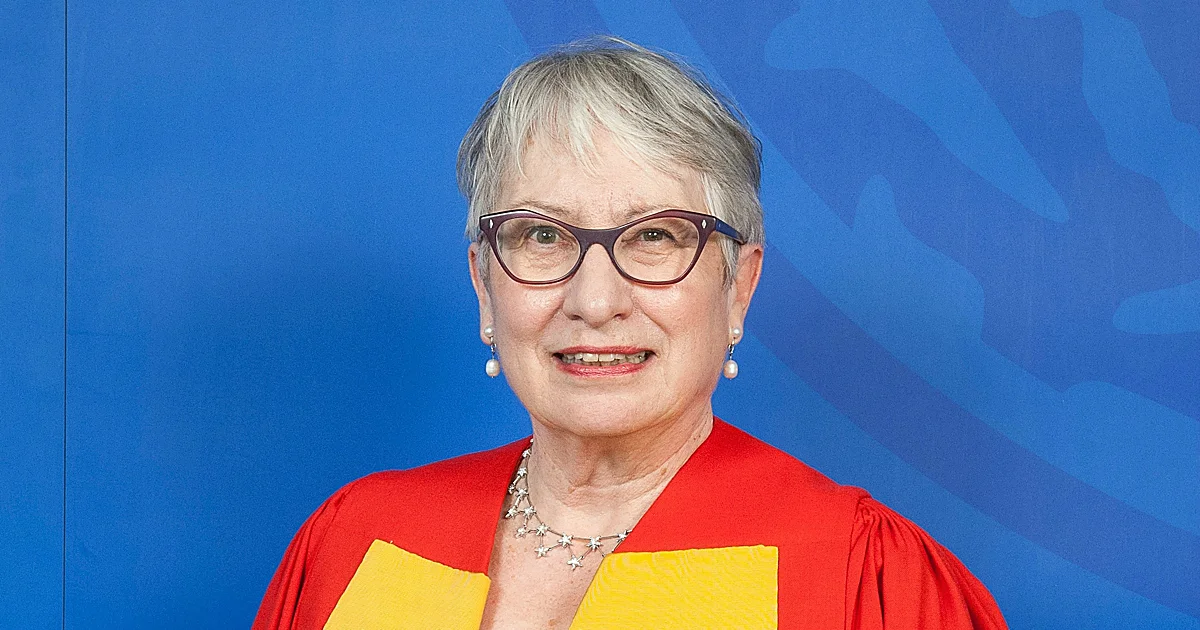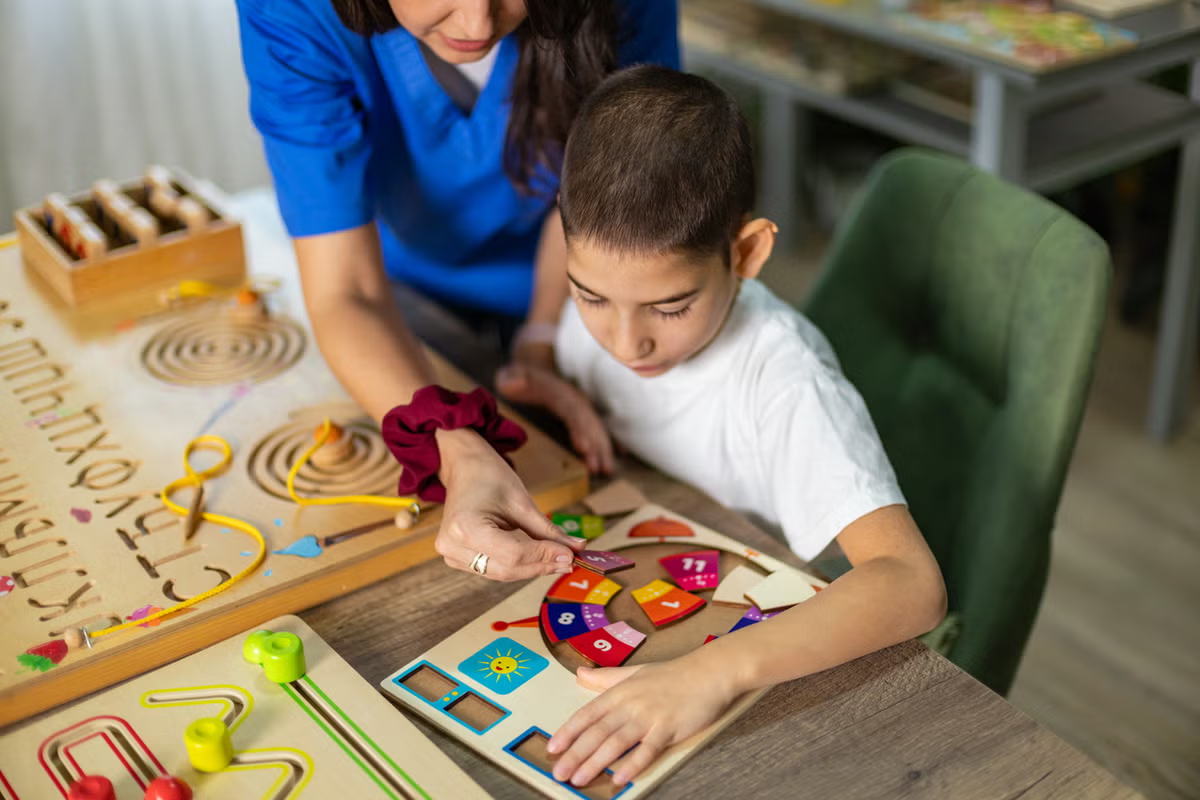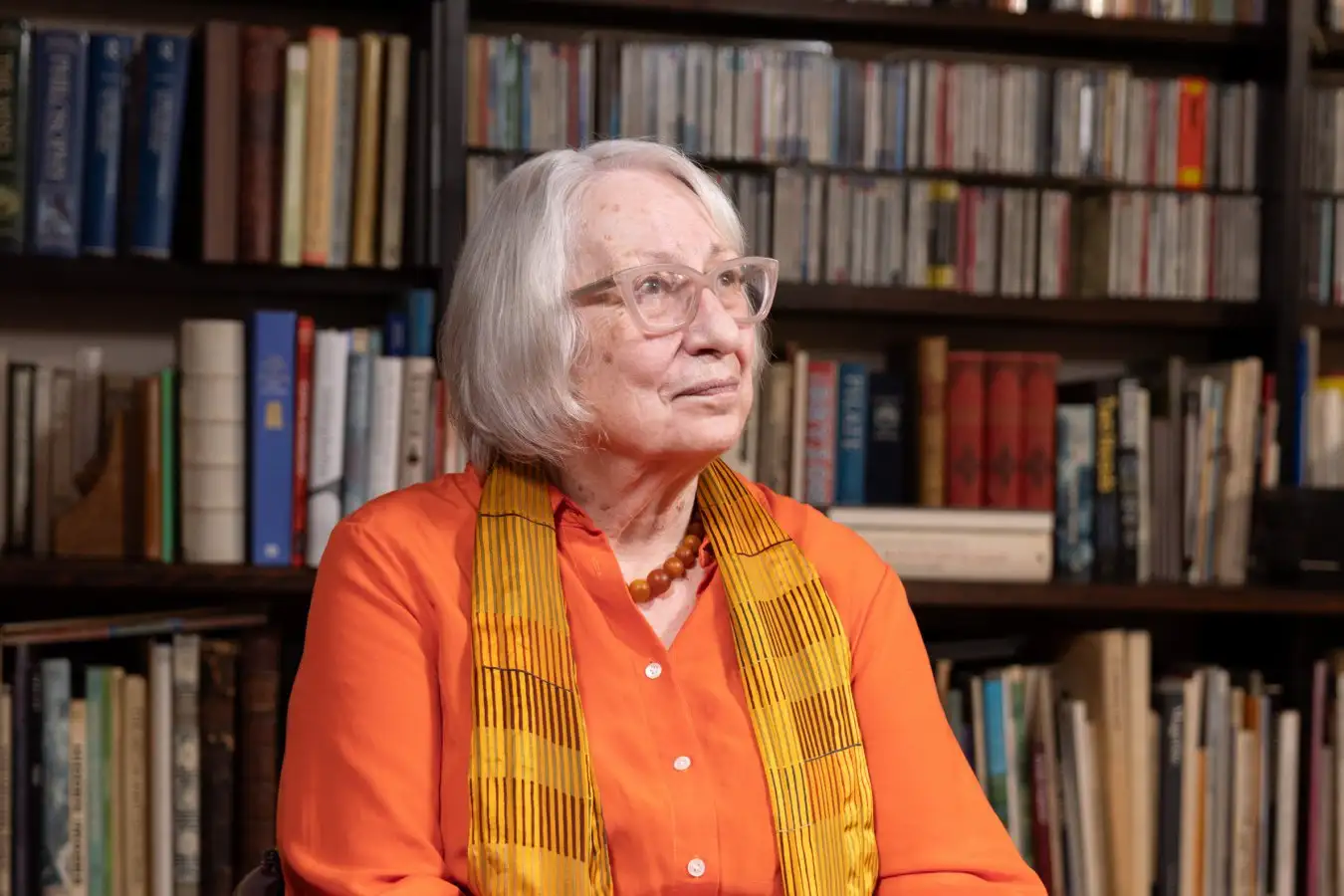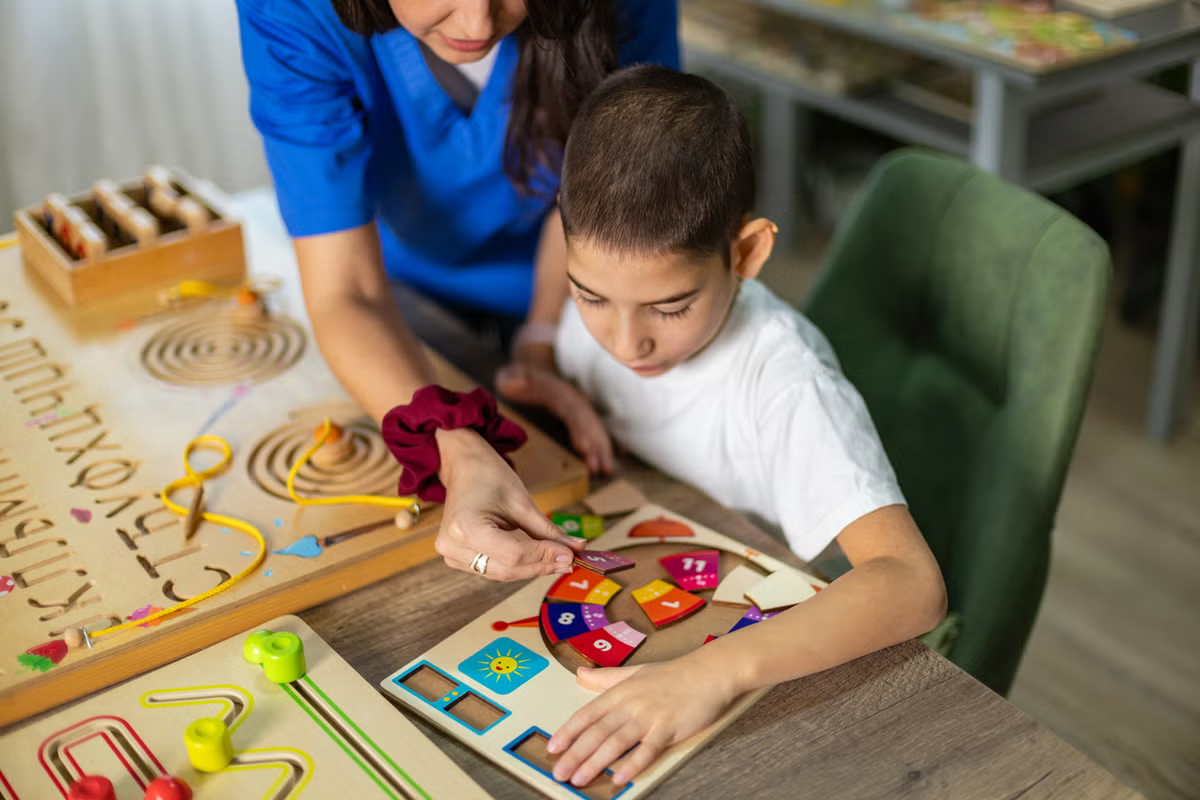
A leading expert has criticised the autism spectrum for being “too broad” - adding that currently “anyone of any age or intelligence level can be diagnosed with autism”UCL Professor Dame Uta Frith, whose pioneering 1960s and 70s research shaped autism understanding, stated it was not always a "catch-all diagnosis.”She also noted the definition has "widened" to include milder traits - suggesting that the spectrum should be “split up” in order to prevent misdiagnosis. She also cautioned that while social media and online communities have helped people share experiences, they may have "also spread simplified or misleading ideas."Autism, a form of neurodivergence, affects how individuals communicate and experience the world, influencing thinking, learning, attention, and sensory responses. Autism, a form of neurodivergence, affects how individuals communicate and experience the world, influencing thinking, learning, attention, and sensory responses (Getty/iStock)Its presentation varies widely, from those with learning disabilities to others with above-average intelligence.Dame Uta said: “Autism wasn’t always defined this way – a sort of catch-all diagnosis for a huge variety of conditions.“When it was first identified in the 1940s, it referred to a small group of children with severe difficulties in social interaction, communication and behaviour.“Over time, the definition has widened to include people with milder traits and no language or learning problems.“Today, anyone of any age or intelligence level can be diagnosed with autism if they meet certain criteria.”It is estimated that around one million people in the UK have autism, with roughly 240,000 on NHS waiting lists for an assessment.Dame Uta said: “Autism is no longer just a medical term – it has become part of popular culture.“Social media, films, and online communities have helped people share experiences, but they have also spread simplified or misleading ideas.“At the same time, the idea of ‘neurodiversity’ has encouraged people to see autism as a difference rather than a disorder.“While this helps reduce stigma, it also creates tension: if autism is not a disorder, why use a medical diagnosis?”Her essay, published in the journal Psychological Medicine, suggests drivers for the rise in cases could be a “desire for inclusion”, as well as a reliance on patients self-reporting symptoms and the acceptance of “masking”, a term used when people suppress traits to blend in.“These have all led to a lowering of the diagnostic threshold,” it said.“Furthermore, the popularity of the concept of autism boosted numbers via self-diagnosis and a search for identity.”Dame Uta added: “The time has come to examine whether the autism spectrum has become too broad.“Without greater precision, we risk misunderstanding people’s needs and misdirecting care.”Dame Uta said that the “shift from a precise clinical into a vague, culturally amplified identity category” has generated “massive demand” for assessments in teenagers and adults “with an almost magnetic attraction” to the autism label.It is estimated that around one million people in the UK have autism, with roughly 240,000 on NHS waiting lists for an assessment (Getty/iStock)She called for “greater precision” in diagnosing the condition, along with a “fresh attempt” to pinpoint the cause of distress experienced by many late-diagnosed cases.“For example, specific therapies could address sensory issues and could prevent burnout,” the essay suggests.“There are ways to reduce the symptoms of anxiety disorder and depression. There are also ways to build resilience in the face of significant social stress.“None of these approaches are likely to be appropriate for early diagnosed cases, where different types of support are needed.“Splitting up the spectrum would ultimately prevent misdiagnosis.”Reacting to the essay, Mel Merritt, head of policy and influencing at the National Autistic Society, said: “Autism is understood as a spectrum. As the article points out, in the past people thought the spectrum was a straight line between ‘more’ and ‘less’ autistic, but this isn’t right.“Today we understand the spectrum to mean each autistic person has a unique combination of characteristics.“Terms such as ‘milder traits’ may be misleading or unhelpful in reflecting the difficulties and impact of navigating daily life for so many. Autistic people can be very different to one another, each with a unique set of strengths and challenges. This should not take away from or ‘neglect’ people with high levels of support needs.“Autistic people need better access to quality autism assessments and tailored support.“The real debate about autistic people is how to address the chronic inequalities they face. It is unhelpful and a false choice to pit autistic people against each other – getting the right support early and better understanding makes a big difference to all autistic people.”
Leading expert says ‘anyone can have autism now’ as she claims spectrum is too broad
Professor Dame Uta Frith said social media could also be spreading ‘simplified or misleading ideas’ about autism
744 words~3 min read