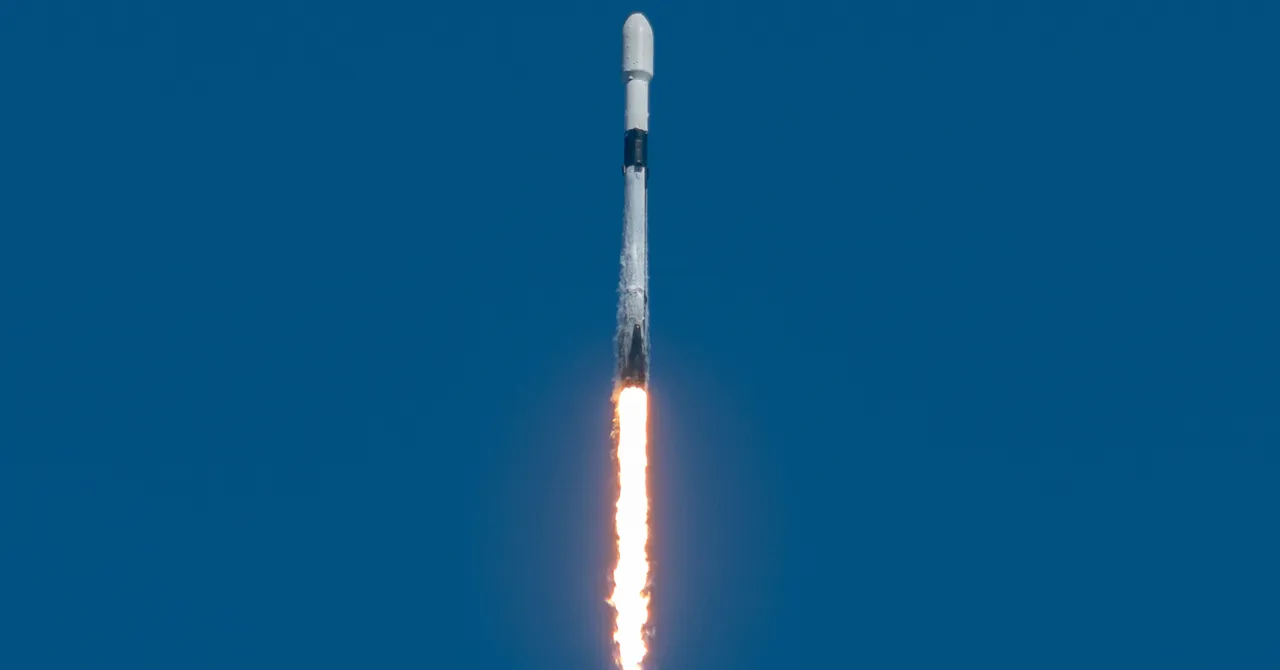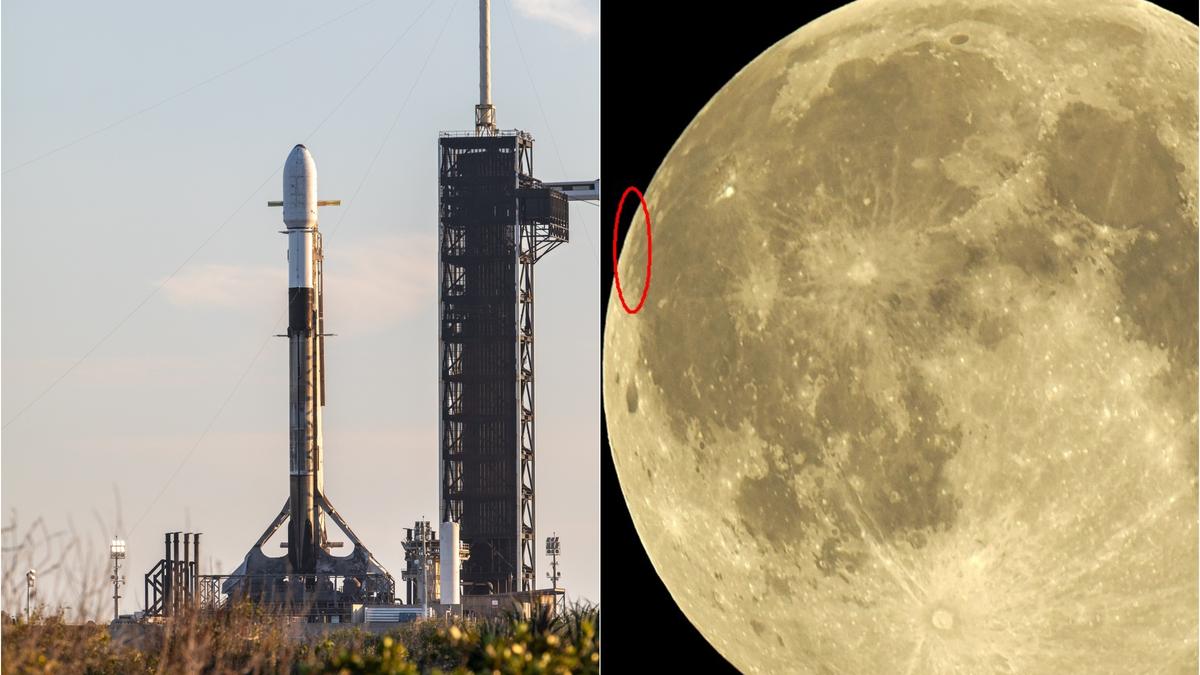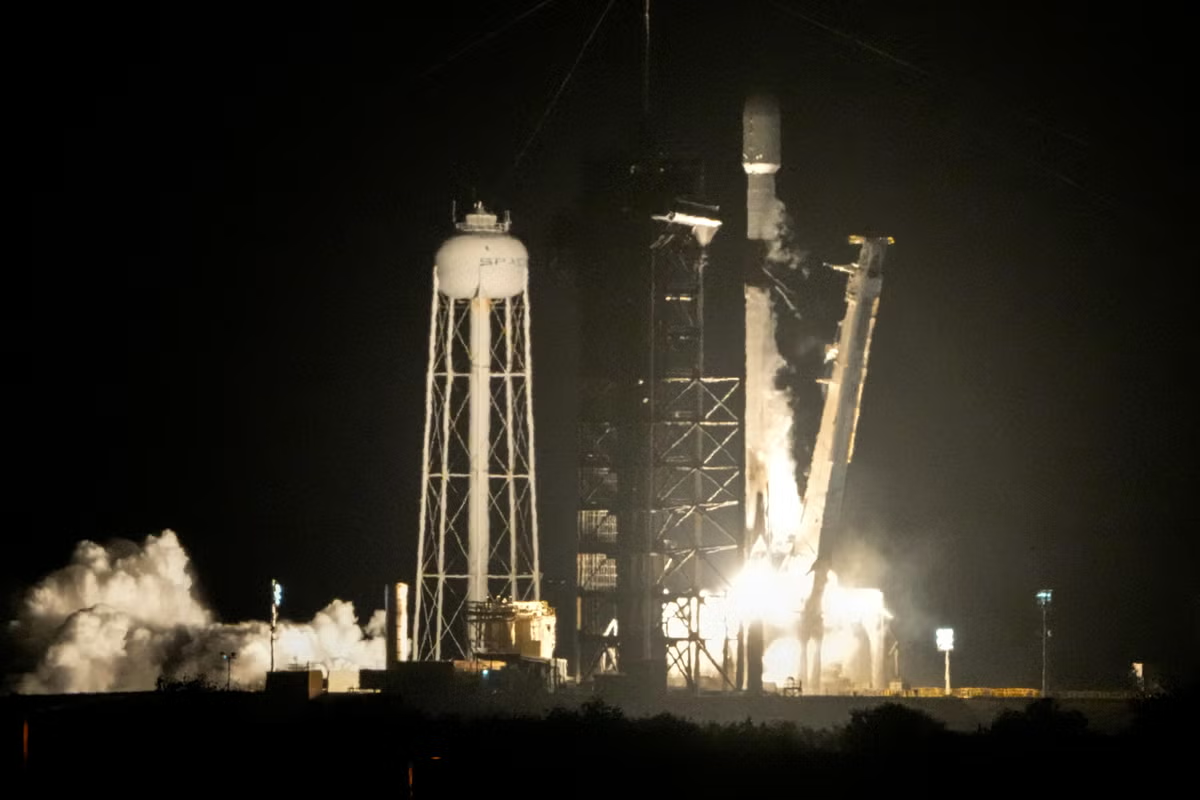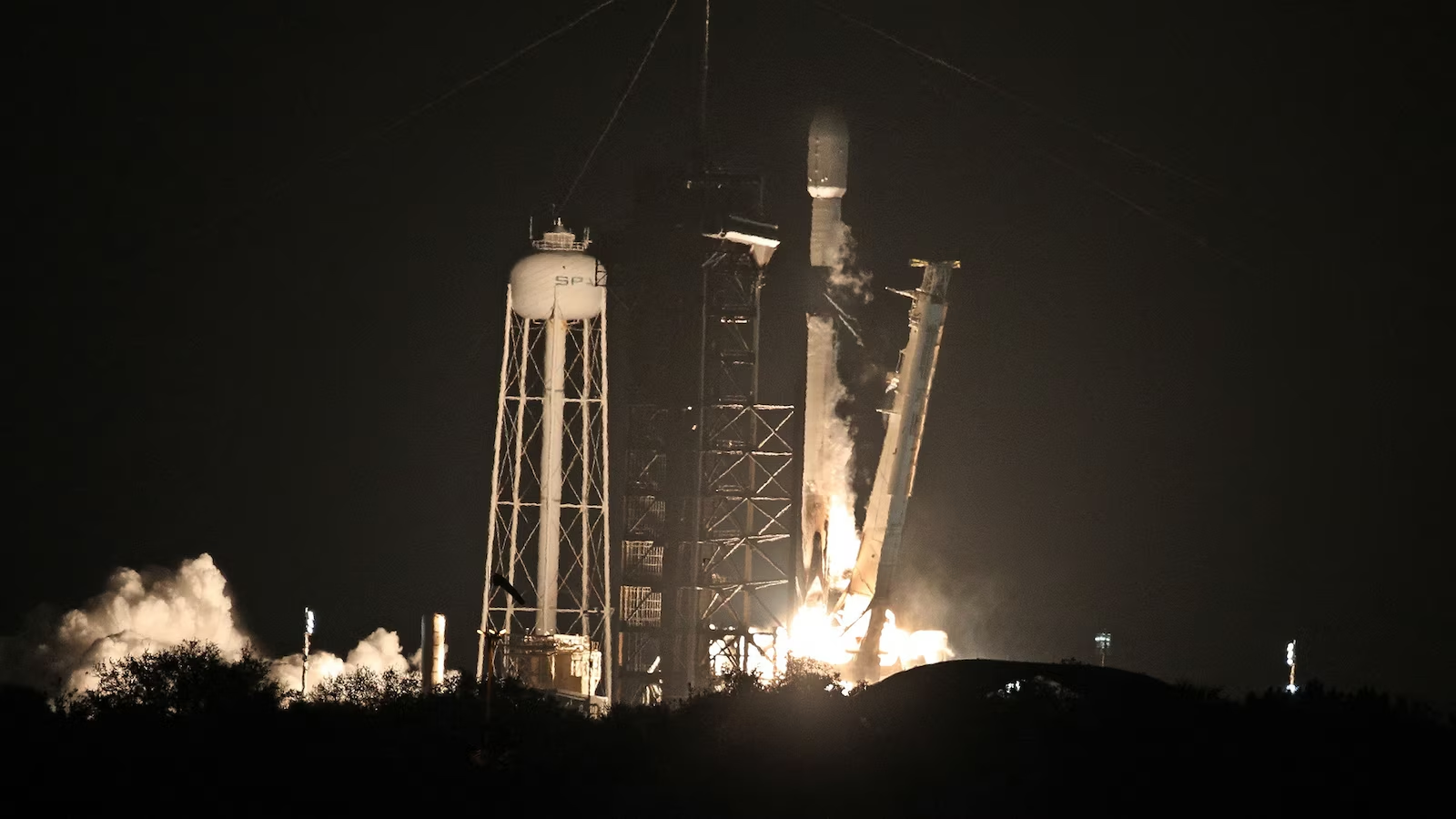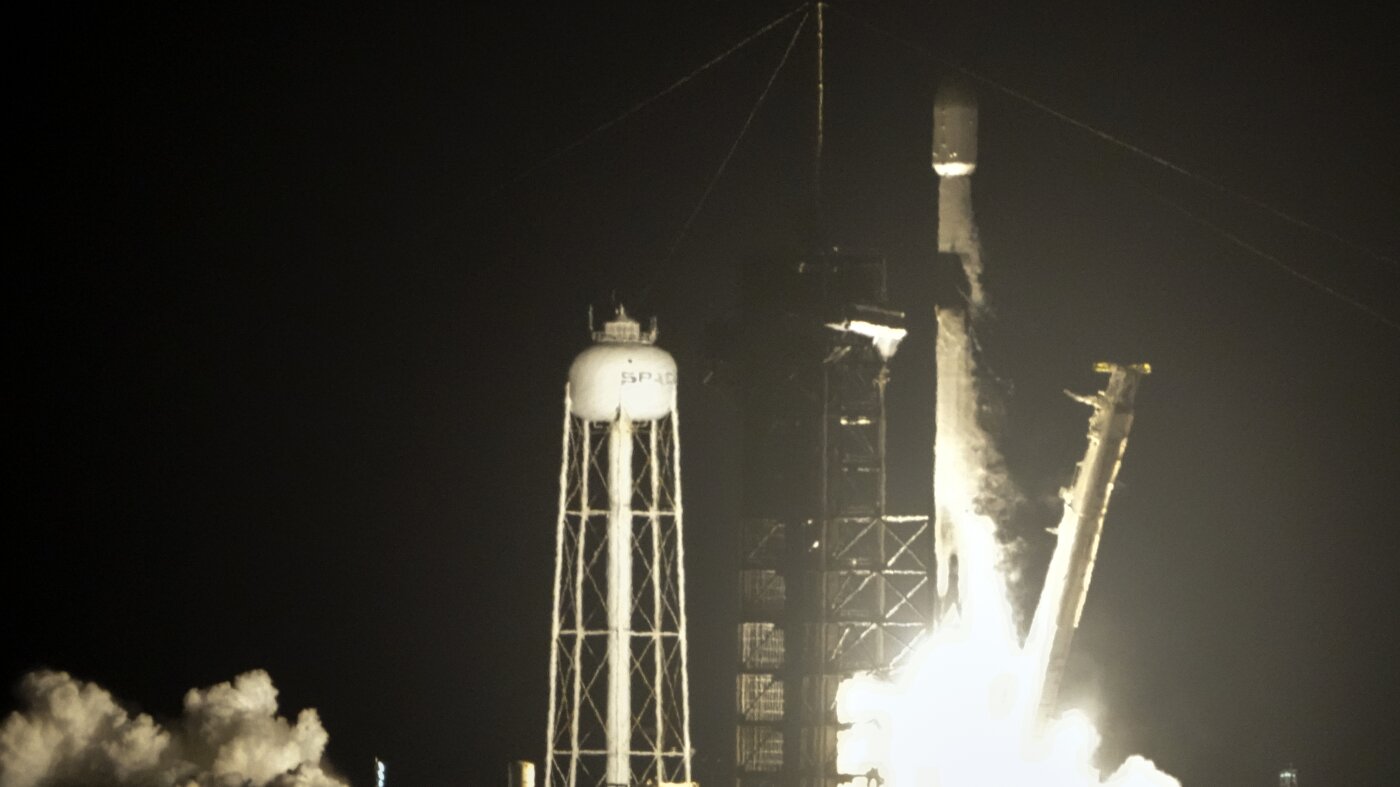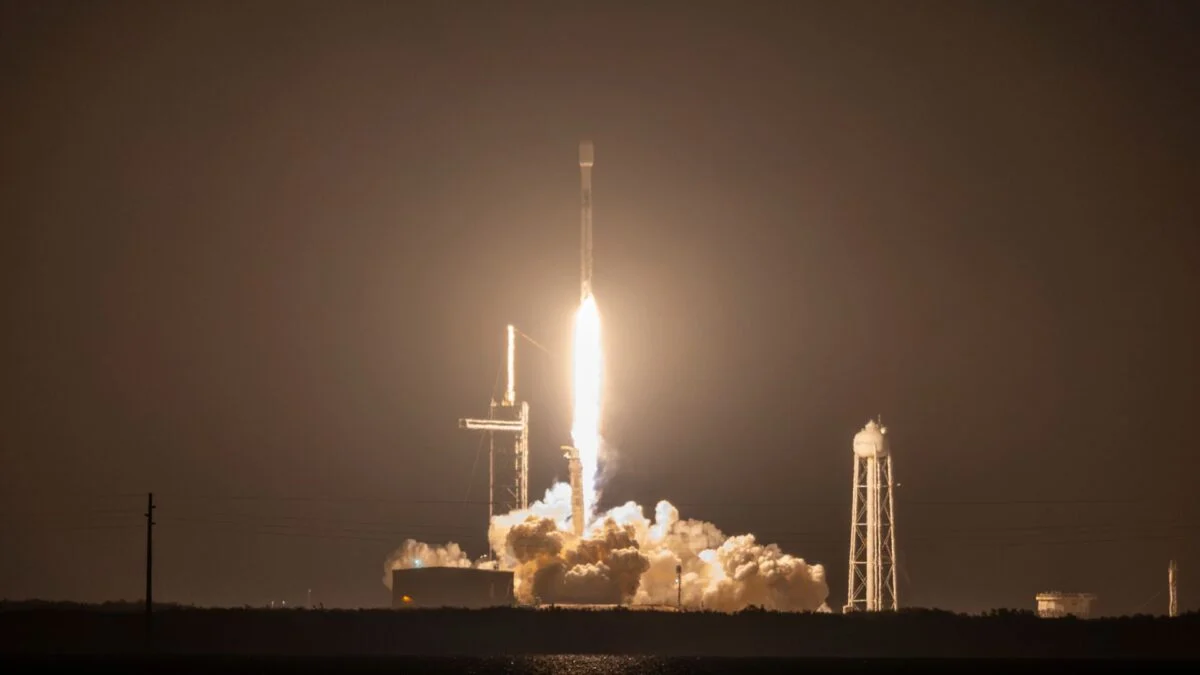
A Falcon 9 lifts off Jan. 15, 2025, carrying lunar landers for Firefly Aerospace and ispace. Credit: SpaceX
WASHINGTON — With a Falcon 9 upper stage set to hit the moon this week, SpaceX says it is working with NASA on ways to prevent similar collisions in the future.
The Falcon 9 upper stage used for the January 2025 launch of lunar landers built by Firefly Aerospace and ispace is on a trajectory to collide with the moon Aug. 5 at 2:35 a.m. Eastern.
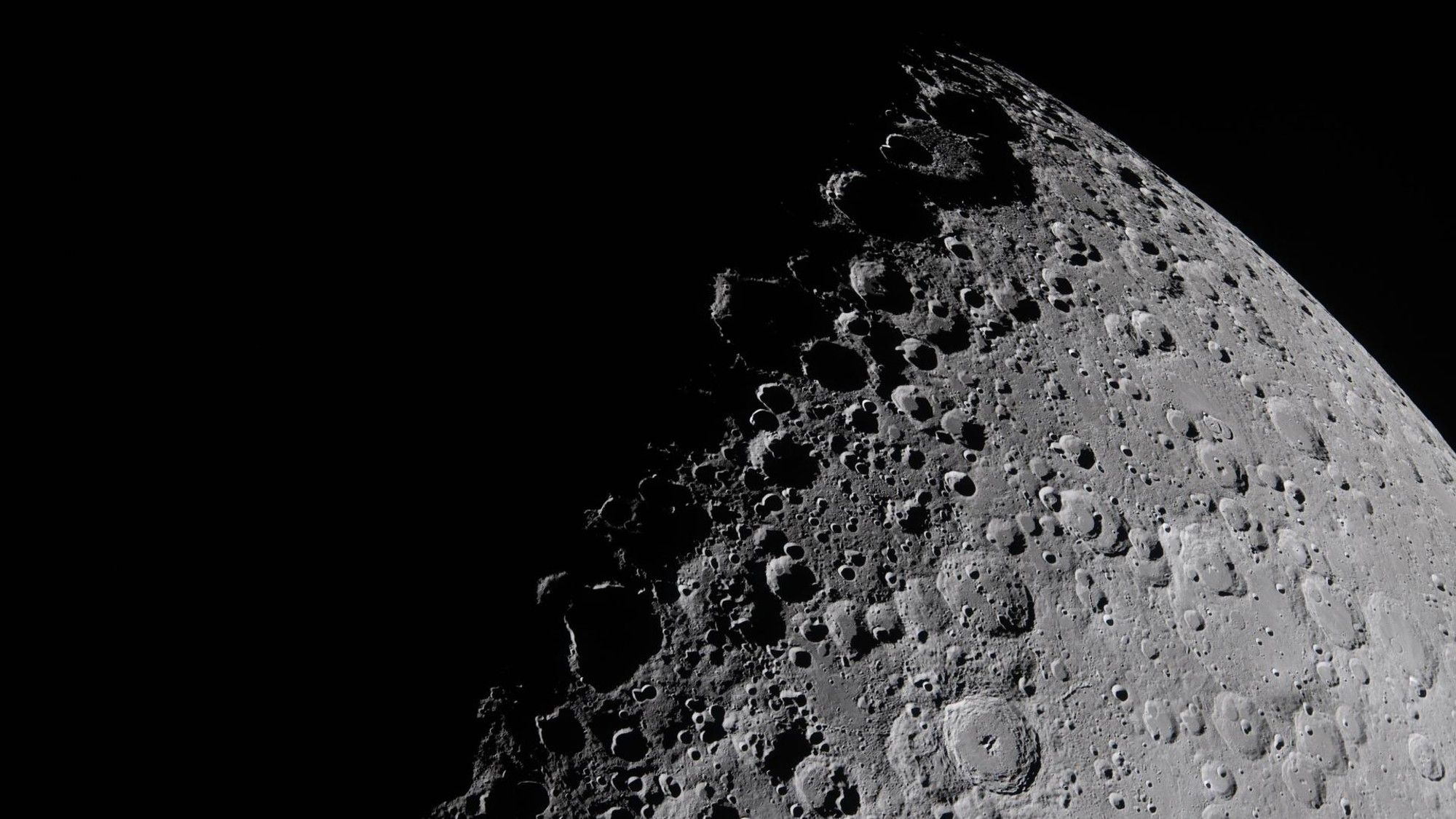
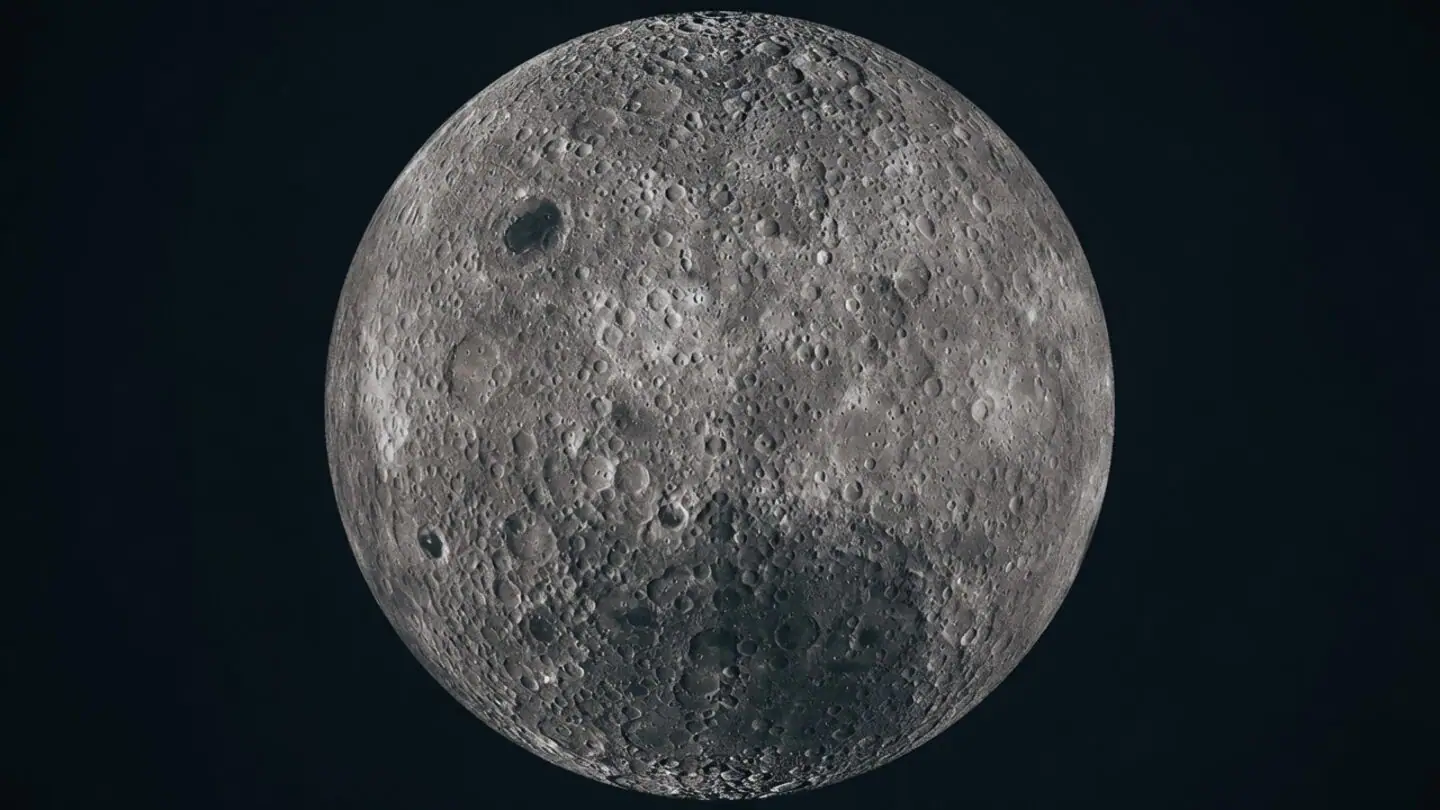
The upper stage is expected to impact near a crater named Einstein on the western limb of the moon, according to Bill Gray, an astronomer who has tracked the stage and was the first to report the projected collision in April. The impact itself, with an estimated energy equivalent of two to three tons of TNT, is unlikely to be visible from Earth, but it may create a plume that can be seen by telescopes.
The impact is not intentional. “What has happened is essentially a mixture of solar activity and gravity forces have put it on a path toward the moon,” said Julianna Scheiman, director of NASA science and Dragon programs at SpaceX, during an Aug. 3 NASA briefing about the upcoming Crew-13 mission to the International Space Station.