If you’ve ever flown home from Bangkok with a mysteriously heavier suitcase, chances are it was stuffed with Gentlewoman totes, ChaTraMue milk tea mixes – and a healthy haul of beauty buys.For decades, Thailand’s beauty industry had evolved largely under the radar. Heritage names like Srichand, founded in 1948, and mass-market giant Mistine, which emerged in the late 1980s, developed products tailored to local consumers rather than chasing global trends.By the 2000s, Bangkok had become one of Asia’s favourite beauty-shopping destinations. Visitors returned with suitcases filled with lightweight sunscreens, oil-control powders and affordable makeup discovered in local pharmacies and beauty stores.
Cathy Doll pop-up in Bangkok. (Photo: Cathy Doll)
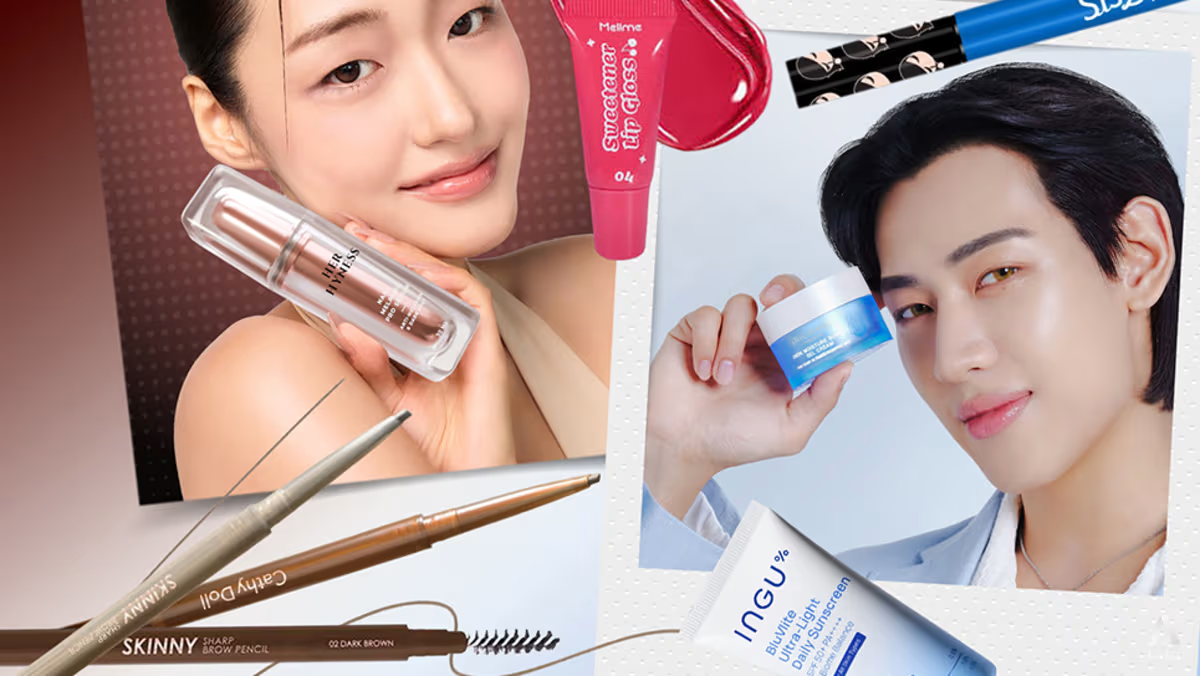
The 2020s marked a turning point. As TikTok and Instagram turned holiday finds into viral recommendations, beauty brands found themselves reaching audiences far beyond Bangkok. Today, many of those once hard-to-find products are just a click away, with Thai labels landing on pharmacy shelves in Singapore and expanding across Asia through e-commerce.The movement has become known as T-beauty. But unlike South Korea's K-beauty, which popularised multi-step skincare routines, or Japan's J-beauty, favoured for its minimalist approach, Thailand isn’t staking its claim on a single viral ingredient or aesthetic. Instead, it’s earning a reputation for products designed around life in the tropics: sunscreens that withstand relentless humidity, makeup that survives sweltering commutes, and skincare formulated for the realities of Southeast Asian skin.