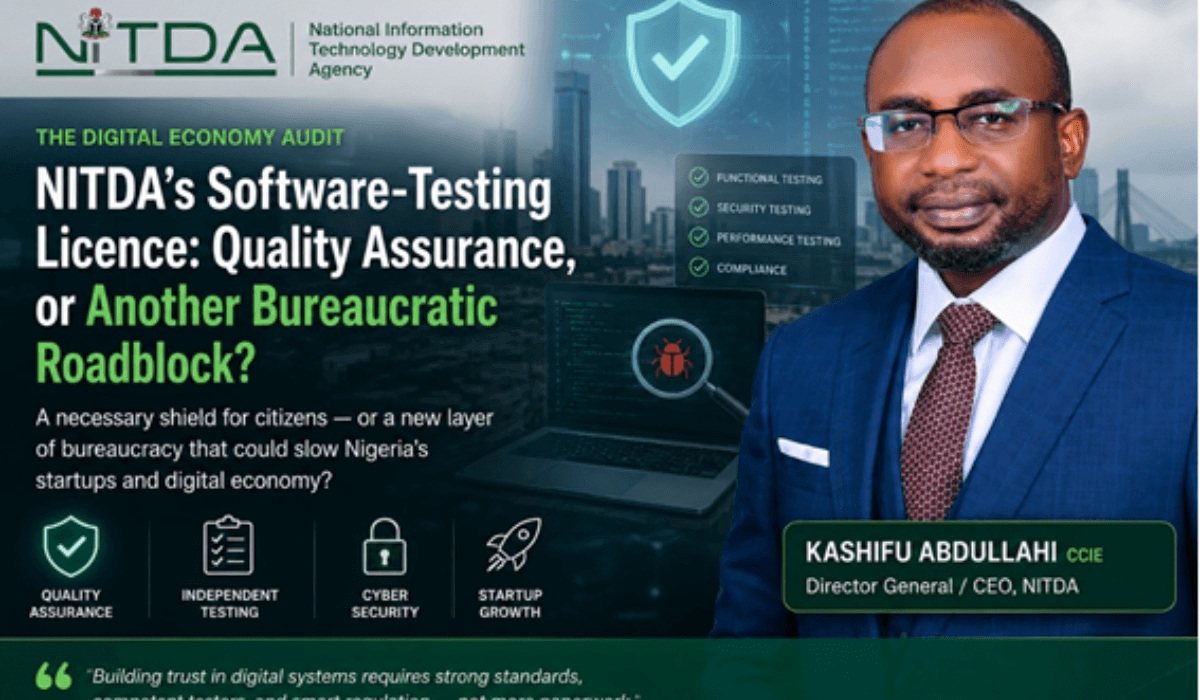
Nigeria has a real software-quality problem, and NITDA is right to confront it. But one design choice will decide whether this framework protects citizens — or quietly taxes every startup in the country.
THE ONE QUESTION THAT DECIDES EVERYTHING
Is this a quality-assurance framework for high-risk government systems — or a national permission regime for every app, update and startup in Nigeria? Those are two radically different policies. The answer decides whether this protects citizens or throttles the digital economy.
Nigeria has a genuine software problem, and anyone who has used a government portal knows it. Platforms fail under pressure. Public-sector projects are delayed, abandoned, or quietly broken. Payment systems collapse after launch. Identity verification throws errors. Applications that dazzled in the demo fall apart in production, and security holes are found only after the damage is done.
So, when the National Information Technology Development Agency (NITDA) announced this week that it will begin licensing firms to test software — part of a broader National Software Quality Assurance Framework spanning development standards, testing guidelines, and the licensing of independent testing organisations, expected to become mandatory for government IT Project Clearance from the second quarter of 2027 — the instinct to applaud is understandable. The framework even leans on a sound risk-based principle: that higher-risk systems should face stricter testing. NITDA is right that Nigeria cannot keep deploying insecure, unreliable, untested software. Someone had to say so with the force of policy.