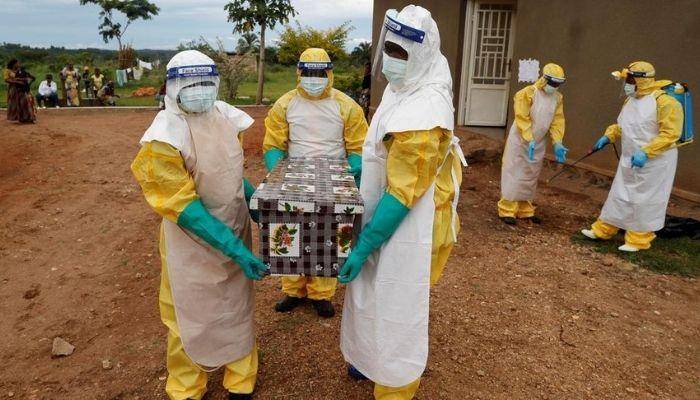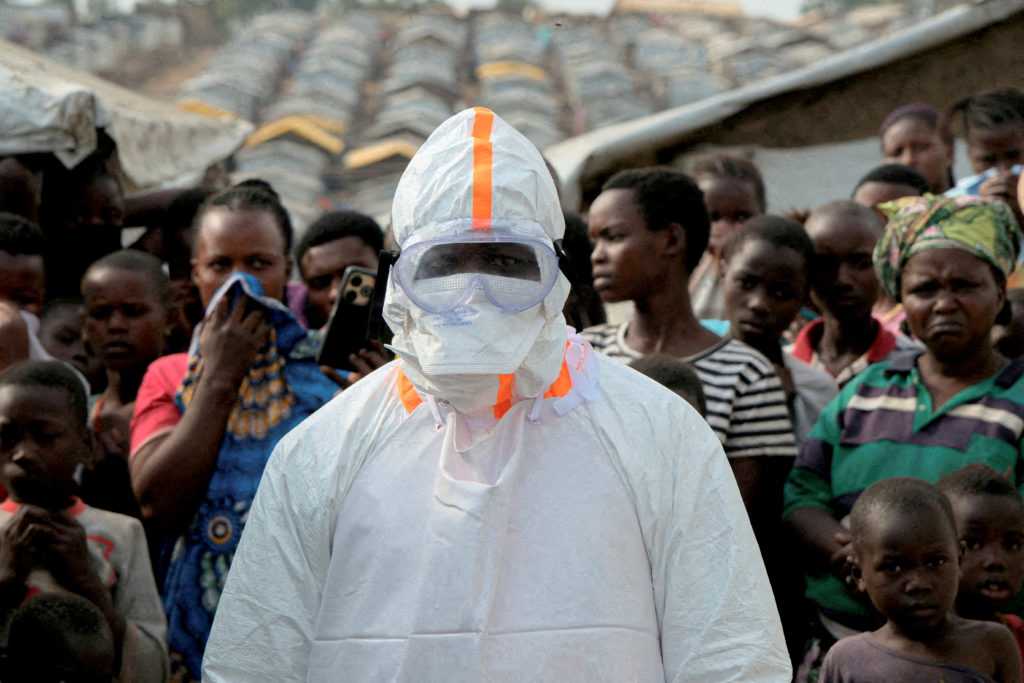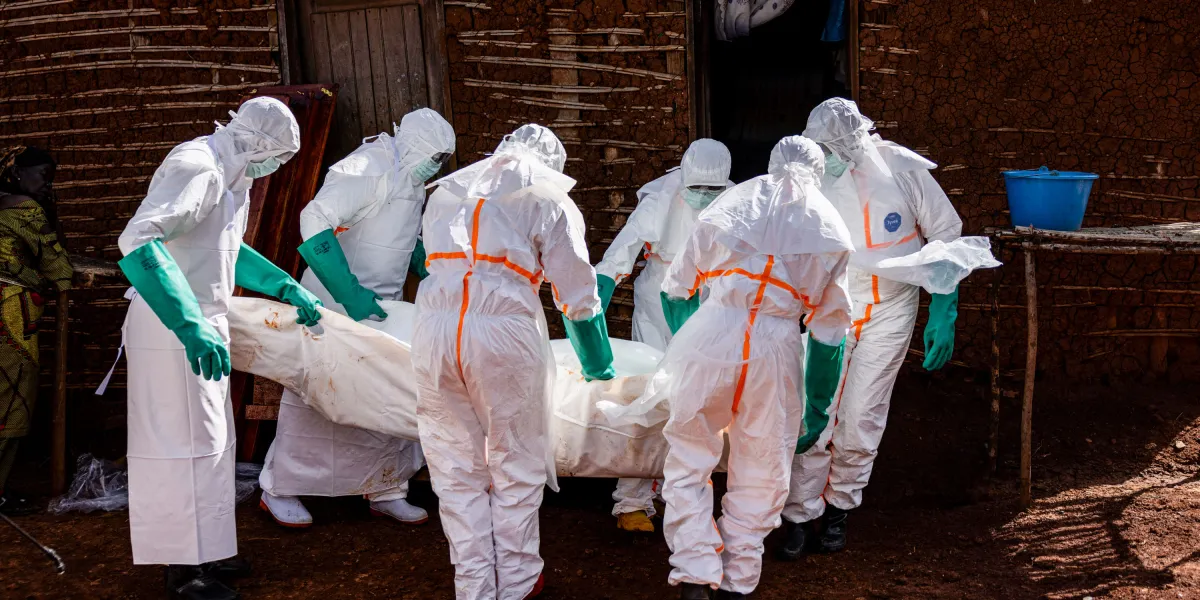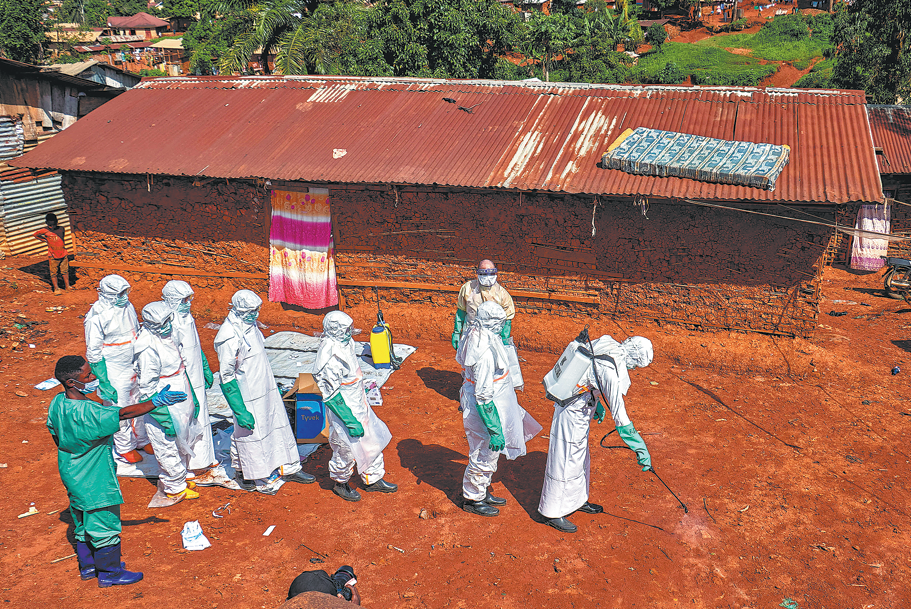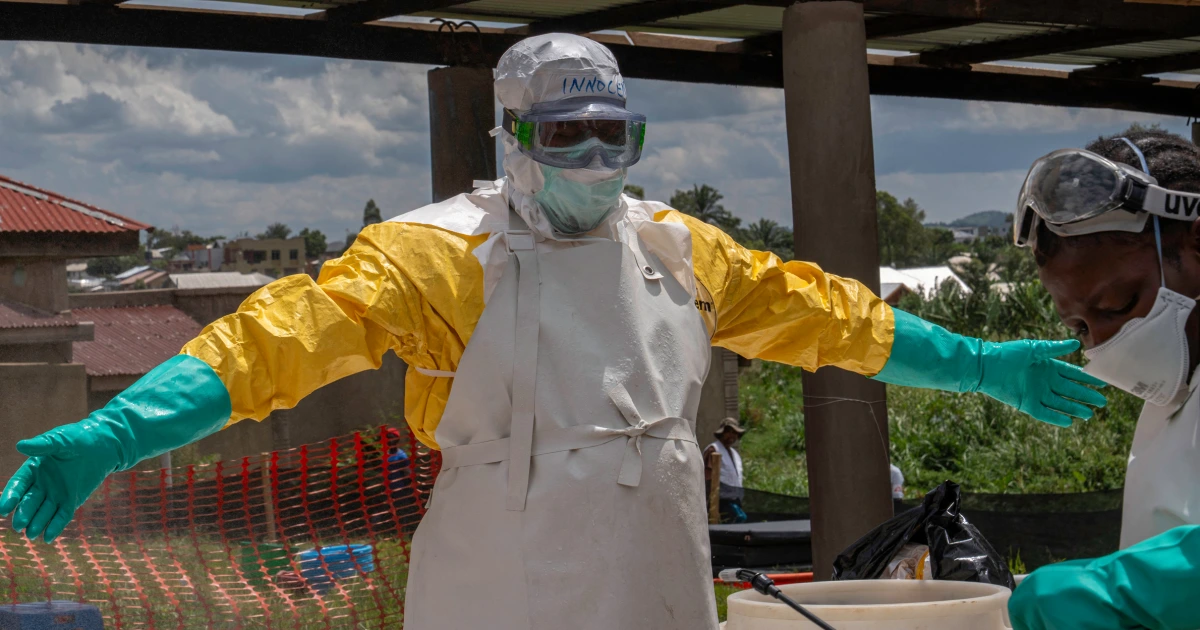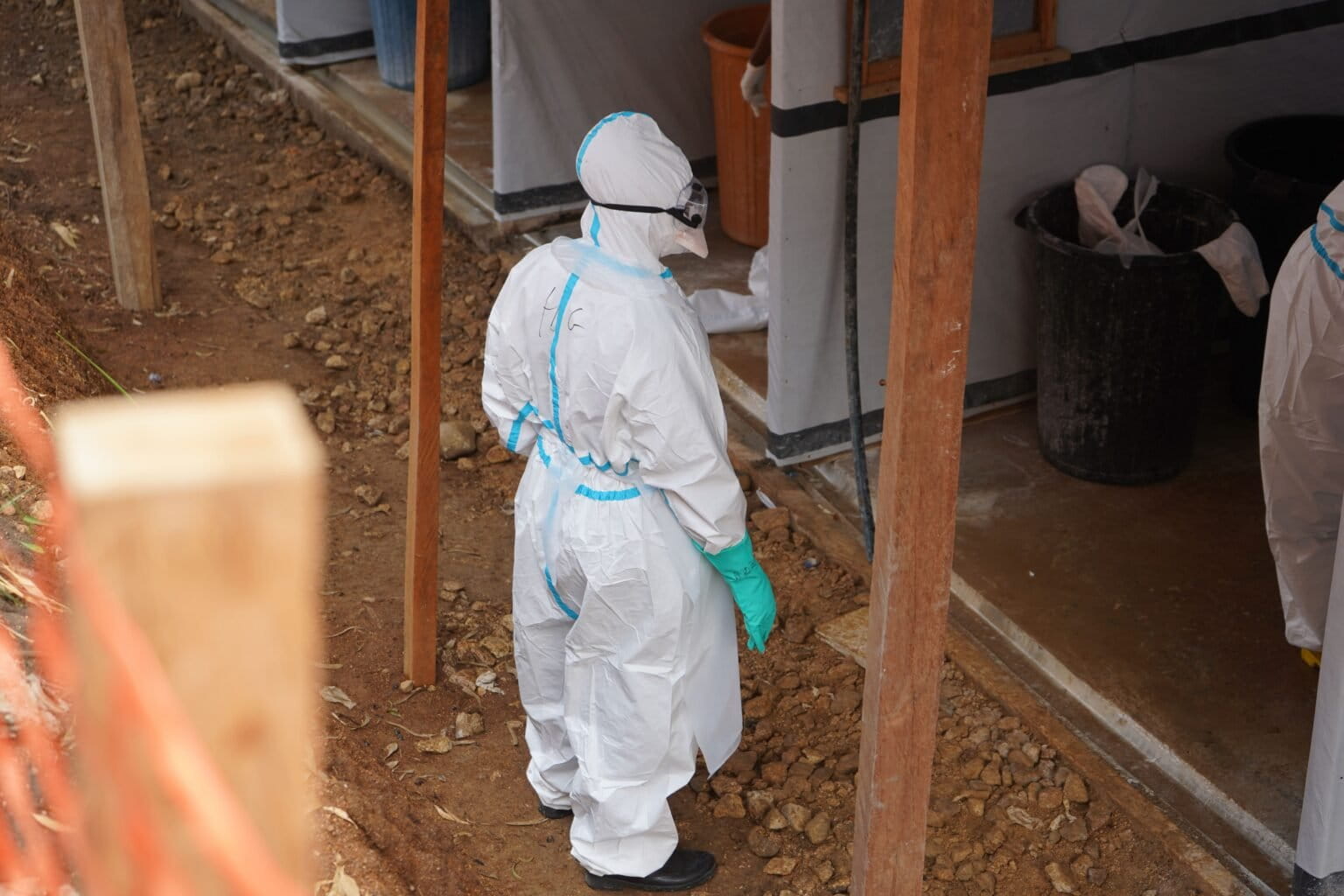
Community leaders and local radio stations are fighting widespread misinformation, while resistance to safe burials has fueled attacks on Ebola treatment facilities.The current Ebola outbreak has become the fastest-growing outbreak recorded in the Democratic Republic of Congo, with more than 3,360 reported cases and nearly 1,487 deaths in about two and a half months.Aid workers say funding cuts have weakened disease surveillance, community outreach and logistics at a time when the response is already constrained by armed conflict.According to WHO, in Uganda, the last confirmed patient was discharged from care on July 16, and the 42-day with no new Ebola cases countdown necessary to declare the end of that country’s outbreak has started.
Several members of the Ebola response gathered on July 15, 2026, outside the Ebola Treatment Center (ETC) in Bunia, eastern Democratic Republic of Congo (DRC), to protest their working conditions. Demonstrators said they had not received their risk allowances for several weeks, payments that are supposed to be made by the Congolese government.
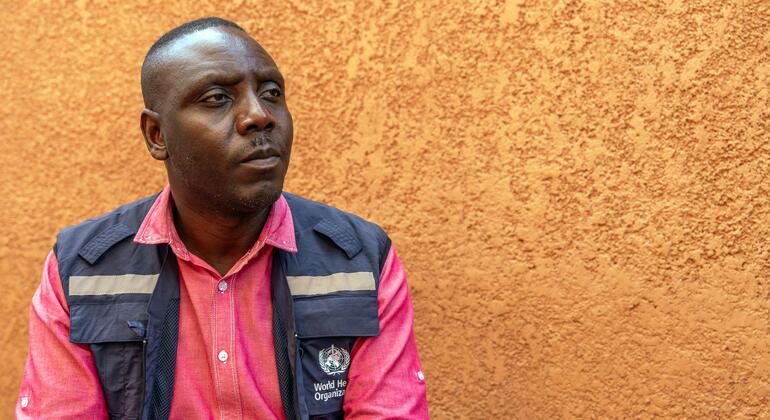
“It’s outrageous for such a high-risk job,” Robert Uyergiu Mambo, a community leader and French teacher in Bunia, Ituri province, told Mongabay by phone. Although he is not officially part of the Ebola response, his position within the Alur community, an ethnic group living in northwestern Uganda and northeastern DRC, has made him an important local ally. Uyergiu Mambo, a volunteer host on the community radio station Radio Terra FM, which states it has an audience of five million listeners, said he was frustrated with the situation, but not surprised.