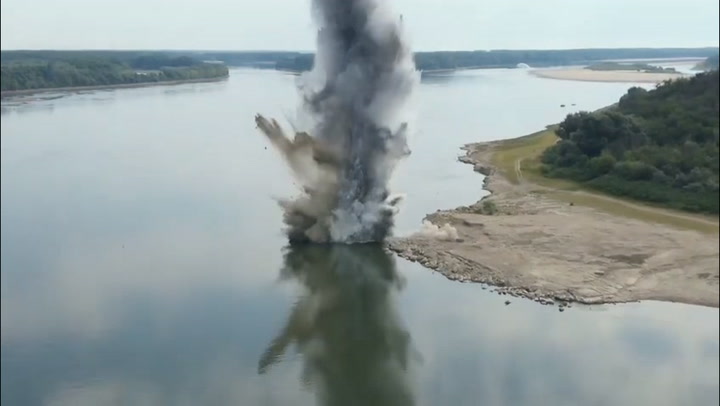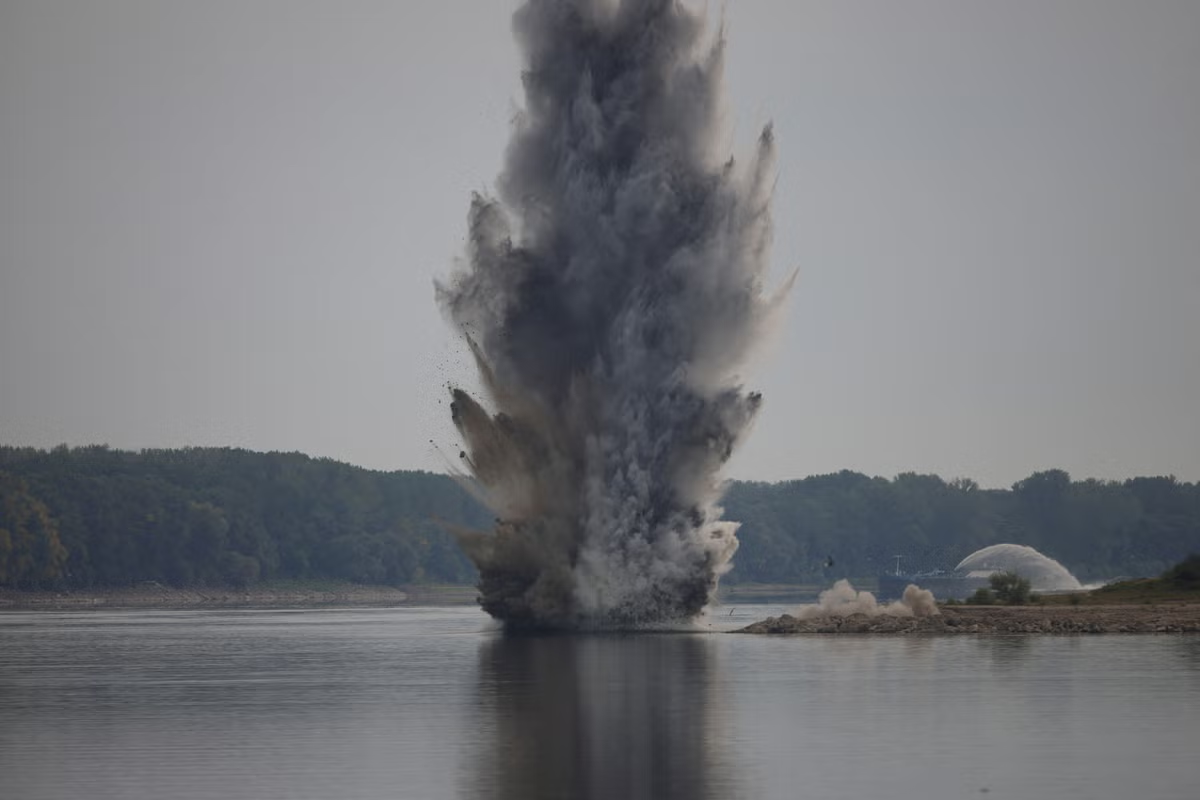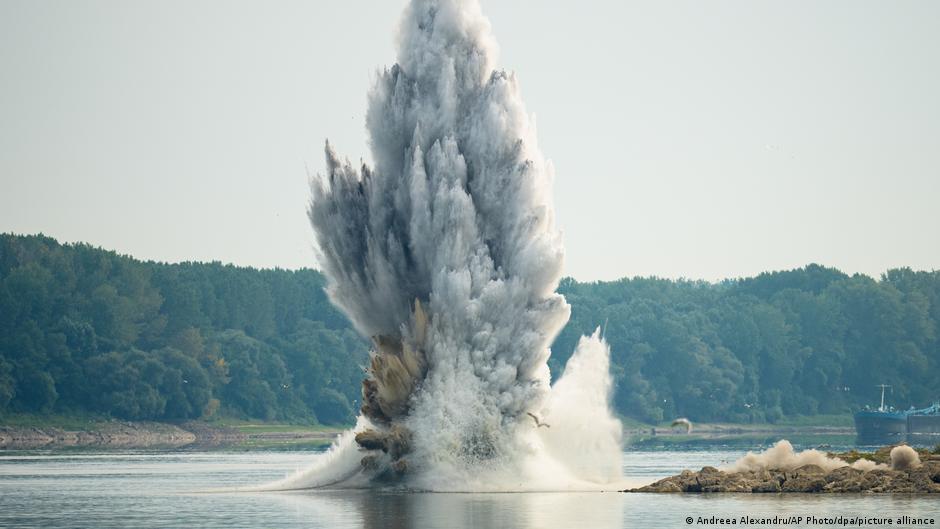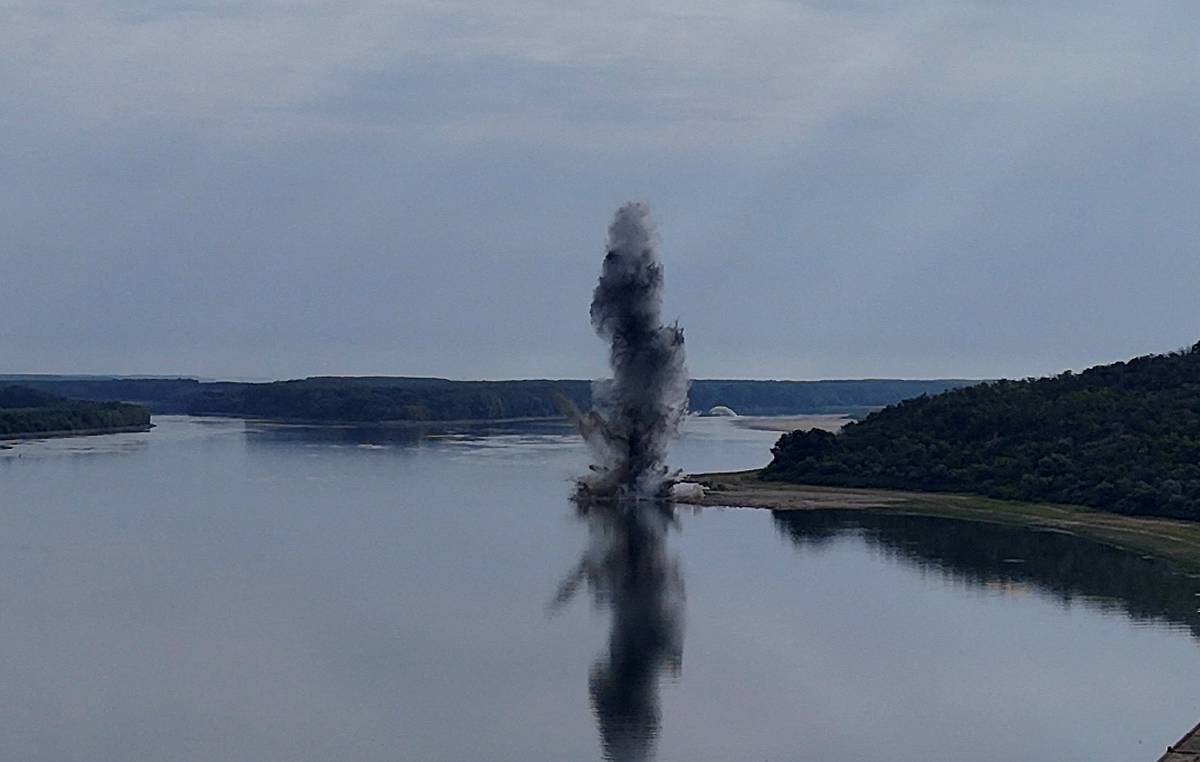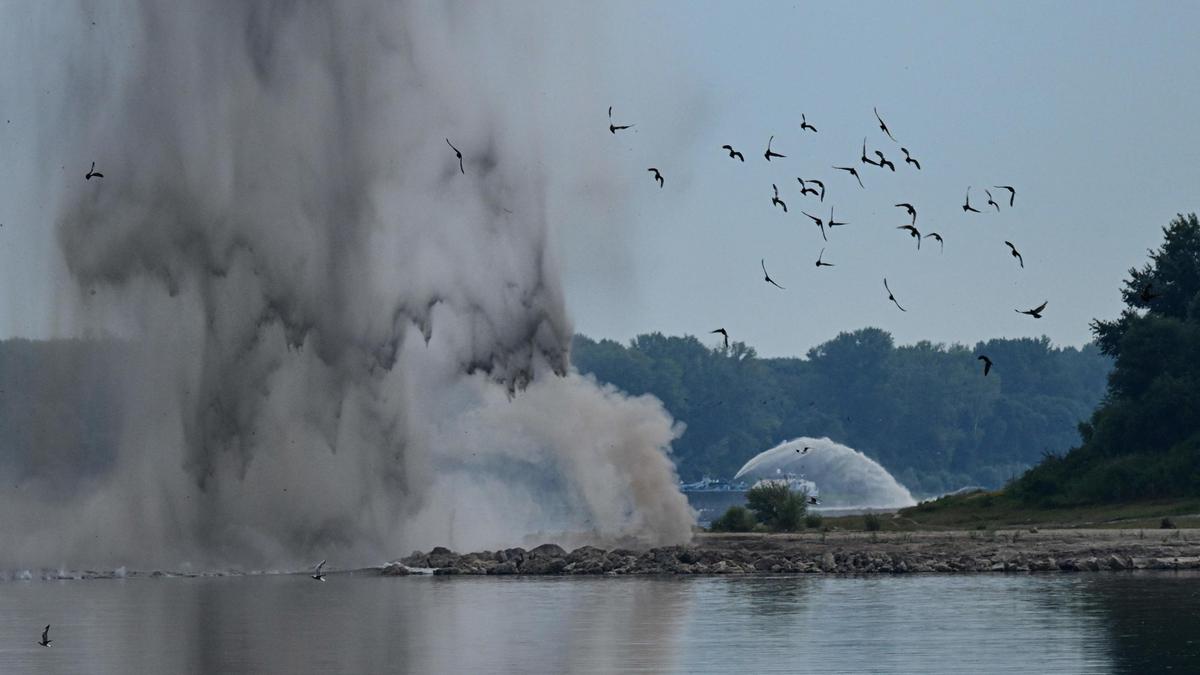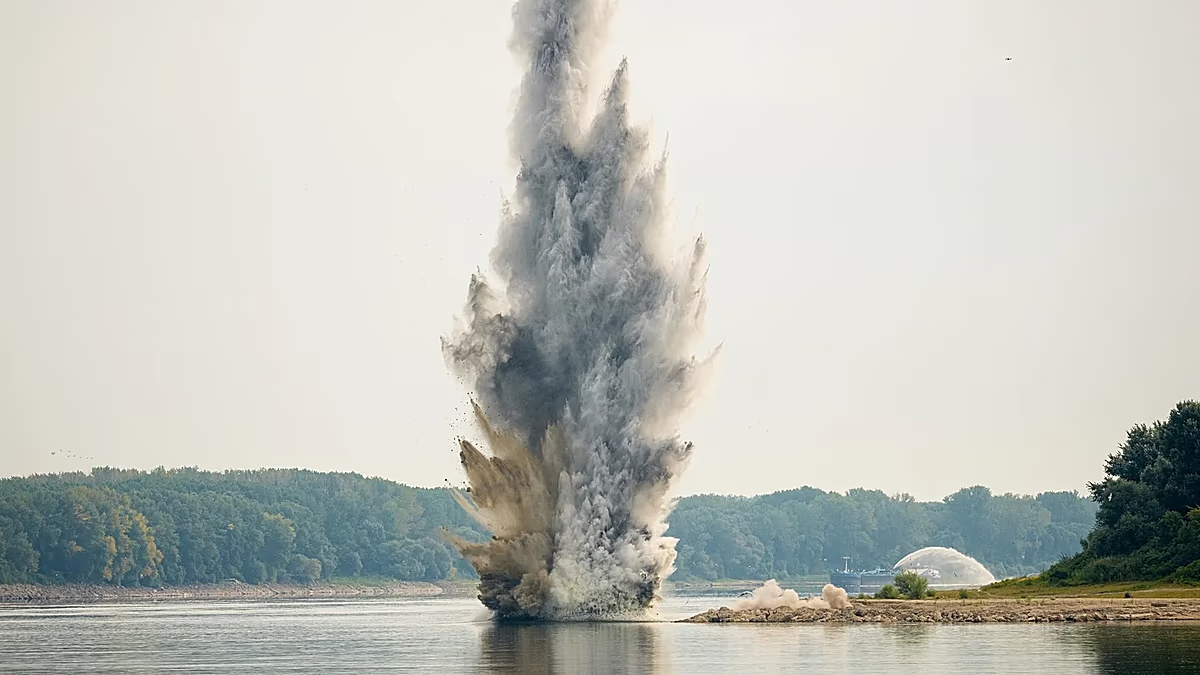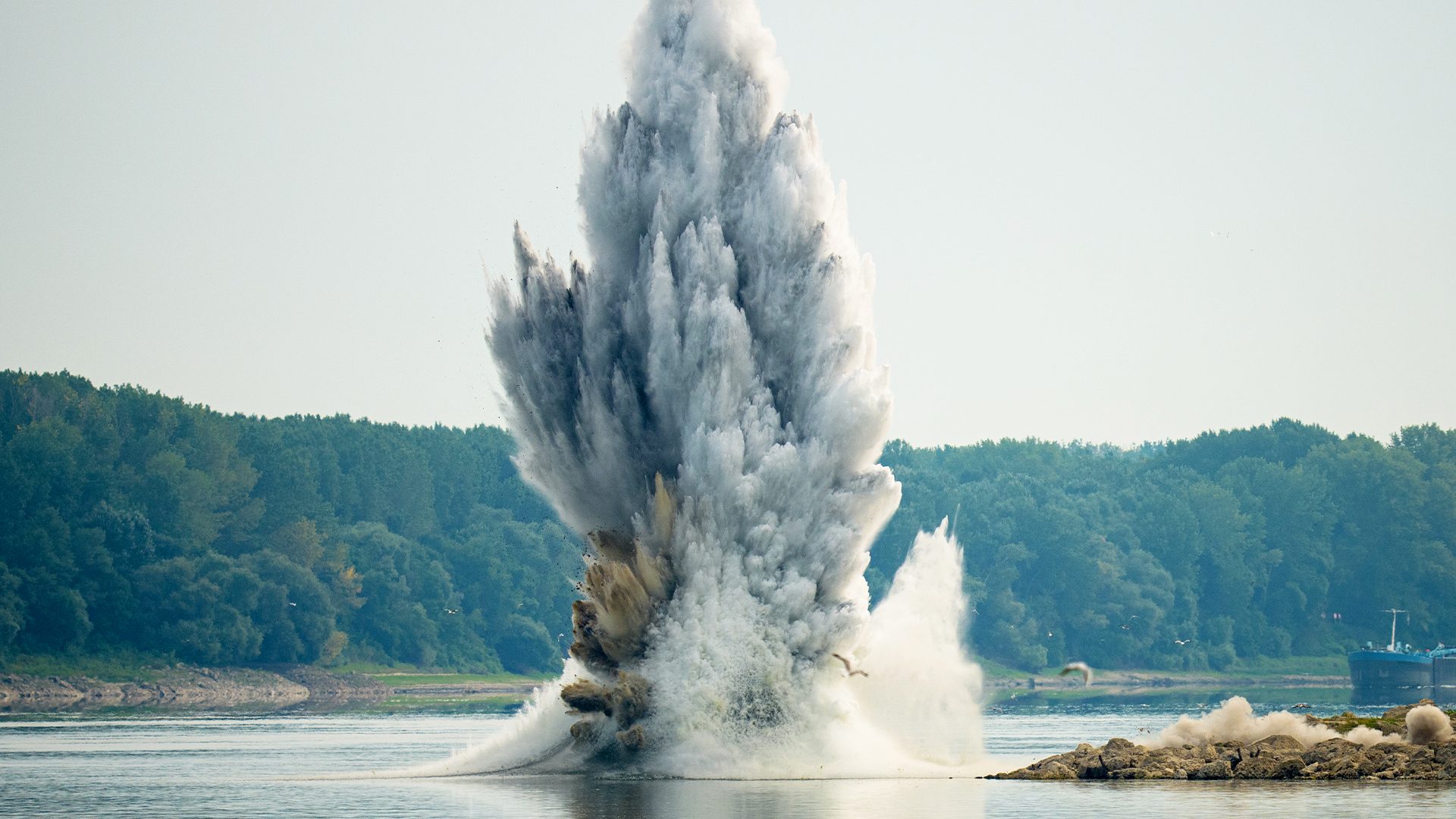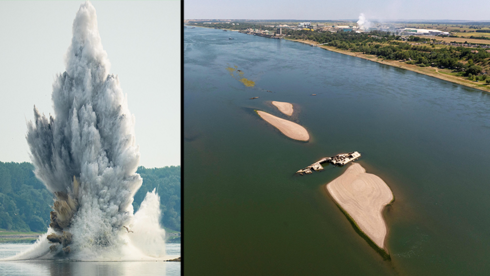
Romania’s military has carried out a controlled explosion on a Danube rock formation in an effort to redirect more water toward the Cernavoda Nuclear Power Plant, as record-low river levels threaten energy production across the region.
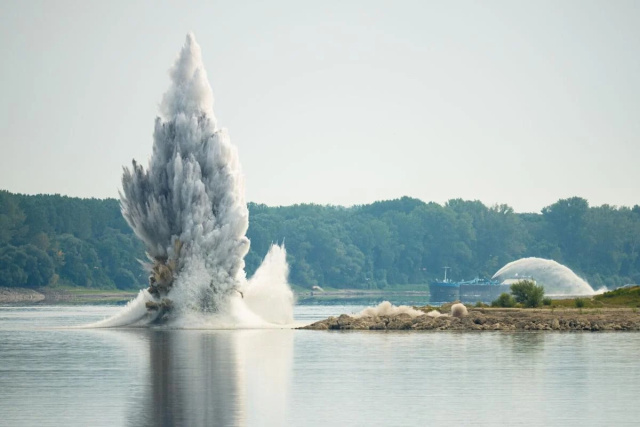
The operation targeted the Prajoaia rock formation near the Bala branch of the Danube. After an initial attempt on Sunday failed to completely destroy the obstacle, military teams used a second explosive charge of 100 kilograms and successfully demolished the rock.
The goal is to create a barrier in the Bala branch and force a larger volume of water into the Old Danube channel, which supplies the nuclear plant with the water needed for cooling. Two barges and a heavy-duty crane have been deployed to clear the remaining debris.
The emergency measure comes as the Danube’s flow at Romania’s entry point is expected to drop to around 1,400 cubic meters per second, approaching the historic low recorded in 1985.
Romanian authorities have warned that under current conditions, the Cernavoda Nuclear Power Plant can continue normal operations for only another four to five days before restrictions could become necessary. “If the current conditions persist, the plant can continue operating at the limit of its capabilities for about four to five more days,” National Water Administration Director General Sorin Rindasu said.