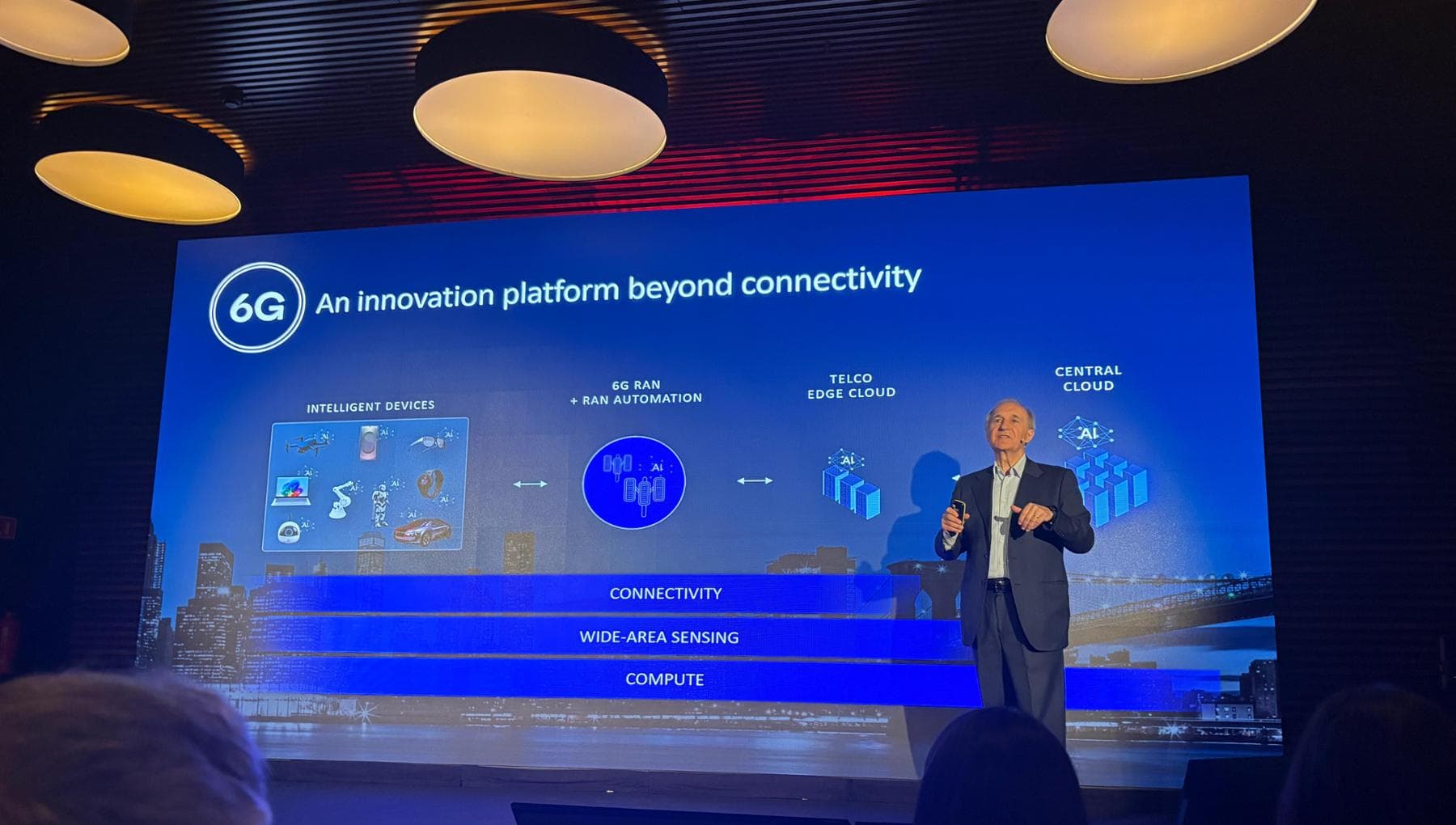
Today’s advanced 5G networks, and tomorrow’s 6G networks, are now moving toward an increasingly AI-centered future. This September in Madrid, the global telecommunications standards body, the 3GPP, will meet to decide how present-day 5G networks migrate to the emerging 6G standard, slated to begin rolling out by 2029. On the docket for Madrid are important decisions that will set the direction for how, and how deeply, AI gets built into 6G’s radio equipment. The stakes are high. If the industry gets it wrong, network operators could end up paying a premium for new AI-enhanced wireless infrastructure that doesn’t lower costs, hasn’t been proven to survive years of real outdoor conditions, and may not do much beyond what existing, cheaper technology can already do.John Strand—an industry analyst based in Copenhagen who has consulted with telecom network providers around the world for three decades—says the clearest example of AI’s inroads is a US $1 billion deal last October in which GPU titan Nvidia invested in Nokia, the telecom infrastructure company based in Espoo, Finland.As described by Nvidia’s press release, Nvidia wants the chips inside Advanced 5G and 6G radio access networks (RANs) to look less like specialized telecom hardware and more like the servers running ChatGPT.Nokia and Nvidia—together with T-Mobile—have done proof-of-concept trials of their proposed system. Earlier this year at T-Mobile’s innovation lab in Seattle, a radio and a Nvidia server successfully handled both a live 5G connection and AI tasks like video streaming and captioning at the same time. It was a working demonstration—although a controlled one, on one radio, at one site. Nokia’s timetable calls for broader commercial trials starting later this year, with commercial rollout expected next year.The deal could be a win for Nokia, because the company “can get a higher price for their RAN, which have declined in price for the last 25 years,” Strand says. By adding top-tier AI hardware to its systems, he adds, Nokia can “increase the entry barrier for competitors to move into this market.”Nokia isn’t alone in seeking an AI-fueled future for 6G. Ericsson, the Stockholm-based telecom infrastructure maker, has been running its own advanced AI-in-the-network trials with T-Mobile since early 2025, and in June began selling a software upgrade that adds AI directly into existing radios and base stations—no new hardware required. Huawei, the Chinese equipment giant, has made similar moves, unveiling AI tools this year that let networks diagnose and fix themselves automatically.What Is AI-RAN Needed For?Despite the AI test cases, Strand says he hasn’t yet heard a convincing case for what’s called “AI-RAN”—a case that would explain why cellphone network operators would want to “increase [their] spending on RAN and, at the same time, maybe also increase their energy consumption.”Wireless engineers have spent decades squeezing radio networks close to their theoretical limits of efficiency. “It’s hard to see the economic justification” for using AI algorithms broadly in 6G network RAN, says Kim Kyllesbech Larsen, chief technology and information officer at the Hoofddorp, Netherlands–based telecom operator United Group.Companies like Seattle-based Opanga Networks, Larsen says, already deliver some of AI-RAN’s strived-for efficiency gains using today’s network architecture—no new AI-RAN hardware needed. Larsen says the trials run so far by Nvidia, Nokia, and others “are important engineering milestones and show that the concept works,” he says. But they still fall short in some ways: The trials prove that AI computing workloads can run alongside the RAN—sharing space and power with it—not necessarily that AI needs to be deeply integrated into the RAN’s core architecture. The latter is a different, harder problem, he says, which demos conducted to date haven’t resolved.“AI-RAN will ultimately have to demonstrate that it delivers capabilities and/or economics that cannot be achieved by simply making existing RAN architectures smarter,” he says. “Until that is proven, operators should evaluate AI-RAN pragmatically...rather than assuming that a new architecture is automatically a better one.”The risk isn’t just unproven hardware, Larsen says. It’s also coordination. Picture several capable managers all trying to improve the same business, he says. Each judges on a different goal. One minimizes energy use, another maximizes speed, a third maximizes coverage. Individually, each makes reasonable decisions. Together, however, they can end up working against each other. The same risk, Larsen says, applies to a network run by multiple independent AI systems with no clear chain of command.Where Should 6G’s Intelligence Live?Larsen says the ultimate question isn’t whether or not AI belongs in 6G. Rather, it’s where inside the network should AI algorithms actually run?“It’s important to distinguish between AI hardware and AI algorithms,” he says. He adds that he’s seen compact machine learning algorithms that increase wireless network efficiencies and work without requiring heavy-hitting GPUs. “These algorithms execute…in microseconds to a few milliseconds and are well suited” to more modest chips, he says.Larsen ran his own simulations of possible 6G AI functions to determine how quickly each one needs to react—some in microseconds, others with more breathing room. Only the fastest-reacting functions, he found, need to be executed on hardware running at the tower itself.So some of the speedups that AI might help wireless networks achieve can, in fact, be computed off-site, “rather than assuming every [cellphone] tower will become an AI data center,” he says.Merouane Debbah, a researcher at Khalifa University’s Digital Future Institute in Abu Dhabi, has run some of the only live trials testing AI hardware in real radio conditions. He says that the fight over 6G’s AI future is not just about whether to place AI compute at the tower or instead to rely on far-away cloud-computing data centers.“My expectation is not that 6G will place one giant AI model inside every tower,” Debbah says. “A more credible architecture is hierarchical and heterogeneous: very small models inside radios and basebands for hard, real-time decisions; more capable models at…edge sites; and large foundation or agentic models at regional or central levels for reasoning, planning, and coordination.”Larsen says as 6G standards begin to mature, so too will the expectations placed on them by network designers.“Ultimately, I trust good architecture more than individual hardware components,” he says. “AI-native RAN will succeed by placing the right intelligence in the right place, with the appropriate authority, latency, and safeguards, rather than trying to make every part of the network equally intelligent.”
The Real Question for AI for 6G Isn’t Whether. It’s Where.
Are expensive GPUs really needed at every cellphone tower?
TL;DRAI
Nvidia's $1B Nokia deal aims to integrate AI into 6G; 3GPP decides architecture scope in September. Operators question the business case: AI-RAN demands higher CAPEX and energy without proven ROI over existing solutions. Only fastest functions need edge GPUs.
1,042 words~5 min read