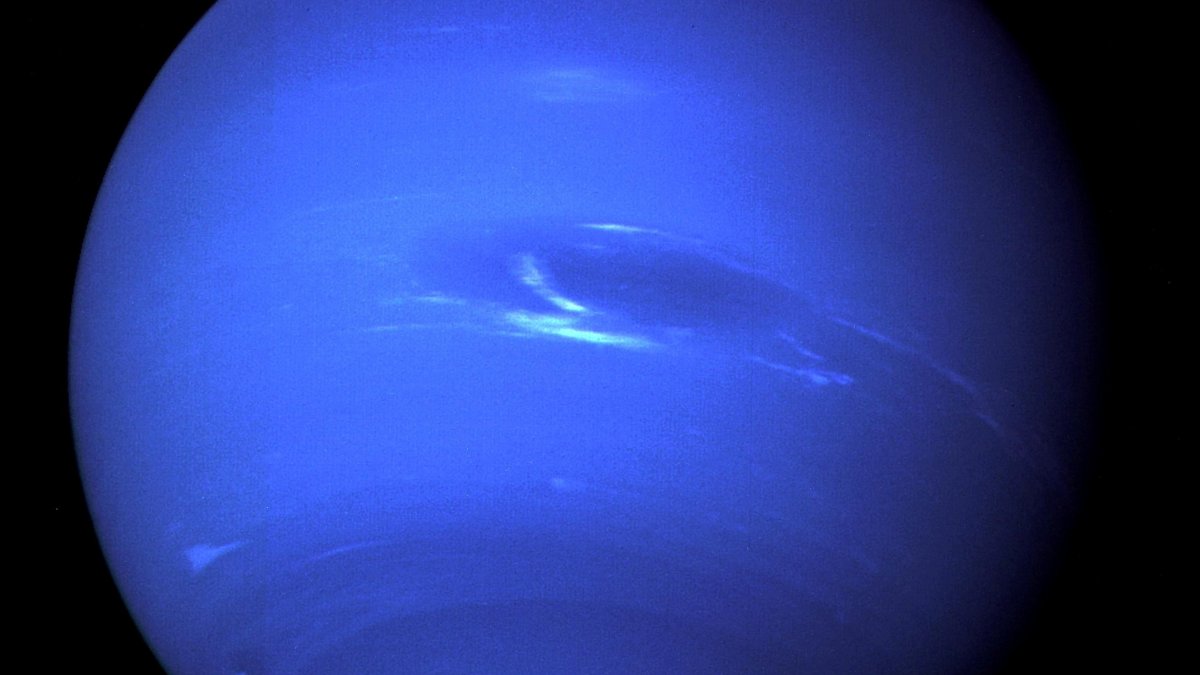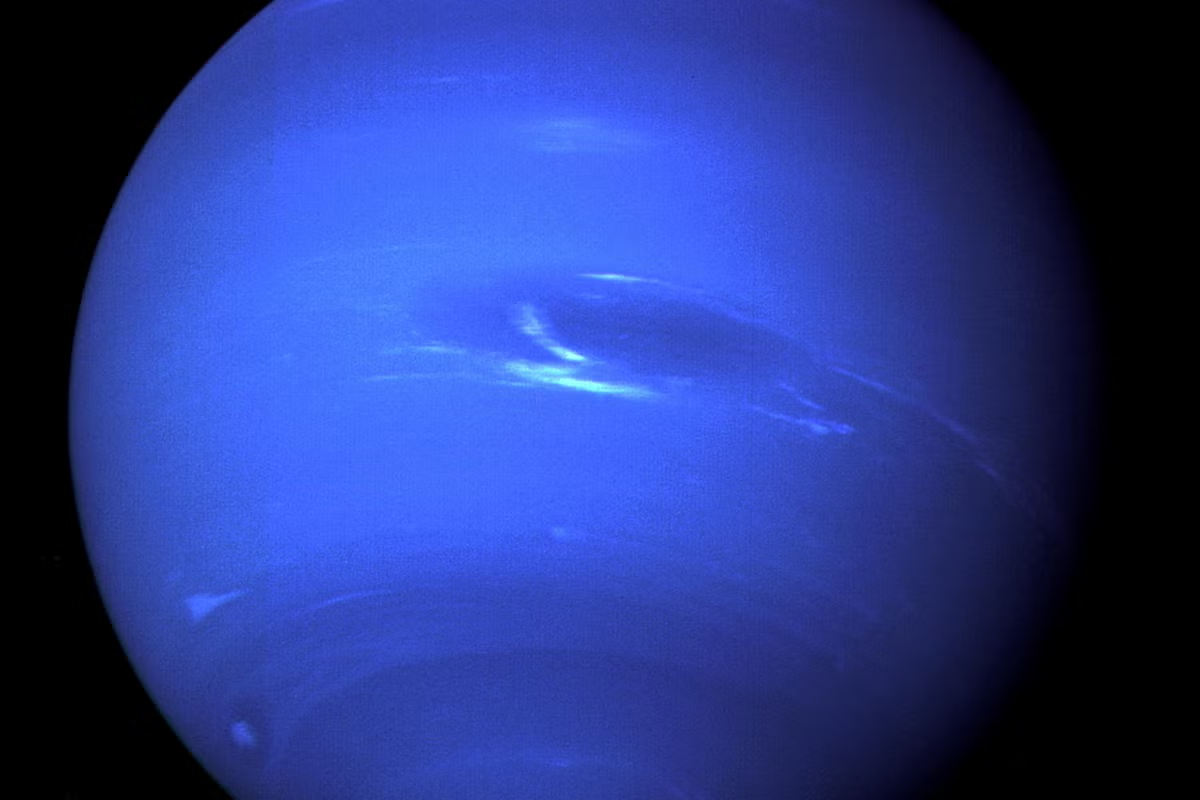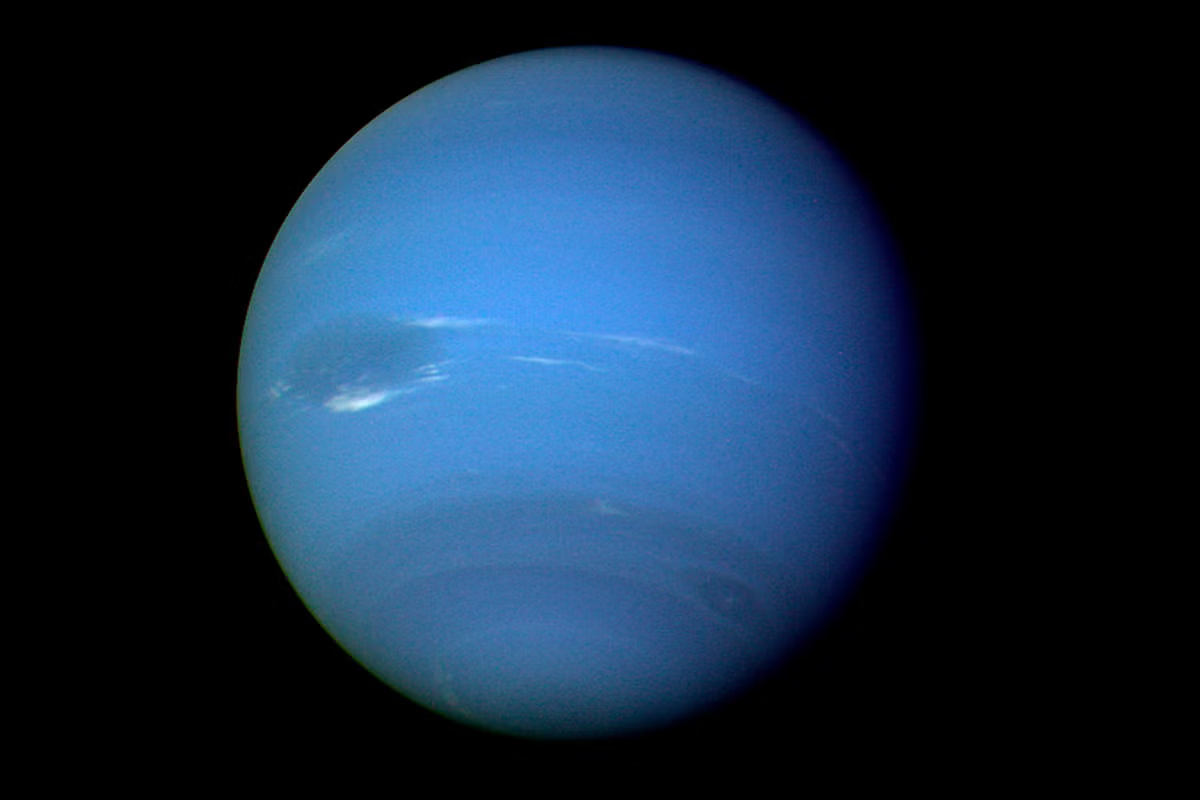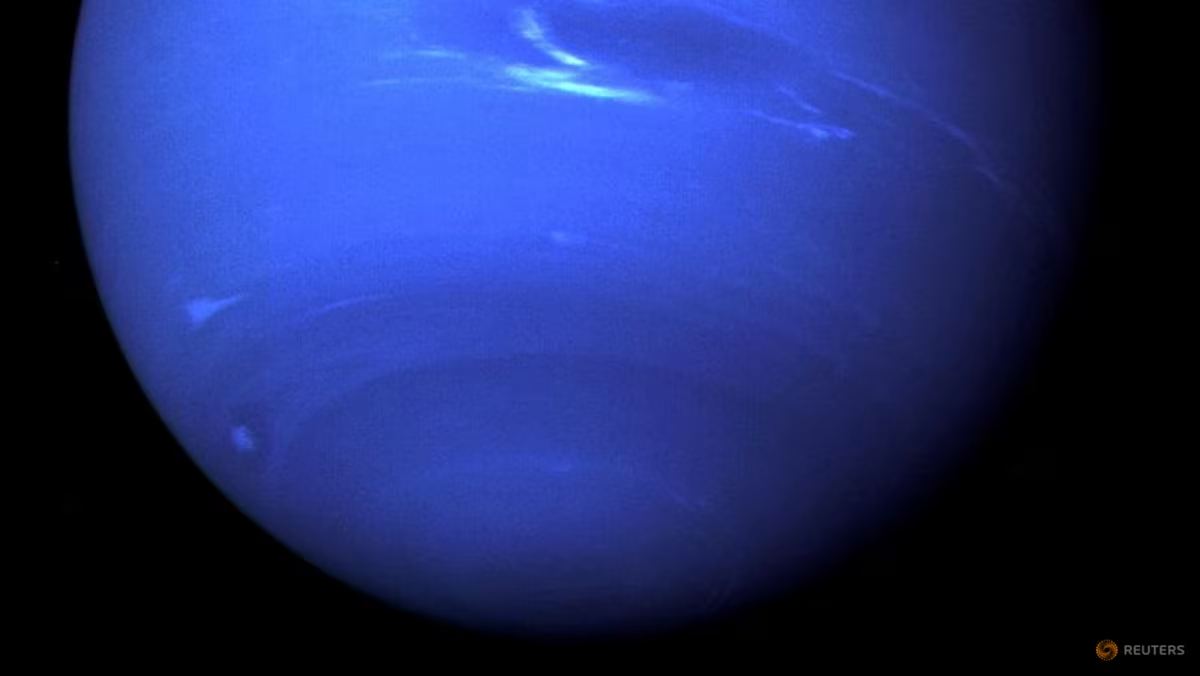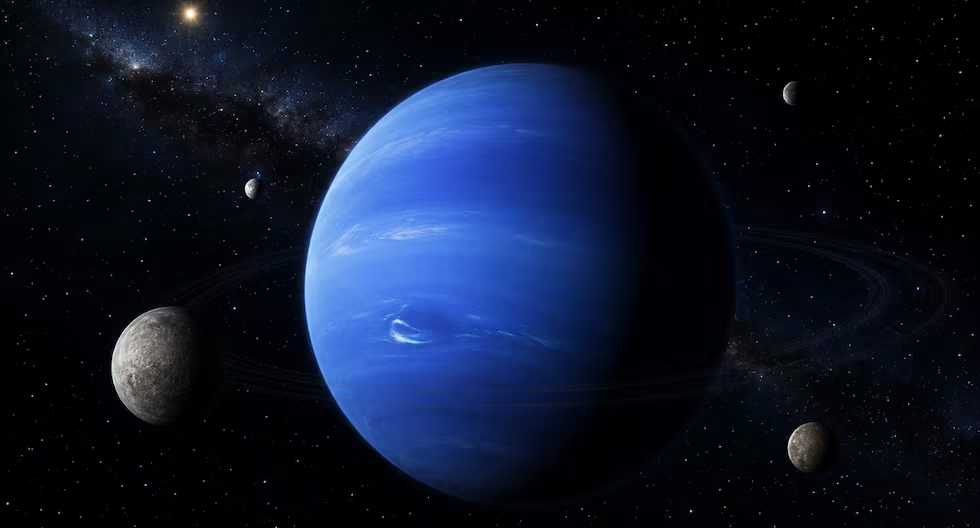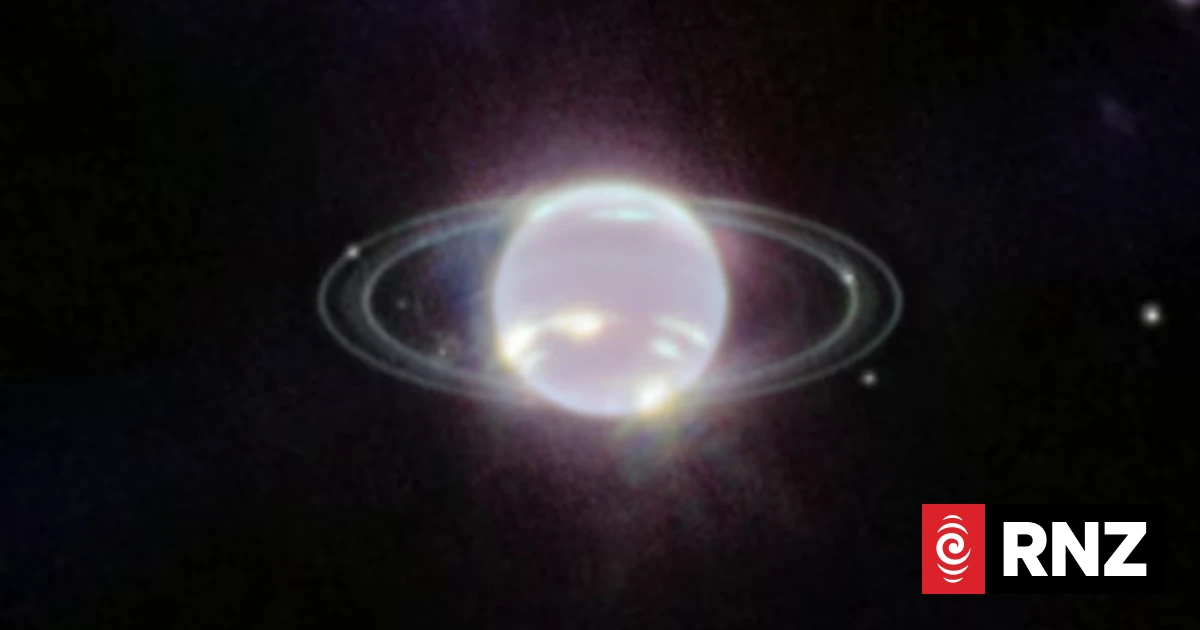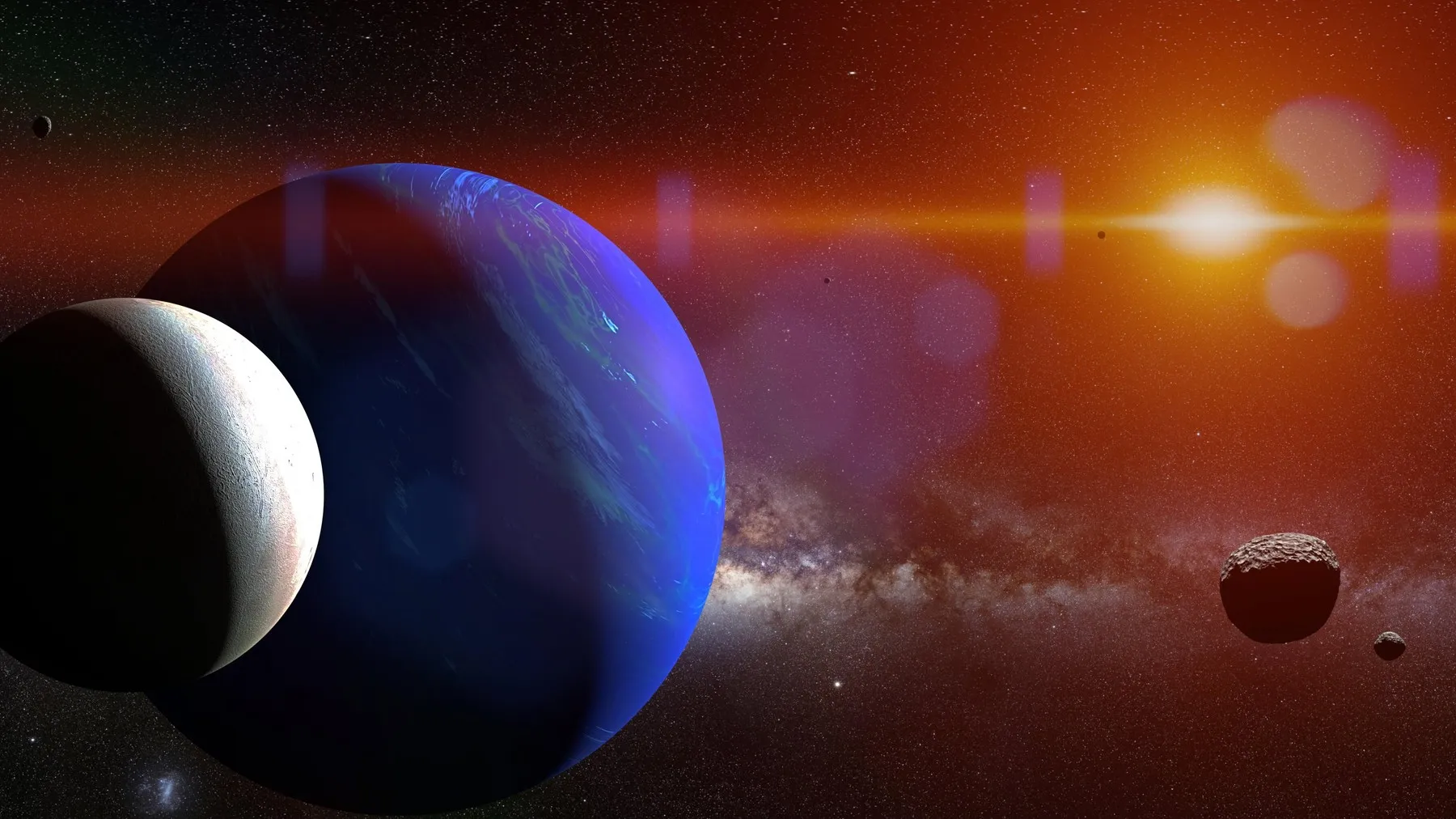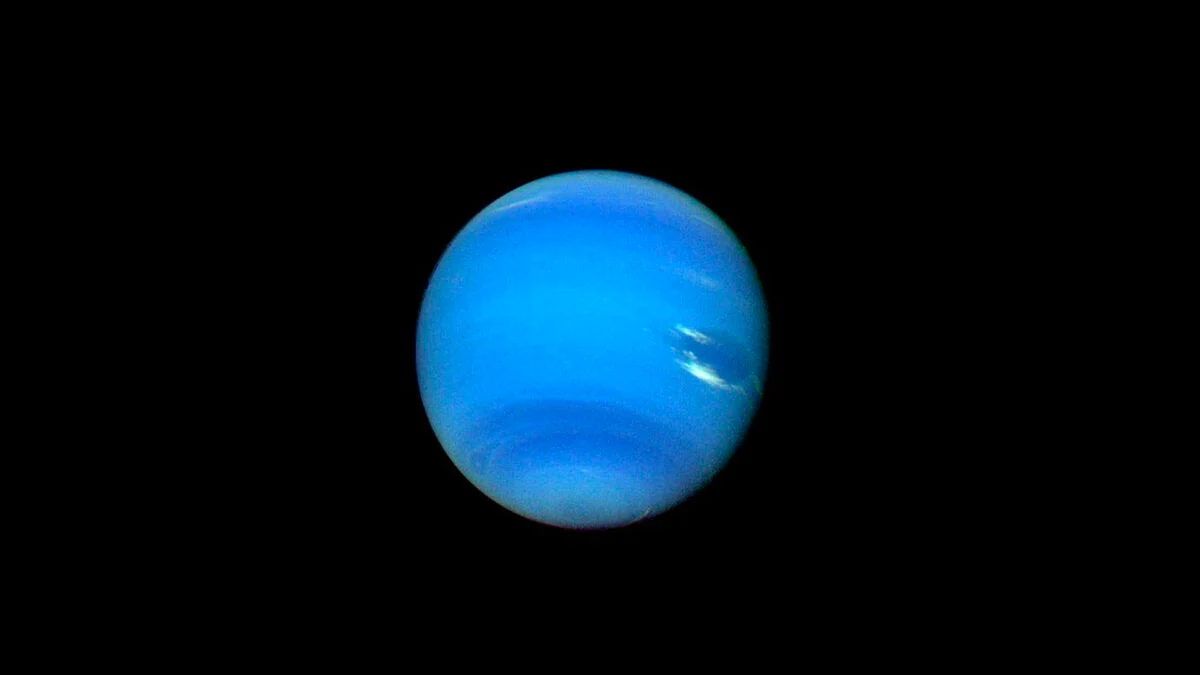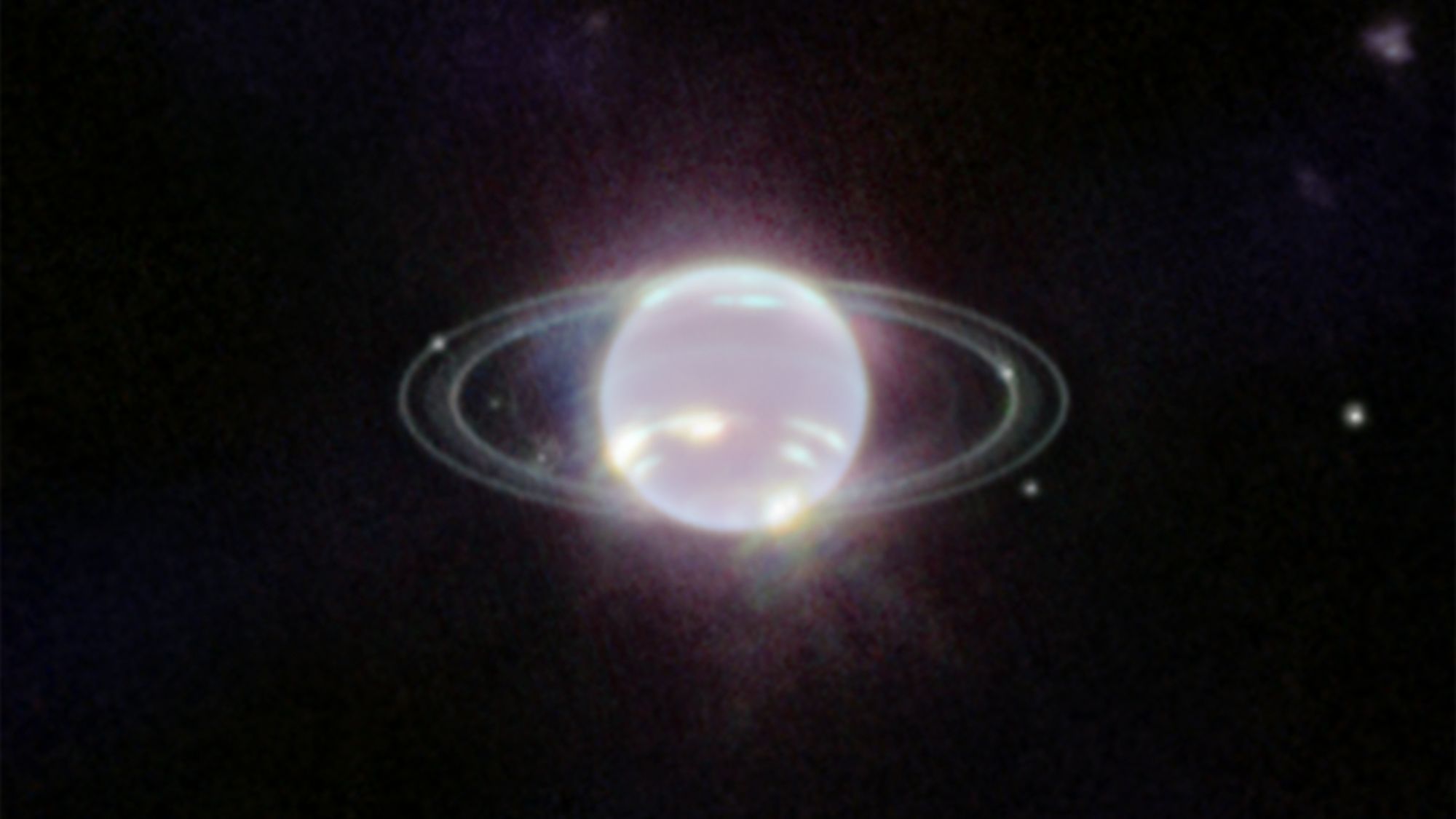
A view of Neptune and its moons, captured by the James Webb Space Telescope.
(Image credit: NASA, ESA, CSA, STScI; Image Processing: Joseph DePasquale (STScI), Naomi Rowe-Gurney (NASA-GSFC))
Three of Neptune's moons might have been born from the remnants of ancient icy worlds shattered by Neptune's largest moon, Triton, a new study finds.These findings suggest further research of these moons might give researchers an unprecedented look at the innards of icy worlds."The interiors of large icy moons are normally permanently hidden from us, buried beneath thick shells of water ice," study lead author Ryleigh Davis, a planetary scientist currently at the University of California, San Diego, told Space.com. "Neptune's inner moons may be the only place in the solar system where we can directly observe that material, because a catastrophic event essentially turned those ancient worlds inside out."Triton is by far the largest of Neptune's 16 known moons. More than 99 percent of the mass of all of Neptune's moons is concentrated in Triton, which is roughly the size of Pluto, Davis said.Whereas the largest moons of the solar system's other giant planets all orbit their worlds in the same direction as those planets spin, Neptune's largest moon, Triton, orbits in the opposite direction. This unusual configuration suggests the Neptunian system evolved in a dramatically different way than those of its siblings. Instead of Triton forming around Neptune, as the largest moons of the other giant planets likely did around their worlds, Triton's backward orbit has led researchers to suspect "it was captured from the outer solar system," Davis said.When Neptune captured Triton with its gravity, Triton may have acted like a giant wrecking ball, smashing many of the moons Neptune may have originally had, Davis said. However, much remained uncertain about what happened in the aftermath of this destruction.To shed light on the mysteries of Neptune's history, scientists investigated Neptune's rings and three of its moons — Larissa, Galatea, and Proteus. Discovered in 1989 with the Voyager 2 flyby of Neptune, these moons are small and close to Neptune, orbiting just outside the planet's main rings. Their locations and tiny sizes have made it difficult for astronomers to study them in detail from Earth.In the new study, the researchers analyzed near-infrared light from those inner moons using the James Webb Space Telescope . This data helped reveal their chemical makeup for the first time.The rings and two of the inner moons — Larissa and Galatea — possessed clay minerals previously unseen on the surfaces of bodies in the outer solar system beyond Jupiter. Specifically, they contain magnesium-rich phyllosilicates, commonly found in main belt asteroids and carbonaceous chondrite meteorites.