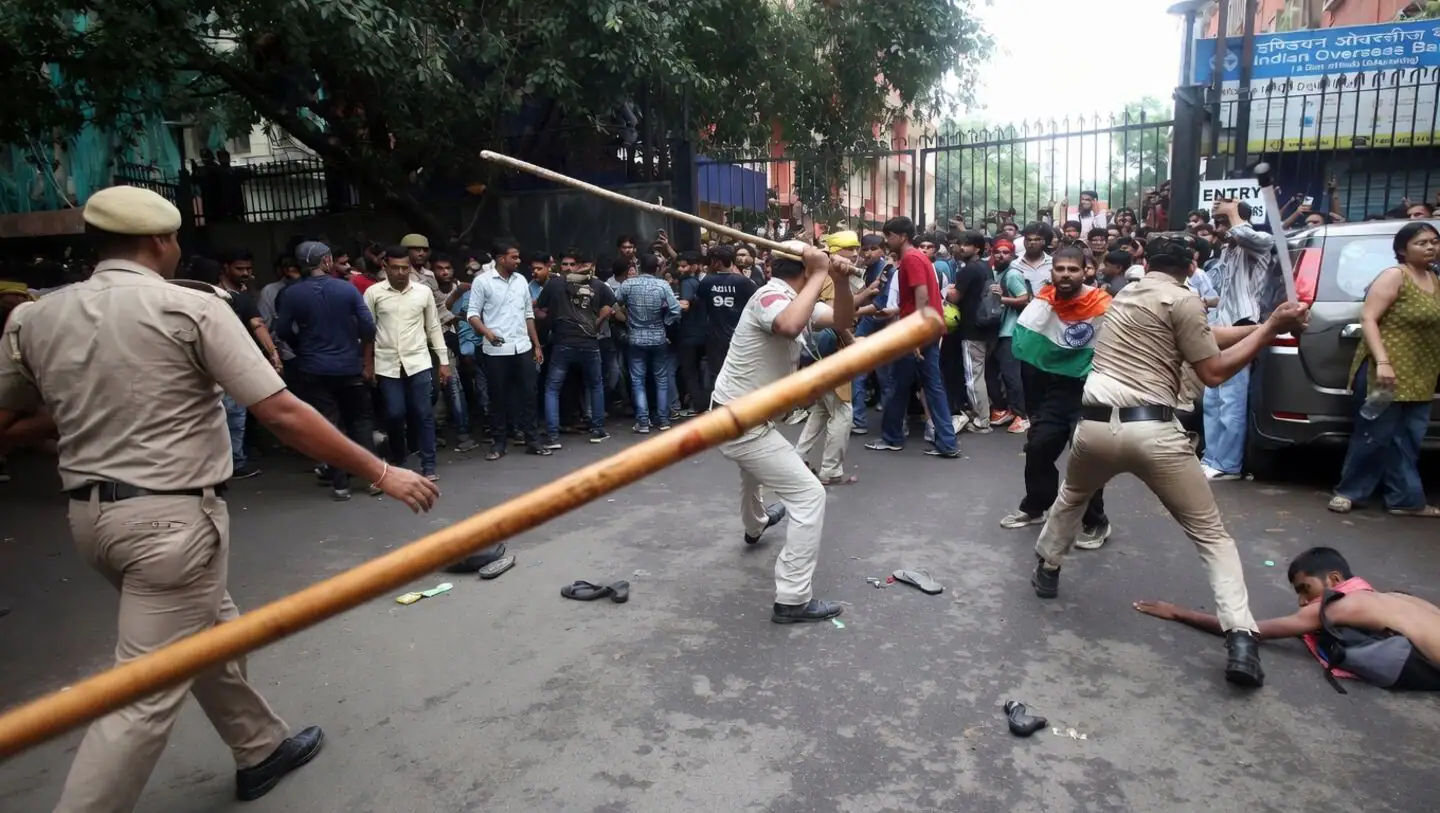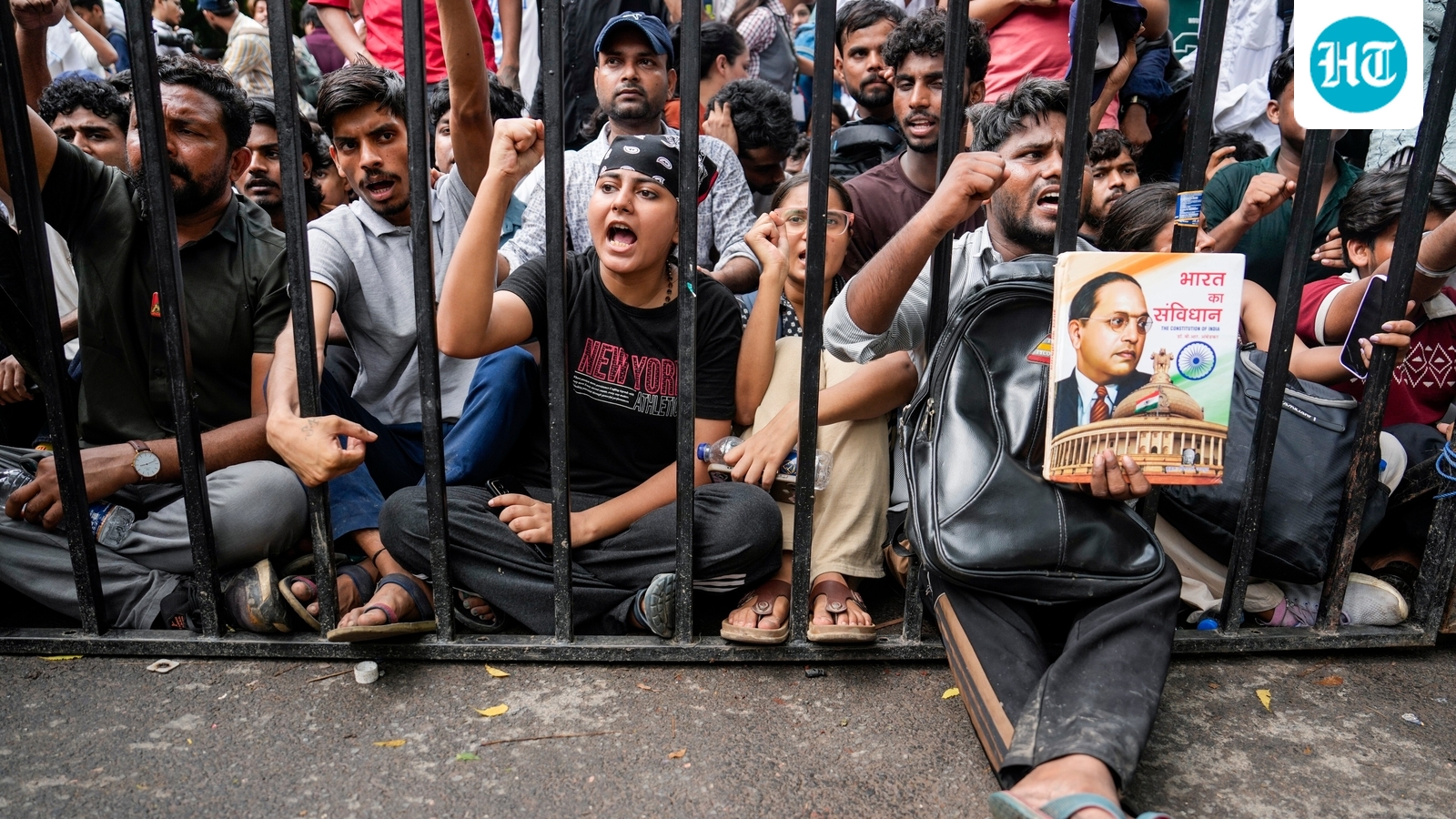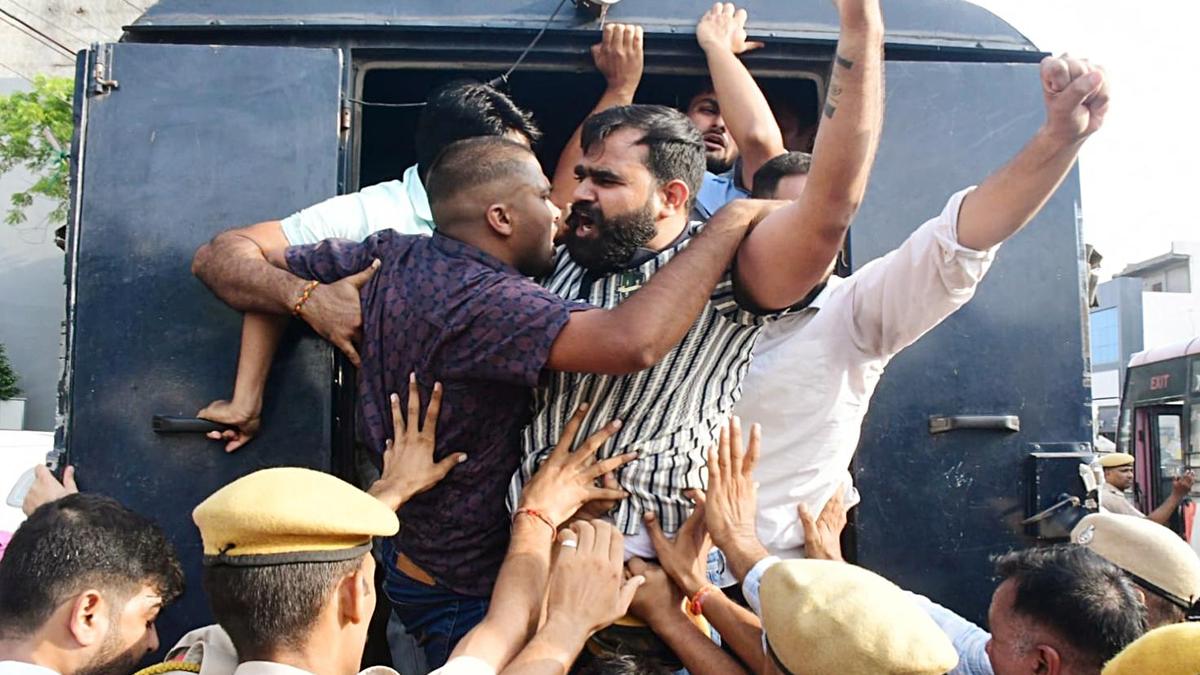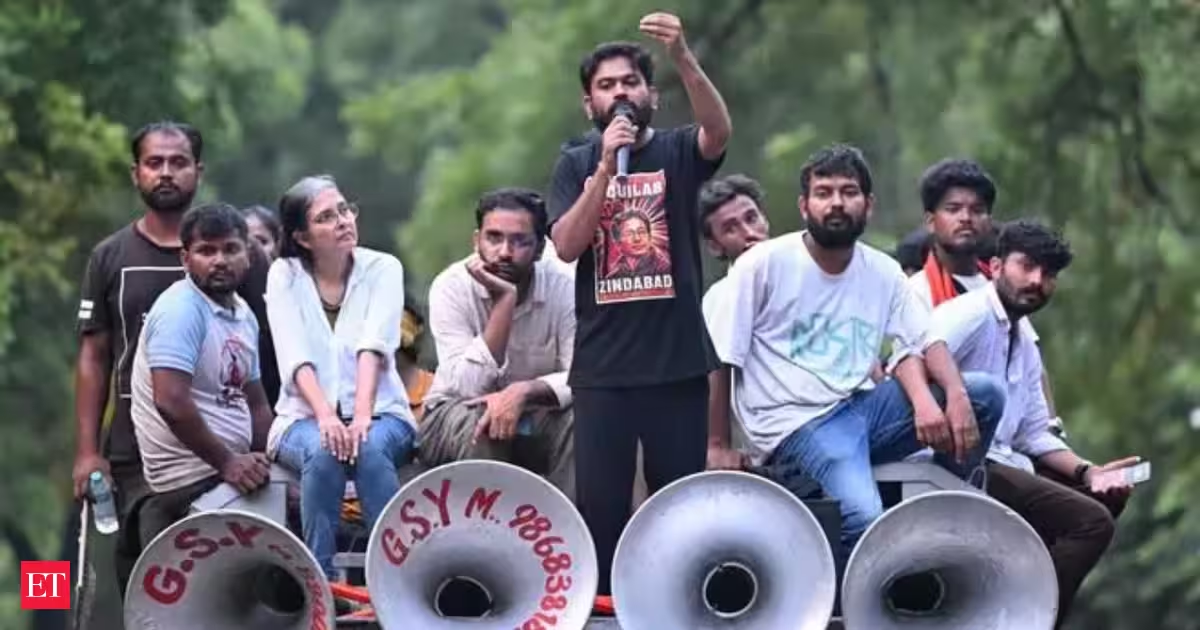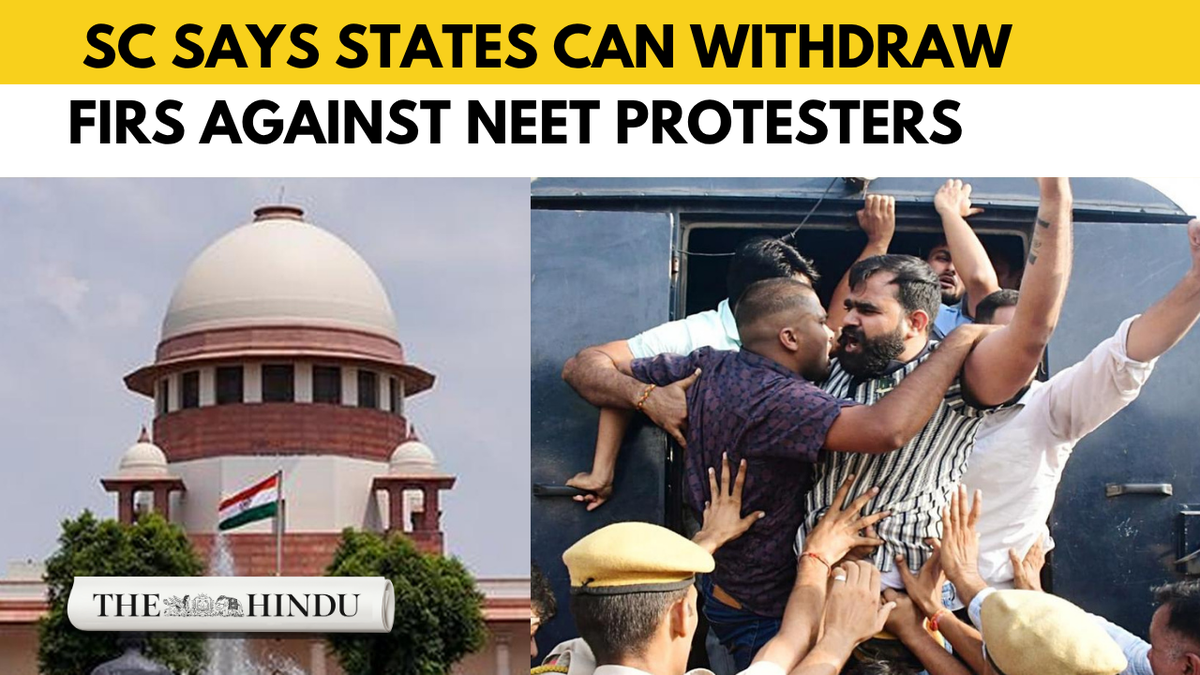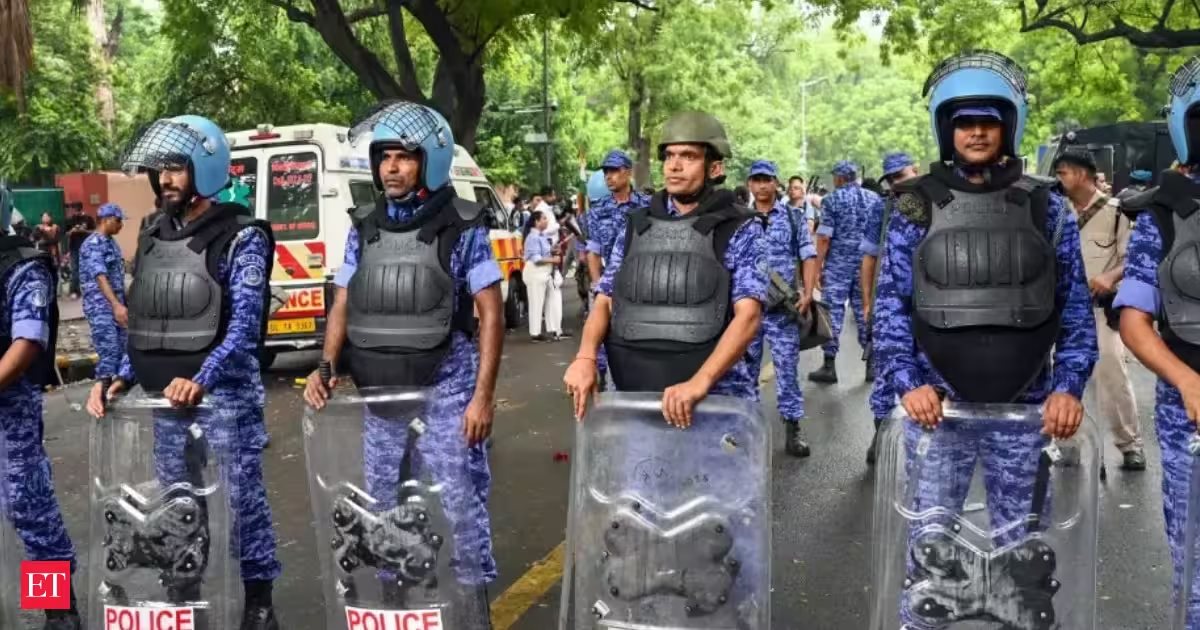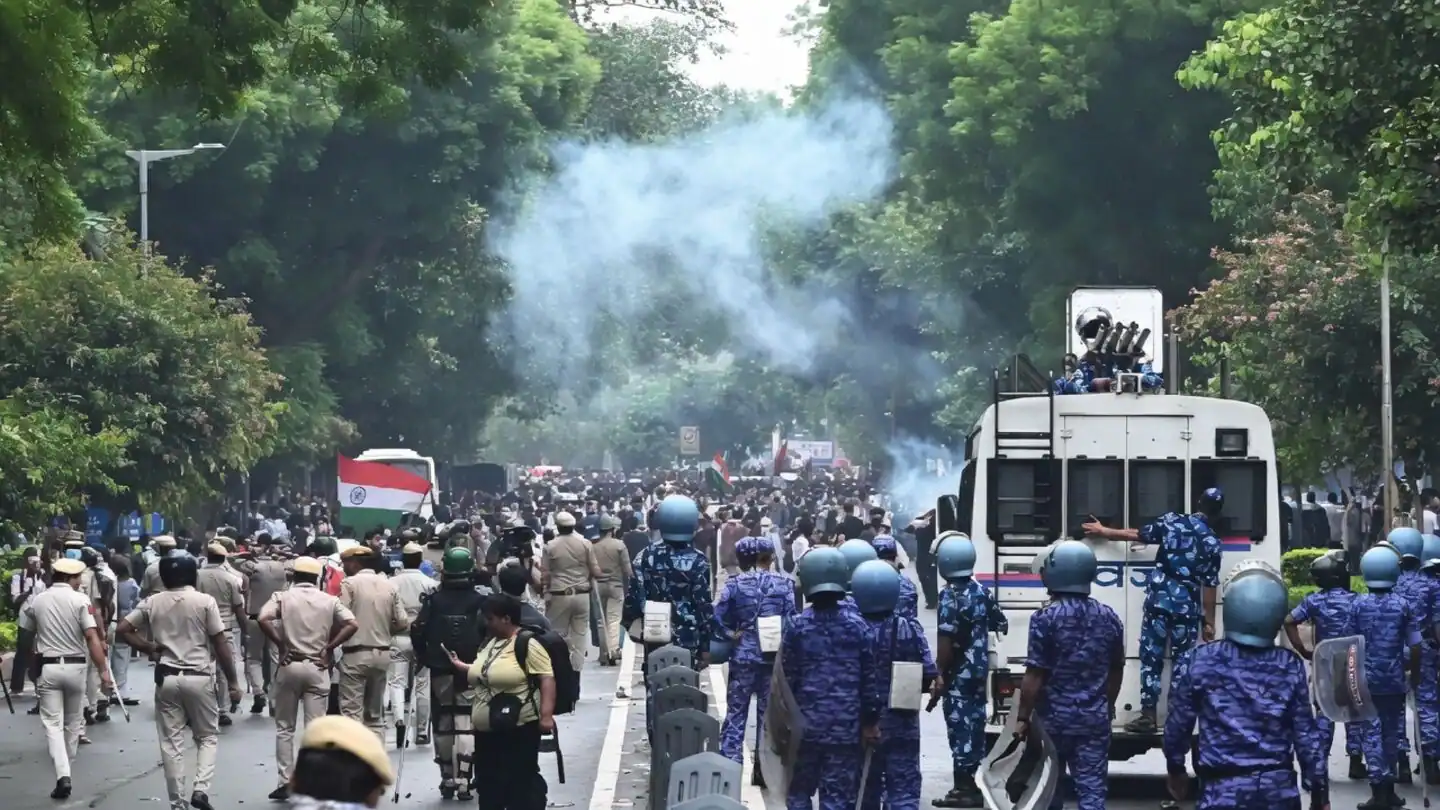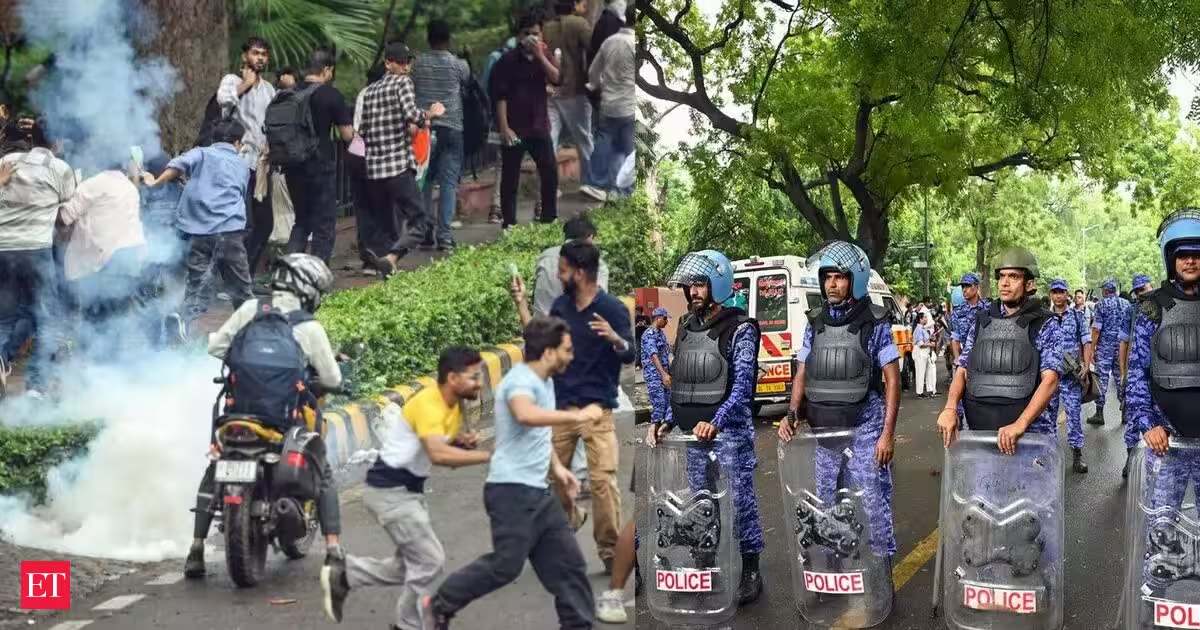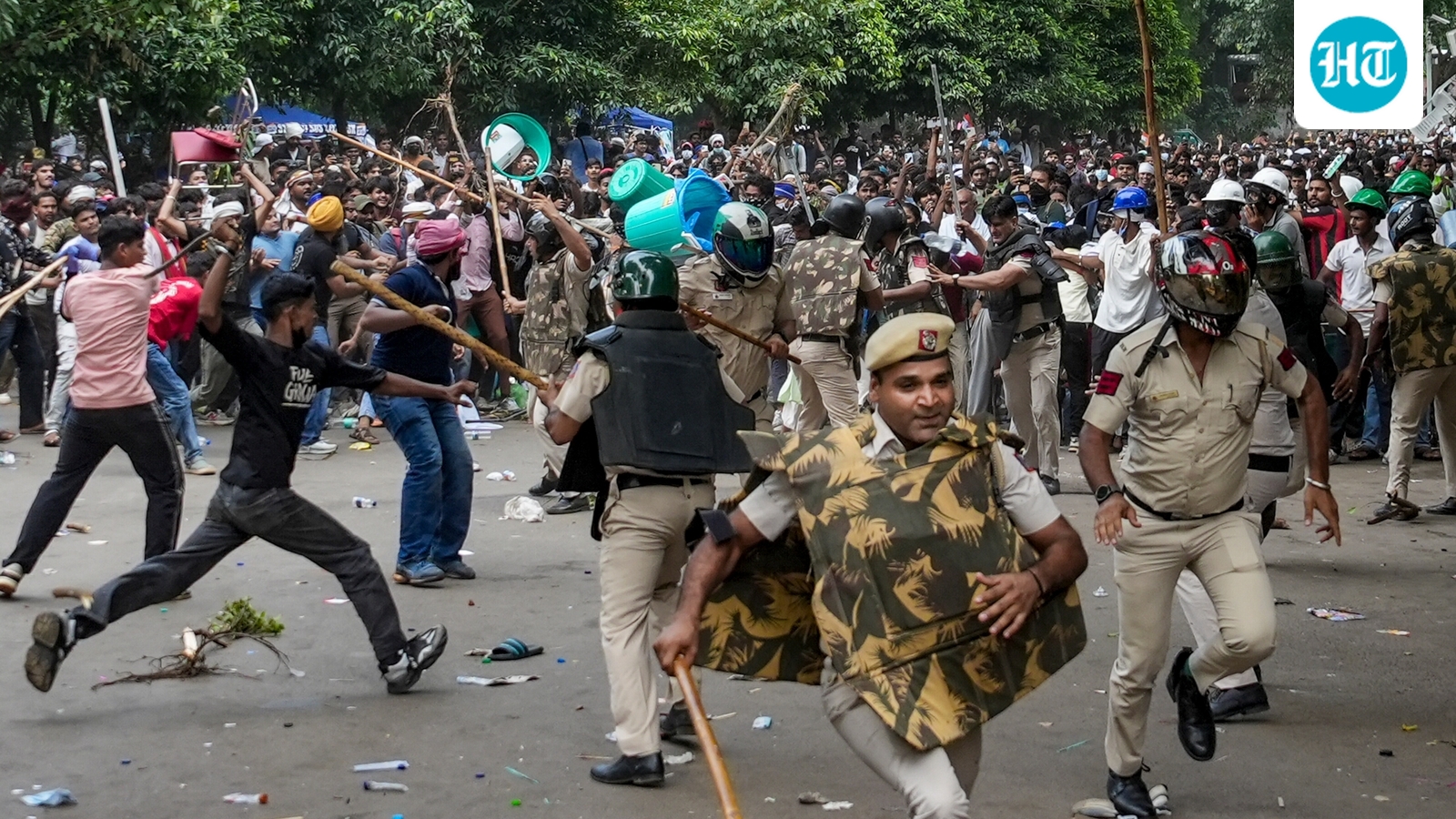
The Supreme Court on Monday (August 3, 2026) clarified that its July 28 order would not prevent the respective State governments from taking steps to close or withdraw proceedings arising out of FIRs registered against student protesters in accordance with law. The court further clarified that the protection from coercive action granted under the earlier order would not extend only to those accused of “grave and heinous offences”.The clarification came after a Bench headed by Chief Justice of India (CJI) Surya Kant had, in its July 28 interim order, permitted the NCT of Delhi and other States to “proceed” with the investigation of FIRs registered in connection with the protests, while restraining the authorities from taking coercive action against “protesting students” who did not have “criminal antecedents”. The direction had prompted the Cockroach Janta Party (CJP), which spearheaded the protests, to contend that the order was in “direct contradiction” to the Centre’s assurance that amnesty would be granted to the protesters.“It is clarified that the NCT of Delhi or any other States shall be at liberty to close/withdraw cases in accordance with law,” the Bench said, while adding that the expression “criminal antecedents” used in its earlier order was being clarified to mean “grave and heinous offences”.Solicitor General Tushar Mehta, appearing for the Union government and the Delhi Police, submitted that the government was “serious” about its assurance and was engaging with representatives of the CJP to work out the “semantics” and the appropriate legal mechanism for bringing the criminal proceedings against the protesters to an end.“There was some misapprehension or misconception about what to do with the FIRs which are registered against protesters. I have instructions to say that the government is serious about the commitment. The question that was discussed was the semantics... whether it would be permissible under the law to withdraw the FIRs or some other methodology needs to be adopted,” Mehta said.‘Quashing of FIRs’Advocate Vrinda Grover informed the Bench that she had been communicating with the law officer on behalf of CJP representatives and the student protesters to work out the legal mechanism through which the assurance could be implemented. She, however, submitted that proceeding with the withdrawal of individual cases would be a “tedious and slightly uncertain process” and urged the court instead to exercise its inherent powers under Article 142 of the Constitution to quash the FIRs and provide relief to the students.“These concern young students. They have their life ahead. They need to move on and look forward to taking their life ahead... This individual case withdrawal is actually a tedious and slightly uncertain process,” Grover submitted.Pressing for the FIRs to be quashed, . Grover referred to an FIR registered by the Bihar Police which, she said, named 142 persons along with 5,000 unidentified persons. She contended that such a “catch-all category” could potentially be used to belatedly implicate individuals who were not initially named in the FIR.‘Congenial way’The Bench observed that a “congenial way” had to be worked out and called for cooperation from both sides. It suggested that details of all FIRs registered in connection with the protests could first be compiled and the cases subsequently segregated to distinguish students who had participated in the demonstrations from “hardened criminals”.“If both of you agree, we can engineer and enable that process... These FIRs should not be left hanging over the students,” Justice Bagchi said. He added that investigating agencies could file closure reports under Section 193 of the Bharatiya Nagarik Suraksha Sanhita, 2023 (BNSS), while public prosecutors could seek withdrawal from prosecution under Section 360 of the BNSS.Senior advocate Gopal Sankaranarayanan, appearing for petitioner Shailendra Mani Tripathi, referred to videographic evidence allegedly showing the use of pellet guns and electric batons against protesters and urged the court to seek accountability from the Delhi Police Commissioner and the Inspector General of the Rapid Action Force (RAF). The Hindu had earlier reported that at least four persons were struck by pellets during the Parliament march and that the RAF fired two rounds from an anti-riot gun on the directions of a Deputy Commissioner of Police (DCP)-rank officer.“We want action against named offenders. The videos are very shocking... Because the directions have clearly come from the top, we believe that the Commissioner of Police and the Inspector General of the Rapid Action Force should explain how you permitted pellet guns, how you permitted sticks with nails,” Sankaranarayanan submitted.He urged that the affidavits to be filed by the Centre and the Delhi Police specifically address these allegations and explain the circumstances in which such crowd-control measures were allegedly used. Mehta, meanwhile, sought additional time to place the Centre’s response on record. He submitted that although the reply had been prepared pursuant to the court’s earlier direction, he had not yet had an opportunity to examine it.“My reply was ready, but I could not go through it... For that, I would need two to three days,” he said.Assuaging the petitioners’ concerns, the Chief Justice said the court was considering constituting a Special Investigating Team (SIT) to conduct an independent inquiry into allegations of police excesses as well as complaints concerning injuries allegedly sustained by police personnel during the protests.‘Protocol for use of pellet guns’The Bench also indicated that it was inclined to lay down a uniform protocol governing the use of pellet guns as a crowd-control measure, including the “exceptional circumstances” in which such weapons could be deployed.The observations came while the court was hearing submissions in a petition filed by former Indian Police Service (IPS) officer Yashovardhan Azad and two pellet-injury victims, Prashant Kumar Singh and Shekh Irshad Mansoori, seeking a ban on the use of kinetic metallic pellets by law-enforcement agencies against civilian assemblies.Appearing for the petitioners, Grover submitted that there was no standing order of the Delhi Police authorising the use of pellet guns.“There is no standing order of the Delhi Police that allows the use of pellet guns or even mentions the weapon. The petition is not saying that the police should not have anything to protect itself. But this particular weapon, by its very nature, is unfit for use,” Grover submitted.She urged the court to direct the Union government to file an affidavit disclosing whether any standing order or other protocol governing the use of pellet guns was in force.“We will take their affidavit, and with your assistance and with the opinion of domain experts, we would like to lay down a protocol on whether it can be used or not and, if allowed, in what circumstances,” the Chief Justice said.“The only way the government has identified all the protest-goers is by using facial recognition technology. This needs to be examined. We have not given consent for use of our biometric data,” Hariharan submitted.The Bench said it would examine these allegations and consider constituting an independent investigating committee on August 18, when the matter will be heard next.Published on August 3, 2026
SC says States free to ‘close, withdraw’ proceedings against protesters as per law
Appearing for the petitioners, Ms. Grover submitted that there was no standing order of the Delhi Police authorising the use of pellet guns.
1,151 words~5 min read