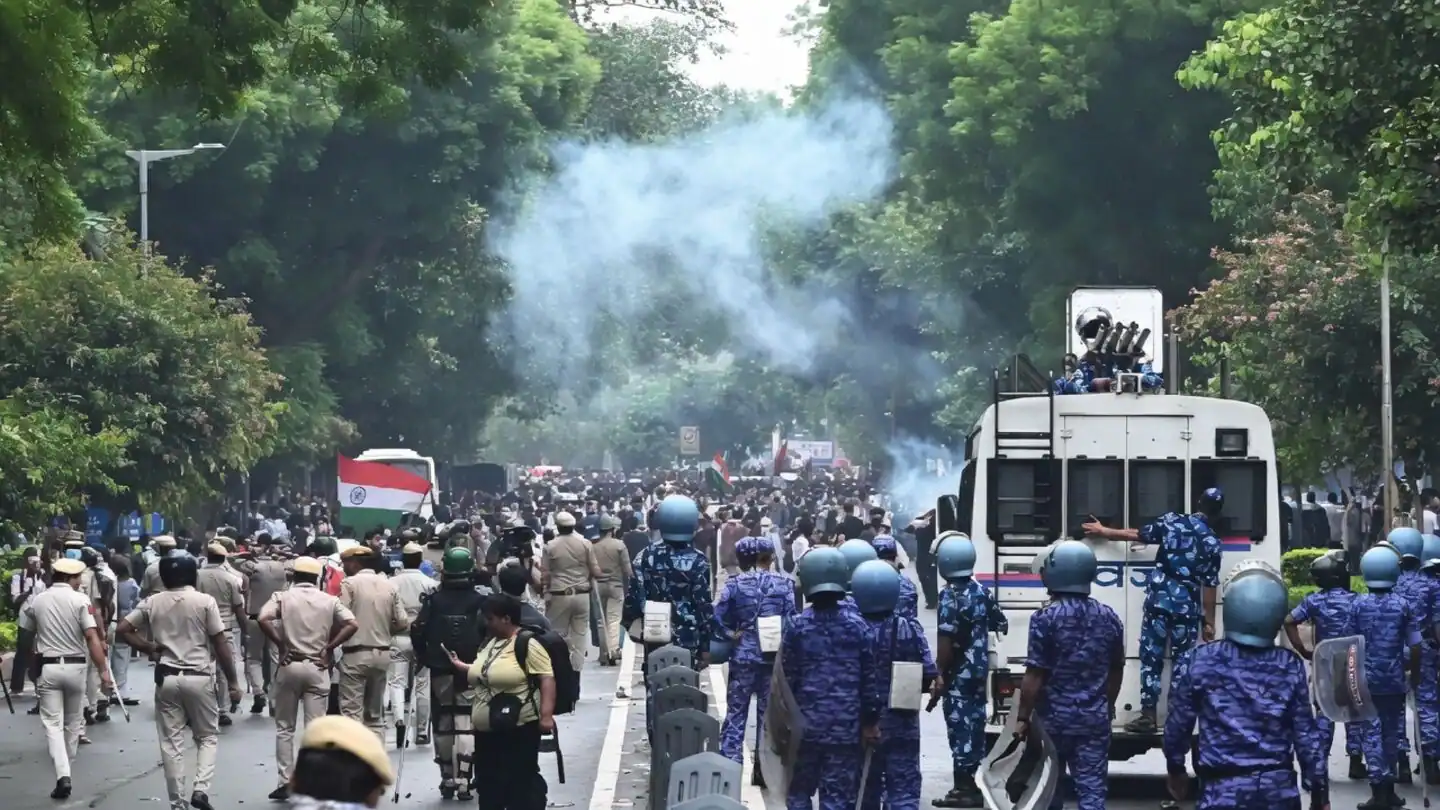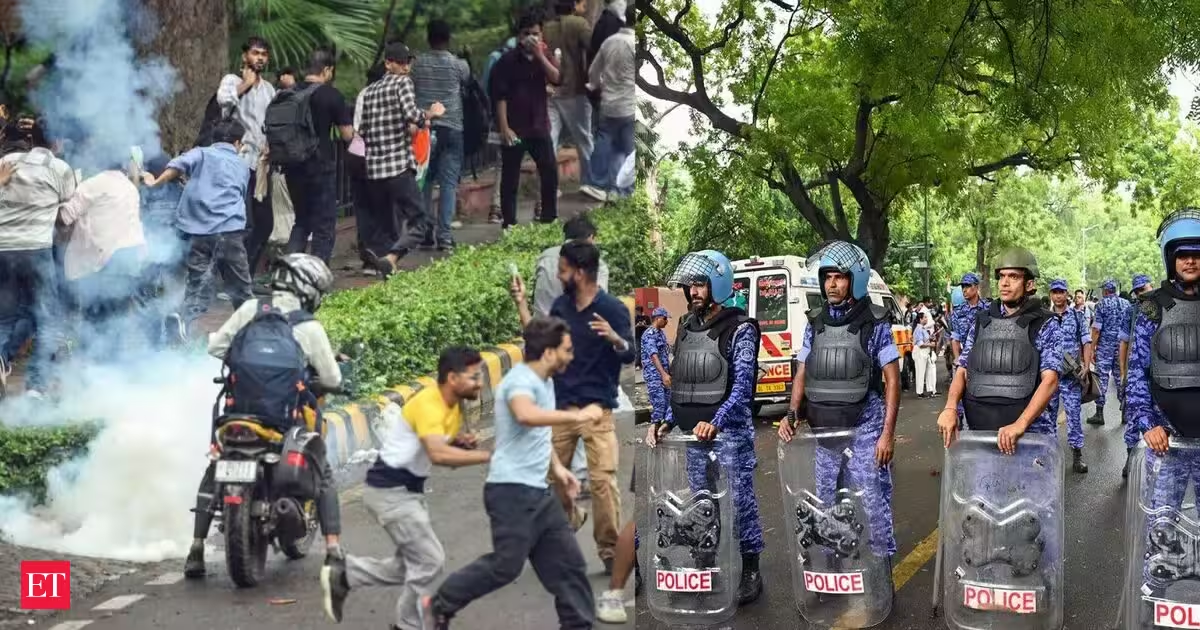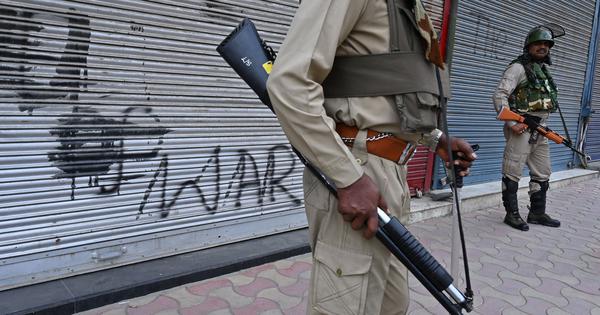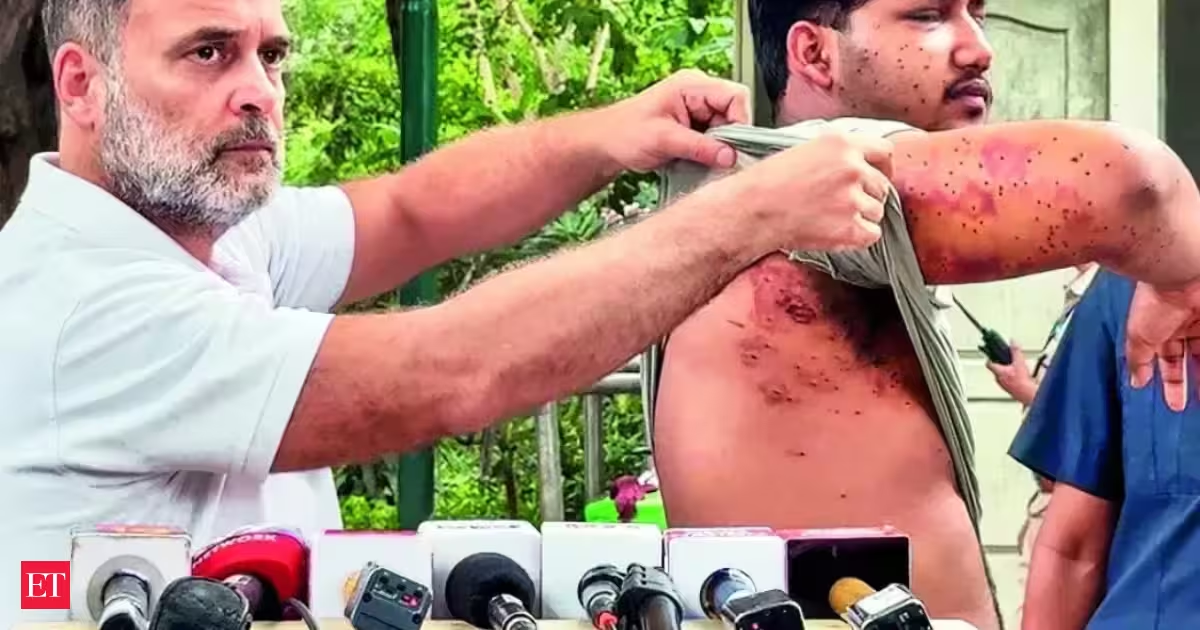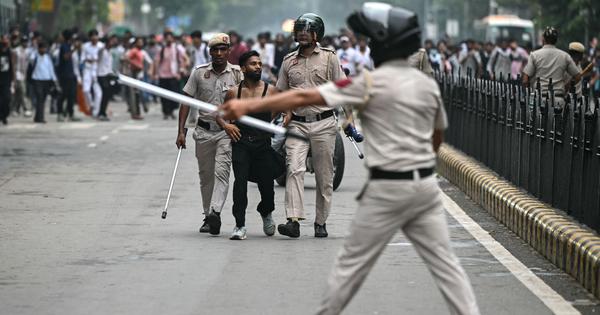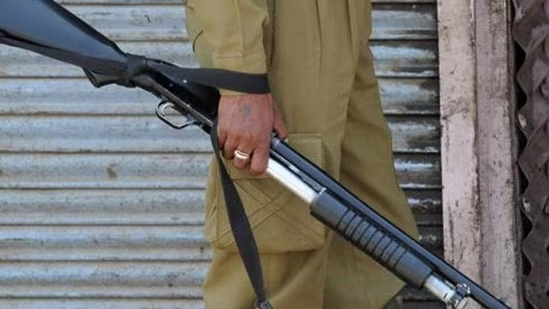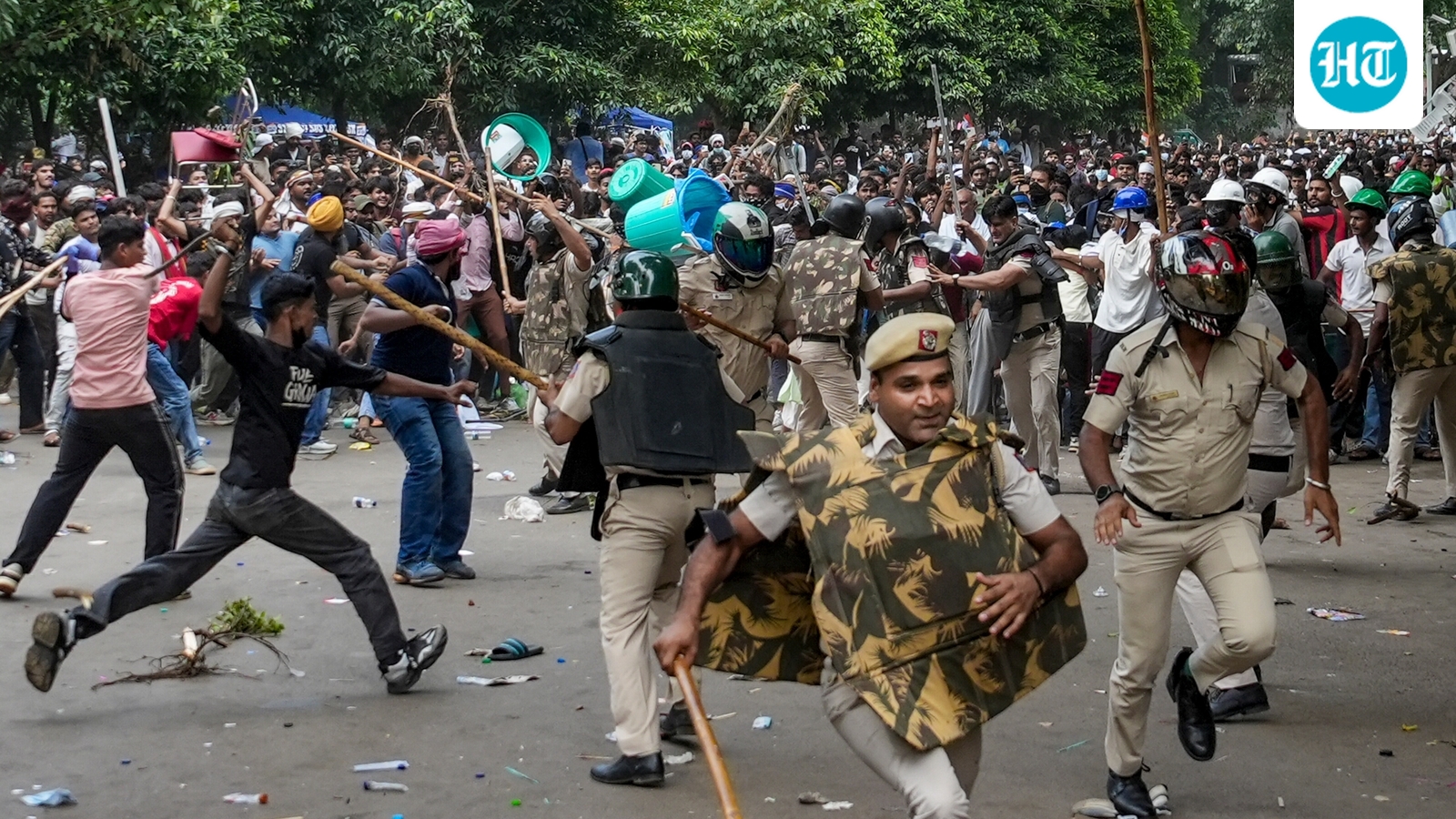
The Supreme Court on Thursday agreed to examine the Centre’s standard operating procedures (SOPs) and standing orders governing the use of pellet guns for crowd control, following allegations that security forces deployed them against students during the July 20 “Sansad Chalo” protest in Delhi, even as it questioned the maintainability of a plea seeking a blanket ban on such weapons.Chaos at the site amid the protest of Cockroach Janta Party (CJP) at Jantar Mantar in New Delhi. (PTI)A bench headed by Chief Justice of India Surya Kant and comprising justices Joymalya Bagchi and V Mohana issued notice to the Union government on a petition filed by former Intelligence Bureau special director Yashovardhan Azad along with two people injured by pellets during the July 20 protests. The petition challenges the use of wholly or partly metallic kinetic projectiles fired from pump action rifles or projectile action guns (PAGs) for dispersing civilian assemblies.ALSO READ | Delhi promises no legal action against CJP protesters, arrests to be reviewedHuge row over use of pellet gunsAlthough the use of pellet guns — categorised as a non-lethal deterrent along with tear gas, rubber bullets and smoke grenades — is included in RAF’s manual for crowd control, their use on student protesters has raked up a controversy, including in Parliament, and was termed inappropriate by the Opposition, students and police experts. It was also the first time that pellets in pump action guns (PAGs) were used in Delhi. It has earlier been used in Jammu and Kashmir to handle violent agitations and stone pelting. During the 2021 farmers’ agitation, police and CRPF used plastic bullets.While agreeing to examine the issue, the bench indicated that the petition would have to specifically assail the legal framework permitting the use of pellet guns instead of seeking their outright decommissioning.“Police rules allow the use in exceptional circumstances unless you challenge the rules itself. One of the steps of the graded approach is use of pellet guns,” observed the bench, adding that the prayer seeking a complete ban was “very vague” unless the underlying regulations themselves were challenged.Place on record all orders over use of pellet guns: SC to CentreThe court directed the Union government to place on record all relevant standing orders and protocols governing the use of pellet guns by law enforcement agencies, observing that these would have to be examined before the legality of their deployment could be tested.“Are there any protocols or regulations to show the graded approach?” the bench asked advocate Vrinda Grover, who appeared for the petition, jointly filed by Azad with Prashant Kumar Singh and Sheikh Irshad Mansoori. According to the plea, Singh and Mansoori were struck by a wide spray of splinter-like metallic pellets during the protests, which penetrated their bodies, causing immediate pain and bleeding.When Grover submitted that there was no publicly available standing order of the Delhi Police permitting the use of metallic pellets and that even the Bureau of Police Research and Development’s 2016 guidelines had been procured only through an RTI application, the bench remarked that if such protocols existed, “they have to be there” and directed the Centre to produce them.Besides seeking the operational guidelines, the court directed preservation of all relevant weapon and ammunition logs pertaining to the deployment of the Rapid Action Force (RAF) during the July 20 protests.Accepting the petitioners’ request, it ordered that all weapon logs relating to pellet guns used by the RAF on July 20 be preserved in addition to the CCTV footage, drone recordings, body-worn camera footage, wireless communication records and PCR call records that had already been directed to be secured in the batch of petitions concerning the nationwide student protests.Centre's responseSolicitor General Tushar Mehta, appearing for the Centre and Delhi Police, did not oppose the request for preservation of records.The bench also directed the Delhi government to ensure complete medical treatment for the two petitioners who suffered pellet injuries, extending the benefit to all similarly placed victims.“The NCT government of Delhi shall provide medical treatment to the injured petitioner or other similarly placed individuals,” said the court after Grover complained that one victim’s medical records had not been released despite a visit by the health minister.The hearing witnessed a broader debate on the legality of pellet guns as a crowd-control measure.Grover clarified that the challenge was confined to the use of metallic pellets, which she argued must satisfy the constitutional tests of reasonableness, necessity and proportionality. She emphasised that the petition was not directed against retaining pellet guns in the armoury for genuinely violent situations but against their alleged use on peaceful student protesters.“There can be rubber, plastic and metallic pellets. These were metallic and recovered from the bodies. The nature of the crowd will determine the use. Was it a violent mob? No. These metallic pellets were fired,” she submitted.The bench, however, questioned whether a complete prohibition could be justified when the law itself permits graded use of force.“We are not averse to examine use of pellets in an individual case. But you have to show us whether, under a graded response, use of pellets can be prohibited when even bullets are used in some situations,” the bench observed.Drawing from past jurisprudence, the court referred to an old rule that had once permitted police in Kolkata to fire bullets at the chest to preserve ammunition. “That rule was struck down. So, you have to show us rules where use of pellets is arbitrary,” it added.At the same time, the court underscored its preference for non-violent methods of crowd management, particularly when dealing with student demonstrations.“We are agreeable to a non-violent approach when there is a protest by students. But peaceful protests are often hijacked by persons with ulterior motives who sabotage the bona fide nature of the protest. Arm your police in such a way that they don’t have to revert to such actions,” it observed.Mehta responded that police personnel had been equipped with adequate protective gear and agreed that unnecessary resort to such force should be avoided.The proceedings form part of the Supreme Court’s continuing examination of allegations arising from the July 20 “Sansad Chalo” protest and subsequent demonstrations across several states. Earlier this week, the court held that the competing allegations of police excesses and attacks on police personnel disclosed a prima facie case warranting a “thorough, fair and impartial” investigation, while indicating that it may frame fresh nationwide guidelines governing police response to protests.As part of those proceedings, the court had already directed preservation of electronic evidence, restrained coercive action against peaceful student protesters without criminal antecedents and observed that constitutional principles governing crowd-control measures may require updating in light of recent events.Thursday’s order expanded that exercise by bringing under judicial scrutiny the legal framework governing the use of pellet guns, with the court now set to examine whether the existing protocols adequately regulate the deployment of such weapons during civilian protests.
SC to examine Centre’s SOPs on pellet gun use amid row over alleged use on student protesters
The court directed the Centre to place on record all relevant standing orders and protocols governing the use of pellet guns by law enforcement agencies. | India News
1,146 words~5 min read