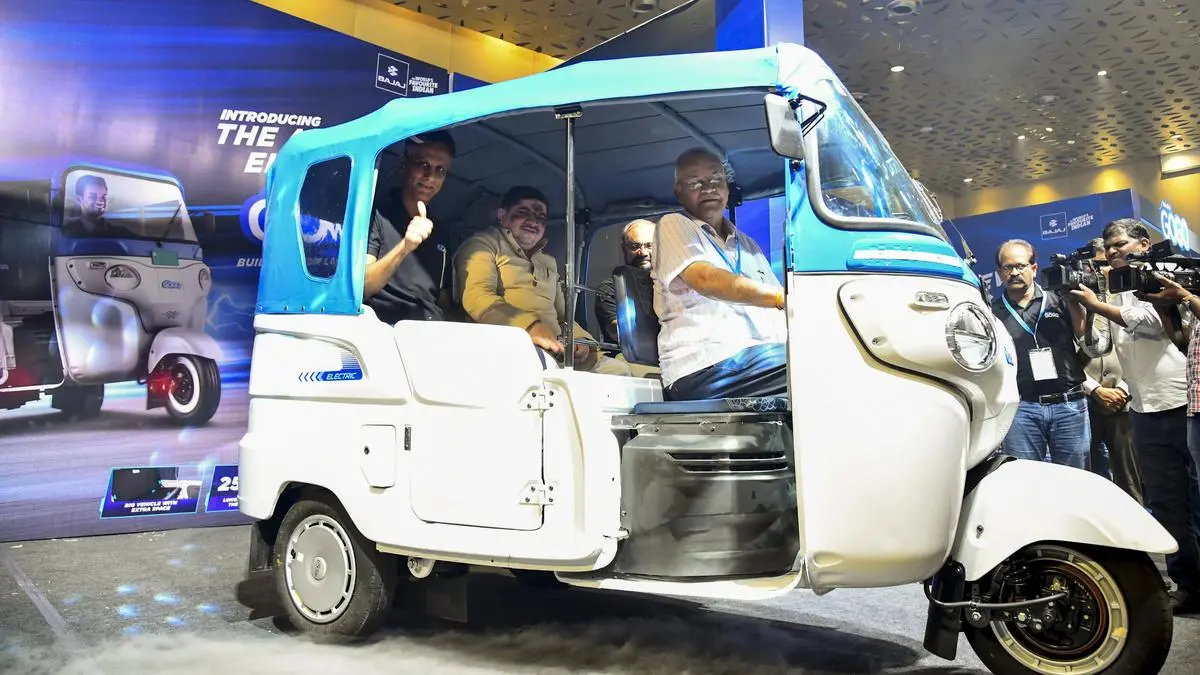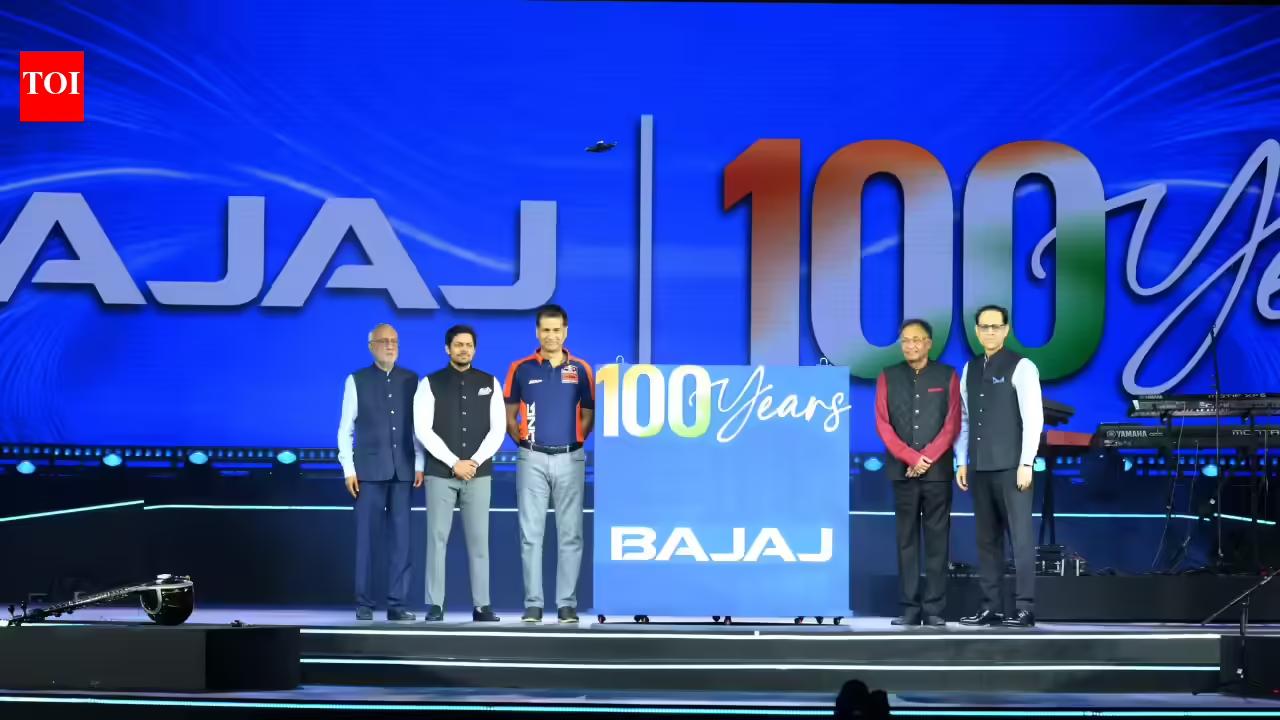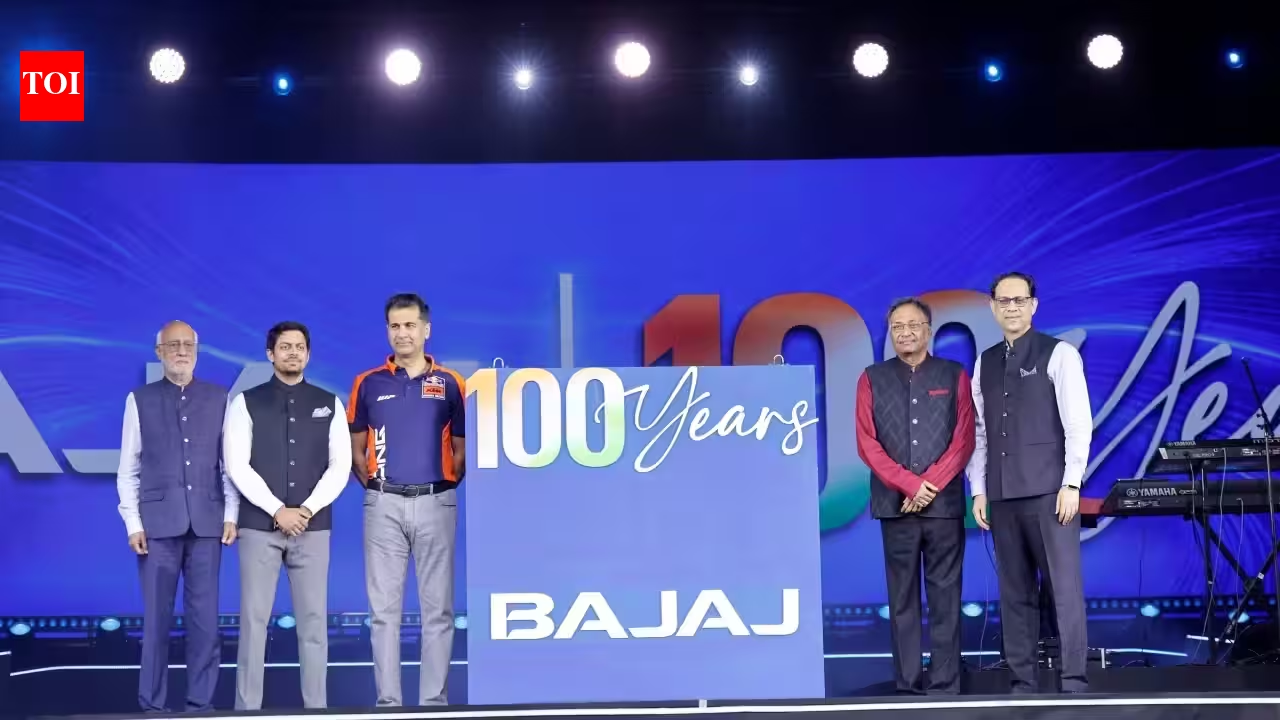
100 years of BajajThere are brands we buy and there are brands we live with. For millions of Indians, Bajaj belongs to the second category.A summer evening in the 1980s. The familiar hum of a scooter turning into the neighbourhood lane. A father returning home from work. Children running to the gate. A mother unloading grocery bags. A family of four somehow fitting onto two wheels and setting off for an evening ride.For an entire generation, this wasn't just transportation. It was life in motion.Because Bajaj was never merely a company that made products. It carried school bags and wedding shopping, first salaries and family vacations, ambitions and anxieties. In countless Indian homes, a Bajaj scooter marked the moment when a family felt it was moving ahead.That is why the story of Bajaj and the story of modern India have never really been separate.A legacy born with a purposeThe Bajaj journey began in 1926 with a man who believed that business had a responsibility beyond profit.Jamnalal Bajaj, freedom fighter, social reformer, philanthropist and the man Mahatma Gandhi regarded as his fifth son, built an enterprise rooted in trust, self-reliance and service. He renounced the British title of Rai Bahadur, stood shoulder to shoulder with Gandhi during India's freedom movement and believed that industry and nation-building were inseparable.Those convictions became the foundation of an institution that would grow alongside an independent India. As the country sought self-reliance, Bajaj built industries. As aspirations grew, it created products and services that empowered millions. And as India stepped confidently onto the global stage, Bajaj emerged as one of its most respected ambassadors.Building businesses that built IndiaOver the last century, the Group has created enterprises that have touched almost every aspect of everyday life.Through Bajaj Auto, it put a nation on wheels. The iconic Chetak became a symbol of aspiration and progress, while brands like Pulsar and partnerships such as KTM demonstrated that Indian engineering could compete with the world's best. Through Bajaj Finserv, Bajaj Finance and Bajaj Housing Finance, the Group expanded access to credit, insurance and financial services, enabling millions to buy homes, build businesses and pursue opportunities once beyond reach. Through Bajaj Electricals and its engineering businesses, the Group illuminated homes, powered industries and strengthened India's manufacturing story.Today, the Bajaj Group serves one in every three Indian households, employs more than 130,000 people and has a presence in over 100 countries. Yet numbers, however impressive, tell only part of the story. Through its philanthropic trusts and social initiatives, the Group has positively impacted more than ten million lives across education, healthcare, livelihoods and community development. Because for Bajaj, prosperity has never been an end in itself. It has always been a means to create progress.A legacy measured beyond numbersFew institutions are shaped by leaders whose influence extends far beyond business. Jamnalal Bajaj's contribution to India's freedom struggle and social reform continues to inspire generations. Jankidevi Bajaj became India's first woman recipient of the Padma Vibhushan, while Rahul Bajaj was conferred the Padma Bhushan for his immense contribution to Indian industry and nation-building.Reflecting on this legacy, Shekhar Bajaj spoke of Jamnalalji's commitment to social equity, women's education, rural upliftment, the promotion of khadi and the fight against practices such as dowry and child marriage. He posed a question that perhaps best captures the spirit of the institution: should success be measured only in numbers and scale, or in lives touched, values upheld and communities strengthened?Looking towards the next centuryThe centenary celebration at the National Sports Club of India in Mumbai brought together family members, captains of industry, ministers, celebrities and long-standing partners to celebrate a journey that has mirrored India's own transformation. The evening featured a specially composed live performance by Grammy Award-winning composer Ricky Kej and the unveiling of the '100 Years of Bajaj' logo.A highlight of the celebration was Kathni Karni Ek si, a film directed by Rajkumar Hirani and crafted entirely using Artificial Intelligence. Featuring members of the Bajaj family who lead some of India's largest businesses today, the film imagines Mahatma Gandhi returning to present-day India to witness whether the values he once entrusted to Jamnalal Bajaj continue to guide the institution, while also showcasing AI as a powerful new medium for creativity and storytelling.Congratulating the Group on its centenary, Prime Minister Narendra Modi said, “Over the decades Bajaj has played an important role in nation-building by creating jobs, fostering innovation and supporting community development. He added that institutions with deep roots and experience such as the Bajaj Group have an important role to play in shaping India's journey towards Viksit Bharat by 2047.”As Bajaj enters its second century, it does so with the same conviction that inspired its founder a hundred years ago: that business must create value not only for shareholders, but also for society and for the nation.Disclaimer - The above content is non-editorial, and TIL hereby disclaims any and all warranties, expressed or implied, relating to it, and does not guarantee, vouch for or necessarily endorse any of the content.
100 years of growth, innovation and impact
There are brands we buy and there are brands we live with. For millions of Indians, Bajaj belongs to the second category.
835 words~4 min read